

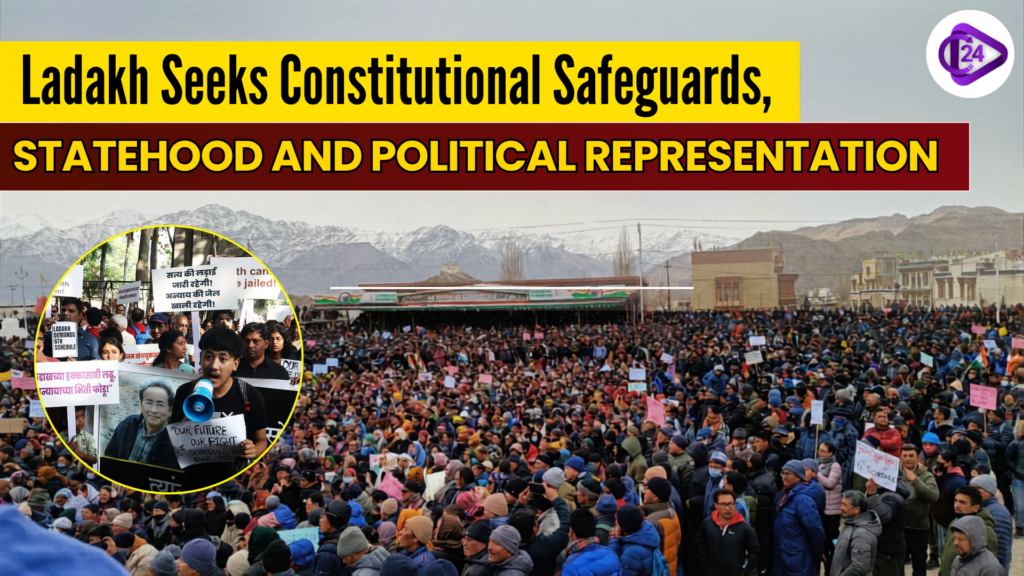
The UT of Ladakh has pitched its cause for giving constitutional protections, restoring statehood, and increasing political representation. Civil society groups representing the Leh Apex Body (LAB) and Kargil Democratic Alliance (KDA) have been seeking protection of land, job, culture and identity for Ladakh, which they want to be accorded Sixth Schedule status by the Central Government. These demands started to grow after Article 370 was scrapped in 2019 and Ladakh was made a Union Territory of the country. Protestors have been holding marches and hunger strikes for democratic rights and, above all, parliamentary representation and a guarantee under the Constitution for the protection of the fragile Himalayan region, led by climate activist Sonam Wangchuk.
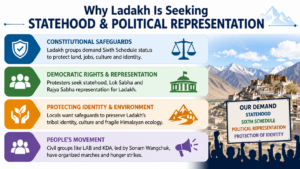
Why Ladakh Is Seeking Statehood, Political Representation
- Ladakh civil society groups are demanding constitutional safeguards under the Sixth Schedule of the Constitution.
- The Leh Apex Body (LAB) and Kargil Democratic Alliance (KDA) are leading the movement in Ladakh.
- Ladakh became a Union Territory in August 2019 after the bifurcation of the former state of Jammu and Kashmir.
- Protesters are demanding statehood for Ladakh to ensure democratic governance and local autonomy.
- The Sixth Schedule provides safeguards for tribal areas through autonomous district councils.
- Ladakh’s population is largely tribal, and locals seek protection of land, employment, and cultural identity.
- Sonam Wangchuk has led awareness campaigns and hunger strikes over the issue.
- Protesters have also demanded separate Lok Sabha seats and representation in the Rajya Sabha.
- The Ministry of Home Affairs held discussions with Ladakh representatives regarding their demands.
- The region is strategically important because of its borders with China and Pakistan.
- Protest groups argue that constitutional safeguards are necessary to preserve Ladakh’s ecological balance and indigenous traditions.
- The demands have become a major political and constitutional issue in the Himalayan region.
Important PYQs on Ladakh
| Exam Name | Year | Question | Options | Answer |
| UPSC Prelims | 2020 | The Sixth Schedule of the Constitution deals with? | A. Emergency Provisions B. Tribal Areas Administration C. Fundamental Duties D. Citizenship | B. Tribal Areas Administration |
| SSC CGL | 2022 | Ladakh became a Union Territory in which year? | A. 2014 B. 2016 C. 2019 D. 2021 | C. 2019 |
| CDS Exam | 2021 | Which ministry handles Union Territory administration in India? | A. Ministry of Defence B. Ministry of Home Affairs C. Ministry of Tribal Affairs D. Ministry of Law | B. Ministry of Home Affairs |
| State PCS | 2023 | The Sixth Schedule currently applies mainly to tribal areas of? | A. Northern India B. Southern India C. Northeastern India D. Western India | C. Northeastern India |
| NDA Exam | 2021 | Which Article of the Constitution deals with the formation of new states and alteration of areas? | A. Article 1 B. Article 2 C. Article 3 D. Article 5 | C. Article 3 |
Taiwan Travelogue Wins International Booker Prize
Conclusion on Ladakh Statehood and Sixth Schedule Demand
As rising activism for statehood, constitutional protection and regional development in Ladakh continues, this can be interpreted as expressing concerns about identity and governance issues. Tribal groups in the region feel that the Sixth Schedule protection will help safeguard their environment, culture and land rights. The movement has also raised questions surrounding representation in democracy, following Ladakh’s status as a Union Territory in 2019. Ladakh’s civil society still persists in pushing for more autonomy and constitutional status through peaceful protest and negotiations. It is still relevant in the context of India’s federal architecture, border security, tribal rights, and inclusive governance at strategic locations across the country.