

Day: May 29, 2026
NATO

German-Netherlands Corps to Take NATO Command Role in Estonia, Latvia

The German-Netherlands Corps will take on a high command position in Estonia and Latvia in response to NATO’s commitment to beef up its Eastern defence force. The move followed increasing security concerns in Eastern Europe, and in the interests of improving military coordination and quick response capability and regional deterrence. The multinational corps – co-led by Germany and the Netherlands – will coordinate NATO actions and troops in the Baltic area. In response to rising geopolitical tensions close to NATO’s eastern borders, NATO members have escalated troop and defence cooperation. This development is a continuation of NATO’s efforts towards collective security and stability in Europe.

Significance of NATO Expanding Baltic Defence Presence

  • In Estonia and Latvia, the German-Netherlands Corps was given command status by NATO.
  • The deployment will enhance the security infrastructure of NATO’s eastern flank.
  • There is a need to pay attention to the important member states of the Baltic countries—Estonia and Latvia—which border Russia.
  • The multinational corps is a German and Dutch operation.
  • NATO would like to see better coordination and coordination among allied forces in Eastern Europe.
  • The command structure will improve quick response capabilities to emergencies.
  • Since the recent geopolitical tensions, NATO has deployed more troops in the Baltic countries.
  • Collective defence is one of the foundations of Article 5 of the NATO Treaty, which the alliance views as very fundamental.
  • Germany has seen its security operations in Europe increase in terms of its military involvement.
  • The Netherlands is still very active as part of NATO multinational defence roles.
  • Estonia and Latvia have always made appeals for NATO forces to be reinforced.
  • The Baltic region continues to be key for European security and deterrence policy.
  • Much NATO military exercise activity flies under the “wings” of Eastern Europe, with Soviet and NATO militaries exercising on a regular basis in an effort to enhance readiness.
  • The alliance is centered in the air defence, cyber defence and troop mobility aspects related to the region.
  • The decision of the Cybersecurity Agencies signifies “a clear signal of warning to adversaries”, say Security Experts.
  • More coherent defence coordination could increase the flow of intelligence between member nations within NATO.
  • Indeed, NATO has placed a high priority on preparedness for “modern” warfare, including cyber and hybrid threats.
  • The command role is indicative of an increased degree of military cooperation between NATO members in Western Europe.
  • In response, regional security concerns have grown, and several NATO members have increased the defence element of their budgets.
  • The analysts see the deployments in the Baltic as a long-term component of NATO Strategic Defence Planning.

Previous Year Questions (PYQs)

Exam Name Year Question Options Answer
UPSC Prelims 2022 NATO was established in which year? A. 1945 B. 1947 C. 1949 D. 1955 C. 1949
SSC CGL 2021 NATO headquarters is located in which city? A. Paris B. Brussels C. Berlin D. Geneva B. Brussels
RRB NTPC 2020 Which of the following countries is a Baltic nation? A. Poland B. Estonia C. Hungary D. Austria B. Estonia
UPSC Mains 2023 Discuss the significance of NATO’s eastern expansion in contemporary global geopolitics. A. Agricultural cooperation B. Military and strategic security C. Tourism development D. Cultural integration B. Military and strategic security
SSC CHSL 2022 Article 5 of NATO is related to what principle? A. Free trade B. Collective defense C. Nuclear disarmament D. Climate action B. Collective defense

Kopra Reservoir Emerges as Chhattisgarh Biodiversity Hub

Conclusion: NATO Strengthens Baltic Security Through Multinational Coordination

The European allies’ strategic intention to operationalise the German-Netherlands Corps in command in Estonia and Latvia focuses attention on NATO’s efforts to bolster security on its Eastern borders. This was aimed at bolstering military coordination, readiness and deterrence in the strategic region of the Baltic. In Europe, members of the North Atlantic Alliance (NATO) are enhancing cooperation in defence and consolidation of the basis of collective security amid growing tension on the continent. Defence cooperation and fortification of joint mechanisms of collective security continue to grow among NATO members, which increases security levels in Europe, as geopolitical tensions continue. The deployment also underlines the growing integration of the military forces of European allies, as well as the significance of multinational military command. NATO’s increased deployment in Eastern Europe is poised to be a major element of regional stability and in protecting its members in the future.

Online Gaming

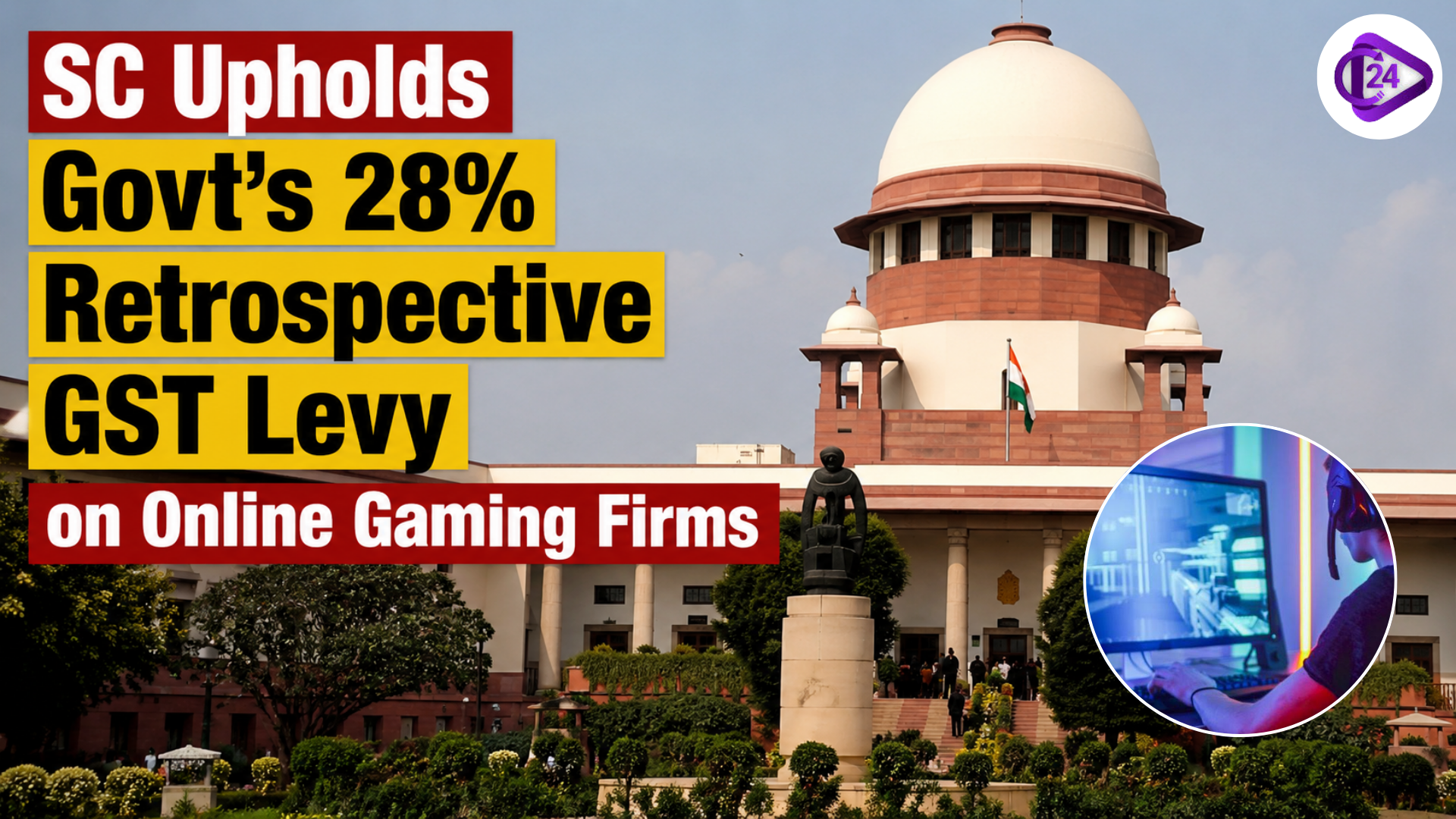
SC Upholds Govt’s 28% Retrospective GST Levy on Online Gaming Firms

The Supreme Court of India has upheld the government order to impose a 28 % Good and Services Tax (GST) for online gaming firms from now on. The decision is said to be a significant move for online gaming and betting, as many gaming companies had filed writ petitions challenging the GST notices which had been issued to them, having a value of thousands of crores. The government said online real-money gaming sites could be considered as actionable claims in a similar fashion to betting/gambling activities. The findings serve as a win for the tax authority and could have a considerable ramification on the gaming industry’s income and compliance expenses. According to industry experts, the decision has the potential to have a profound impact on the Indian online gaming sector, which is witnessing rapid growth, and could impact future government policies on online taxation.

Supreme Court Verdict on Online Gaming GST: Key Highlights and Impact

  • The Supreme Court has confirmed the 28% tax on online gaming platforms imposed by the government.
  • The decision is seen as an endorsement of a retrospective assessment by gaming companies of taxes on past deals.
  • The real-money online gaming industry was placed by the government in the betting and gambling category.
  • GST authorities had issued several thousand crores worth of notices to gaming companies.
  • The decision is likely to hit online gaming companies with higher taxes.
  • The online gaming companies said GST should only be charged for the platform fees/commission.
  • The government argued that per-bet taxation levied on the total amount of winnings is to be considered as GST.
  • The ruling further enhances the legal powers of GST departments in taxation of digital products.
  • There could be some potential retro taxes on several gaming companies.
  • Experts in the industry say that increased taxation could have an impact on investments in India’s gaming business.
  • The ruling could affect fantasy sports and skill-based gambling websites.
  • Previously, the GST Council committee had recommended uniform tax rates of 28% on online games.
  • The decision is expected to bring better tax compliance and better revenue collections, according to tax authorities.
  • With a surge in smartphone and internet use, the online gaming sector has drastically progressed.
  • Proponents of, say, the crypto-currency ban say that this high tax will hinder innovation and drive users toward illicit platforms.
  • The ruling is clarifying to legal minds the difference between gaming and gambling taxes, say legal experts.
  • The judgement might pave the way for policy deliberations around the digital gaming economy of India.
  • Online gaming is one of the most significant digital entertainment and start-up sectors of India.
  • The decision may have ramifications for the tax regime of the emerging virtual and digital platforms as well.
  • Now regulators can look at balancing out regulation, tax, and development of the industry in the sector.

PYQs on GST

Exam Name Year Question Options Answer
UPSC Prelims 2017 The Goods and Services Tax (GST) in India was introduced through which Constitutional Amendment? A. 99th Amendment B. 101st Amendment C. 102nd Amendment D. 103rd Amendment B. 101st Amendment
SSC CGL 2022 GST in India was implemented on which date? A. 1 January 2016 B. 1 July 2017 C. 15 August 2017 D. 26 January 2018 B. 1 July 2017
RRB NTPC 2021 Which body recommends GST tax rates in India? A. RBI B. Finance Commission C. GST Council D. NITI Aayog C. GST Council
UPSC Mains 2020 Discuss the impact of GST on India’s digital economy and services sector. A. Reduced taxation B. Uniform indirect taxation system C. Increase in direct taxes D. Decline in e-commerce B. Uniform indirect taxation system
SSC CHSL 2023 Online gaming taxation in India primarily falls under which category? A. Direct Tax B. Customs Duty C. GST D. Income Tax C. GST

Historic Book on India’s First Olympic Gold Released

Conclusion: Supreme Court Verdict Reshapes India’s Online Gaming Industry

This landmark ruling by the Supreme Court will shape the future of online gaming tax policy in India, particularly as it upheld the retrospective 28% GST levy on online gaming companies. The decision further bolsters the government’s power to control and tax online gaming, akin to betting and gambling businesses. This is likely to raise game company and startup operational costs, but also generate added revenue and enhance compliance rules. High taxes may impact innovation and investment in a growing gaming industry by industry participants. In the future, policymakers will have to find a balance between effective regulation, revenue generation and sustainable growth of the Indian digital entertainment economy.

Public Health

Public Health Spending Rises as Out-of-Pocket Expenses Decline

Over the past ten years, India’s healthcare funding system has undergone a significant shift. Government expenditure on healthcare has also seen a substantial rise, which has led to a substantial decrease in the burden on households, according to the latest National Health Accounts (NHA) Estimates, released by the Ministry of Health and Family Welfare. Out-of-pocket expenditure (OOPE), defined as direct payments made by citizens for medical treatment, has reduced from 64.2 per cent in 2013-14 to 43.4 per cent in 2022-23. This improvement is attributable to increased public health expenditure, insurance coverage, Ayushman Bharat schemes, and a robust healthcare system. But experts feel an additional investment is needed to make healthcare affordable and accessible for everyone in India.

Public Health Spending in India: Key Highlights

  • Government health spending rose from ₹1.30 lakh crore in 2013-14 to almost ₹3.85 lakh crore in 2022-23.
  • During the same period, public health allocation as a percentage of GDP climbed from 1.15% to almost 1.43%.
  • The OOPE has decreased steeply by approximately 21 percentage points over 10 years.
  • The decrease in OOPE reflects better financial protection for Indian households.
  • The Ayushman Bharat and PM-JAY schemes opened new doors to getting treatment for millions of families at affordable prices.
  • The government’s promotion of Ayushman Arogya Mandirs enhanced primary health care.
  • There was overall enhancement of public health facilities because of vaccination drives and investments in the health sector during the pandemic.
  • Per capita public expenditure on health care has risen significantly in the past few years.
  • The stagnation of the number of deaths in the Philippines was also attributed to the increasing share of state governments in financing health care, as reflected in the National Health Accounts report.
  • Even with the improvement, Indian OOPE is still higher than a number of other developing countries, experts note.
  • Enhancing coverage by the family has lowered catastrophic out-of-pocket expenses that poor families face when it comes to health care costs.
  • The World Health Organisation (WHO) has been calling for enhanced public funding as a key requirement for achieving Universal Health Coverage (UHC).
  • Enhanced investment was observed in the healthcare industry for rural hospitals, medical colleges, digital healthcare systems, etc.
  • Improvements in spending have enhanced services for disease control, maternal services, child health services and immunisation.
  • But it is also reported that the billings of private hospitals are still high.
  • The results of some surveys show that even some patients obtain loans and savings for health and emergencies.
  • Benchmarking the spending on healthcare to 2.5% of GDP is suggested to improve the objectives of healthcare in the long run.
  • Reducing household medical burden is seen as being a positive development towards inclusive economic growth.
  • Improved health-care financing can boost productivity, alleviate poverty and promote general human development.
  • Policymakers remain preoccupied with extending insurance coverage and greater access to health care throughout the country, as well as the affordability of these options.

PYQs on Public Health Spending and Healthcare Financing

Exam Name Year Question Options Answer
UPSC Prelims 2020 Ayushman Bharat scheme is related to which sector? A. Education B. Healthcare C. Agriculture D. Defence B. Healthcare
SSC CGL 2021 What does OOPE stand for in healthcare economics? A. Out of Public Expenditure B. Out-of-Pocket Expenditure C. Official Public Economic Expenditure D. Out of Patient Expense B. Out-of-Pocket Expenditure
RRB NTPC 2022 Which ministry releases National Health Accounts Estimates in India? A. Ministry of Finance B. Ministry of Statistics C. Ministry of Health and Family Welfare D. Ministry of Rural Development C. Ministry of Health and Family Welfare
UPSC Mains 2018 Discuss the importance of public healthcare expenditure in achieving inclusive growth. A. Only economic growth B. Universal healthcare and social welfare C. Defence expansion D. Industrialization only B. Universal healthcare and social welfare
SSC CHSL 2023 PM-JAY is a component of which flagship programme? A. Digital India B. Ayushman Bharat C. Skill India D. Startup India B. Ayushman Bharat

India-US, Quad Push Critical Minerals Partnership

Conclusion: Rising Public Health Investment Strengthens India’s Healthcare System

As India invests in public healthcare, it is moving towards a more cost-effective, accessible, and inclusive healthcare system. Reducing the share of OPE helps draw attention to greater healthcare infrastructure, increased insurance coverage, and greater government support. In the Government of India’s schemes, such as Ayushman Bharat, increased public funding has lessened the financial strain on millions of households. Nonetheless, health issues like an increasing health care hospitalization expenses and uneven access to quality health services remain. Leading experts say that India should do more to scale up the allocation of financial resources for health, enhance the capacity of rural health systems and make health insurance more effective to achieve the goal of Universal Health Coverage and build sustainable social and economic growth.

Frequently Asked Questions (FAQs)

The current affairs cover recent national and international events related to UPSC, SSC, Banking, Railways, and State PCS.

You need to read about the current affairs daily, and revise them every week and every month to keep them longer in your memory.

Yes, Class24 provides free downloadable Daily Current Affairs PDFs for easy revision.

Yes, you can practice MCQs and quizzes to boost your exam preparation.

Absolutely. The content is written in simple, easy-to-understand bilingual language suitable for beginners.

Go to class24.com and click on the current affairs section directly, where you find everything that you need.

ssc-toppers

Start Learning Today with Class24

Related current affairs

Class24 offers free video lectures for smart preparation, covering CGL, CPO, CHSL, MTS, and GD exams. Learn from expert faculty, revise concepts easily, practice with PYQs, and improve speed and accuracy through high-quality, exam-focused video lessons anytime, anywhere.

Get success in your hand. Start study anytime anywhere.

The journey becomes simple and enjoyable when you start taking interest in it. And through our app “Class24”, we will be your trusted partners in developing that interest.

Daily Quizzes
Mock Tests
Ongoing

No ongoing tests right now.