
Day: September 9, 2025

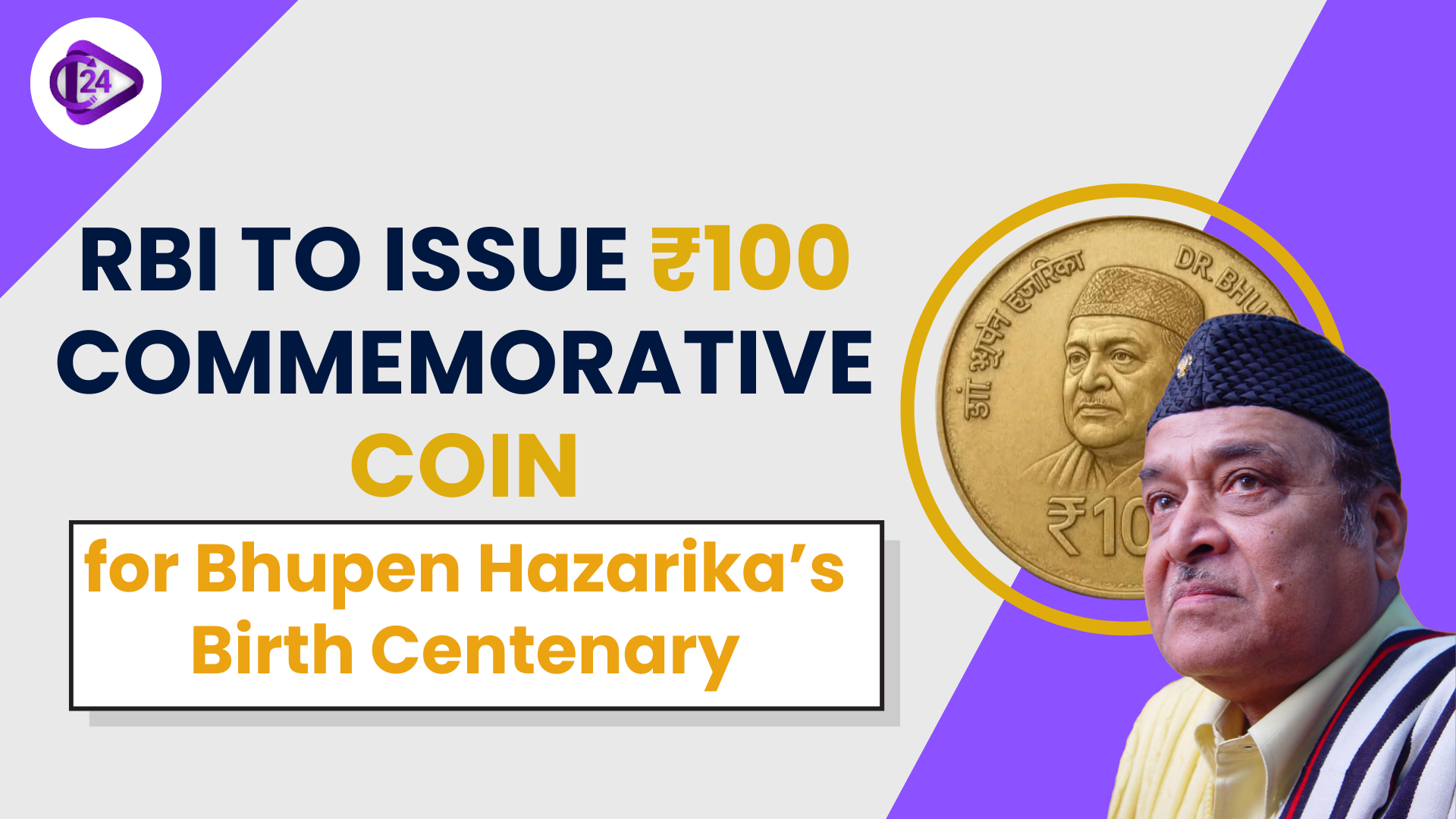
RBI to Issue ₹100 Commemorative Coin for Bhupen Hazarika’s Birth Centenary

On September 13, 2025, Reserves Bank of India (RBI) will release a commemorative coin with denominations of ₹100 to celebrate the birth centenary of Bharat Ratna, Dr. Bhupen Hazarika, in Guwahati. Prime Minister Narendra Modi will present the coin in a mass gathering event with a detailed profile of the cultural icon being published as well. It is introduced as part of a one-year centenary (Sept 20252026) with events in India. It has plans of a memorial site, a museum in Guwahati and cultural tributes during Bihu festivals. The themes of unity, justice and human dignity are still made to flourish through the legacy of Hazarika as a musician, poet and social reformers.

Key Points in Detail

Background and Context

  • Bhupen Hazarika (19261911): Famous Assamese singer, poet, motion picture film-maker and cultural reformist.

  • Reputed to mix folk music with universal humanism.

  • Bharat Ratna was posthumously conferred in 2019.

  • The centenary events begin 8th Sept 2025, and end 8th Sept 2026.

The Coin and Launch Event

  • RBI to release 100 rupees commemorative coin.

  • Introduction on 13 th September 2025 at Veterinary College Ground, Khanapara, Guwahati.

  • PM Modi to unveil the coin.

  • Publication of a biography by Assam Publication Board, which is to be translated into several languages.

Centenary Observances last year.

  • Activities will take place in Delhi, Mumbai, Kolkata, Arunachal Pradesh, Meghalaya.

  • Final event in Sept 2026 with the presence of the President of India.

Cultural Legacy and Projects.

  • Bhupen Hazarika Memorial place (Jalukbari) to be renamed Bhupen Hazarika Samannay Tirtha.

  • Guwahati Dedicated museum Srimanta Sankardev Kalakshetra.

  • Bihu committees asked people to devote a night to his vision.

Significance

  • Coins and celebrations confirm the activity of Hazarika as a symbol of harmony and social justice.

  • Empowers cultural pride in Assam and disseminates his message in the country.

  • Knows his contribution to Indian music, literature, and human values.

Conclusion

The release of the 100 commemorative coins by RBI and the decade long centennial events indicate the importance of Bhupen Hazarika as a culture bridge-maker and social philosopher. The tribute, more than honouring an artist, strengthens the national acknowledgment of music and literature as unifiers of national integrity, dignity and justice.

Anuparna Roy Wins Best Director at Venice Film Festival 2025

A film by Indian director Anuparna Roy, titled Songs of Forgotten Trees, received the Best Director in the Orizzonti section at the 82nd Venice film festival. The only Indian nomination in the category, the motion picture was praised because of its touching narration of two Indian migrant women in Mumbai. It was awarded by Julia Ducournau, renowned French director and Orizzonti Jury President. The victory of Roy reflects the increased awareness of independent socially aware Indian film in the world. It also indicates the breaking point of women-led Indian story telling.

Key Points in Detail

Background and Context

  • Venice film festival: This is one of the oldest and the most prestigious film festivals in the world.

  • Orizzonti: Section is devoted to the new tendencies and the new voices in the world films.

  • Scarcity of success: Indian filmmakers rarely receive the best direction award at leading film festivals in Europe.

Venice 2025 – Other Major Winners

  • Golden Lion (Best Film): Father Mother Sister Brother – Jim Jarmusch.

  • Silver Lion (Runner-up): The Voice of Hind Rajab – Kaouther Ben Hania.

  • Best Actor: Toni Servillo (La Grazia).

  • Best Actress: Xin Zhilei (The Sun Rises On Us All).

  • Best Director (Main Competition): Benny Safdie (The Smashing Machine).

  • Special Jury Prize: Gianfranco Rosi (Below the Clouds).

Regarding the Film -Songs of Forgotten Trees.

  • Discusses the life of two migrant women in Mumbai.

  • Themes: Survival, identity, memory, alienation in the city.

  • Formal: Poetic, social, minimal.

  • Raises the voices of the marginalised that are not given priority in mainstream cinema.

Anuparna Roy’s Significance

  • Respected as filmmaker of migration, gender inequality and metropolis battles.

  • Blends documentary realism, lyrical images.

  • This is her career defining international breakthrough award.

  • Contributes to the list of Indian women filmmakers that is becoming more and more world-renowned.

Value to India and Cinema Worldwide

  • Increases the exposure of Indian independent movies in the world markets.

  • Understands how the power of women to tell a story contributed to the development of modern cinema.

  • Promotes filmmakers to establish stories based on local realities that have universal appeal.

  • Emboldens the Indian cultural soft power at the global level.

Conclusion

The victory in Venice of Anuparna Roy is a step towards the Indian independent film and confirms the world interest in the socially conscious, woman-centered discourse. It shows how stories of the periphery of India can be given worldwide prominence when narrated carefully and with a sense of craftsmanship. In the case of UPSC, this indicates the increasing cultural presence of India and the impact of creative industries in molding the world perceptions of the country.

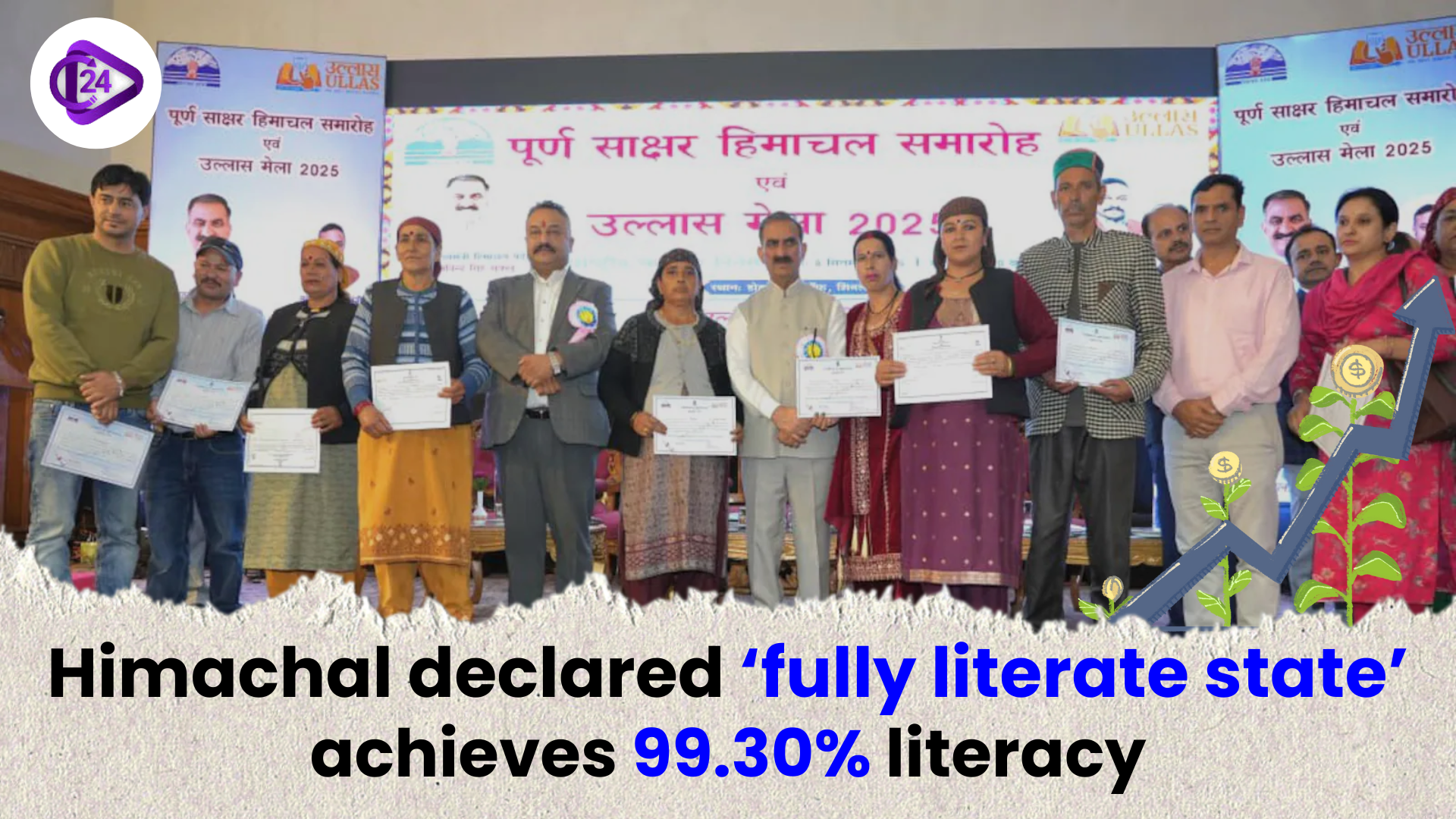
Himachal declared ‘fully literate state’, achieves 99.30% literacy

International Literacy Day (ILD) 2025 (8 th September) in New Delhi was celebrated by the Ministry of Education with a theme of Promoting Literacy in the Digital Era. The event underscored the Indian advancement in the move toward increasing literacy beyond reading and writing to digital, civic, financial and legal literacy. Himachal Pradesh became the 5th State/UT to become fully literate following Tripura, Mizoram, Goa and Ladakh. As a transformative literacy movement, the ULLAS Nav Bharat Saaksharta Karyakram that has 3 crore learners and 42 lakh volunteers was presented. The celebration renewed the aim of universal literacy and its contribution in developing a self-reliant and developed Bharat.

Key Points in Detail

Background and Context

  • Proclaimed on the occasion of International Literacy Day, 2025 (8th September).

  • Venue: Shimla, Puran Sakshar Himachal Samaroh and Ullaas Mela-2025.

  • The literacy rate in Himachal: 99.30 and one of the highest in India.

  • Already fully literate states/UTs added to the list: Tripura, Mizoram, Goa and Ladakh.

Education Achievements

  • Himachal has the highest student-teacher ratio in the country which guarantees improved results in learning.

  • Effective network of community based literacy programmes and schools.

  • The success of literacy was associated with ULLAS Nav Bharat Saaksharta Karyakram and state-based programs.

Goals of ILD 2025 Celebration.

  • Emphasize the importance of digital technology in facilitating literacy and life-long learning.

  • Encourage shared responsibility among government, communities and volunteers.

  • Introduce demonstrations of multilingual literacy in 26 Indian languages.

  • In addition to reading and writing, empowerment, self-reliance and dignity with regard to stress literacy.

Activities and Implementation.

  • Venue: Dr. Ambedkar International Centre, New Delhi.

  • Highlight programmes: ULLAS Compendium release, literacy week drive (1 0 8 Sept 2025).

  • Practical experience in Ladakh and Goa on how to reach complete literacy.

  • Participation of neo-learners, state education departments, teachers, and volunteers in blended online-offline learning.

Significance

  • Literacy reconstructed to include digital, financial, civic and legal awareness.

  • Empowered Jan Andolan (people movement) of education.

  • Awareness of community based efforts in hard to reach areas.

  • Showed how the Indian digital civil infrastructure boosted learning and assimilation.

Conclusion

The International Literacy Day 2025 was a big milestone towards a 100 percent literate Bharat that combines the old form of literacy with the new to enable empowerment. Through a concerted effort by the government and the involvement of volunteers and digital technologies, India demonstrated how literacy can transform into a holistic and inclusive process and become future-ready. In the case of UPSC, it is a powerful case study of the connection between education, digital governance, and community involvement to develop a country.

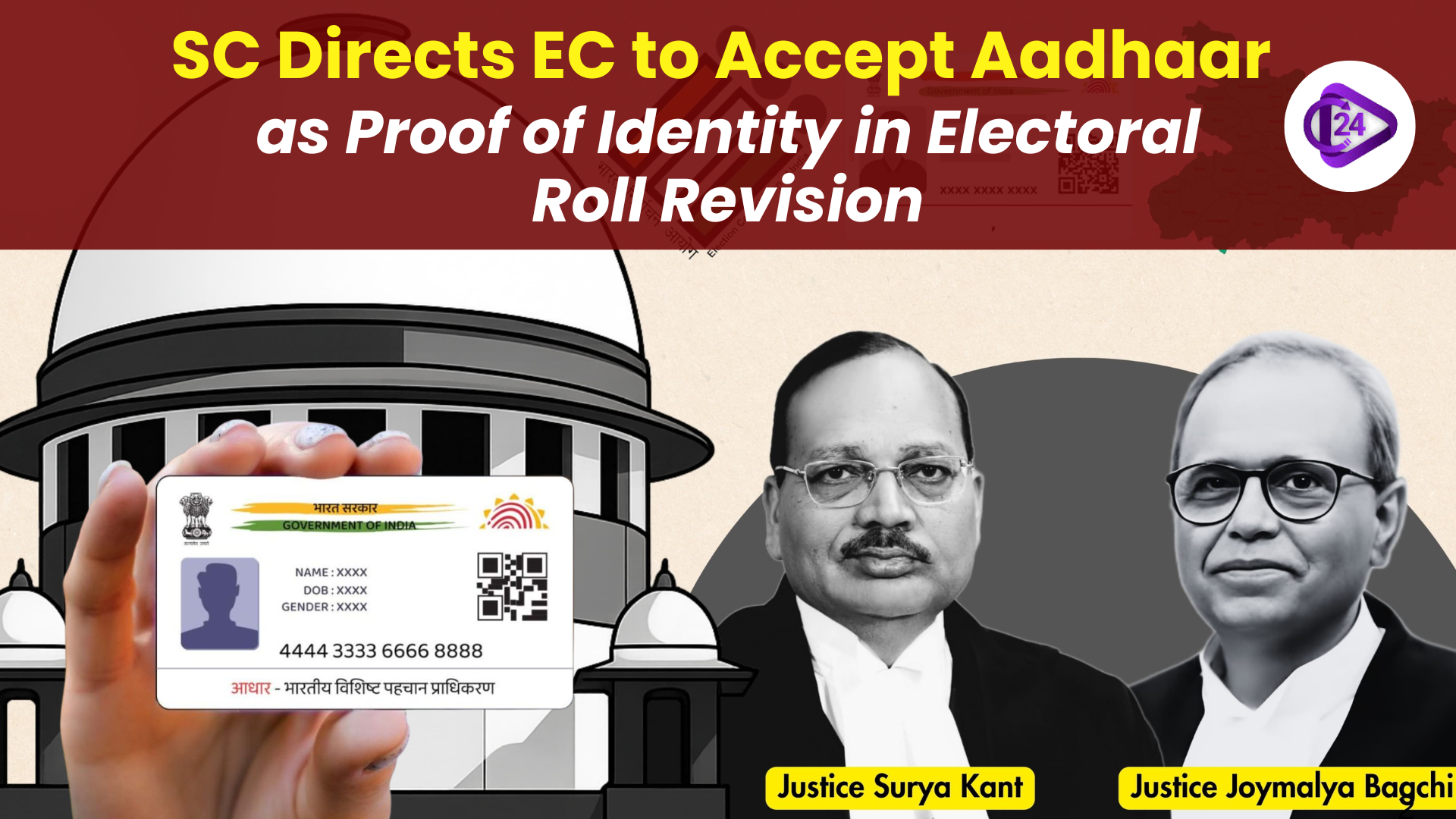
SC Directs EC to Accept Aadhaar as Proof of Identity in Electoral Roll Revision

The Supreme Court has directed the Election Commission (EC) to receive Aadhaar as the 12 th indicative document in the identity verification during the special intensive revision of the rolls in Bihar. The court further explained that Aadhaar would only be used as an identity or residence demonstration but not citizenship. This was ordered following reports that the booth-level officers (BLOs) were rejecting Aadhaar even after the SC had given earlier orders. The directive targets to include the disenfranchised and avoids disenfranchising those voters who are almost 65 lakh and do not appear on the draft rolls. The EC has been now advised to give clear instructions and publicise the order.

Key Points in Detail

Background and Context

  • Bihar: 65 lakh voters left out of draft roll of 7.89 crore.

  • Objections and claims were until the end of Sept 1.

  • SC had previously requested EC ( July 10, Aug 14, Aug 22) to receive Aadhaar.

  • RJD claimed that the BLOs rejected Aadhaar; police who received it were fined.

Supreme Court’s Directive

  • Aadhaar as the 12 th indicative document to be added.

  • Purpose: only proof of identity/ residence and not citizenship.

  • Aadhaar was put at par with other non-conclusive ID documents such as voter ID or ration card.

  • EC to get instructions down to the top level to BLOs.

  • Court requested EC to publicize so that voters can be aware that Aadhaar is valid.

Arguments in Court

  • Kapil Sibal (RJD): EC Aadhaar refusals by BLOs, EC in contempt; officers to be disciplined. Affected voters affidavit

  • Rakesh Dwivedi (on behalf of the EC): Aadhaar is not an equivalent of a passport; 99 percent of voters have been made; there is no flaw in the process.

  • Court opinion: Aadhaar was a recognised residence proof in Representation of People Act; why not excluded.

Legal Significance

  • Reaffirms distinction Aadhaar = ID/residence proof, not citizenship proof.

  • Trade-offs include voter inclusion and misuse.

  • Enhances judicial control of EC performance in electoral roll management.

Next Steps

  • EC should also publish circulars in order to get Aadhaar accepted.

  • Citizen-education campaigns.

  • On September 15, 2025, the case was listed for further hearing.

Conclusion

The SC order requiring Aadhaar acceptance in revising electoral roll is an important measure to avoid large scale voter disenfranchisement in Bihar. Although it reaffirms the fact that Aadhaar is not citizenship, the ruling gives preference to inclusion by expanding the range of accepted IDs. In the case of UPSC, it is a conflict between the integrity of the electoral process, the administrative adherence, and the judicial regulation of the protection of democratic participation.

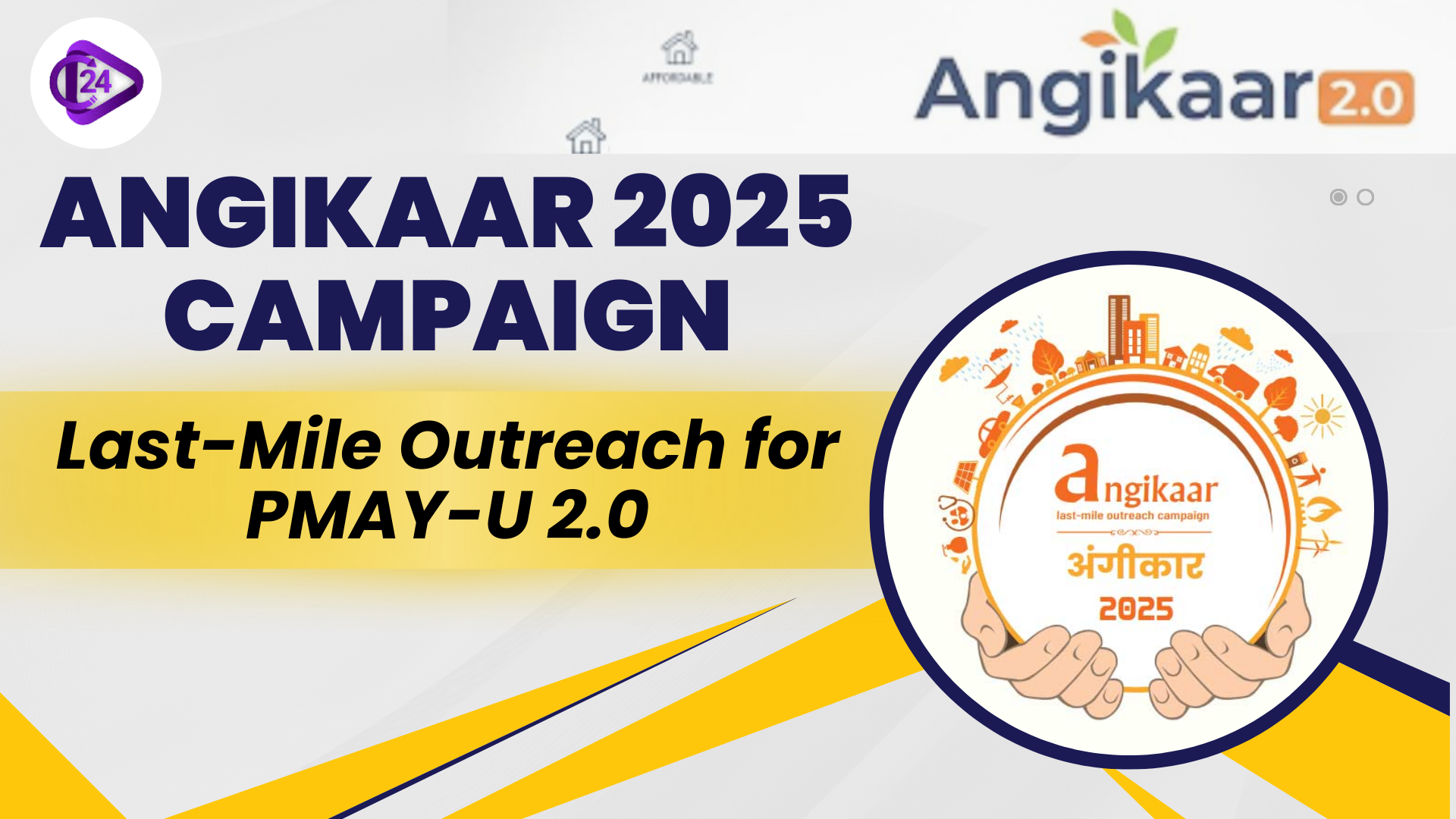
Angikaar 2025 Campaign: Last-Mile Outreach for PMAY-U 2.0

Angikaar 2025, an end-last-mile outreach program by the Ministry of Housing and Urban Affairs was launched on 4 th September 2025 as part of Pradhan Mantri Awas Yojana- Urban 2.0 (PMAY-U 2.0). The campaign will speed up awareness, check applications and expedite the process of completing approved houses. It also consolidates such schemes as PM Surya Ghar: Muft Bijli Yojana and Credit Risk Guarantee Fund Trust of Low Income Housing (CRGFTLIH) to achieve comprehensive benefits. It will operate in more than 5,000 Urban Local Bodies (ULBs) until October 31, 2025 through door to door awareness, loan melas and cultural events. It closes the gap between planning and implementation, making the Housing for All goal stronger with vulnerable populations in mind.

Key Points in Detail

Background and Context

  • PMAY-U was introduced in 2015 as PMAY-U 2.0 in Sept 2024.

  • Goal: Expand the monetary help on pucca houses to one million more families.

  • To date,120 lakh houses have been approved, 94.11 lakh houses constructed and handed over.

  • Angikaar 2025 was created to accelerate the stagnant delivery and consolidate outreach.

Objectives of Angikaar 2025

  • Develop mass awareness of PMAY-U 2.0.

  • Verify the applications and accelerate the construction of approved houses on the last mile.

  • Educate beneficiaries on CRGFTLIH and other welfare programmes.

  • In PMAY-U 2.0 Special Focus Groups should be put under priority in terms of housing.

  • Connect beneficiaries to PM Surya Ghar: Muft Bijli Yojana to energy benefits.

Implementation Strategy

  • Timeframe: 4th September -31st October 2025.

  • Coverage: 5,000+ ULBs across India.

  • Techniques: Door to door awareness, community mobilisation, camp, loan melas, cultural activities.

  • Key events:

    • On 17 th September 2025, PMAY-U Awas Diwas.

    • PM Awas Mela at district HQ / municipal level (Sept -Oct 2025 in two phases).

Significance

  • Fills the divide between scheme delivery and scheme design.

  • Concretenises Jan Bhagidari (people participation) within housing programmes.

  • Fosters integration of housing with related welfare schemes.

  • Addresses the urban poor and vulnerable, therefore, Housing for All is inclusive and sustainable.

Conclusion

Angikaar 2025 in PMAY-U 2.0 is not an awareness initiative but a delivery-oriented initiative to get housing benefits to the targeted beneficiaries on a timely basis. It is the integration of housing with energy, finance and community involvement that indicates the drive towards integrated welfare delivery by the government in urban India. In the case of UPSC, the study is significant as to how the governance of the last-mile and citizen participation can make major welfare projects successful.

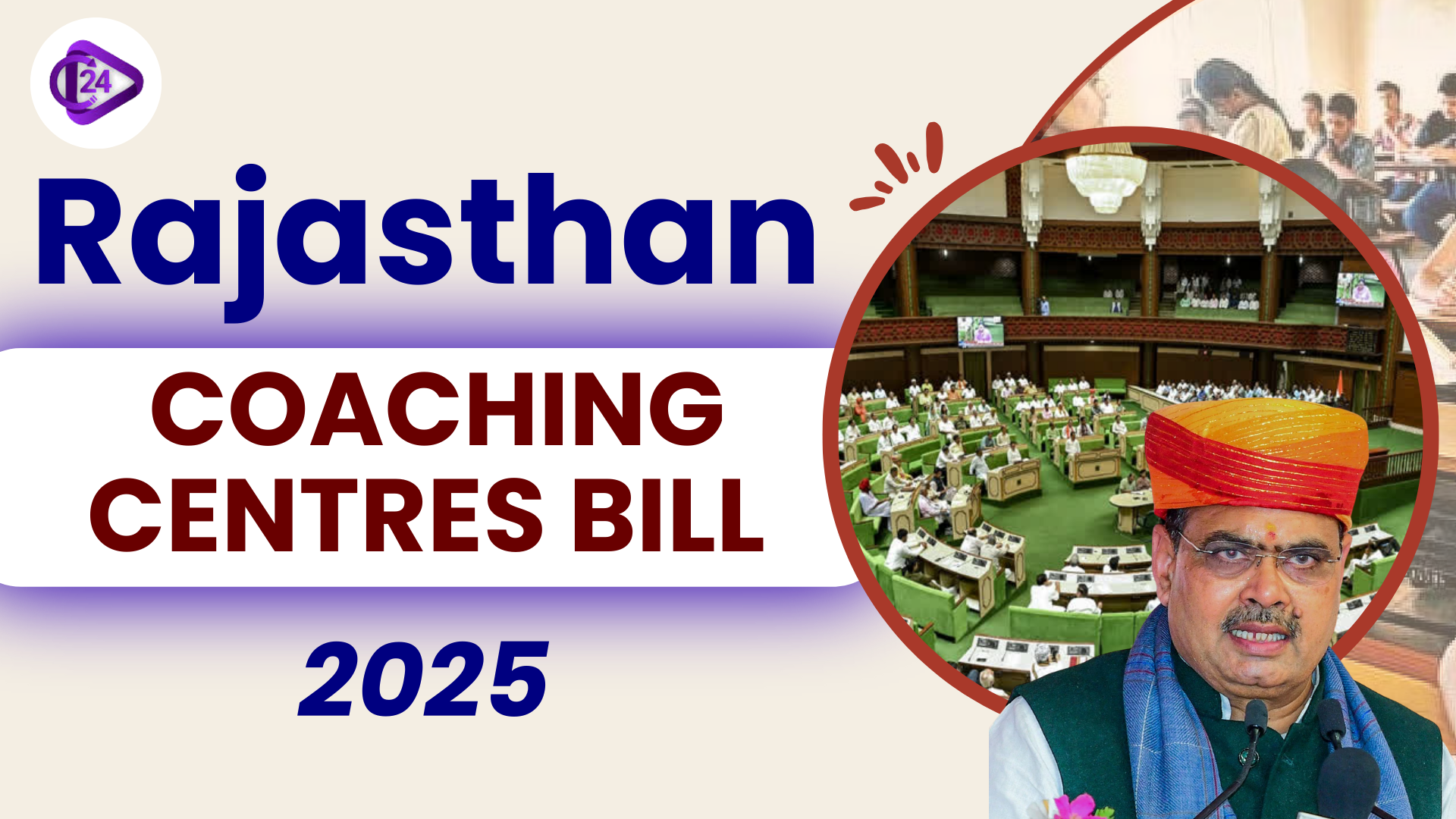
Rajasthan Coaching Centres Bill, 2025: Balancing Regulation, Student Welfare, and Economic Interests

Rajasthan Coaching Centres (Control and Regulation) Bill, 2025, was enacted to control the fast growing business of coaching and to curb the increasing suicides among students, particularly in Kota and Sikar. The Bill requires registration, minimum infrastructure, qualified tutors, counselling facilities and maximum limits of teaching hours. It aims at limiting the commercialization but maintains transparency in charges and guarantees of results. The Bill has significant socio-economic repercussions since it has more than 50 lakh students and an industry of over Rs 60,000 crore. But critics claim it is watered down, does not require compulsory counselling and could shield institutes rather than students.

Key Points in Detail

Context and Background

  • Following 88 student suicides in 4 years (70 in Kota, 14 in Sikar).

  • Since 2015, Rajasthan High Court has advocated reforms following the increasing cases of suicides.

  • In parliamentary Standing Committee (2025), inadequacy of a national framework was flagged and suicides and mental health struggles were reported in coaching centres.

Provisions of the Bill

  • Introduction of Rajasthan Coaching Centres Regulation Authority in the state and in the districts.

  • Within 3 months of enactment, mandatory registration.

  • Rules: no less than 1 sq. metre per student, no one graduates as tutor, prohibition of deceptive assurances.

  • Student protection: not more than 5-hour daily instruction, weekly holidays, counselling and grievance redressal committees.

  • Fine: 50000 (first time), 2 lakh (second time), cancellation (third time, etc.).

Economic Significance

  • Enrolment 50 lakh students, industry 60,000 crore.

  • Direct and indirect livelihood to 10 lakh people.

  • Contributes almost 30-35 percent of the economy of Sikar; Kota called the coaching capital of India.

Criticism

  • Non-conformance to Union Education Ministry requirements (e.g. no enrolment below 16 years disregarded).

  • The provision of counselling not obligatory even though the suicides issue is the priority.

  • The risks of inspector raj, pressure at the expense of excessive officiality.

  • Smaller institutes risk going out of business thereby giving way to monopoly of large coaching brands.

  • Opposition asserts that the Bill safeguards the coaching centres and not the students.

Government’s Defence

  • CM and Higher Education Minister defended it on the basis of balance and justice.

  • Bill sought to control but not to overwork the coaching institutes.

  • Small players were safeguarded by Select Committee, which provided fewer penalties and provisions which applied to centres of 100 students and above.

Conclusion

The Rajasthan Coaching Centres Bill, 2025, is the first serious effort to control a highly stakes and yet poorly monitored industry in India. It shows an attempt of the state to consider the well-being of students and the economic significance of coaching centers. Nevertheless, the absence of compulsory counselling, watered down penalties, and intimidation of bureaucratic authority viability create doubts on its potential of reducing suicides and exploitation. In the case of UPSC, the Bill points out the government regulatory problem of controlling privatized education, accountability and protection of youth welfare and the maintenance of a large-scale industry.

Frequently Asked Questions (FAQs)

The current affairs cover recent national and international events related to UPSC, SSC, Banking, Railways, and State PCS.

You need to read about the current affairs daily, and revise them every week and every month to keep them longer in your memory.

Yes, Class24 provides free downloadable Daily Current Affairs PDFs for easy revision.

Yes, you can practice MCQs and quizzes to boost your exam preparation.

Absolutely. The content is written in simple, easy-to-understand bilingual language suitable for beginners.

Go to class24.com and click on the current affairs section directly, where you find everything that you need.

ssc-toppers

Start Learning Today with Class24

Related current affairs

Class24 offers free video lectures for smart preparation, covering CGL, CPO, CHSL, MTS, and GD exams. Learn from expert faculty, revise concepts easily, practice with PYQs, and improve speed and accuracy through high-quality, exam-focused video lessons anytime, anywhere.

Get success in your hand. Start study anytime anywhere.

The journey becomes simple and enjoyable when you start taking interest in it. And through our app “Class24”, we will be your trusted partners in developing that interest.

Daily Quizzes
Mock Tests
Ongoing

No ongoing tests right now.