

Day: July 14, 2025

Namibia to Become First African Country to Roll Out Digital Payments System Based on UPI

During the visit of the Prime Minister of India to Namibia, the two countries entered an agreement that involved a license to adopt the UPI system of making real-time digital payments. This transforms Namibia to become the first African leading nation to use Unified Payments Interface (UPI) as an indication of promoting India Digital payment ecosystem internationally.

Key Details:

What is UPI (Unified Payments Interface)?

  • UPI was introduced in 2016 by NPCI, which enables having access to multiple accounts in one bank using only a single application, routing funds and making payments to merchants extremely convenient.

International proliferation of UPI:

  • The globalization of UPI would be in tandem with the plan of RBI to make UPI operational in 20 nations by 2028-29.

  • Other states that have UPI in operation are Bhutan, France, Mauritius, Nepal, Singapore, Sri Lanka and UAE.

Internationalization of UPI significance:

  • International market growth: Enables international payments, a factor that will enhance the flow of goods between India and the rest of the world.

  • Interoperability & Standardization: Facilitates cooperation between payment systems in different parts of the world and establishes more harmonious relations in the field of financial technologies.

  • Digital Diplomacy: Amplifies India image, goodwill and international presence due to collaborations with technology.

Internationalization of UPI activities:

  • In 2020 NIPL (NPCI International Payments Ltd.) was established in order to market RuPay to international customers and UPI.

  • UPI One World: A prepaid payment tool which is pegged to UPI, issued to foreign nationals and NRIs using G20 countries.

The G20 initiatives of India:

  • Creating a Global Digital Public Infrastructure (DPI) Repository.

  • Establishing a Gracious Social Impact Fund to promote Digital Public Infrastructure (DPI), especially in the Global South.

Conclusion:

The use of UPI in Namibia is a milestone in relations between India and that country in its mission to digitalize payments. It is an initiative that will not only strengthen trade across borders but it will also promote India in matters of diplomacy and technology. India will continue its lead in the field of global financial technology with UPI in the center of the Global Digital Public Infrastructure.

Uttarakhand Cabinet Approves Geo-Thermal Energy Policy 2025

Uttarakhand has given the go-ahead to Geo-Thermal Energy Policy 2025 to reduce the cost of energy resources and achieve greener solutions by organizing the energy sources of geothermal character. The policy targets at prompting researches, innovations, and advancements of geothermal technologies. Geo-thermal energy depends on the heat inside the earth including leftover heat during the formation of the planets and heat decay of radioactive compounds. It has application potential as heating, cooling, electricity generation, as well as energy storage. This step classifies Uttarakhand as a trendsetter in harnessing clean energy in a long-term environmental and economic interest.

Context

  • Uttarakhand Geo-thermal Energy Policy 2025 has been endorsed by Uttarakhand Cabinet, which seeks to encourage research and development activities in geo-thermal energy since it holds promise regarding economically and environmentally viable power sources.

Key Details:

  • Geo-Thermal Energy Geo-thermal energy is the energy that is gained through the earth.

  • The geothermal energy comes to be as a byproduct of the heat beneath the Earth consisting of the remaining heat that was present since the world was formed and the radioactive heat.

  • It may be applied in heating, cooling, power generation and storage.

Technologies:

  • The Conventional Geothermal Technologies utilize hydrothermal repositories in which the heat is transmitted through naturally occurring fluids.

  • The Next-Generation Technologies such as Enhanced Geothermal Systems (EGS) or Closed-Loop Geothermal Systems (CLGSs) are capable of extracting heat at increased depths; they are also not connected to the hydrothermal reservoirs.

Potential of Geothermal Energy in India:

  • India is estimated to have potential capacity of 10,600 MW (Geothermal Atlas of India 2022).

  • The most prospective ones in Ladakh are Puga and Chumathang in Ladakh.

Benefits:

  • round-the-clock electric power production with substantial utilization rate (more than 75 % in 2023).

  • Low emission relative to the conventional sources of energy.

India’s Initiatives:

  • The Indian Geothermal Atlas identifies geothermal prospects in the nation.

  • A Task Force has been set to tap the geothermal energy in India.

  • Renewable Energy Research and Technology Development Programme (RE-RTD) is based on development of geothermal energy.

International Cooperation:

  • In Geothermal energy research and development India has formed partnerships with Iceland, Saudi Arabia and Renewable Energy Technology Action Platform (RETAP) in the USA.

Conclusion:

The process of approving the Uttarakhand Geo-Thermal Energy Policy 2025 will help a long way to access the decade long Geothermal Energy by utilizing its thermal properties to generate power sustainably and with no impact on the environment. This policy will develop the research in geothermal technologies in India, cut down on emissions, bring in a green future of energy and thereby Uttarakhand will be an instrumental figure and take forward the renewable energy sector in India.

Maratha Military Landscapes Added to UNESCO World Heritage List

The Maratha Military Landscapes of India have obtained the formal UNESCO World Heritage List, making it the 44th World Heritage site of India. The cultural, historical, and architectural value of Maratha military forts has been recognized as a way of staging Indian fine military heritage and capabilities as well as strategic brilliance.

Context

  • The Maratha Military Landscapes of India have obtained the formal UNESCO World Heritage List, making it the 44th World Heritage site of India.

Key Details:

  • Cultural and Historical SignificanceThe range of colors mentioned above is of cultural and historical significance, as it glorifies the triumph of good and the defeat of evil.

  • The forts are considered as the reflection of architectural innovativeness, strategic military thinking, and historical activities of the Maratha Empire highlighting the existing cultural tradition of the region.

Geographical Spread:

  • The forts are spread within Maharashtra and Tamil Nadu.

  • Major forts are Salher, Shivneri, Raigad, Rajgad, Lohgad, Sindhudurg, Pratapgad, Vijaydurg, and Suvarnadurg in Maharashtra, and Gingee Fort in Tamilnadu.

Strategic Importance:

  • Strategic positions of the forts could be found at different terrains and directions, as coastal fortifications and the forts on the hills provided an advanced defense planning and capabilities in geography of 17 th to 19 th centuries CE.

India and the World:

  • The addition has placed India in the 6th and 2nd positions in the world and in the Asian Pacific respectively in the number of UNESCO World Heritage Sites.

Selection Process of UNESCO:

  • A site can be included in the World Heritage List only after it has been proved that it contains an outstanding universal value and any of the ten selection criteria have been met.

  • The international organizations such as the International Council on Monuments and Sites (ICOMOS) and the International Union for Conservation of Nature (IUCN) assess the site and the decision is taken by the World Heritage Committee.

Purpose of ASI:

  • In India, the management of related matters (World Heritage) lies with the Archaeological Survey of India (ASI).

Conclusion

Addition of the Maratha Military Landscapes to the World Heritage list of the UNESCO is an appreciation of the Indian military history and the buildup of military architecture. It not only draws attention to the military genius of the Maratha Kingdom but also gives an added advantage to India in international location as one of the traditions of great historic and cultural sites.

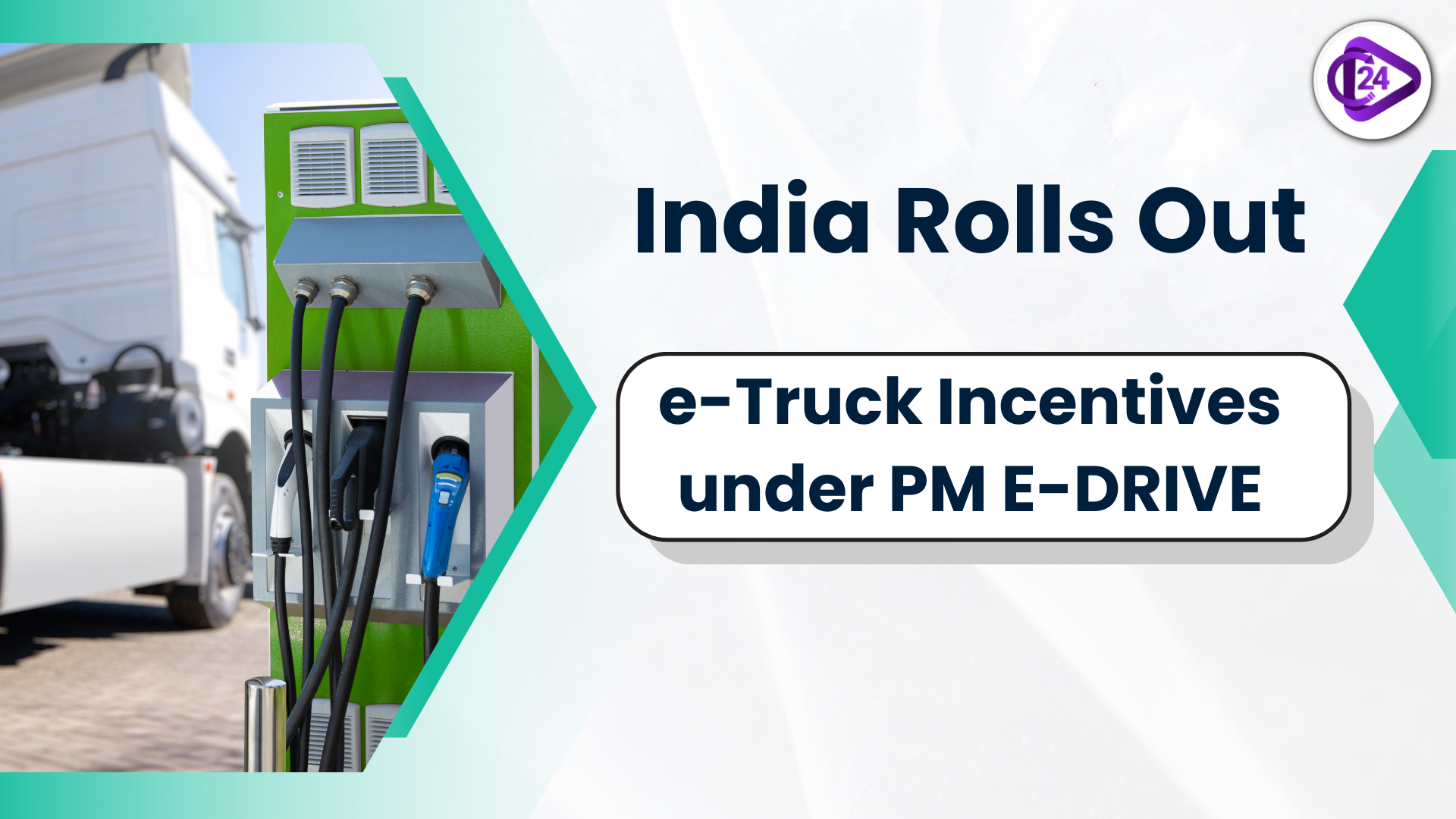
India Launches First-Ever e-Truck Incentive Scheme Under PM E-DRIVE Initiative

The e-Truck Incentive Scheme is part of the PM Electric Drive Revolution in Innovative Vehicle Enhancement (PM E-DRIVE) introduction initiated by India. Through the scheme, the government hopes to fast-track the uptake of electric trucks (e-truck) in the country, which results in cleaner transport systems, lower logistics prices, and helps the electric vehicle (EV) manufacturing industry.

Context

  • India has initiated the e-Truck Incentive Scheme under the PM Electric Drive Revolution in Innovative Vehicle Enhancement (PM E-DRIVE) initiative.

Key Details

  • Objectives of scheme

    • Increase the use of e-trucks, support native production, cut logistics expenses and decrease the carbon footprint of the transport industry.

  • Target Audience:

    • The scheme targets the N2 e-trucks (Gross Vehicle Weight of 3.5 to 12 tonnes), and the N3 e-trucks (GVW 12 to 55 tonnes).

  • Financial Incentives:

    • The program provides a one-time financial incentive of up to 9.6 lakh per unit of vehicle as a direct cut to promote fleet operators to use the electric trucks.

  • Environmental Impact:

    • Diesel vehicles play the greatest role in leading to 42 % of emissions which are related to transport despite the fact that 3 % of total Indian vehicles are diesel. This plan will reduce such an effect.

  • Around PM E-DRIVE Initiative:

    • E-DRIVE is PM led initiative under the Ministry of heavy Industries (MHI), which aims at the faster adoption of EVs by various industries, including the adoption of e-2Ws, e-3Ws, e-ambulances, e-trucks, e-buses, and establishing EV charging infrastructure.

Distinguishing Features of PM E-DRIVE

  • Wider Reach: It goes wider than the FAME-II program by including e-trucks, e-ambulances and charging infrastructure that will be provided publicly.

  • Scrapping Incentive: Contains the e-trucks scrap-related incentives and preference in deploying e-buses.

  • Testing and Development: Upgrading and restructuring of testing agencies shall be provided, so that EVs will be equipped with the latest technologies.

Conclusion

The eTruck incentive scheme will play a major role in ensuring the adoption of electric trucks in India to improve green energy initiatives in logistics industries. 

Frequently Asked Questions (FAQs)

The current affairs cover recent national and international events related to UPSC, SSC, Banking, Railways, and State PCS.

You need to read about the current affairs daily, and revise them every week and every month to keep them longer in your memory.

Yes, Class24 provides free downloadable Daily Current Affairs PDFs for easy revision.

Yes, you can practice MCQs and quizzes to boost your exam preparation.

Absolutely. The content is written in simple, easy-to-understand bilingual language suitable for beginners.

Go to class24.com and click on the current affairs section directly, where you find everything that you need.

ssc-toppers

Start Learning Today with Class24

Related current affairs

Class24 offers free video lectures for smart preparation, covering CGL, CPO, CHSL, MTS, and GD exams. Learn from expert faculty, revise concepts easily, practice with PYQs, and improve speed and accuracy through high-quality, exam-focused video lessons anytime, anywhere.

Get success in your hand. Start study anytime anywhere.

The journey becomes simple and enjoyable when you start taking interest in it. And through our app “Class24”, we will be your trusted partners in developing that interest.

Daily Quizzes
Mock Tests
Ongoing

No ongoing tests right now.