
Day: June 20, 2025

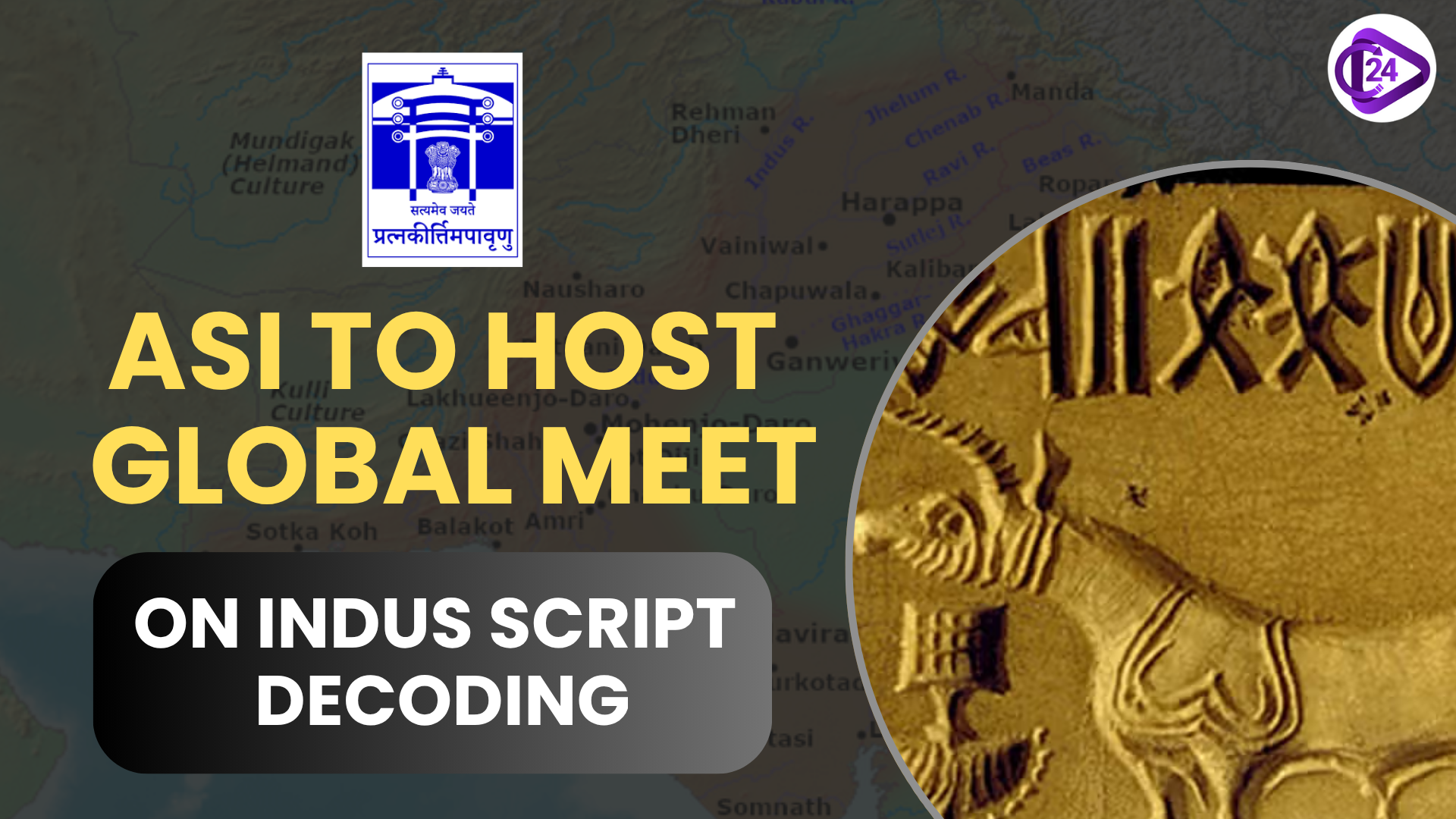
ASI to host International Conference for Decipherment of Indus Valley Script

A three-day international conference at Greater Noida on 20-22 August, 2025 is being organised by the Archaeological Survey of India (ASI) The part of the event will be concentrated on the decipherment of the Indus Valley script that is a topic of considerable interest to scholars of the Harappan civilisation. Topics to be covered during the conference will include the presentation of the current state of the research and future prospects in the comprehension of the script which has long remained undeciphered to read because of the lack of bilingual records.

Context

  • The Indus Valley script of one of the oldest civilizations of the world remains a mystery to the researchers. 

  • The international conclave of ASI is the goal of the members in this organisation to assemble specialists worldwide as a part of the world in order to exchange the intellectual resources and introduce new solutions to deciphering this ancient writing system as it may hold keys to the Indus valley Civilization.

Key Points

Event Details

  • Event Dates: 20 to 22 August 2025.

  • Location: Greater Noida, Pt. Deendayal Upadhyaya Institute of Archaeology.

  • Focus: Decipherment of the Indus Valley writing, presentations and thematic sessions around research on the current knowledge.

  • Format: The conference is expected to consist of both offline and online presentations with discussions performed after every presentation.

The Indus Valley Script

  • The script has more than 400 pictorial symbols but has not been deciphered, principally because of both the absence of bilingual texts and the brevity of the writings.

  • Some researchers suspect it of being logo-syllabic, i.e. a combination of logographic and syllabic scripts.

  • The deciphering of the script would provide important new information about the culture, the government and communication of the Harappan civilisation.

Research and Collaboration:

  • Experts researching on the Harappan culture and civilisation will have an opportunity to share knowledge and innovations in the conference and deliberate on issues on how to decipher the script.

  • Future research directions and cooperative possibilities will be discussed about introducing new breakthroughs in comprehension of the script.

  • International Cooperation: The international attention to solve the secrets of the Indus Valley Civilization has been noted since scholars of foreign countries have also been invited to participate in this global excavation affair.

  • Value to Indian Archaeology: Cracking the code might offer a major contribution in understanding ancient India and its position in the ancient world.

About Indus Valley Script

What is Indus valley Script?

  • Origin: It was applied by the Indus Valley Civilization (26001900 BCE) in what is now Pakistan and the north-western India.

  • Discovery: discovered during the 1920s by the team of Sir John Marshall.

  • Typography: Is mainly written right to left occasionally in Boustrophedon style (alternating line orientations).

  • Content: Brief texts, the mean length being 5 characters; the longest having 26 symbols.

  • Nature: Possibly logosyllabic Photogram, pictogram, and syllable, presumably used the same symbols to signify the sounds or concepts.

Speculations on the Language in the Script:

  • Dravidian Hypothesis: Evidence given by scholars such as Asko Parpola that connects it to Old Tamil.

  • Sanskrit Connection: There exists the ancient vedic connection on the script through Sanskrit known to be Vedic Sanskrit due to the points raised by some like S.R. Rao thought with some dissention.

  • Non Linguistic Signs: Critics claim that the script may not be a language, it may be political or religious in some way.

Challenges in decipherment

  • Absence of Bilingual Texts: As opposed to the Rosetta Stone, which was used to determine the Egyptian hieroglyphs, the Indus script does not have any bilingual texts, to assist it in translations.

  • Short Inscriptions: The majority of the inscriptions are short that constrained the treatment of grammar and syntax.

  • Language Unknown: The language registered behind the script remains a secret thus making it hard to decode.

  • Variations in symbols: The number of signs used ranges between 62 and more than 600 and their meanings remain unknown yet.

  • Restricted Archaeological Evidence: A limited amount of seals and artifacts to conduct study retards the study.

  • Technological Limitation: The technology is being implemented, but the existing models confront the problem of scanty information.

Importance of Unearthing Indus Script:

  • Unlocking the Harappan language: Learning to read the writing would enable us to determine what the linguistic origins of ancient India were, thus they may be related to Dravidian, Indo-Aryan, or other linguistic groups.

  • Understanding Harappan Culture: Decipherment may help to unlock some of the secrets regarding the rule and religious ideas and social systems of the civilization.

  • Historical Continuity: The linkage of the Harappan civilization to subsequent Indian cultures might offer knowledge on the cultural and Linguistic change.

  • Global Significance: The work has a contribution to the knowledge of the ancient writing systems, the process of human communication, the interaction of culture across boundaries with other ancient peoples such as Mesopotamians.

Conclusion

The forthcoming international conference on the Indus Valley script that is organized by the ASI, gives a chance to promote the research in one of the most interesting spheres of ancient history. The event can contribute to new knowledge and methods of unraveling the undeciphered script and can perhaps provide a greater insight into the Harappan civilization with collective expertise of the global research community.

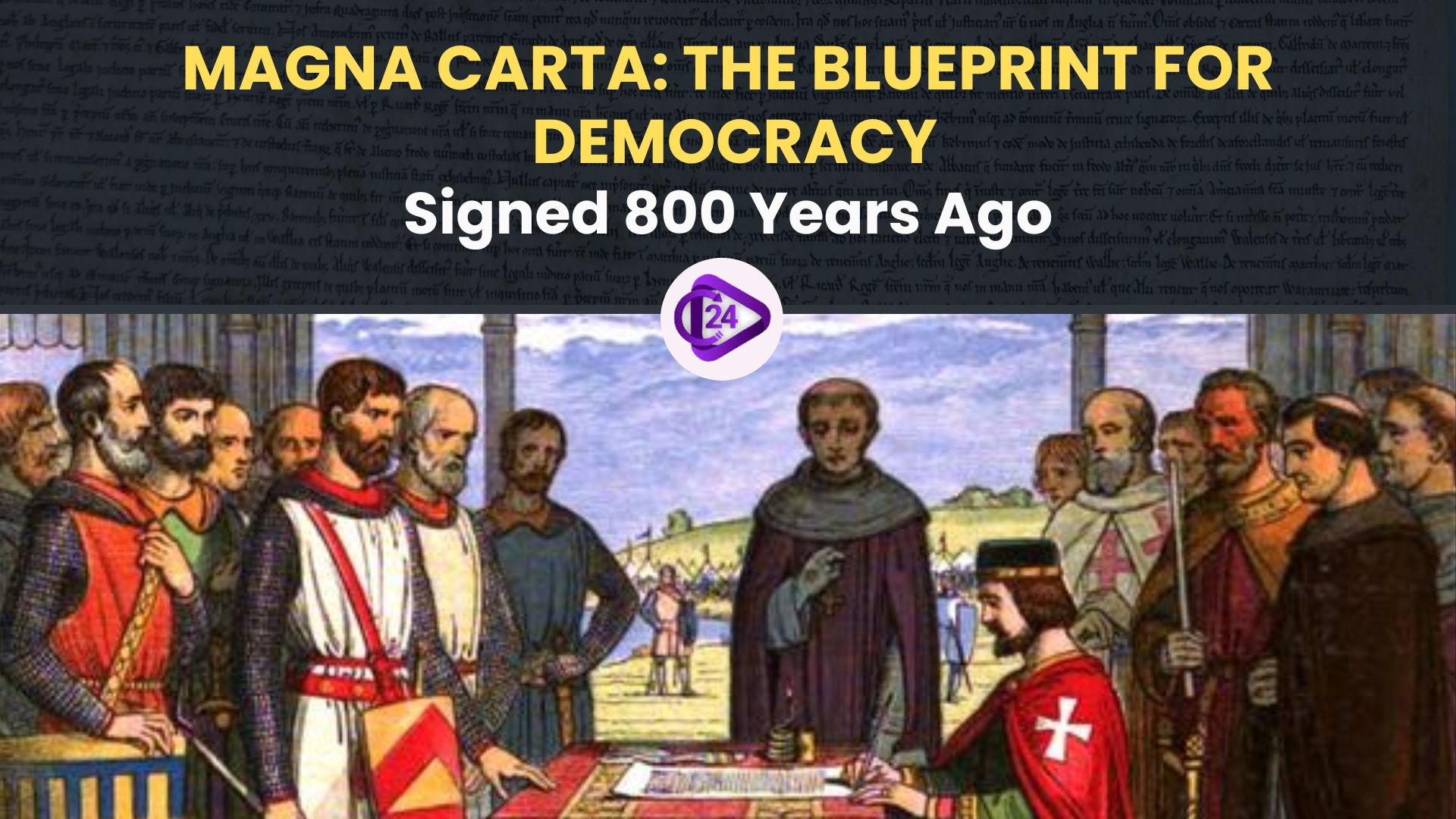
Magna Carta: The Blueprint for Democracy, Signed 800 Years Ago

On June 15, 1215 the Magna Carta was signed, which influenced the history of governance and rule of law greatly. It was originally abolished in months, but it's ideas became a core of modern democratic ideas. Some of the major concepts that were presented by the charter were the rule of law and restraints on the executive power, which informed constitutional construction in other parts of the world, including the United States.

Context

  • Magna Carta was signed in case of military defeats which were met by the king of England John. 

  • Kings John accepted a number of principles which curtailed his powers under pressure by rebellious barons. 

  • Although the Magna Carta was handed out fairly soon, its symbolism was not without consequence as it guided constitutional systems later on.

Key Points

Historical Background:

  • The Signing Date: June 15, 1215, Runnymede Meadows, near London.

  • Signatories: English barons compelled King John to comply with limitations in his absolutism.

  • Short-term effect: The paper was overturned in three months, yet its precepts still sounded in subsequent legal and political events.

Key Clauses:

  • Clause 39: No free man shall be taken or imprisoned or exiled, or in any ways destroyed nor put to death, without he be brought to answer by lawful judgment of his peers or by the law of the land.

  • Clause 40: No person shall be denied justice or right or did whoever delay or sold it.

  • These provisions formed the basis of the current rule of law including habeas corpus and right to a fair trial.

Meaning

  • Legal: Magna Carta held the view that even the king is bound by law that conspired in the notion of absolutism.

  • Influence on Democracy: It did not constitute a democratic document, but it preconditioned democratic ideas because it restricted royal rights and asserted the individual rights.

  • International Impact Magna Carta had an impact on subsequent constitutional movements including the U.S., which was influenced by it in the Bill of Rights and the Constitution.

Objections and Faults:

  • Certain Applicability: First, the Magna Carta was originally addressed to the higher and the sole representatives of the society were the free men who were free even before 1215; it was not related to women and the lower classes.

  • Not a Democratic Document: Though it brought in relevant legal principles, it was not written in a way that could democratize the political system.

  • Historical Context: The redistribution of the balance of power between the king and the barons was in the core of the document, but not the building of the wider rights of the common people.

Additional Information:

  • Rediscovery: One copy of the Magna Carta of 1297 auctioned in 2007 in the USA for 21.3 million 1297, demonstrating its permanent historic and image values.

  • Nowadays Applicability: The rules elaborated on in the Magna Carta, especially those that are in clauses 39 and 40, still to some extent confound the laws practiced in countries all over the world including the UK presently.

Magna Carta of the Indian Constitution: Part III (Fundamental Rights)

  • Articles 12 to 35 of the Indian Constitution which form Part III of the Indian Constitution are known to be the Magna Carta of India. 

  • It ensures Fundamental Rights that are justiciable, which gives protection of citizens against actions taken by the state arbitrarily. These fundamental rights are in the centre of Indian democracy which is influenced by international rights documents such as the Bill of Rights in the United States, and whose upholding makes the Indian citizen rights legally binding.

The constitution provides six categories of fundamental rights

  • Right to Equality (Articles 14-18):

    • Makes discrimination illegal, prohibits discrimination and ensures that there are equal employment opportunities within the public sphere.

  • Right to Freedom (Articles 19-22):

    • Free of speeches, movements, assembly, profession which guards against arbitrary arrests.

  • Right Against Exploitation (Articles 23-24):

    • Prohibits human labour, forced labour and child labour.

  • Right to Freedom of Religion (Articles 25-28):

    • Guarantees the freedom to practice and spread the religion and to conduct the religious matters.

  • Cultural and Educational Rights (Articles 29-30):

    • Protects the minority rights to conserve the culture and manages learning institutions.

  • Right to Constitutional Remedies (Article 32):

    • Enables the citizens to turn to the Supreme Court to defend their basic rights

Conclusion

Even though initially dedicated to the political and legal balance between the monarchs and the barons, the legacy of the Magna Carta can be found in its symbolic function in the further development of the basis of modern law and democracy. Its ideologies, especially to the rule of law and restriction of arbitrary power, still influence the present worldwide structure of governance.

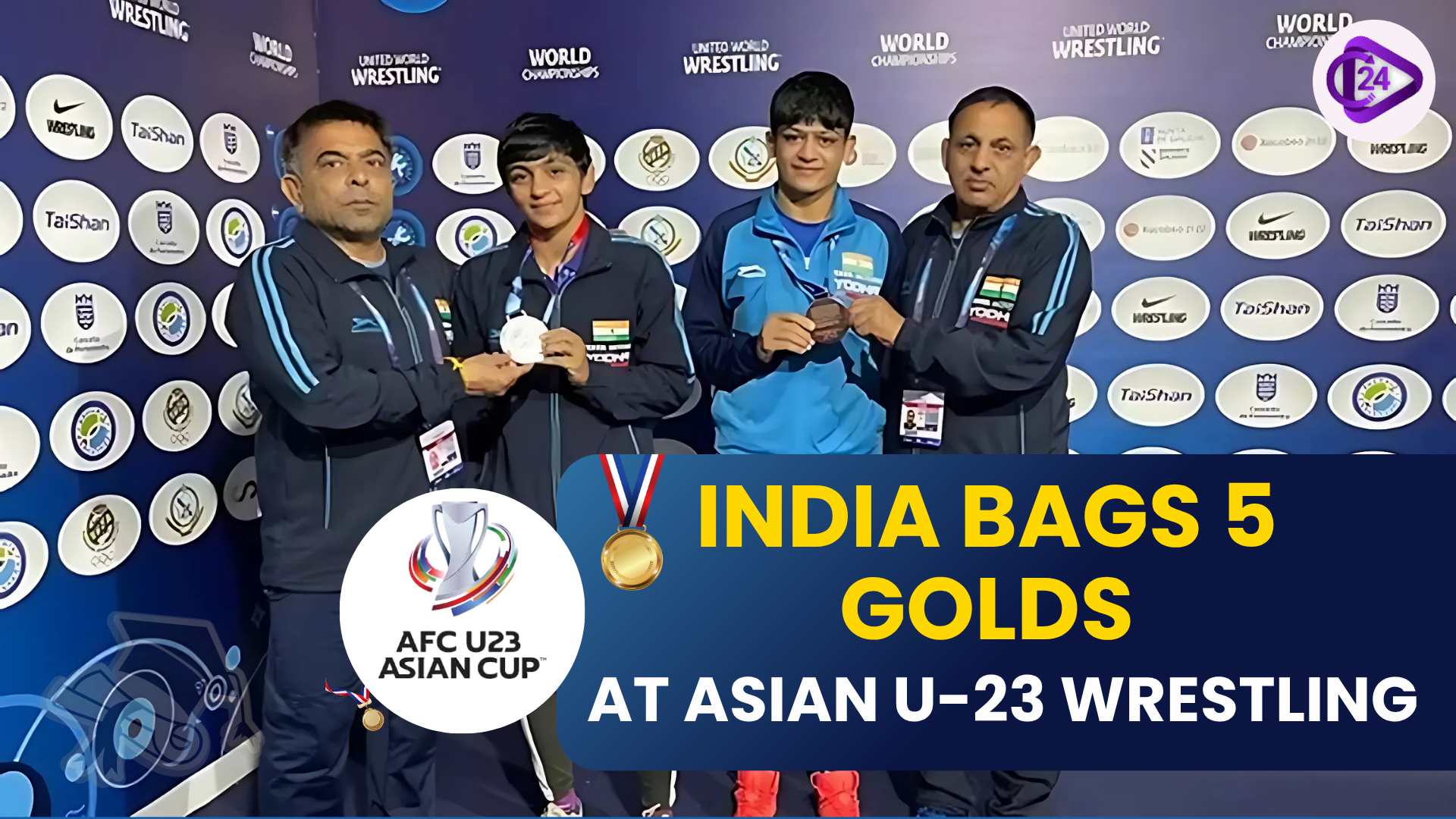
Indians wins five gold medals at the Asian U-23 wrestling competition

Indian wrestlers performed well in the Asian U-23 wrestling championship, which was hosted in Vung Tau winning five golds: four were women. Priyanshi Prajapat, Reena, Srishti and Priya won gold, Tanvi Gundesh Magdum won silver. Sumit won gold at Greco-Roman wrestling, and Ankit Gulia and Nitesh got bronze. The performances show the Indian aggressiveness in international wrestling.

Context

  • Asian U-23 Wrestling Championship was an opportunity given to young Indian wrestlers to display their talent and dexterity. 

  • India's outstanding performances and particularly in the women's events depicts the fact that the country is becoming dominant in wrestling at the regional track.

Key Points

Women's Competitions:

  • Priyanshi Prajapat (50kg): Take the gold by defeating Mongolia Munkhgerel Munkhbat 4-2.

  • Reena (55kg): edged out Kyrgyzstan Aruuke Kadyrbek Kyzy 13-4 in the final.

  • Srishti (68kg): Beat Chinese wrestler Yuqi Liu 10-0.

  • Winner: Priya (76kg): Three round-robins matches to win gold.

Men Greco Roman Wrestling:

  • Sumit (63kg): Won the gold medal beating all three matches in the round robin.

  • Ankit Gulia (72kg) and Nitesh (97kg): They both won their bronze medals in the respective weight categories.

About Asian U-23 wrestling championship

  • Continental wrestling tournament to those less than 23 years old.

  • Is composed of three styles, including Greco‑Roman, Women freestyle and Men freestyle. 

Details of 2025 Edition

  • Date: June 18 2025 June 21 2025

  • Location: VungTau, Vietnam 

India performance

Greco‑Roman:

  • Sumit took a dramatic 60 kg final (6 5) to become the first Indian male to win Greco 2 Roman gold at U 23 Asians since 2022. 

  • Day 1 Ankit Gulia (72 kg) and Nitesh Siwach (97 kg) won bronze

Notable Achievements:

  • India won altogether five gold medals all of which were attained in the women section.

  • In the women's category Tanvi Gundesh Magdum (59kg) claimed silver.

Conclusion

This is because India has registered impressive results in the Asian U-23 Wrestling Championship which is also a pointer to the fact that the country is becoming powerful in wrestling. The Indian wrestlers are also set to shine in the international arena with five gold and good performance in other categories so it is going to be established further in the wrestling world map.

Frequently Asked Questions (FAQs)

The current affairs cover recent national and international events related to UPSC, SSC, Banking, Railways, and State PCS.

You need to read about the current affairs daily, and revise them every week and every month to keep them longer in your memory.

Yes, Class24 provides free downloadable Daily Current Affairs PDFs for easy revision.

Yes, you can practice MCQs and quizzes to boost your exam preparation.

Absolutely. The content is written in simple, easy-to-understand bilingual language suitable for beginners.

Go to class24.com and click on the current affairs section directly, where you find everything that you need.

ssc-toppers

Start Learning Today with Class24

Related current affairs

Class24 offers free video lectures for smart preparation, covering CGL, CPO, CHSL, MTS, and GD exams. Learn from expert faculty, revise concepts easily, practice with PYQs, and improve speed and accuracy through high-quality, exam-focused video lessons anytime, anywhere.

Get success in your hand. Start study anytime anywhere.

The journey becomes simple and enjoyable when you start taking interest in it. And through our app “Class24”, we will be your trusted partners in developing that interest.

Daily Quizzes
Mock Tests
Ongoing

No ongoing tests right now.