


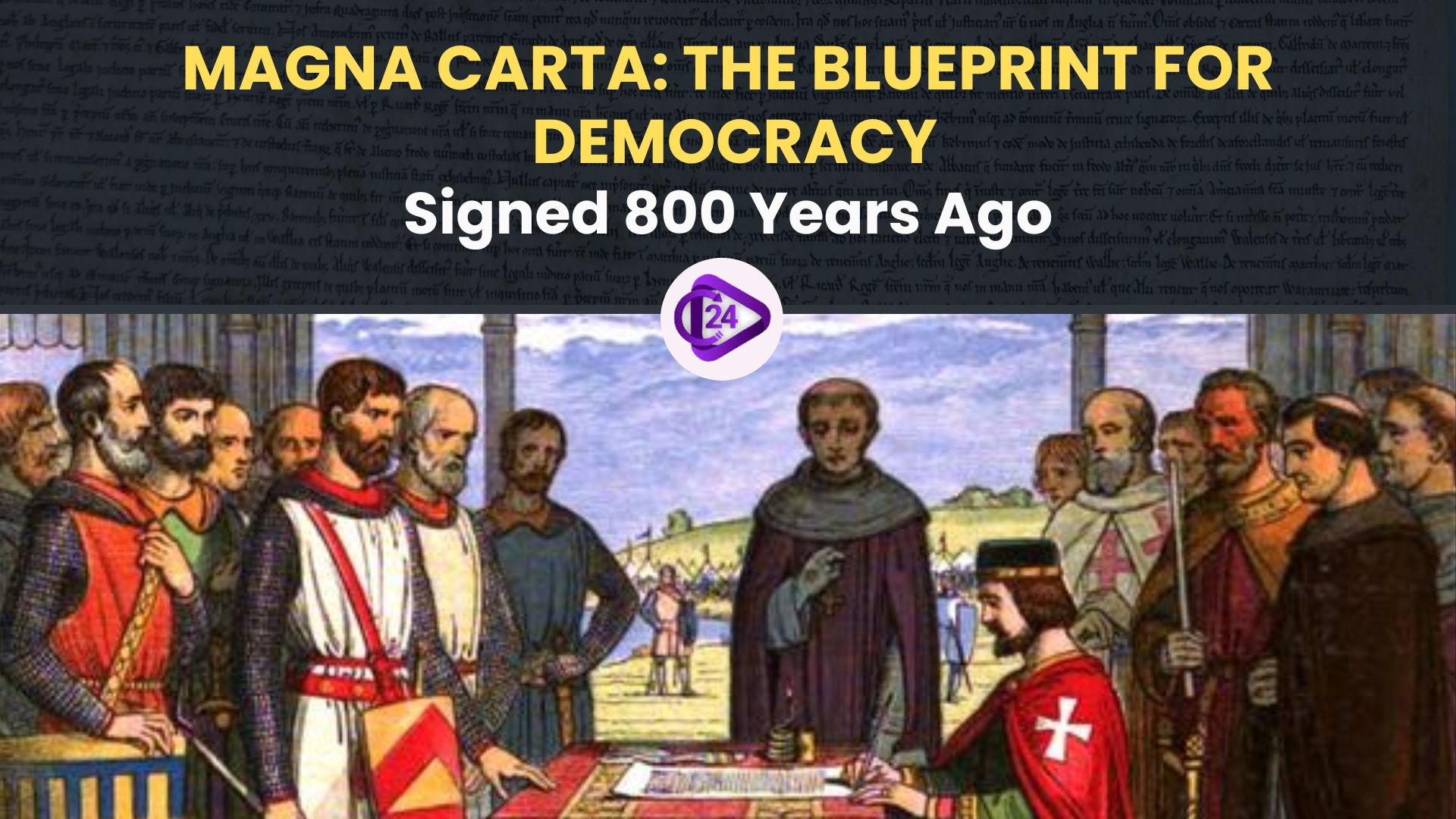
On June 15, 1215 the Magna Carta was signed, which influenced the history of governance and rule of law greatly. It was originally abolished in months, but it's ideas became a core of modern democratic ideas. Some of the major concepts that were presented by the charter were the rule of law and restraints on the executive power, which informed constitutional construction in other parts of the world, including the United States.
Context
-
Magna Carta was signed in case of military defeats which were met by the king of England John.
-
Kings John accepted a number of principles which curtailed his powers under pressure by rebellious barons.
-
Although the Magna Carta was handed out fairly soon, its symbolism was not without consequence as it guided constitutional systems later on.
Key Points
Historical Background:
-
The Signing Date: June 15, 1215, Runnymede Meadows, near London.
-
Signatories: English barons compelled King John to comply with limitations in his absolutism.
-
Short-term effect: The paper was overturned in three months, yet its precepts still sounded in subsequent legal and political events.
Key Clauses:
-
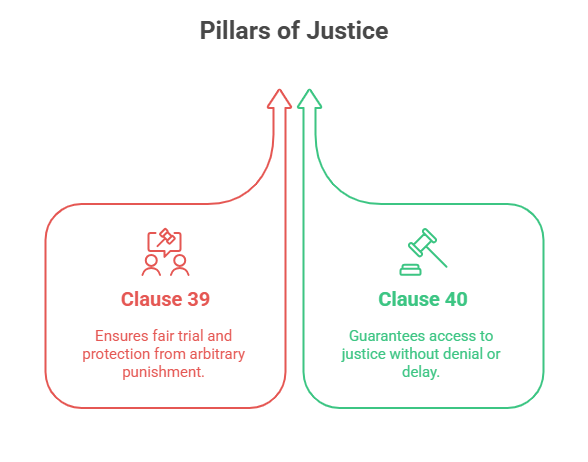
Clause 39: No free man shall be taken or imprisoned or exiled, or in any ways destroyed nor put to death, without he be brought to answer by lawful judgment of his peers or by the law of the land.
-
Clause 40: No person shall be denied justice or right or did whoever delay or sold it.
-
These provisions formed the basis of the current rule of law including habeas corpus and right to a fair trial.
Meaning
-
Legal: Magna Carta held the view that even the king is bound by law that conspired in the notion of absolutism.
-
Influence on Democracy: It did not constitute a democratic document, but it preconditioned democratic ideas because it restricted royal rights and asserted the individual rights.
-
International Impact Magna Carta had an impact on subsequent constitutional movements including the U.S., which was influenced by it in the Bill of Rights and the Constitution.
Objections and Faults:
-
Certain Applicability: First, the Magna Carta was originally addressed to the higher and the sole representatives of the society were the free men who were free even before 1215; it was not related to women and the lower classes.
-
Not a Democratic Document: Though it brought in relevant legal principles, it was not written in a way that could democratize the political system.
-
Historical Context: The redistribution of the balance of power between the king and the barons was in the core of the document, but not the building of the wider rights of the common people.
Additional Information:
-
Rediscovery: One copy of the Magna Carta of 1297 auctioned in 2007 in the USA for 21.3 million 1297, demonstrating its permanent historic and image values.
-
Nowadays Applicability: The rules elaborated on in the Magna Carta, especially those that are in clauses 39 and 40, still to some extent confound the laws practiced in countries all over the world including the UK presently.
Magna Carta of the Indian Constitution: Part III (Fundamental Rights)
-
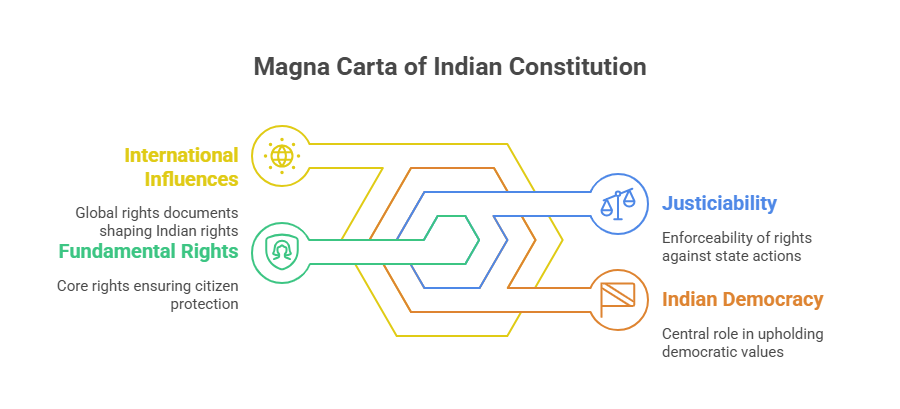
Articles 12 to 35 of the Indian Constitution which form Part III of the Indian Constitution are known to be the Magna Carta of India.
-
It ensures Fundamental Rights that are justiciable, which gives protection of citizens against actions taken by the state arbitrarily. These fundamental rights are in the centre of Indian democracy which is influenced by international rights documents such as the Bill of Rights in the United States, and whose upholding makes the Indian citizen rights legally binding.
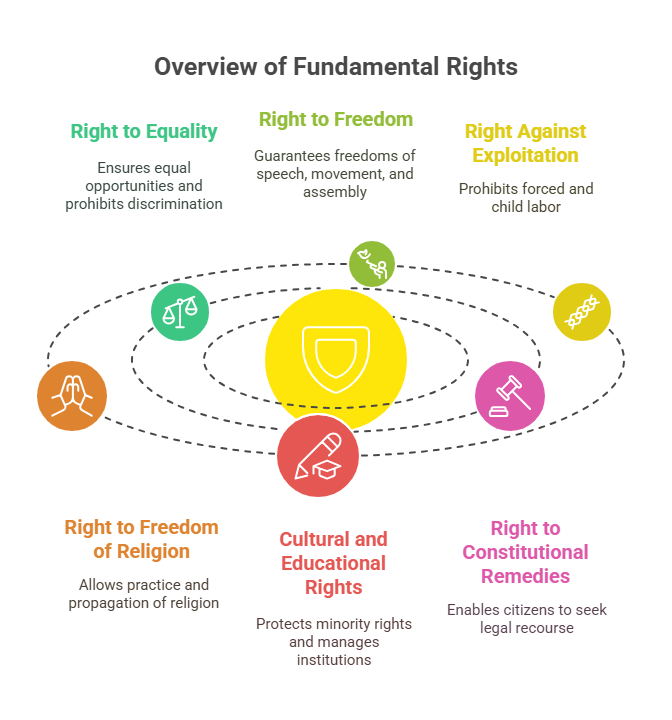
The constitution provides six categories of fundamental rights
-
Right to Equality (Articles 14-18):
-
Makes discrimination illegal, prohibits discrimination and ensures that there are equal employment opportunities within the public sphere.
-
-
Right to Freedom (Articles 19-22):
-
Free of speeches, movements, assembly, profession which guards against arbitrary arrests.
-
-
Right Against Exploitation (Articles 23-24):
-
Prohibits human labour, forced labour and child labour.
-
-
Right to Freedom of Religion (Articles 25-28):
-
Guarantees the freedom to practice and spread the religion and to conduct the religious matters.
-
-
Cultural and Educational Rights (Articles 29-30):
-
Protects the minority rights to conserve the culture and manages learning institutions.
-
-
Right to Constitutional Remedies (Article 32):
-
Enables the citizens to turn to the Supreme Court to defend their basic rights
-
Conclusion
Even though initially dedicated to the political and legal balance between the monarchs and the barons, the legacy of the Magna Carta can be found in its symbolic function in the further development of the basis of modern law and democracy. Its ideologies, especially to the rule of law and restriction of arbitrary power, still influence the present worldwide structure of governance.