Day: March 24, 2025

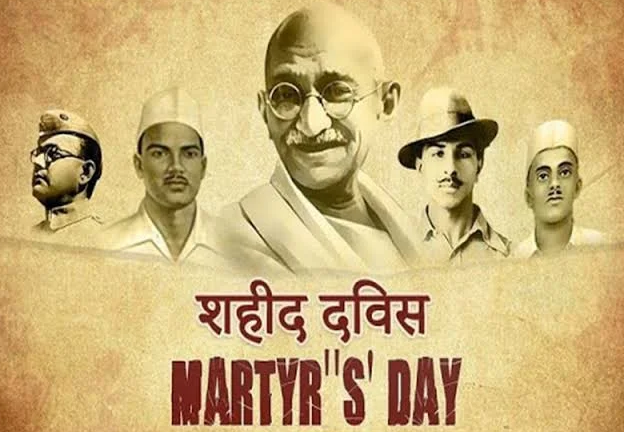
Shaheed Diwas 2025: Honoring Bhagat Singh, Rajguru & Sukhdev’s Sacrifice

Every year on March 23 India honors three young martyrs Bhagat Singh and Shivaram Rajguru and Sukhdev Thapar during Shaheed Diwas by remembering their execution by British colonial forces in 1931. Their eternal sacrifice currently arouses successive generations to follow Indian patriotic values and humanitarian morals within contemporary Indian society. During this special day tributes accompany nationwide educational activities and public demonstrations through streets and other public spaces.

What is Shaheed Diwas?

  • The tradition of Shaheed Diwas as Martyrs' Day recognizes the brave revolutionary heroes of India.

  • On March 23, 1931 Bhagat Singh, Rajguru, and Sukhdev were killed by British authorities through execution because of their activities against British domination.

  • India's freedom movement received its decisive boost from their heroic fight which sparked mass nationalist sentiments throughout the nation.

Historical Significance of Shaheed Diwas

  • Bhagat Singh Rajguru and Sukhdev died by hanging at Lahore Central Jail on March 23rd, 1931 because of their actions against Lala Lajpat Rai.

  • They received capital punishment after taking down the British police officer J.P. Saunders.

  • The scheduled killing happened before the day protests started along with petitioned requests for clemency from all across the nation.

  • Through their martyrdom the cause of national liberation gained increased momentum as it motivated multitudes to engage in battle against foreign control.

Revolutionary Thoughts of Bhagat Singh

  • Socialist and Marxist teachings strongly influenced the political thinking of Bhagat Singh.

  • People took up his well-known battle cry "Inquilab Zindabad" which transformed into a freedom movement slogan.

  • Through his beliefs he supported revolutionary combat along with intellectual development to liberate India from British colonial rule and social suppression.

  • His work through speeches and literary productions drives present-day advocacy for democratic rights and justice as well as societal equality.

How is Shaheed Diwas Observed?

  • Citizens together with their leaders visit both Shaheed Smarak and other memorial places to place floral tributes.

  • Educational institutions run multiple programs consisting of dialogues and debates and essay competitions dedicated to celebrating the heritage of Bhagat Singh together with his fellow revolutionaries.

  • The entire nation of India witnesses public gatherings that combine candle marches with patriotic functions.

  • The silent tributes occur at three important sites including Hussainiwala (Punjab), Khatkar Kalan (Punjab) and Delhi’s Shaheed Smarak.

  • Two popular hashtags namely #ShaheedDiwas and #BhagatSinghLivesOn serve to popularize messages about this occasion through social media platforms.

Shaheed Diwas 2025: Expected Events

  • Schools will establish yearly events designed to teach Indian revolutionary history to their students.

  • The tradition of cultural homage includes theatrical revivals that depict Bhagat Singh's life as well as Rajguru's life and Sukhdev's life.

  • TV channels together with digital platforms will play their stories to the public.

  • The public will conduct rallies and marches across cities to commemorate their heroes.

Impact of Shaheed Diwas on Modern India

  • Bhagat Singh along with Rajguru and Sukhdev have left an enduring legacy on India through their enduring ideas.

  • Through their message about justice and freedom and equality these revolutionaries keep providing material for modern discussions of both governance and civil rights.

  • The ultimate sacrifice made by these heroes teaches us to protect democracy and it compels us to oppose corruption while pursuing social justice in modern India.

Conclusion

India observes Shaheed Diwas through this somber occasion which honors the revolutionary youth who dedicated their lives to gain independence for India. Indian future generations find inspiration through the absolute dedication of these martyrs to fairness and equality. Every Indian must actively support the principles Bhagat Singh along with Rajguru and Sukhdev gave their lives to protect because this national day emphasizes this duty.

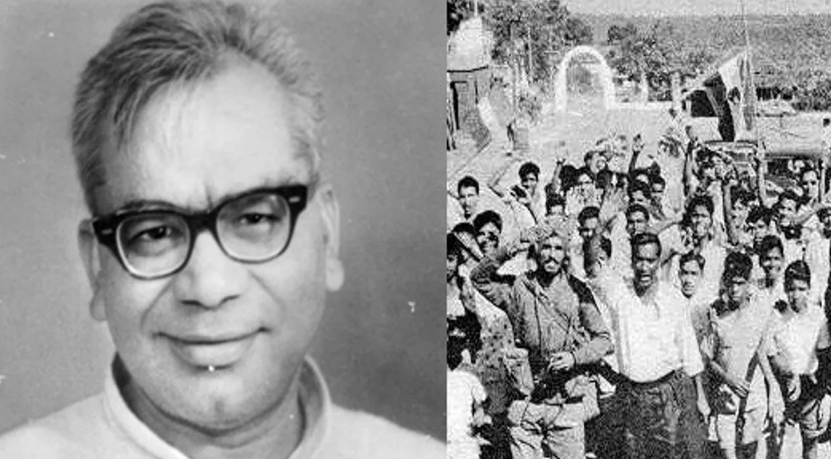
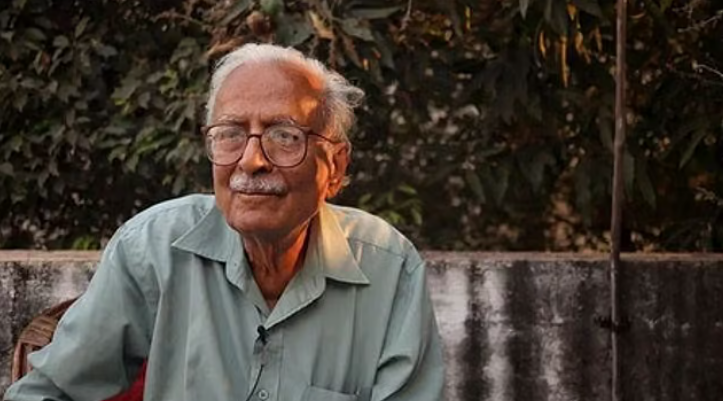
Remembering Ram Manohar Lohia on His Birth Anniversary

The distinguished Indian freedom fighter Dr. Ram Manohar Lohia established himself as a socialist thinker and political leader who supported both the independence movement and national politics after independence. Lohia used his life advocating social justice alongside economic equality and political transparency while his political ideas remain influential in modern Indian politics. Prime Minister Narendra Modi along with other leaders honored Dr. Ram Manohar Lohia on his birth anniversary for successfully empowering the disadvantaged section and developing India as a stronger nation.

Early Life and Education

  • The date of his birth fell on March 23rd, 1910 in Akbarpur within Ambedkar Nagar district of Uttar Pradesh.

  • He became an orphan when his mother passed away when he was just two years old then he lived with his father.

  • He graduated from Vidya Sagar College at Calcutta University during 1929.

  • He earned his Doctorate of Philosophy in Economics from Frederick William University located in Berlin Germany.

  • The paper investigated Indian salt taxation following the teachings of Mahatma Gandhi.

Role in the Indian Freedom Movement

  • Through his membership of the Congress Socialist Party (CSP) he started serving as editor of Congress Socialist publication.

  • In 1936 Jagjivan Ram officially took the position of Secretary to the All India Congress Committee (AICC).

  • During 1940 he received imprisonment for two years because of dissenting against war.

  • He maintained an essential position within the hidden organization of the Quit India Movement from 1942.

  • The police captured him in 1944 then put him through torture in Lahore Fort until his release happened in 1946.

  • Sapta Kranti (Seven Revolutions) served as his proposal for achieving social transformation.

Post-Independence Political Career

  • After merging the Socialist Party with Praja Socialist Party (PSP) he took leadership in 1952.

  • After splitting with the Socialist Party in 1956 he established his own political party called Socialist Party (Lohia).

  • Nehru defeated Lohia when he ran against him in the 1962 election for Phulpur constituency.

  • His political victory at the 1963 Farrukhabad by-election enabled him to become an MP.

  • A political partnership between the Socialist Party and Bharatiya Jan Sangh resulted in the establishment of the first government outside the Congress in Uttar Pradesh during 1967.

  • He won a parliamentary seat in Kannauj during 1967 before his death occurred on October 12 of that year.

Key Political Ideologies and Contributions

  • Lohia pushed for an economically equal society which included caste-based reservation policies and female empowerment rights.

  • Dr. Lohia actively opposed inheritances of political power combined with elitism in public leadership.

  • He advocated economic decisions and self-governance programs that operated from the bottom up.

  • He brought forward the slogan which said "Roti, Kapda, aur Makaan" representing "Food, Clothing, and Shelter" for every person to have.

Conclusion

The ideas of Dr. Lohia live on as they influence both socialist political approaches and the regional movement in India. His initiatives for social equity combined with economic improvement and political restructuring continue to shape India in modern times. Today scholars use his speeches together with his writings to study his perspectives on democracy, economy and governance.

Where Viksit Bharat Meets Green Growth

India needs to harmonize its plans for Viksit Bharat (Developed India) achievement by 2047 with its national commitment to reach net-zero emissions by 2070. The process of building energy infrastructure which supports rapid economic growth combined with sustainable green transition remains a crucial task that is challenging to execute. The development of sustainable progress needs green growth integration with economic development according to both recent policies and global cooperation initiatives.

Key Points

1. The Dual Challenge: Economic Growth & Green Transition

  • India needs minimum 8% yearly GDP expansion to achieve its Viksit Bharat objective.

  • The country plans for near-total emission reduction by 2070 and needs extensive public policy adjustments to reach that goal.

  • The economy needs to achieve synchronization between heavy industrial development and renewable energy systems.

2. Green Growth as an Economic Driver

  • The current indifferent approach to climate risks threatens to cost India up to 10% of its GDP by 2050 and 2.8% already by 2030.

  • Labor productivity losses will reach $220 billion due to extreme heat conditions during the 2030 decade.

  • Decarbonisation failure will result in annual export losses of $150 billion throughout the year 2040.

  • The transition to green energy systems will result in creating 50 million jobs before 2070 while adding an economic value equivalent to $15 trillion to the economy.

  • Through green energy investments India can improve its position in global politics and strengthen its national power resources.

3. Prime Elements for Building a Sustainable Growth Strategy under Policy Requirements

2025 Union Budget Initiatives:

  • Expansion of nuclear energy capacity to 100 GW by 2047.

  • Investments in solar equipment manufacturing, grid-scale batteries, and critical mineral recycling.

Infrastructure Development:

  • The infrastructure development strategy aims at reinforcing renewable energy network systems and deploying carbon capture systems and climate adaptation responses.

  • The policy ensures distribution of sustainable energy resources to both the farming community which is 45% of the workforce and MSMEs generating thirty percent of the GDP.

Global Collaborations & Financing:

  • The company enters into collaborations with experts who serve as partners for project management and technology development and financing solutions.

  • A risk-management plan based on different scenarios needs to be established for economic transformations.

Conclusion

The achievement of a Viksit Bharat and green growth exists in a mutually dependent relationship. Indian prosperity depends on developing both economic growth and environmental sustainability through an approach which combines economic progress with inclusive responsibility for the environment. India will achieve its dual development and climate targets and become a global leader in the green economy by implementing policy reforms at the national level and technological innovations and international partnerships.

India Strengthens Ties with Suriname: $1 Million Machinery Support for Passion Fruit Industry

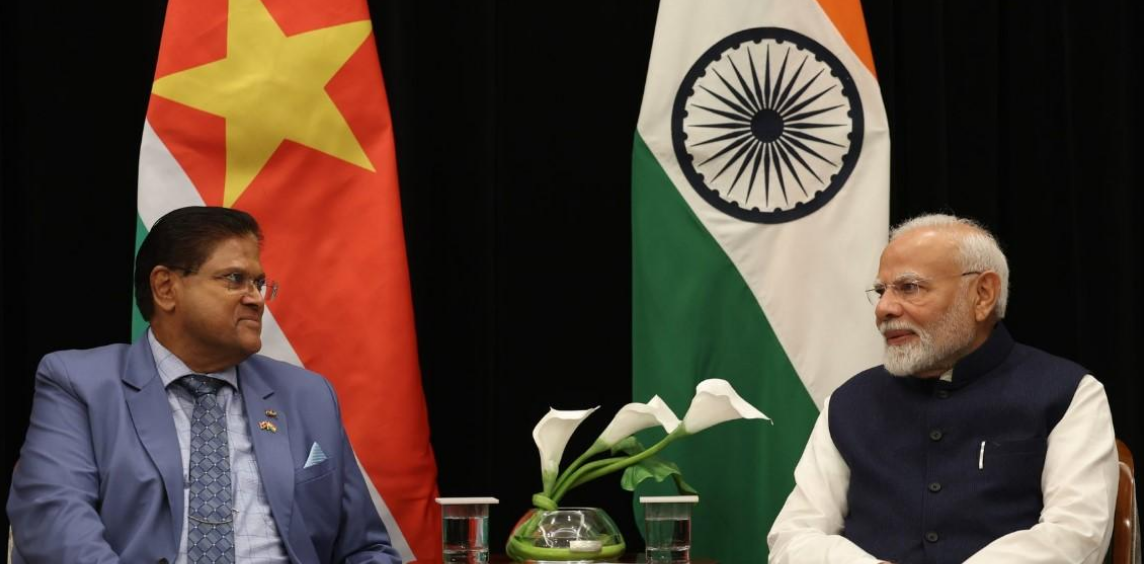
Through a $1 million machine donation to Suriname India seeks to advance development in its passion fruit industry. As a component of their development partnership India extends this support to Suriname to develop its agricultural industry with enhanced productivity and strengthened diplomatic ties between the two nations. The initiative proves India’s dedication to developing economic relations together with agricultural advancements throughout partner nations.

India–Suriname Development Partnership

Objective

  • Strengthening Suriname’s agricultural capacity, specifically the passion fruit industry, through technological and infrastructural support.

  • Advanced agricultural equipment with a worth of $1 million has been supplied by India to assist Suriname's farmers in maximizing their production efficiency.

  • The Strategic Partnership belongs to India's multinational program which aims to boost South-South collaboration and provide technical support to developing nations.

Significance of the Initiative

  • Through agricultural machinery Suriname can enhance its passion fruit farming output to increase economic revenue from exports.

  • The partnership enhances political as well as economic bonds between Suriname and India to form enduring bilateral relations.

  • Sustainable Development enhances agricultural practices through the use of contemporary farming approaches.

  • The Suriname farm sector benefits through technology transfer enabling Indian agricultural science to enter the country along with new collaborative prospects.

About Suriname

  • Location: Northern coast of South America.

  • Capital: Paramaribo.

  • Neighbouring Nations:

    • Borders French Guiana (east), Brazil (south), Guyana (west), and the Atlantic Ocean (north).

Geographical Features:

  • Mountains: Juliana Top (highest peak at 1,230 metres) in the Wilhelmina Mountains.

  • Major waterways of Suriname consist of four affluent rivers: Courantyne together with Coppename combined with Suriname and Maroni that empty into the Atlantic Ocean.

  • Plains and Plateaus:

    • New Coastal Plain serves as agricultural terrain from its swamp areas combined with polder lands.

    • Zanderij Formation: Rolling hills, savannas, and tropical rainforests.

    • Southern Highlands: Includes the Sipaliwini Savanna near the Brazilian border.

Conclusion

The $1 million machinery aid provided by India to Suriname's passion fruit business demonstrates its commitment to boost agricultural expansion along with economic progress across international partnerships. The combination of these initiatives together creates better conditions for Suriname’s agricultural activities and improves diplomatic ties between India and Suriname. India builds vital global development partnerships through technology investments and sustainable practice investments which promote national and international prosperity and cooperative relationships.

Günter Blöschl Wins 2025 Stockholm Water Prize for Pioneering Hydrological Research

Günter Blöschl received the 2025 Stockholm Water Prize after extensive recognition for his revolutionary work in flood risk analysis coupled with water resource management. His wide-ranging research work has both enhanced worldwide flood prediction mechanics and expanded scientific understanding of climate change effects concerning extreme hydrological events. The selection of Guenter Blöschl marks his essential position in developing worldwide strategies for climate resilience and water management policies.

Key Highlights

Award & Recognition

  • The Stockholm Water Prize board honored Professor Günter Blöschl in 2025 for establishing himself as a leader in flood hydrology research.

  • The Prize Committee disclosed the award winner through an announcement made on March 20 2025.

  • Through his research Professor Günter Blöschl made significant worldwide progress in the fields of flood risk analysis as well as climate change adaptation and water resource management.

Scientific Contributions

  • The construction of an all-encompassing global flood risk database became an essential database for creating international disaster preparedness strategies.

  • The research shows that climate change directly correlates with enhanced flood occurrence as current floods surpass those observed historically.

  • The enhanced hydrological modeling system helps governments together with community groups prepare for intense weather occurrences.

Academic & Professional Background

  • At Vienna University of Technology he leads the Institute of Hydraulic Engineering and Water Resources Management as its professor.

  • The Doctoral Programme of Water Resources Systems was established by him over 15 years ago to educate future hydrologists.

  • Holds a part-time professorship at the University of Bologna.

  • Through research initiatives across the USA, Canada and Australia he expanded global knowledge about hydrological problems in different areas.

Recognition & Ceremony

  • The Stockholm Water Prize stands as the top award in water research because the Stockholm Water Foundation together with the Royal Swedish Academy of Sciences organize it.

  • King Carl XVI Gustaf of Sweden as prize patron will present the award at the World Water Week gatherings in Stockholm during August 2025.

Collaborations & Influence

  • Laureates Taikan Oki and Andrea Rinaldo along with Delgado collaborated to develop hydrological research.

  • The research conducted by Blöschl enables international agencies and climate scientists and water resource policymakers to utilize his findings in their work across the world.

Conclusion

Through his research activities Günter Blöschl reshaped the knowledge base regarding flood hazards and adapted to climate changes and directed water resource protection processes. Through his research he added valuable information to science and simultaneously created useful methods for disaster readiness. Through the 2025 Stockholm Water Prize organization he received acknowledgement for his life-changing water science impact on worldwide hydrology practice and research methods in water protection. The rising frequency of water-related disasters because of climate change will benefit from the leadership of Blöschl as he guides policy development and prime global responses to hydrological extremes.

Tamil Nadu Allocates ₹1,087 Crore for Village Panchayat Development

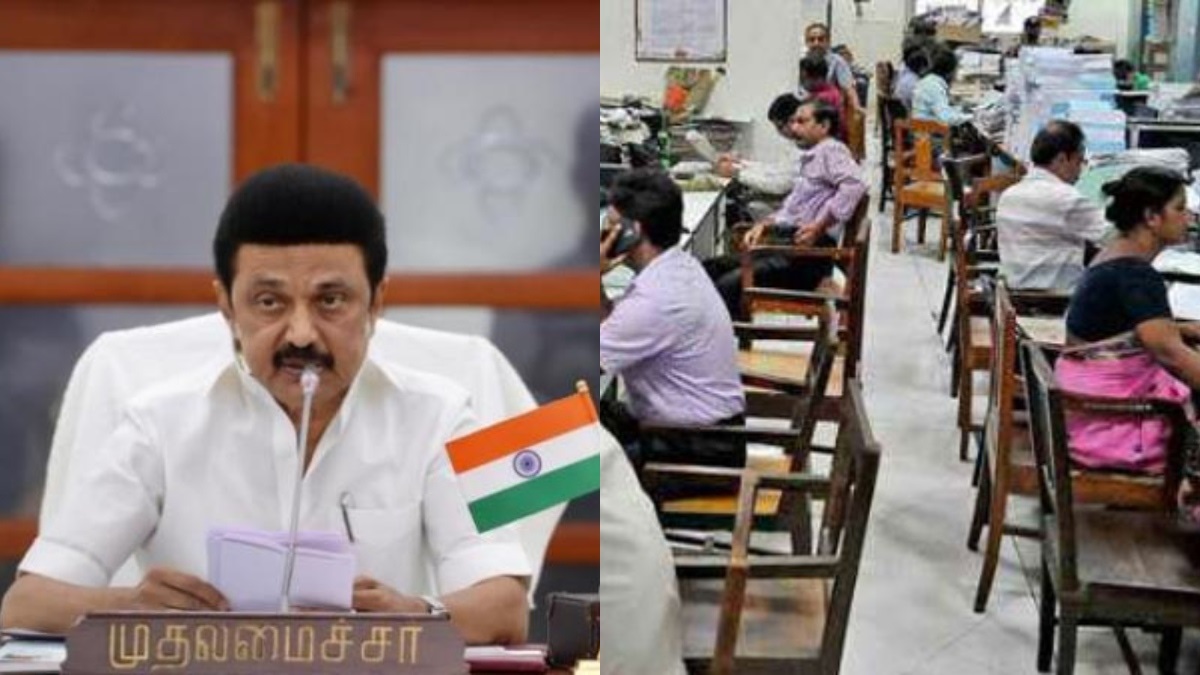
The Anaithu Grama Anna Marumalarchi Thittam – II received a Tamil Nadu government budget of ₹1,087 crore to build rural area basic infrastructure throughout fiscal year 2025-26. Through the leadership of the Rural Development and Panchayat Raj Department the government advances village panchayats through this phased structure. The primary goal of this program involves building vital infrastructure facilities while improving standard living conditions within village panchayats.

Programme Overview

  • The Anaithu Grama Anna Marumalarchi Thittam appeared in 2006 as its first scheme to advance complete rural development.

  • The primary goal of this program involves building vital infrastructure facilities while improving standard living conditions within village panchayats.

  • The scheme plans to execute the development across 2,329 village panchayats in the year 2025-26.

  • The Block-level committees together with Special Grama Sabha approval will carry out approval and execution functions for development programs.

Key Development Areas

  • Infrastructure Enhancement:

    • Rejuvenation of ponds

    • Upgrading streets and lanes

    • Installation of streetlights

  • Economic & Social Development:

    • Provision of livelihood opportunities

    • Development of marketing facilities

  • Social Equity:

    • A minimum of thirty percent funds from the allocation will support SC/ST habitation areas.


Significance & Impact

  • The program establishes fundamental progress to achieve rural inclusivity in Tamil Nadu. 

  • Through basic service improvements and livelihood programs the program strives to create sustainable development at village panchayats as it eliminates the urban-rural difference.

Conclusion

The Anaithu Grama Anna Marumalarchi Thittam – II underscores Tamil Nadu’s commitment to holistic rural development. The government directs its efforts toward building infrastructure while developing economic activities and social programs in order to enhance living conditions which will benefit rural areas for a better tomorrow.

Improving TB Treatment Success Rates in India: A Path to Eradication

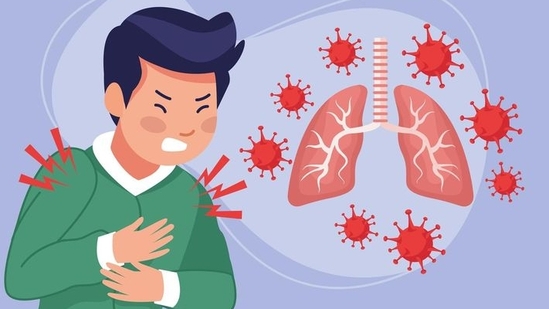
The success rates for tuberculosis treatment in India show a gradual increase as the nation advances its battle against the disease. The incidence of TB decreased by 16% from 2015 through 2022 while the mortality rate for the disease dropped by 18%. Treatment of drug-resistant TB remains the primary challenge among other ongoing improvements in TB healthcare. The states of Himachal Pradesh together with Odisha and Gujarat demonstrate excellent performance in their battle against tuberculosis. The existence of high catastrophic health expenditure levels throughout the population requires immediate implementation of fundamental people-oriented healthcare systems.

Key Insights

  • TB incidence rate in India experienced a notable decline which resulted in dropping below 200 cases per lakh population after 2015.

  • The TB incidence rate dropped to under 200 per lakh Indian population during 2022 after exceeding 237 per lakh in 2015.

  • TB mortality rates decreased by 18% during 2015 to 2022 to achieve 23 deaths per lakh population.

Treatment Success Rates for Drug-Resistant TB

  • The success rate of treating severely drug-resistant TB amounted to only 45% in 2021.

  • A total of 74% patients with Multi-Drug Resistant (MDR) and Rifampicin-Resistant TB (RR-TB) achieved treatment success.

  • The treatment rate for Pre-Extensively Drug-Resistant TB (Pre-XDR-TB) achieved a success of 68% during 2021.

  • The success rate of tuberculosis treatment has generally improved throughout the years.

State-wise Performance in TB Control

  • Among the major states Himachal Pradesh together with Odisha and Gujarat demonstrate exceptional performance in TB control activities.

  • Punjab and Karnataka along with Bihar currently demonstrate the poorest performance in TB management control.

Healthcare Spending and Financial Challenges

  • A tenth of India’s population spends too much on healthcare which makes the country rank behind only two other countries among 14 lower-middle-income nations with severe TB problems.

  • Although health coverage extends to more than 60% of the population they still face rising healthcare out-of-pocket expenses.

Critical Requirements for TB Eradication

  • Strengthening the Public Health System

    • Dedicated human resources and uninterrupted supply of drugs.

    • Service delivery must move away from standardized care models to deliver patient-oriented care.

  • Empowering Communities and Healthcare Workers

    • Patients who have recovered from TB need to actively fight against discrimination and they must take part in advocacy efforts.

    • Compensated health personnel trained in basic tuberculosis should deliver health treatment education and psychological assistance to patients.

Enhancing Diagnostic and Preventive Measures

  • Development and deployment of newer point-of-care testing tools.

  • Improved airborne infection control and nutritional status.

  • Universal access to an effective TB vaccine.

  • Improving Private Healthcare Participation

  • Private medical facilities need to improve their patient treatment quality standards.

  • Integration of TB treatment within social and private insurance schemes.

Way Forward: A Multi-Sectoral Approach

  • The public needs to receive constant media attention about TB throughout all mainstream platforms.

  • Leadership dedication toward TB elimination needs to be a core priority for government representatives elected to power.

  • Business organizations should put TB control initiatives forward as recipients of CSR funding.

  • Social business models for TB care need to be created through Public-Private Partnerships in order to remain sustainable.

  • The National Strategic Plan for TB control requires complete execution as it should not focus on certain areas over others.

Conclusion

India achieved substantial progress by lowering the number of new tuberculosis cases and improving the success rate of treatment outcomes in the country. For tuberculosis elimination the government must unite with public communities through direct business engagement along with media campaigns to successfully reach the targeting goal. Every stakeholder needs to collaborate for TB patients to receive timely diagnosis and effective treatment with long-term support. India needs an all-encompassing approach that considers everyone to succeed in creating its vision of a society without tuberculosis.

India’s GDP Doubles in a Decade, Set to Overtake Japan: IMF

The Indian economy underwent exceptional development through which GDP rose two-fold during the last ten years. The Gross Domestic Product of India expanded from USD 2.1 trillion in 2015 to USD 4.3 trillion in 2025 according to International Monetary Fund (IMF) reports indicating 105% growth. The economic growth outpaces both China and the United States as India surpassed major global economies during this period. The Indian economy currently occupies the fifth position worldwide and shows potential to surpass Japan in the upcoming years. The Indian economic expansion has gained international significance through successful structural reforms which led to increased worldwide influence.

Key Highlights

  • The Indian economy grew 105% during the period from 2015 to 2025 to reach USD 4.3 trillion surpassing all major economic players.

  • The world recognizes India as its fifth-largest economy after the United States with USD 30.3 trillion and China at USD 19.5 trillion and Germany at USD 4.9 trillion while Japan holds the fourth spot with USD 4.4 trillion GDP.

Comparison with Major Economies:

  • United States: 66% growth (USD 18.2 trillion in 2015 to USD 30.3 trillion in 2025).

  • China: 44% growth (USD 13.5 trillion in 2015 to USD 19.5 trillion in 2025).

  • United Kingdom: 28% growth.

  • France: 38% growth (USD 2.4 trillion to USD 3.3 trillion).

  • The economies of Russia together with Australia and Spain showed more than 50% growth in their GDP.

India’s Economic Trajectory:

  • India promises to become larger than Japan because Japan experienced little economic growth in the last ten years according to IMF statistics.

  • The country's rapid economic expansion places India at the top position among major global economies due to its structural reform initiatives and strong economic policies.

Key Drivers of India’s Economic Growth

  • Structural Reforms

    • The unified tax system came about due to Goods and Services Tax (GST) implementation.

    • Introduction of Insolvency and Bankruptcy Code (IBC) for financial stability.

    • India encourages global capital investment through relaxed norms allowing foreign direct investment.

  • Ease of Doing Business

    • The government works to optimize business rules through administrative deregulation efforts.

    • Promotion of digital governance and single-window clearances.

  • Infrastructure and Industrial Growth

    • Massive investments in roads, railways, and urban development.

    • Under the 'Make in India' program the Indian manufacturing sector received increased support.

  • Financial Inclusion and Digital Economy

    • Expansion of financial access through Jan Dhan Yojana.

    • Digital payment ecosystem growth via UPI (Unified Payments Interface).

Government’s Vision and Policy Measures

  • India should emphasize the initiative "Self-Reliant India" since it will fortify domestic industries.

  • The government aims to increase production-linked incentive (PLI) schemes as a means to develop exports and the manufacturing sector.

Conclusion

India has experienced such remarkable economic expansion throughout the last ten years that it demonstrates a major transformation in worldwide financial operations. The Indian economy surpassed major economies by expanding its GDP by 105% which established its position as a dominant force in worldwide markets. To sustain its rapid growth rate the country needs continued policy support for reforms alongside industrial growth together with financial inclusion practices. The continued rise of India’s economy signals promising prospects to surpass Japan making it an essential member of the worldwide economic framework.

One Billion Tonne: Strengthening India’s Energy Future

The Prime Minister declared the achievement of exceeding 1 billion tonnes of coal output in FY 2024–25 as India's moment of achievement for securing its energy independence while demonstrating national self-sufficiency. Such an accomplishment demonstrates India's advancement in creating energy independence while driving national economic progress while weakening dependency on international suppliers. Gevra and Kusmunda coal mines operated by South Eastern Coalfields Limited (SECL) under Coal India's subsidiary create a major industrial contribution in Chhattisgarh by ranking second and fourth on the worldwide list of the biggest coal mining facilities.

Key Highlights

India’s Coal Production Milestone

  • On March 20, 2025, India achieved its 1 BT target which happened eleven days earlier than the performance during the previous fiscal year.

  • The Indian energy sector depends significantly on coal as it produces 55% of national energy and 74% of electricity in the country.

  • Coal import levels dropped by 8.4% between April and December of 2024 which resulted in saving ₹42,315.7 crore equivalent to $5.43 billion from foreign exchange reserves.

  • The Ministry of Coal applied their strategic reforms to achieve this growth.

About Coal Production in India

Historical Background

  • The practice of commercial coal extraction started in India during 1774 when operations began at Raniganj Coalfields which sat beside the Damodar River.

  • Nationalisation of Coal:

    • Under the Coking Coal Mines Act of 1972 the Indian government took control of coking coal extraction sites.

    • Under the Coal Mines (Nationalisation) Act the Indian government took control of all non-coking coal mines during 1973.

Key Reforms/Initiatives in Coal Sector

  • The Coal Mines (Special Provisions) CMSP Act, 2015 gave private entities permission to operate commercially in the mining industry.

  • A new program launched its first coal mining auctions in the year 2020.

  • Mines and Minerals (Development and Regulation) Amendment Act, 2021:

    • New processes enhanced the visibility of mining license distribution procedures.

    • The licensing system now provides Combined Prospecting License-cum-Mining Lease (PL-cum-ML).

    • Removed end-use restrictions for captive miners.

  • National Coal Index (NCI): 

    • Tracks coal price fluctuations from different sales channels.

    • The government allows 100% FDI in coal mining to invite global expertise in the industry.

  • Amendment to New Coal Distribution Policy (NCDP), 2007: Allowed transparent sales from closed/abandoned mines.

Recent Initiatives to Boost Domestic Production

  • The Integrated Coal Logistic Policy and Plan, 2024 seeks to establish a cost-efficient resource for coal transport systems.

  • The government approved an 8,500 crore rupee scheme to promote coal and lignite gasification operations.

  • PM Gati Shakti – National Master Plan in the coal sector.

Major Coal Mines in India

  • Gevra along with Kusmunda which are operated by SECL under the Coal India subsidiary situated in Chhattisgarh have recently claimed positions as the 2nd and 4th largest coal mines across the globe.

  • The Korba district of Chhattisgarh hosts two mines that generate above 100 million metric tons of yearly coal output making up 10% of India's total coal production.

Persistent Issues/Challenges in Coal Sector

  • High Import Dependence:

    • The Indian energy market does not possess sufficient stocks of coal that match high Gross Calorific Value standards (GCV).

    • The main sources of imported coal come from Australia together with Russia and South Africa along with USA.

    • The domestic coking coal contains ash levels between 28-42% while imported coking coal possesses less than 10% ash content.

  • Dominance of Coal India Limited (CIL):

    • Coal India Limited generates more than 80% of all coal delivered in Indian markets.

    • Allegations of market dominance and supply of lower quality coal.

  • Advanced technology in the industry creates performance declines and spending increases along with safety threats.

  • The absence of multi-modal transport systems leads to expensive coal delivery costs throughout the logistics sector.

  • The practice of open-cast mining results in permanent destruction of the land.

  • The development of new mines requires relocation of current inhabitants in the affected areas.

Other Challenges:

  • Unpaid dues from power sector consumers.

  • Labour and industrial relations issues.

  • The area containing coal reserves has seriously suffered from unexpected rainfall occurring during the wrong season and rainfall that exceeded average levels.

Way Forward

  • Sustainable practices will be promoted through the Miyawaki plantation method to establish green areas adjacent to mining operations.

  • More private coal operations should be supported because it will decrease CIL's control position and advance mining technology development.

  • Import Substitution Strategies:

    • The coal linkage policy needs logical restructuring to lower the distance between production sites.

    • Early operationalization of captive/commercial coal blocks.

    • The government requires power plants to operate using coal obtained from local domestic sources.

    • The steel industry must develop its dependence on synthetic gas through improved coal gasification procedures.

About Coal

  • The organic sedimentary rock coal exhibits black and brownish-black coloration and consists primarily of carbon.

  • A sequence of natural processes begins when plant matter starts decomposition into what becomes peat which will eventually develop into coal.

Types of Coal in India:

  • Anthracite coal exists at the highest grade level in the region of Jammu & Kashmir.

  • The generating sector uses bituminous coal extensively since it exists across Jharkhand, Odisha, West Bengal, Chhattisgarh, and Madhya Pradesh and parts of Tamil Nadu.

  • Black subbituminous coal possesses lower lustrous appearance than both lignite and higher calorific value.

  • Lignite presents the lowest grade coal formation that can be located in Rajasthan and Tamil Nadu and Jammu & Kashmir regions.

Conclusion

Reach rates exceeding 1 billion tonnes of coal production demonstrate a major triumph for India by advancing its capacity to secure its energy needs. Success in coal production results from implemented reforms and private sector involvement alongside technological advancements. Policy makers need sustained emphasis to resolve pressing matters including environmental threats together with export dependence and delivery system problems. National energy security depends on achieving sustainable operations along with innovative methods to maximize efficiency during the coming years.

Vinod Kumar Shukla: First Hindi Writer from Chhattisgarh to Receive Jnanpith Award

The Jnanpith Award goes to Vinod Kumar Shukla an eminent Hindi writer and poet and novelist primarily for his outstanding influences in Hindi literature. At the age of 88 he has received recognition for his important work in Hindi literature through his distinctive method of simple sensitive writing along with experimental techniques. As the 12th writer in Hindi literature and the first from Chhattisgarh Vinod Kumar Shukla gained this renowned award. This recognition through the Jnanpith Award recognizes his entire life commitment to writing which showcases the complex range of human experiences in his creative works.

Key Points:

About the Jnanpith Award:

  • The Jnanpith Award began in 1961.

  • It was first given out in 1965 to Malayalam poet G. Sankara Kurup.

  • Praised as India's foremost literary distinction for authors demonstrating excellence in several Indian languages.

  • The Jnanpith Award gives ₹11 lakhs and also grants recipients a bronze Saraswati statue with a citation.

About Vinod Kumar Shukla:

Life & Career 

  • Born in 1937 in Rajnandgaon, Chhattisgarh

  • He received multiple honors from Sahitya Akademi together with other distinguished awards throughout his career. 

  • The first collection of poetry by Vinod Kumar Shukla began his literary career when he published Lagbhag Jai Hind in 1971.

  • He represents both his state Chhattisgarh and stands as the 12th recipient of this literary award among Hindi writers.

  • Through his art he represents the ordinary experiences and feelings which characterize common people.

  • Vinod Kumar Shukla became the inaugural writer from Chhattisgarh to achieve the Jnanpith Award.

  • His literary achievements include receiving prizes from both Sahitya Akademi and other distinguished literary institutions.

Notable Works:

  • "Deewar Mein Ek Khidki Rahti Thi" – Won the Sahitya Akademi Award in 1999.

  • "Naukar Ki Kameez" (1979) – Adapted into a film by Mani Kaul.

  • "Lagbhag Jai Hind" (1971) – His first poetry collection.

  • "Sab Kuch Hona Bacha Rahega" (1992) – A well-known poetry collection.

Conclusion:

The Jnanpith Award bestowed upon Vinod Kumar Shukla properly honors his enriching work in Hindi literature. Through his straightforward literary methods Shukla tells stories which reach deep into human feelings as he depicts societal complexities. Through becoming the inaugural Jnanpith Awardee of Chhattisgarh he has made both his state and regional literary voices essential in the national literary context. The invaluable work of this author inspires all new writers in India today.

Frequently Asked Questions (FAQs)

The current affairs cover recent national and international events related to UPSC, SSC, Banking, Railways, and State PCS.

You need to read about the current affairs daily, and revise them every week and every month to keep them longer in your memory.

Yes, Class24 provides free downloadable Daily Current Affairs PDFs for easy revision.

Yes, you can practice MCQs and quizzes to boost your exam preparation.

Absolutely. The content is written in simple, easy-to-understand bilingual language suitable for beginners.

Go to class24.com and click on the current affairs section directly, where you find everything that you need.

ssc-toppers

Start Learning Today with Class24

Related current affairs

Class24 offers free video lectures for smart preparation, covering CGL, CPO, CHSL, MTS, and GD exams. Learn from expert faculty, revise concepts easily, practice with PYQs, and improve speed and accuracy through high-quality, exam-focused video lessons anytime, anywhere.

Get success in your hand. Start study anytime anywhere.

The journey becomes simple and enjoyable when you start taking interest in it. And through our app “Class24”, we will be your trusted partners in developing that interest.

Daily Quizzes
Mock Tests
Ongoing

No ongoing tests right now.