
Day: March 18, 2025

ADB Launches Frontier Seed (Pacific) Program for Economic Growth

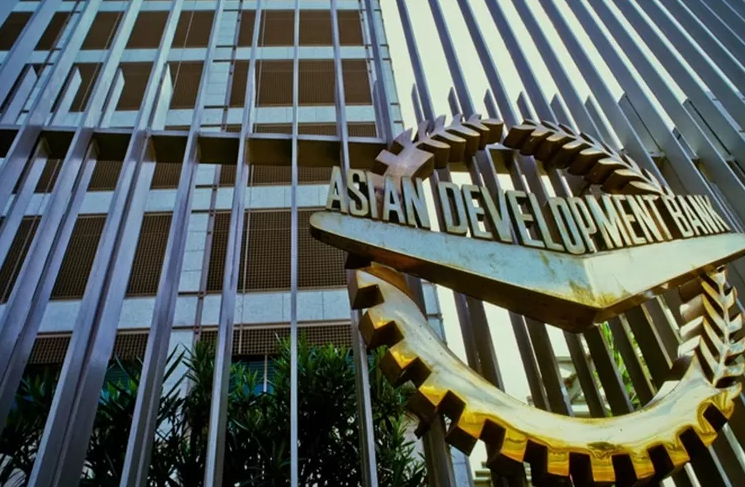
The Asian Development Bank (ADB) established Frontier Seed (Pacific) as a program to develop local businesses while enhancing capital markets alongside sustainable economic development in the Pacific region. Through its initiative the program seeks to strengthen economies through private sector development and ocean impact programs which build resilient and inclusive systems.

Objectives of the Frontier Seed (Pacific) Program

  • Local capital markets need development to bring in investments.

  • Private sector innovation receives support from the organization which enables new businesses to advance.

  • Economic development needs promotion of both sustainability and resilience.

  • The Pacific region needs to develop entrepreneurial programs that create new employment positions.

Initial Investments and Technical Assistance

  • The ADB program started its first phase by authorizing $200,000 of technical assistance funds to each of these two enterprises.

SeaPAC Pte Ltd (Fiji)

  • The business plan of SeaPAC Pte Ltd in Fiji seeks to develop the local prawn industry because it will create food security and economic sustainability benefits for the nation.

  • The program would lead to two notable effects that help develop local aquaculture practices along with new job opportunities.

Kahuto Pacific

  • The program works to improve aerial mapping capabilities because this addition will result in better coastal data availability.

  • The project makes essential contributions which help enhance both coastal management and disaster resilience.

ADB’s Role and Commitment

  • ADB actively provides risk capital investments for businesses in the Asia-Pacific region which enables start-ups to launch demonstrating their potential to attract new investors. 

  • Through this initiative stakeholders expect Pacific regional areas will develop innovative economic systems based on self-sustainability.

Support from the Fiji Government

  • Deputy Prime Minister Manoa Kamikamica supports the program because it guides Fijian development towards economic independence. 

  • The program adheres to Fiji’s overall strategy to promote both private sector expansion and employment opportunities in the country.

Funding and Key Partners

  • The Frontier Seed (Pacific) program receives its first $4 million in funding from multiple international donors.

  • Asian Development Bank (ADB) – $2 million

  • Ocean Resilience and Coastal Adaptation (ORCA) Trust Fund – $2 million

  • Additional support from:

    • Nordic Development Fund

    • United Kingdom Foreign, Commonwealth and Development Office (FCDO)

About the Asian Development Bank (ADB)

  • The organization started its operations in 1966 as a development institution for multilateral purposes.

  • The bank represents 69 member states spread across two regions and 49 of them belong to the Asia-Pacific continent.

  • The organization seeks development through sustainable infrastructure combined with financial innovation and strategic partnerships for regional growth.

Conclusion

The Frontier Seed (Pacific) program represents a major development by ADB to enhance Pacific economic stability through its support of local business creation as well as market growth and environmentally-friendly business practices. The program will succeed through international partner and local government support while attracting investments and job creation to enhance long-term economic stability in the region.

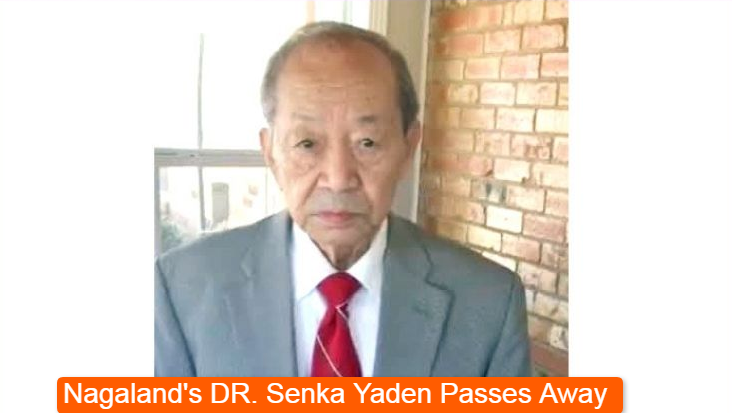
Dr. Senkalong (Senka) Yaden: A Legacy of Science and Education

Dr. Senkalong (Senka) Yaden a distinguished Naga scholar and scientist died at 89 years old when he passed away March 14, 2025 in Tyler Texas. People throughout the United States of America called him the “Man of Science of the United States of America” because he hailed from Merangkong village in Mokokchung district. For his entire career Dr. Yaden earned esteemed academic positions at various United States educational institutions where he conducted meaningful scientific work. Dr. Senka dedicated nearly his whole existence living abroad yet maintained strong connections to his heritage in the Naga community. On March 17, 2025, Ao Senden officially designated this day as a mourning period to honor the outstanding achievements of late Zoetics Senka.

Key Highlights

Introduction

  • Dr. Senkalong (Senka) Yaden a distinguished Naga scholar and scientist died at 89 years old when he passed away March 14, 2025 in Tyler Texas. 

  • Also known as “Man of Science of the United States of America”

Personal Background

  • He entered this world on April 21st, 1935 in the Merangkong village of Mokokchung district in Nagaland.

  • Son of the late Takojungba Yaden.

  • Dr. Senka lost his life at age 89 on March 14, 2025 when he passed away in Tyler, Texas USA.

Academic Achievements and Career

  • His scientific achievements earned him recognition as the “American Man of Science” while his profile appeared in American Men and Women of Science.

  • The academic experience at the University of Minnesota from 1961–1965 marked his initial entry into educational work as a Biology Teaching Assistant.

  • Academic institutions gave him positions with distinguished importance:

    • From 1967 to 1979 he served Jarvis Christian College first as an Associate Professor of Biology before taking charge of the Science Division as Professor of Biology in 1979.

    • Texas College of Osteopathic Medicine (1981-1984): Senior Science Associate.

    • Parker University (1985-1986): Associate Professor of Science.

    • The institution of Talladega College appointed him as an Associate Professor of Biology during 1987.

    • Wiley College (1988-1991): Professor and Chairman, Department of Biology.

    • Texas College (1993-Retirement): Professor of Biology.

Recognition and Honors

  • Sentimental recognition marked his status as the initial scientist from the Naga community.

  • Honored with memberships in:

    • International Platform Association (1994).

    • Who’s Who in America (1994 & 1997).

    • Who’s Who Among America’s Teachers (1996).

Contributions to Society and Science

  • The individual participated in peace work through service at Peace Camp Chedema (1966-67) as a Peace Mission Volunteer.

  • Inspired generations through his commitment to education, science, and leadership.

Mourning and Tributes

  • The members of Texas Nagas Fellowship expressed profound sadness to honor his achievements for the Naga diaspora community.

  • On March 17, 2025 Ao Senden set March 17, 2025 as a national day for mourning to celebrate his departed legacy.

  • Venerable Medemsanger Putu of Merangkong expressed grief to bring attention to the saintly aspects of his late life as he worked tirelessly and maintained unwavering faith in God.

  • He carried the status of a genuine member of Merangkong village and succeeded in turning his homeland into a place of distinction.

Conclusion

Dr. Senkalong (Senka) Yaden endures as an academic and scientific legend who uplifted cultural pride throughout his life. The lifelong efforts of this individual persist to guide generations ahead within Nagaland as well as throughout the world.

Raisina Dialogue 2025: A Strategic Forum for Global Geopolitical Discourse

The upcoming 10th Raisina Dialogue will occur between March 17th to March 19th 2025 in New Delhi, India. The premier event has scheduled its next gathering for March 17-19, 2025 in New Delhi to host world leaders and policymakers and subject matter experts for addressing rising global security issues and diplomatic challenges and economic development trends. The conference will organize a dedicated high-level meeting of intelligence directors belonging to the Five Eyes Alliance as an important side event.

About Raisina Dialogue

What is Raisina Dialogue?

  • India organizes this annual event to explore geopolitics and geo-economics as a worldwide international conference.

  • It is a platform that connects world leaders with policymakers together as well as scholars and strategic experts.

  • The organization began operations in 2016 through strategic cooperation between the Ministry of External Affairs (MEA) and Observer Research Foundation (ORF).

  • Indian authorities collaborate with Observer Research Foundation and MEA to activate global dialogue about diplomacy, security and economic policies.

Key Features:

  • Participation from global leaders, diplomats, and strategic experts.

  • The event includes panel discussions and keynote addresses together with networking events.

  • The program concentrates on current security threats together with technological advancements and governmental leadership issues.

Raisina Dialogue 2025

  • Organizers: Ministry of External Affairs (MEA) and Observer Research Foundation (ORF).

  • Theme: "Kalachakra" (meaning Wheel of Time) illustrates worldwide political transformations and broad worldwide insecurities.

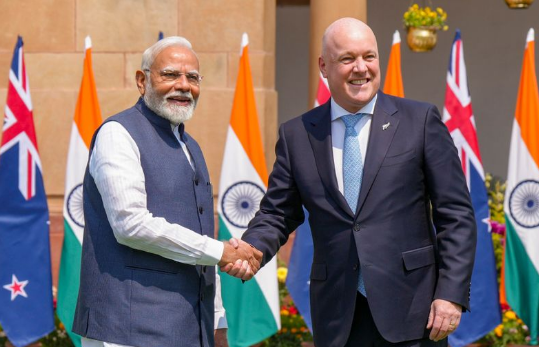
  • Guest: The Main Guest at this event will be New Zealand Prime Minister Christopher Luxon while giving the main speech.

Key Participants:

  • Foreign ministers from at least 18 nations.

  • Senior executives from major multinational businesses.

  • Foreign policy experts and diplomats.

  • Directors of intelligence agencies from the Five Eyes Alliance (on the sidelines).

Significance for India’s Foreign Policy

  • Balancing Global Power Dynamics:

    • New Zealand must handle diplomatic relations with the United States, Russia, China and European Union.

  • Enhancing Regional Leadership:

    • The strategy aims to enhance the bonds between South Asian nations as well as the Indo-Pacific region.

    • Through proper positioning India can establish itself as a global mediator in various international matters.

    • The example demonstrates Ukrainian conflict mediation and regional management of Indo-Pacific disagreements and international trade settlements.

  • Expanding Influence in the Global South:

    • India aims to establish a stronger economy together with geopolitical relationships with emerging nations in the world.

About the Five Eyes Alliance

  • The Five Eyes (FVEY) Alliance functions as a cooperative intelligence network between five countries which include the United States and United Kingdom and Canada and Australia with New Zealand.

  • A global intelligence-sharing network comprising:

    1. United States (US)

    2. United Kingdom (UK)

    3. Canada

    4. Australia

    5. New Zealand

  • The alliance originated from WWII cooperations through the UK-USA Agreement during 1946.

Purpose:

  • The alliance works to advance worldwide security operations along with intelligence exchange activities.

  • The network facilitates threat monitoring activities involving terrorism defense as well as cyber warfare defense and international geopolitical conflict defense.

Key Areas of Cooperation:

  • Counterterrorism & Security:

    • The exchange of intelligence information works as a preventive measure against terrorist attacks.

    • The example shows how intelligence sharing began after 9/11 to monitor Al-Qaeda cells throughout the world.

  • Cybersecurity & Cyber Warfare:

    • The national security agencies track cyber threats generated by China, Russia, North Korea and Iran.

    • The coalition operates against state-based hacking operations together with spoof and ransomware campaigns while protecting against espionage intrusions.

  • Geopolitical Intelligence & Surveillance

    • The surveillance tracks Chinese territorial advancement across the Indo-Pacific region.

    • The tracking of Russia’s activities spans throughout Ukraine together with NATO-operated territories.

  • Espionage Prevention:

    • The organization must detect hostile secret agents as well as foreign intelligence operations.

    • Example: Banning Chinese telecom giant Huawei from 5G networks in most Five Eyes countries.

Conclusion

Based on forecasts The Raisina Dialogue 2025 will influence international geostrategic dialogue as India uses this platform to establish a stronger presence in worldwide diplomatic choices. Global security and diplomatic challenges require the event to establish the guidelines which will determine interregional strategic partnerships for upcoming decades. The participation of global leaders together with foreign ministers and intelligence officials emphasizes the rising position of India in global diplomatic circles.

Telangana Launches Rajiv Yuva Vikasam Scheme for Youth Self-Employment

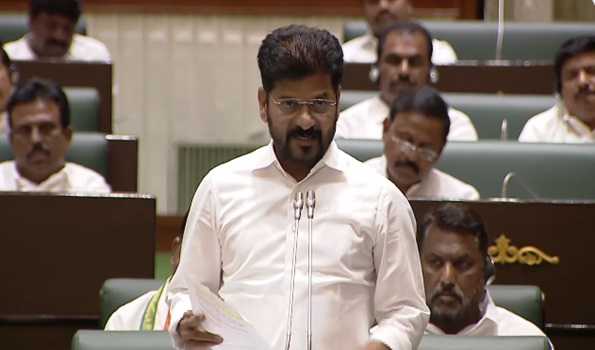
A Revanth Reddy launched the ‘Rajiv Yuva Vikasam’ Scheme on the premises of the Telangana Legislative Assembly in a recent attempt to advance both economic growth and self-employment options. The plan has been structured to offer economic support for unemployed young people who belong to the families classified as SC and ST while covering those from BC communities together with minorities. The scheme receives funding of ₹6,000 crore from the government to generate five lakh self-employment opportunities throughout the state.

Objectives of the Rajiv Yuva Vikasam Scheme

  • The central goal of the scheme enables unemployed youth to receive monetary help which lets them start their own businesses. 

  • This program supports the government initiative to drive economic growth together with social betterment especially among underprivileged groups.

Key Goals:

  • Eligible youth can obtain self-employment loan funding.

  • The scheme aims to decrease the numbers of unemployed members in SC, ST, BC and Minority communities.

  • Support the development of business-mindedness and independence through economic initiatives.

  • Government measures should provide equal access to financial aid to diverse population segments.

Financial Assistance and Subsidy Structure

  • Financial support totaling ₹3 lakh will be available under the Rajiv Yuva Vikasam Scheme as beneficiaries start their self-employment units. 

  • The planning for loans includes robust financial support through subsidies to maintain low costs of borrowing.

  • Loan Assistance: Up to ₹3 lakh for business setup

Subsidy Breakdown:

Loan Amount

Govt. Subsidy

₹1 lakh

80%

₹2 lakh

70%

₹3 lakh

60%

  • Beneficiaries who obtain loans worth ₹1 lakh receive an 80% subsidy that comes from government resources.

  • The government provides full subsidy of ₹1.4 lakh when a beneficiary obtains loans up to ₹2 lakh.

  • The government provides 60% of a subsidy for loans that do not exceed ₹3 lakh.

  • The funding structure provides larger financial backing to smaller loan amounts whose purpose is to stimulate youth participation in small and medium-scale business initiatives.

Application and Selection Process

  • The Rajiv Yuva Vikasam Scheme application procedure will begin operation during the upcoming month. 

  • The application screening process will verify the legitimacy and deserving nature of candidates availing financial support.

  • Key Dates:

    • Application scrutiny begins next month.

    • Final selection of beneficiaries.

    • Loan sanction documents will be issued on June 2nd simultaneous to Telangana Formation Day.

  • The well-planned timeline helps both applications processing speed up and funding distribution occur promptly.

Impact and Expected Outcomes

  • This program will deliver major shifts in Telangana's employment situation through its capability to support young business founders in establishing their companies. Through the scheme Telangana will achieve three main long-term advantages:

  • The employment situation improves for people who belong to disadvantaged communities.

  • The scheme promotes development within small and medium enterprise sectors (SMEs).

  • Boost to state-wide economic development.

Conclusion 

The program will enhance access to financial products for underprivileged groups. Telangana stands as one of the largest self-employment programs under this scheme because of the substantial financial support from the government for youth empowerment.

India Boosts Cultural Heritage Preservation with Digitization Efforts

India has the world's biggest collection of tangible heritage artifacts that date back from the prehistoric age up to colonial times. The heritage documentation activities of the ASI and State Archaeology Departments and INTACH have resulted in parts of heritage documentation but much heritage content remains unrecorded or undocumented. Research together with conservation efforts and management becomes hindered because of the lack of a single database. The National Mission on Monuments and Antiquities (NMMA) launched a systematic program for digital documentation and creation of databases which covers built heritage sites and antiquities. Standardized documentation along with training programs and public awareness initiatives will help NMMA establish a comprehensive national database which will protect India's cultural heritage.

National Mission on Monuments and Antiquities (NMMA)

  • Born in 2007 as part of the National Mission on Monuments and Antiquities (NMMA) the organization leads documentation efforts for Indian built heritage landmarks and antiquities collection. 

  • The organization has successfully developed national registers which contain information about monuments and antiquities.

Achievements of NMMA:

  • Digitization of Antiquities under NMMA resulted in the digitization of 12,34,937 antiquities which include 4,46,068 items from ASI Museums/Circles/Branches and 7,88,869 antiquities from other institutions.

  • The documentation activity covers 11,406 sites and monuments across the country.

  • For the FY 2024-25 budgetary funds amounting to Rs. 20 lakh were allocated to NMMA.

Objectives of NMMA:

  • The establishment of a national database with documentation about built heritage sites and antiquity monuments aims to enhance research opportunities for better management decisions.

  • All institutions including central and state departments together with universities and private entities must execute standardized documentation of their antiquities.

  • The organization aims to educate people about sustaining cultural heritage values.

  • A planned training program will be delivered to state departments together with local bodies and museums along with NGOs and universities.

  • The Archaeological Survey of India (ASI) needs to strengthen its organizational relations with state departments and other involved stakeholders.

Ancient Monuments and Archaeological Sites and Remains Act, 1958

The Ancient Monuments and Archaeological Sites and Remains Act, 1958 (AMASR Act 1958) established legislation for safeguarding national importance archaeological sites together with historical monuments and ancient archaeological remains. IOD 1958 protects archaeological excavations as well as sculptures and carvings and other historical objects.

Definition of Ancient Monuments:

  • The AMASR Act 1958 defines an ancient monument through these criteria:

  • Historical monuments along with archaeological sites possess artistic interest when their existence extends beyond 100 years.

  • Such monuments together with their remnants and locations constitute the scope of this definition.

  • The law requires possession of land which surrounds these monuments for preservation purposes.

  • Entrances that allow authority personnel to inspect the monuments exist in their intended locations.

  • NMMA has broadened its documentation efforts to include pre-independence structures with 1950 as the cut-off year because they hold important historical value.

Antiquity & Art Treasure

The Antiquities and Art Treasures Act of 1972 contains the following definitions:

Antiquity Includes:

  • The definition covers any coin and sculpture together with paintings and epigraphs and objects that demonstrate artistic craftsmanship.

  • An object counts as antiquity when it separates from either a building or a cave structure.

  • The definition includes all objects which represent past scientific discoveries as well as artistic works and literature and artifacts from religious beliefs and political movements as well as historical information about science.

  • Any historically significant object over 100 years old.

  • A legal object declaration from the Central Government turns it into an antiquity.

  • Art Treasure:

  • The Central Government has authority to declare a human-made object as an art treasure when it demonstrates artistic or aesthetic value despite not being an antiquity.

Digitization Guidelines

  • The establishment of a national digital database requires NMMA to establish common documentation standards.

  • Built heritage and site images must be saved as files in the TIFF format with 300 dpi resolution.

  • Antiquities photography: TIFF (300 dpi). NEF/RAW digital files need conversion into TIFF in order to capture them properly.

  • The scanning of miniature paintings should be done in TIFF format at 300 dpi resolution with a plain background.

  • Documentation format: MS Excel with separate sheets for each antiquity, heritage site, or built structure.

  • The documentation sheets should contain images and master images of photographs must be stored independently.

Indian Heritage in Digital Space (IHDS) Research

  • Electronic Heritage in Digital Space functions through contemporary digital methods to protect and distribute Indian heritage past the basic documentation stage. 

  • This project develops deep interactive systems while developing research methods for academic scholars together with interactive tools for the public audience.

Objectives of IHDS:

  • The priority is to support digital heritage technology research especially for the protection of Indian cultural artifacts.

  • IHDS seeks to develop an open crowdsourcing system which enables users to construct digital collections of heritage materials.

  • The system establishes all processes required to manage multimedia heritage information for interdisciplinary academic investigations.

The Role of Digital Technologies in Heritage Preservation

Modern digital technology instruments have revolutionized the way we preserve our cultural heritage. These include:

  • 3D scanning as well as virtual reconstruction techniques help restore heritage sites lost due to damage or destruction.

  • High-resolution digital archives for manuscripts, monuments, and artifacts.

  • Virtual reality & interactive experiences for education and tourism.

  • AI & computer vision for enhanced research in historical analysis and restoration.

Conclusion

India requires the digitized record and documentation of its cultural heritage to protect these artifacts alongside making them accessible to all stakeholders. The National Mission on Monuments and Antiquities (NMMA) participates greatly in heritage conservation through its initiatives to establish standardized documentation systems and train relevant personnel while generating public awareness about preservation efforts. Through technological collaboration NMMA maintains a system which documents India's enormous heritage and safeguards its accessibility for research as well as educational purposes. Such a consolidated database system will serve dual purposes of conservation alongside preservation of cultural heritage for upcoming generations.

ISRO Achieves Space Docking Milestone, Boosting Future Missions

Indian organization ISRO (Indian Space Research Organisation) completed a space docking demonstration to make India the fourth country behind the United States, Russia and China which achieved space docking capabilities. The accomplishment stands vital since it will enable India to pursue upcoming space exploration targets like its 2035 space station development and 2040 lunar human missions. Two spacecraft in orbital flight win joint operations when they align and combine through the process of space docking.

Understanding Space Docking 

  • Space docking is a method to combine orbiting spacecraft through which they create a single functioning structure. The successful completion of space docking needs specific orbital calculations and highly advanced robotic systems and propulsion and navigation components that show high reliability levels.

  • NASA’s Gemini VIII mission conducted the first satellite docking in 1966 and the USSR’s Kosmos 186 and Kosmos 188 spacecraft executed the first independent docking operation in 1967. China joined the exclusive group of countries which mastered docking operations through its unmanned spacecraft in 2011.

ISRO’s Spadex Mission 

  • SPACEX was the docking technology development program launched by ISRO which flew its mission on December 30, 2024. It involved:

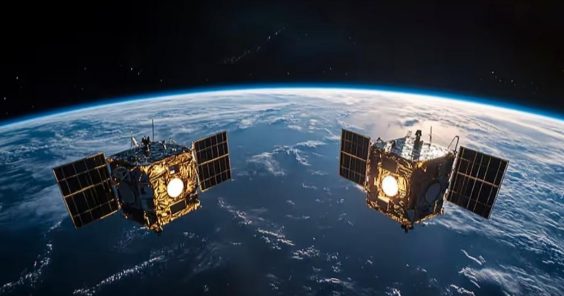
  • The space mission launched two 220-kg satellites named SDX01 (Chaser) and SDX02 (Target) into a 470 km orbital flight.

  • A controlled approach from an initial separation of 20 km.

  • A docking system with an androgynous mechanism, similar to the International Docking System Standard but with only two motors instead of 24.

  • The experimental unit achieved two U5 objectives after the docking operation by demonstrating power-sharing functionality while operating as one integrated structure.

  • The docking crew successfully separated the vehicles on March 14 of 2025 which signaled the termination of the essential research study.

Significance of Space Docking for India

  • Future Human Spaceflight Missions:

    • Current space station requirements need docking systems to transfer crew members alongside essential supplies.

    • Such capability will serve future spaceflight missions including Gaganyaan and the subsequent human spaceflight ventures.

  • Heavy Payload Missions:

    • The weight restrictions for launch vehicles force scientists to perform space construction of big spacecraft and modular space stations while in orbit.

    • India plans to construct its space station in 2035 while heavily depending on docking capabilities.

  • Lunar and Deep Space Exploration:

    • The docking capability enables Chandrayaan-4 to guide lunar samples from orbiters to return modules during its sample return operation.

    • The space exploration mission to Mars together with interplanetary journeys need orbital rendezvous capabilities for sending crewed deep-space travel.

  • International Collaborations:

    • The creation of indigenous docking systems makes India a key participant among international space collaborative efforts.

    • Through its enhancements India can more effectively work in space partnership programs such as Artemis and future ISS missions.

Challenges and Way Forward

  • Technological refinement: Research in technology has led to the development of smaller docking systems with automated protocols for execution.

  • Human-Rated Docking Mechanisms: The development of docking interfaces that enable human interaction needs to become one of the main priorities.

  • Space Policy and Diplomacy: Establishing frameworks for international docking compatibility.

  • Sustained Investment: Ensuring continuous funding for long-term space station and interplanetary ambitions.

Conclusion 

With its successful demonstrations of docking and undocking operations ISRO has made exceptional progress towards India’s future space exploration goals. Ambitious space exploration initiatives such as building a space station and conducting lunar human missions and planetary travel now have their path forward. Indian space leadership depends on ongoing advancements in docking processes and vehicle propulsion systems and automated systems for the future.

Buddhist Thematic Circuit under Swadesh Darshan Scheme

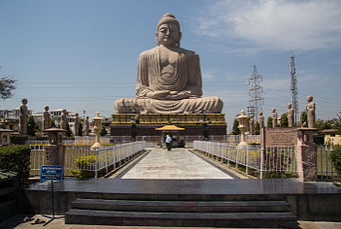
The Buddhist Circuit receives support from the Swadesh Darshan Scheme to develop Buddhist tourism and enhance its infrastructure. The Archaeological Survey of India operates for conservation work and the Asian Buddhist Summit functions to build cultural bonds between countries. Theme-based circuit development which includes religious and pilgrimage sites drives complete tourism progress. Eco-friendly measures have been integrated into multiple sanctioned projects throughout Northeast India through Swadesh Darshan and PRASHAD funding programs. Through the Incredible India 2.0 campaign the Ministry of Tourism works to promote all these initiatives. The strategic development positions India in a stronger role as a Buddhist heritage destination worldwide which creates economic connections and cultural interactions through tourism.

Introduction

  • Buddhist tourism development receives financial backing from the Ministry of Tourism through its Swadesh Darshan (SD) and PRASHAD schemes targeted at State Governments and UT Administrations.

  • The Swadesh Darshan Scheme recognizes the Buddhist Circuit as one of its thematic circuits.

Conservation and Preservation Efforts

  • The Archaeological Survey of India (ASI) as a division within the Ministry of Culture maintains authority to protect Buddhist sites and all protected monuments through preservation activities.

  • The area provides public facilities that include toilets together with drinking water services and parking spots and pathways alongside signage benches ramps and wheelchair access points which receive ongoing maintenance improvements.

Asian Buddhist Summit

  • Organizers of the 1st Asian Buddhist Summit (ABS) were the Ministry of Culture along with the International Buddhist Confederation (IBC) situated in New Delhi.

  • Participation in the summit reached over 650 individuals which included 130 foreign delegates representing 26 Asian countries for its Asian cultural and religious cooperation focus.

  • Organizers made a decision to conduct the summit every other year.

Theme-Based Circuits under Swadesh Darshan

  • The Ministry of Tourism established 15 different themes through which they can create circuit-based tourism development plans.

    • Buddhist Circuit

    • Coastal Circuit

    • Desert Circuit

    • Eco Circuit

    • Heritage Circuit

    • Himalayan Circuit

    • Krishna Circuit

    • North-East Circuit

    • Ramayana Circuit

    • Rural Circuit

    • Spiritual Circuit

    • Sufi Circuit

    • Tirthankar Circuit

    • Tribal Circuit

    • Wildlife Circuit

Religious and Pilgrimage Tourism Development

  • Tourism development under the PRASHAD Scheme has focused on 41 religious cities/sites spread across 25 states.

    • Kamakhya (Assam)

    • Parasuram Kund (Arunachal Pradesh)

    • Patna and Gaya (Bihar)

    • Dwarka and Somnath (Gujarat)

    • Amritsar (Punjab)

    • Varanasi and Mathura (Uttar Pradesh)

    • Kedarnath, Badrinath, Gangotri, and Yamunotri (Uttarakhand)

Swadesh Darshan and PRASHAD Projects in North-East India

Swadesh Darshan Projects:

  • Arunachal Pradesh: Development of Mega Circuit at Bhalukpong-Bomdila and Tawang (Rs. 49.77 Cr)

  • Manipur: Development of Tourist Circuit in Imphal-Khongjom (Rs. 72.23 Cr)

  • Sikkim: The government allocated Rs. 98.05 Cr to develop a Tourist Circuit that links many different tourism destinations in Sikkim.

  • Assam: Development of Manas–Probitora–Nameri–Kaziranga–Dibru–Saikhowa as Wildlife Circuit (Rs. 95.67 Cr)

  • Meghalaya: Development of Umium, U Lum Sohpetbneng-Mawdiangdiang-Orchid Lake Resort (Rs. 99.13 Cr)

PRASHAD Projects:

  • Assam: Development of Kamakhya Temple and Pilgrimage Destination (Rs. 30.71 Cr)

  • Nagaland: Development of Pilgrimage Facilities (Rs. 25.26 Cr)

Sustainable Tourism and Environmental Considerations

  • The Swadesh Darshan and PRASHAD schemes implement development methods that protect the environment.

  • Every State Government and UT Administration must develop Detailed Project Reports (DPRs) which include environmental-friendly components including:

Use of clean/renewable energy

  • Eco-friendly construction materials

  • Recycling and reuse practices

Promotional Initiatives

  • Through its Incredible India 2.0 campaign the Ministry of Tourism concentrates on marketing adventure tourism along with religious and eco-tourism products.

  • The promotion of North Eastern tourism destinations makes use of special media campaigns paired with digital platforms.

  • These tourist locations participate in numerous exhibitions and tourism fairs in both Indian and overseas markets.

Conclusion

The establishment of the Buddhist Circuit through the Swadesh Darshan Scheme serves as a premier development approach which aims to grow tourism while safeguarding heritage sites and establish India as the primary Buddhist travel destination.

Through concentrated financial assistance together with improved infrastructure and enhanced promotion India intends to welcome both international and home visitors to boost cultural exchange and economic development.

Maharashtra Inaugurates First Temple Dedicated to Chhatrapati Shivaji Maharaj

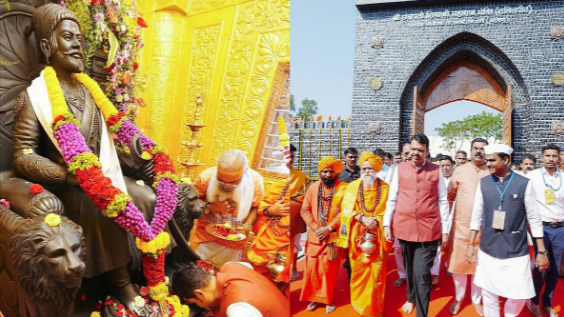
The state of Maharashtra unveiled its inaugural temple for Chhatrapati Shivaji Maharaj in Bhiwandi which falls under Thane district. Chief Minister Devendra Fadnavis attended the event to stress the cultural and spiritual value of the temple at its inauguration. The temple construction serves as a tribute to Shivaji Maharaj while striving to establish itself as a sacred journey spot for those who love the Maratha leader.

Introduction:

  • Maharashtra CM Devendra Fadnavis inaugurated the first-ever temple dedicated to Chhatrapti Shivaji Maharaj in Bhiwandi, Thane. On the occasion of Shivaji’s birth anniversary.

Key Highlights:

  • Vijaykumar Patil designed this temple which consists of 2,500 sq. ft. space enclosed by a 5,000 sq. ft. fortified boundary.

  • The temple repository features the Statue of Shivaji Maharaj which Arun Yogiraj sculpted to a height of 6.5 feet.

  • The main entry of the temple stands 42 feet tall while the adjacent assembly hall matches this height.

  • The life of Shivaji Maharaj is portrayed through 36 different sculptures arranged sequentially to illustrate important historical periods.

  • The shrine functions as a cultural landmark which demonstrates Shivaji Maharaj's vital part in developing Hindu identity while presenting his essential contributions to Indian historical events.

Early Life and Influences

Birth and Parentage:

  • The date of February 19th 1630 marks his birth at Shivneri Fort which exists today in Maharashtra.

  • Son of Shahaji Bhosle and Jijabai.

Formative Years:

  • His upbringing by Jijabai taught him to develop a solid link to his religious background as well as cultural customs.

  • Under the guidance of Dadoji Kondadeo who served as Pune administrator Shivaji received training that combined administrative skills with military tactics together with revenue management techniques.

Ancestry and Family Legacy:

  • During the reign of Ahmadnagar Sultanate from 1552 to 1597 the general Maloji Bhosle served as his grandfather.

  • Maloji received the titles of Deshmukh for Pune as well as Supe, Chakan and Indapur and received Shivneri Fort from the rulers.

Wars and Conquests

Conflict with the Bijapur Sultanate

  • Shivaji started his military journey at 16 years old by taking control of Torna Fort during 1646.

  • He increased his dominion through the capture of Purandar Fort as well as Kondhana (Sinhagad) and Chakan Forts.

  • Battle of Pratapgarh (1659): A decisive victory against Afzal Khan of the Bijapur Sultanate.

  • Shivaji first seized Panhala Fort during the year 1659-1660 after which Siddi Jauhar took control before Shivaji took it back during 1673.

  • Even though the Marathas suffered a tactical defeat at Pavan Khind in 1660 they showed their exceptional capabilities in guerrilla warfare tactics.

Conflict with the Mughal Empire

  • Before breaking their allegiance with the Mughals in 1657 Shivaji formed an alliance with them.

  • Marathas conducted a successful resistance against the Mughal forces led by Shaista Khan in the Battle of Chakan year 1660 but had to surrender in the end.

  • During the Battle of Surat (1664) Shivaji conducted a surprise attack against Surat which became one of the wealthiest Mughal territories thus depriving the Mughals of considerable amounts of money.

  • Shivaji was required to surrender 23 defensive forts as well as send his son Sambhaji to Mughal authority after signing the Treaty of Purandar with Mirza Raja Jai Singh in 1665.

  • Shivaji escaped the Mughal captivity at Agra through a bold break on August 17th, 1666.

  • Soldiers under Tanaji Malusare brought back possession of Sinhagad Fort during the battle of 1670.

  • Battle of Salher (1672): A significant Maratha victory against the Mughals.

Southern Campaigns and Naval Expansion

  • Starting in 1674 the Marathas launched their southern offensive that resulted in taking Ponda, Karwar and Kolhapur.

  • Shivaji made an alliance with Qutubshah who ruled Golconda during 1677 to improve his position.

  • The Maratha navy expanded during this period through which they took possession of coastal forts to build Sindhudurg Fort.

Administrative Reforms

Governance System

  • Shivaji gained the title of Chhatrapati at Raigad Fort in 1674.

  • The Ashta Pradhan council consisting of eight members became responsible for governing the Maratha Empire in 1674.

    • Peshwa (Prime Minister): Administration

    • Amatya: Finance and Revenue

    • Sachiv: Royal correspondence

    • Mantri: Internal intelligence

    • Senapati: Military affairs

    • Sumant: Foreign affairs

    • Nyayadhish: Justice

    • Panditrao: Religious affairs

Cultural and Linguistic Policies

  • Marathi along with Sanskrit gained preference for administrative use by eliminating Persian language.

  • Used Sanskrit inscriptions on his royal seal.

  • His government promoted religious unity as he selected both Muslim and European personnel to work in both administrative and naval positions.

Military Strategies

  • According to Marathi locals his advanced mastery in strikes made him renowned as Ganimi Kawa.

  • Surprise attacks originated from his forces making use of the mountainous terrain.

  • Strengthened fort-based defense, controlling 240-280 forts by his death.

  • The establishment of India's first naval force occurred after he fully acknowledged the need to protect the Konkan coast.

Legacy and Successors

  • Chhatrapati Shivaji Maharaj left this world at Raigad Fort on April 3rd of 1680.

  • Sambhaji became the ruler after his father but the Mughals subsequently took him captive before executing him.

  • The fight continued under Rajaram (1689-1700) until Shivaji II (Ramaraja) took power with Tara Bai serving as his regent.

  • During his 42-year reign Shahu Maharaj facilitated the growth of Peshwas who would expand the Maratha Empire all across India.

Conclusion

Bhiwandi residents celebrate a major cultural achievement through the opening of the Chhatrapati Shivaji Maharaj Temple. The temple exists beyond its religious significance to commemorate Shivaji Maharaj's eternal contributions that motivate generations to come. The temple demonstrates architectural greatness along with historical value and religious importance which positions it to become an influential monument that honors Maratha warrior achievements throughout Indian historical and cultural records.

India and New Zealand to Institutionalise Defence and Security Cooperation

The cooperative meeting between Indian Prime Minister Narendra Modi and New Zealand Prime Minister Christopher Luxon brought bilateral ties between the two nations to a new level of importance. During their meeting both parties discussed the creation of defense security frameworks together with trade investment and educational and agricultural initiatives. PM Modi stressed that India prioritizes development while opposing territorial growth and supporting global anti-terrorism cooperation. Both countries plan to sign a Free Trade Agreement as they approach their hundred-year anniversary of sporting cooperation in 2026.

Key Developments and Agreements

Defence and Security Cooperation

  • The leaders of both India and New Zealand decided to formalize defense agreement cooperation.

  • Through their defense cooperation initiative both sides will execute mutual military exercises and training sessions and maritime port stops.

  • An official guide to facilitate cooperation in defence industries will be created.

  • The navies from both nations continue their participation in Combined Task Force-150 activities for protecting maritime security within the Indian Ocean.

Counter-Terrorism and Security

  • The participants emphasized their joint terrorism encounters through mention of the 26/11 Mumbai attacks and the 2019 Christchurch attacks.

  • During their meeting India emphasized their disapproval of activities targeting Indian interests in New Zealand which support the Khalistan movement.

  • The New Zealand government committed to maintaining joint efforts for combating extremist problems.

Economic and Trade Relations

  • The leaders began talks to establish a beneficial Free Trade Agreement (FTA).

  • Strengthened trade cooperation in sectors such as dairy, food processing, pharmaceuticals, and investment opportunities.

  • Business entities should expand their commercial partnerships between the two nations to drive economic expansion for both nations.

Diplomatic and Cultural Engagement

  • The government of New Zealand plans to expand its diplomatic capacity in India by 60% in order to establish deeper bilateral ties.

  • The Indian diaspora comprising 300,000 people in New Zealand makes substantial contributions to the relationship development.

  • The Governments will celebrate 100 years of sports relations between the two nations when 2026 arrives.

Geopolitical Considerations

  • PM Luxon explained New Zealand's geopolitical policy which focuses on three main global developments:

  • The transition from a rules-based order to power-driven politics.

  • The shift from economic priorities to security-driven policies.

  • Supply chains based on resilience have surpassed efficiency-based supply chains in importance.

  • Throughout security dialogues with Australia, Japan and South Korea New Zealand focuses on discussions about Ukraine and North Korean matters.

Significance of the agreement

  • Strategic Significance

    • The development of India-New Zealand military alliances allows India to expand its strategic presence across the Indo-Pacific region in line with its Act East Policy.

    • Security initiatives between maritime nations create stability for the Indian Ocean while protecting the region from potential challenges by local powers.

    • Security cooperation between nations offers India an example to model when developing relationships with Pacific Sea countries.

  • Economic Implications

    • Through the proposed FTA India will expand its trading relationships beyond its traditional trading blocs.

    • The expansion of agricultural trade and investments alongside dairy and pharmaceuticals operations leads to developing fresh economic prospects across the two nations.

    • India works to establish business alliances because it wants to advance its status as a worldwide production and distribution center.

  • Security and Counter-Terrorism Cooperation

    • Global counter-terrorism frameworks of India become stronger through efforts to combat anti-India activities across international borders.

    • The security cooperation between India and New Zealand creates a model which India can use to handle extremist threats with other nations sharing the same risks.

    • The integration of intelligence networks through better cooperation would strengthen the effectiveness of regional security operations.

  • Geopolitical Positioning

    • India’s diplomatic connections with New Zealand establish the nation’s essential position as a leading Indo-Pacific power.

    • India's participation in Quad-related dialogue patterns contributes to strengthening regional security talks although it does not officially belong to the organization.

    • New Zealand’s expanding diplomatic presence in India reflects an increased understanding of India’s rising position as a global power.

Conclusion 

Regional geopolitics undergo a major strategic transformation as India and New Zealand move forward with increased commitments for defense security together with trade relations and diplomatic alliances. The wide range of cooperative engagement includes formal security partnerships as well as FTA negotiations and anti-extremist measures. The initiatives work toward India's goals of establishing stable regions and expanded economic growth which will develop a strong New Zealand-India partnership during forthcoming years.

National Quantum Mission: India’s Quantum Technology Revolution

The Government of India created the National Quantum Mission (NQM) as an initiative to position the country leaders among quantum technology nations. The National Quantum Mission obtained approval on April 19, 2023 to operate during 2023–24 to 2030–31 by utilizing funding of ₹6003.65 crore for quantum computing development alongside cryptographic applications and advanced sensing system implementation. NQM will advance innovation while improving security and economic growth through its four Thematic Hubs (T-Hubs) at premier institutions which establish next-generation employment.

Introduction to Quantum Computing:

  • Quantum computing implements qubit units that occupy multiple states simultaneously thus providing computers with exponential computational power beyond traditional systems.

  • The quest seeks to exploit this potential for developing next-generation computing and healthcare systems and protection technologies and communication solutions.

Objectives of NQM:

  • Quantum Computing Evolution: Develop quantum computers with increasing qubit capabilities over time (20-1000 qubits).

  • The Executive Branch will deploy quantum communication networks using satellites that extend encryption coverage up to distances exceeding 2000 kilometers.

  • A quantum communication network will be deployed for cities through the implementation of Quantum Key Distribution (QKD).

  • A network of connected quantum systems based on multiple nodes creates platforms for enhanced security applications.

  • Scientists need to establish advanced quantum sensing platforms and clocks that show elevated sensitivities.

  • Quantum Materials & Devices group conducts research about advanced materials suitable for quantum technology uses.

Implementation Strategy: Thematic Hubs (T-Hubs):

  • Four T-Hubs: Established in IISc Bengaluru, IIT Madras, IIT Bombay, and IIT Delhi.

  • The Hub-Spoke-Spike framework in collaboration presents a framework which promotes research development between different entities.

  • The initiative aims at boosting female scientist involvement within the quantum research field.

Key Initiatives:

  • Quantum-Safe Ecosystem Framework: Development of quantum-resilient encryption and security solutions.

  • DRDO together with SETS has invested in building advanced post-quantum cryptography as well as security solutions breakthroughs.

  • C-DoT Innovations conduct research about Quantum Key Distribution (QKD) and develop secure communication technologies.

Global Competitiveness and Strategic Impact:

  • India seeks to improve its quantum technology dominance on the international front.

  • Defensive and financial institutions together with healthcare providers and organizations in space exploration utilize these technologies.

  • Alignment with national initiatives like Digital India, Make in India, and Skill India.

What is Quantum Computing?

  • Quantum computing provides an advanced computing model which takes advantage of quantum mechanics for information handling that exceeds classical computer ability. 

  • The system uses quantum bits (qubits) as an approach for solving intricate problems across cryptography and material science while performing optimization tasks. 

  • Quantum computing has the capability to reshape all modern industries because it extends computational abilities that go beyond traditional boundaries.

How is Quantum Computing different from Classical bits?

  • Quantum-bit operation differs from classical-bits because qubits possess the ability to maintain simultaneous multiple states through superposition. 

  • Unprecedented speeds result from the ability of quantum computers because of their qubit architecture. 

  • Quantum entanglement serves as an essential principle to create qubit interconnections which boosts the efficiency of problem solving. 

  • The applications of quantum computing demonstrate particular strength in areas such as cryptography as well as optimization, drug discovery and machine learning initiatives that traditional computers find challenging to handle effectively.

Key Principles of Quantum Computing: 

Quantum mechanisms allow quantum computers to use fundamental principles which allow them to solve computations that standard computing systems cannot perform efficiently. 

These principles include:

  • Quantum computing brings about superposition through which qubits retain simultaneous states between 0, 1 and both values which allows for fast processing of complex problems that explores many possibilities at once.

  • Qubits establish an interconnected state where the measurement result of one directly reflects the state of the other across any distance. The specific operating method facilitates coordinated and highly efficient numerical operations.

  • Quantum Interference enables two quantum states to work together by matching correct answers while disregarding wrong solutions for better computational precision.

  • Quantum Measurement requires observing a quantum state which forces it to transform into either a 1 or a 0 definite value after collapse becomes mandatory for result extraction.

State-wise Funds Allocation

  • The four T-Hubs selected under NQM collectively involve 152 researchers from 43 institutions nationwide, fostering a collaborative ecosystem to drive research and innovation in quantum technologies. 

  • The activities carried out by these hubs include Technology Development, Human Resource Development, Entrepreneurship Development, Industry Collaborations, and International Collaboration

Government Initiatives:

The Indian government continues investing through research and development initiatives toward establishing quantum technology leadership status.

  • The National Quantum Mission (NQM) started operations in 2023 using funds worth ₹6,000 crores ($730 million) for developing quantum technology.

  • The DST program QuEST stands for Quantum-enabled Science & Technology to encourage quantum research and strengthen technology capabilities.

  • The top academic institutions such as IISc IITs and TIFR carry out complex quantum computing research focusing on quantum algorithms and both hardware development and cryptography.

  • Corporate participation includes IBM along with Microsoft and Google who work with Indian entities along with startup QpiAI and BosonQ which advance quantum technological progress.

Global Competitiveness and Strategic Impact:

  • India will improve its capabilities to compete in the global quantum research competitions.

  • Defense institutions and financial organizations and healthcare facilities and space exploration teams benefit from its implementations.

  • Alignment with national initiatives like Digital India, Make in India, and Skill India.

Conclusion

The National Quantum Mission establishes a decisive policy that positions India to become a worldwide leader of quantum technology. The National Quantum Mission will lead technological innovation and national security as well as economic growth and scientific progress through well-directed research efforts coupled with international cooperation and substantial financial backing. The mission demonstrates India's dedication to innovation through which it establishes a permanent position in the upcoming quantum technology age.

Frequently Asked Questions (FAQs)

The current affairs cover recent national and international events related to UPSC, SSC, Banking, Railways, and State PCS.

You need to read about the current affairs daily, and revise them every week and every month to keep them longer in your memory.

Yes, Class24 provides free downloadable Daily Current Affairs PDFs for easy revision.

Yes, you can practice MCQs and quizzes to boost your exam preparation.

Absolutely. The content is written in simple, easy-to-understand bilingual language suitable for beginners.

Go to class24.com and click on the current affairs section directly, where you find everything that you need.

ssc-toppers

Start Learning Today with Class24

Related current affairs

Class24 offers free video lectures for smart preparation, covering CGL, CPO, CHSL, MTS, and GD exams. Learn from expert faculty, revise concepts easily, practice with PYQs, and improve speed and accuracy through high-quality, exam-focused video lessons anytime, anywhere.

Get success in your hand. Start study anytime anywhere.

The journey becomes simple and enjoyable when you start taking interest in it. And through our app “Class24”, we will be your trusted partners in developing that interest.

Daily Quizzes
Mock Tests
Ongoing

No ongoing tests right now.