

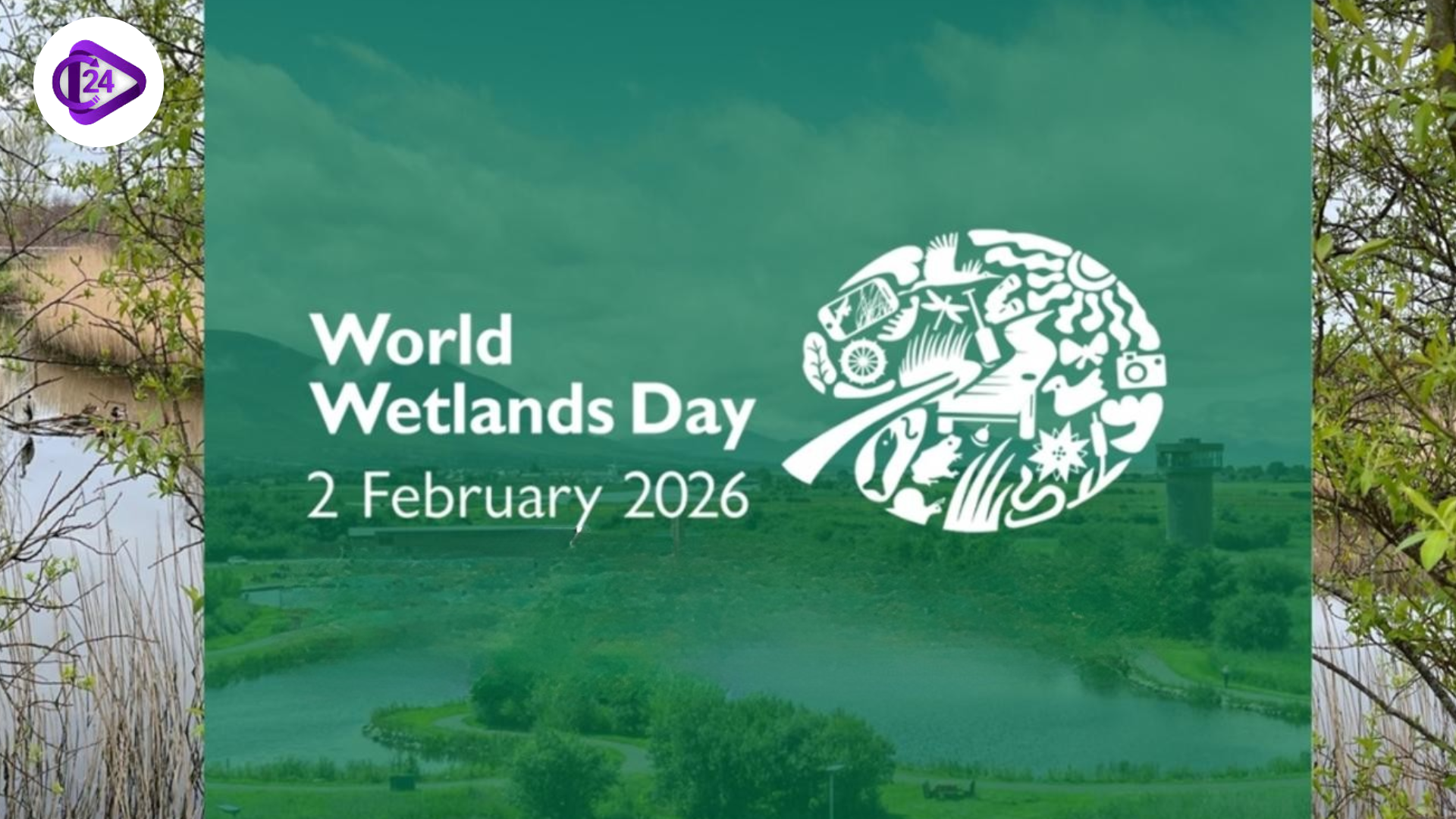
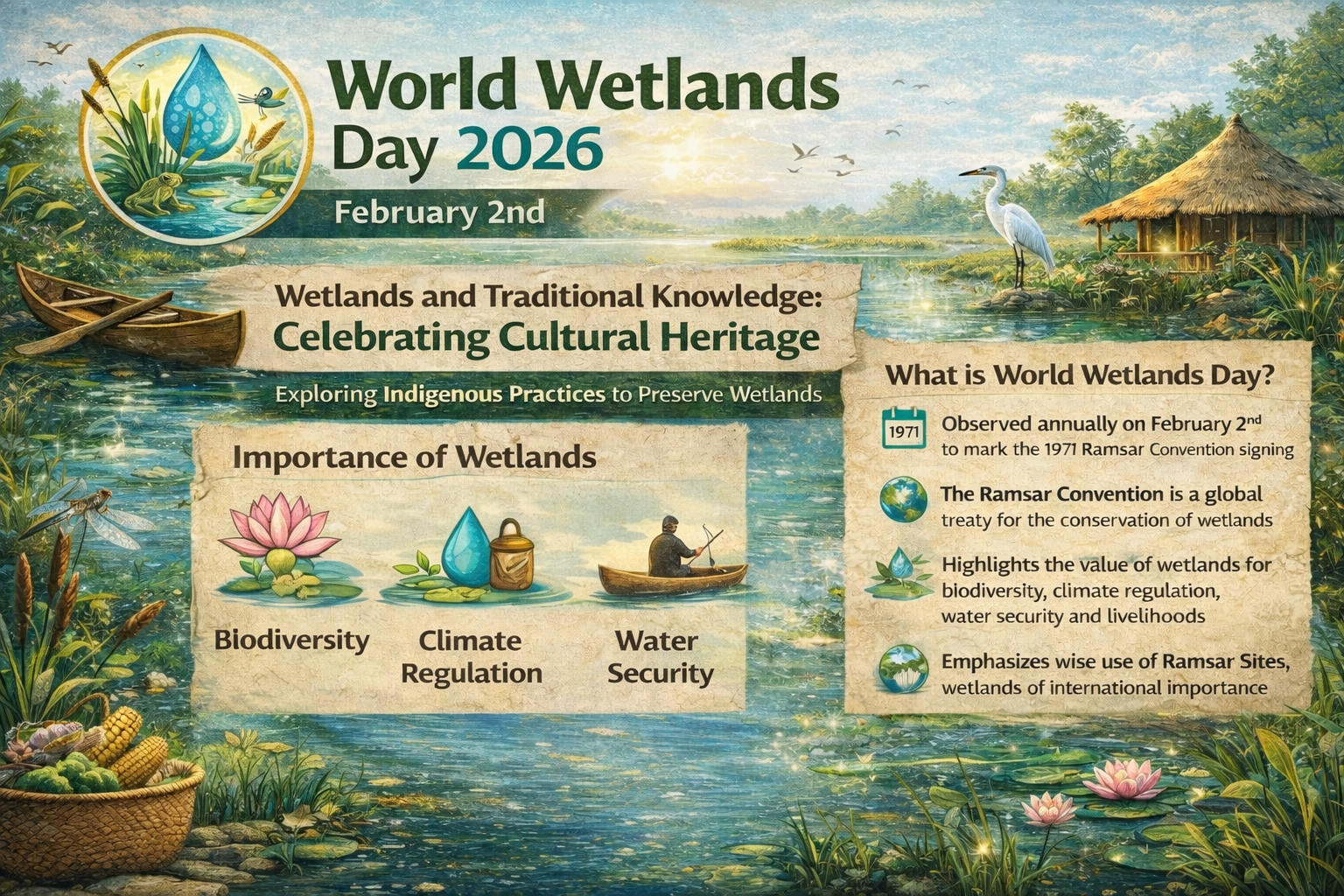
The world wetlands day is celebrated worldwide on the 2nd of February every year, in 2026, as a way of commemorating the signing of the Convention on Wetlands (Ramsar Convention) in 1971, a global treaty on the conservation and prudent use of wetlands. The day helps to emphasize the importance of wetlands in the conservation of biodiversity, climatic regulation, water security, and livelihoods. The 2026 theme is Wetlands and traditional knowledge: Celebrating cultural heritage," and how indigenous practices can be used to preserve these ecosystems. Ramsar Sites, wetlands of international significance, due to their ecological, cultural, and economic importance, are also highlighted during World Wetlands Day to take joint responsibility to protect and manage the sites sustainably.
History of World Wetlands Day
-
The world wetlands day is celebrated on the 2nd of February every year.
-
It celebrates the day of the Convention on Wetlands adoption that happened in 1971.
-
The convention was signed in Ramsar, Iran, hence the naming after the Ramsar Convention
-
It is also the inaugural international environmental treaty that specifically addresses wetlands.
-
The first World Wetlands Day was observed in 1997.
-
The day is meant to highlight the significance of wetlands to the world.
-
Every year, one has a certain theme that is associated with conservation and sustainability.
-
This project helps in the conservation and prudent utilization of wetlands globally.
List of Ramsar Sites in India
| Ramsar Site | State / Nearest City | Year |
|---|---|---|
| Chilika Lake | Odisha (Puri) | 1981 |
| Keoladeo National Park | Rajasthan (Bharatpur) | 1981 |
| Harike Wetland | Punjab (Firozpur) | 1990 |
| Loktak Lake | Manipur (Moirang) | 1990 |
| Sambhar Salt Lake | Rajasthan (Sambhar) | 1990 |
| Wular Lake | Jammu & Kashmir (Bandipora) | 1990 |
| Kolleru Lake | Andhra Pradesh (Eluru) | 2002 |
| Deepor Beel | Assam (Guwahati) | 2002 |
| Pong Dam Lake | Himachal Pradesh (Kangra) | 2002 |
| Bhitarkanika Mangroves | Odisha (Kendrapara) | 2002 |
| Upper Ganga River Stretch | Uttar Pradesh (Narora–Brijghat) | 2005 |
| Surinsar–Mansar Lakes | Jammu & Kashmir (Jammu) | 2005 |
| Renuka Lake | Himachal Pradesh (Sirmaur) | 2005 |
| Ashtamudi Lake | Kerala (Kollam) | 2002 |
| Sasthamkotta Lake | Kerala (Kollam) | 2002 |
| Rudrasagar Lake | Tripura (Melaghar) | 2005 |
| Nalsarovar Bird Sanctuary | Gujarat (Ahmedabad) | 2012 |
| Vembanad–Kol Wetland | Kerala (Alappuzha) | 2002 |
| Sundarbans Wetland | West Bengal (South 24 Parganas) | 2019 |
| Kabartal Wetland (Kanwar Taal) | Bihar (Begusarai) | 2020 |
| Sultanpur National Park | Haryana (Gurugram) | 2021 |
| Bhindawas Wildlife Sanctuary | Haryana (Jhajjar) | 2021 |
| Thol Lake Wildlife Sanctuary | Gujarat (Mehsana) | 2021 |
| Wadhvana Wetland | Gujarat (Vadodara) | 2021 |
| Haiderpur Wetland | Uttar Pradesh (Muzaffarnagar) | 2021 |
| Hokera Wetland | Jammu & Kashmir (Srinagar) | 2022 |
| Hygam Wetland | Jammu & Kashmir (Baramulla) | 2022 |
| Shallbugh Wetland | Jammu & Kashmir (Ganderbal) | 2022 |
| Tampara Lake | Odisha (Ganjam) | 2022 |
| Ranganathittu Bird Sanctuary | Karnataka (Mysuru) | 2022 |
| Aghanashini Estuary | Karnataka (Uttara Kannada) | 2023 |
| Ankasamudra Bird Conservation Reserve | Karnataka (Haveri) | 2023 |
| Magadi Kere Conservation Reserve | Karnataka (Gadag) | 2023 |
| Nagi Bird Sanctuary | Bihar (Jamui) | 2023 |
| Nakti Bird Sanctuary | Bihar (Jamui) | 2023 |
Conclusion (World Wetlands Day 2026)
World Wetlands Day 2026 introduces us to the fact that wetlands play an essential role in the ecological balance, water security, and sustainable development. Preservation and conservation of these ecosystems by means of awareness, conservation, and responsible use is needed to preserve biodiversity and to have a healthier planet for future generations.