


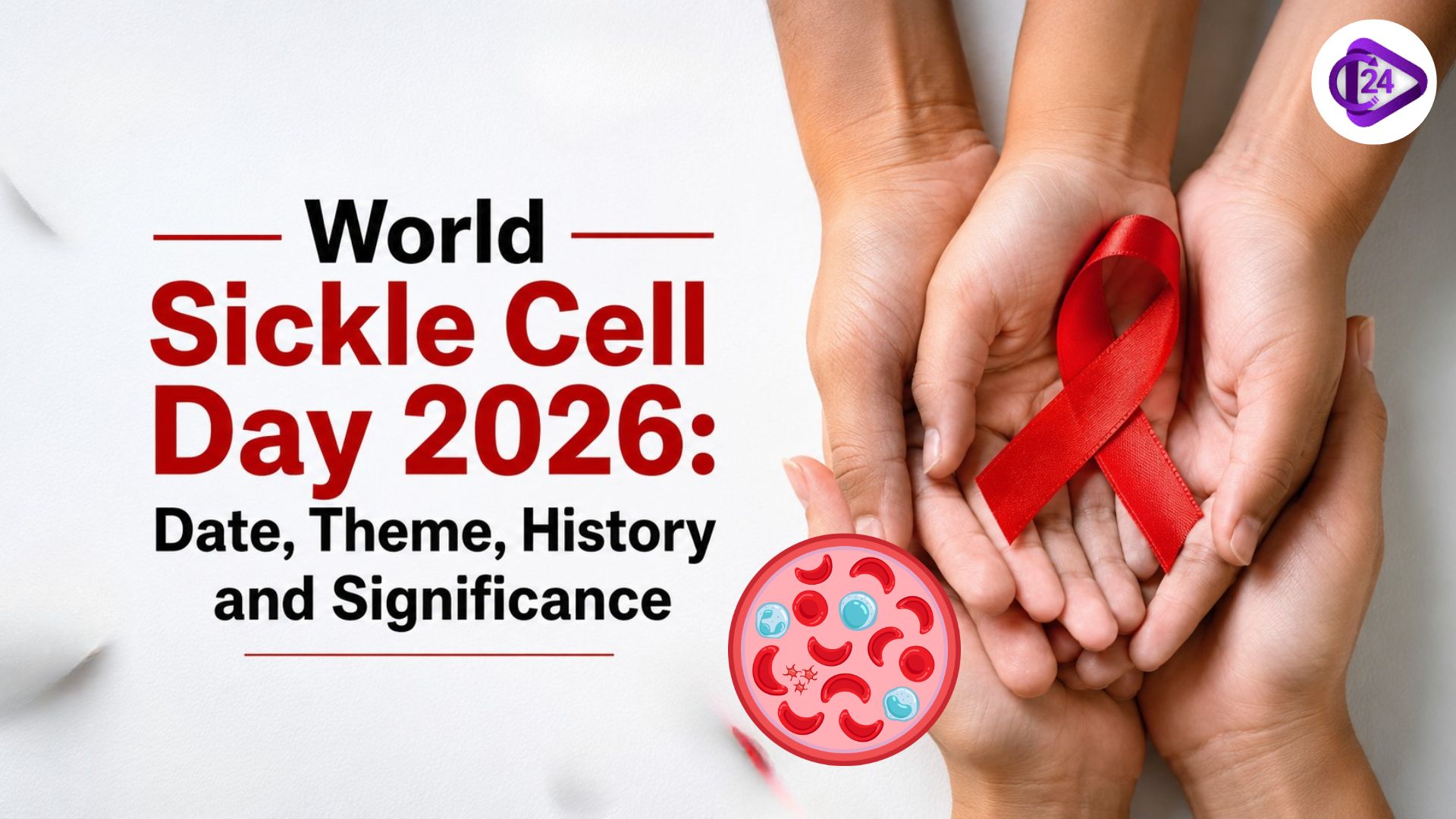
World Sickle Cell Day 2026 is observed across the world on 19 June every year to raise awareness to the sickle cell disease (SCD), an inherited blood disease impacting millions of people worldwide. The day underscores the need for early diagnosis, better access to health services, better genetic counselling and ongoing research to advance the health and wellbeing of those impacted. World Sickle Cell Day 2026 is dedicated to raising awareness of inequities in health care and fair chances of treatment and care for individuals living with SCD. Events are marked with awareness building campaigns, screening programs, and education about the condition by the government, healthcare providers, patient advocacy groups, and international organizations.
World Sickle Cell Day 2026 Theme
“Closing the Survival Gap: Equity in Sickle Cell Disease”
The theme begins to address the critical need to minimize health inequality for SCD patients. It means that high standards of diagnosis, treatment and medicines, as well as specialised care, must not be related to a person’s location, financial means or healthcare facilities.
World Sickle Cell Day 2026: Overview Table
| Particulars | Details |
| Event Name | World Sickle Cell Day 2026 |
| Date | 19 June 2026 |
| Theme | Closing the Survival Gap: Equity in Sickle Cell Disease |
| Established By | United Nations General Assembly |
| First Observed | 2009 |
| Purpose | Raise awareness about sickle cell disease |
| Type of Disease | Genetic blood disorder |
| Key Focus | Early diagnosis, treatment access, and healthcare equity |
What is Sickle Cell Disease?
A group of inherited blood disorders that result from abnormal haemoglobin also called haemoglobin S is termed Sickle cell disease (SCD) (World Health Organization, Ministry of Health and Family Welfare). This genetic disease results in red blood cells becoming stiff, sticky and sickle-shaped, rather than round.
Small blood vessels may get clogged in the abnormal cells, preventing blood from getting to various tissues and organs. Consequently those who have sickle cell can have pain attacks, anaemia episodes, infections, fatigue, stroke, and organ damage.
Key Facts About Sickle Cell Disease – World Sickle Cell Day
- A Sickle cell disease is a blood disorder which runs from generation to generation within the family.
- When a child receives the sickle cell gene from both parents.
- The disease is characterized by impaired action of haemoglobin, which is a protein molecule that picks up oxygen in the blood of red blood cells.
- Normal red blood cells are flexible and oval-shaped; sickle cells are stiff and the shape of a sickle.
- Sickle-shaped blood cells can clog blood vessels and cause a decrease in oxygen to the tissues.
- Typical symptoms are pain attacks, anaemia, fatigue, swelling and repeated infections.
- Newborn screening enhances health outcomes because many diseases can be identified early.
- Treatment is drug, transfusion and supportive measures.
- Help with understanding inheritance risks through genetic counselling.
- India’s National Sickle Cell Anaemia Elimination Mission is seeking to eradicate the disease as a public health issue by 2047.
Sickle Cell Disease Previous Year Questions (PYQs)
| Exam Name | Year | Question with Options | Correct Answer |
| UPSC Prelims | 2023 | With reference to sickle cell disease, consider the following statements:
1. It is a genetic blood disorder. 2. It is caused by abnormal haemoglobin. 3. It spreads through physical contact. Which of the statements given above are correct? (A) 1 and 2 only (B) 2 and 3 only (C) 1 and 3 only (D) 1, 2 and 3 |
(A) 1 and 2 only |
| SSC CGL | 2022 | Sickle cell disease affects which component of the human body?
(A) White blood cells (B) Platelets (C) Haemoglobin in red blood cells (D) Plasma |
(C) Haemoglobin in red blood cells |
| RRB NTPC | 2021 | Sickle cell disease is inherited when a child receives the sickle cell gene from:
(A) Mother only (B) Father only (C) Either parent (D) Both parents |
(D) Both parents |
| State PSC | 2023 | Which type of cells become sickle-shaped in sickle cell disease?
(A) White blood cells (B) Red blood cells (C) Nerve cells (D) Platelets |
(B) Red blood cells |
| SSC CHSL | 2023 | Which of the following is a common symptom of sickle cell disease?
(A) Pain crises (B) Hair loss (C) Hearing loss (D) Hyperactivity |
(A) Pain crises |
| UPSC CDS | 2022 | Sickle cell disease is caused by a mutation in the gene responsible for producing:
(A) Insulin (B) Haemoglobin (C) Collagen (D) Melanin |
(B) Haemoglobin |
| State PSC | 2024 | The abnormal haemoglobin associated with sickle cell disease is known as:
(A) Haemoglobin A (B) Haemoglobin C (C) Haemoglobin S (D) Haemoglobin F |
(C) Haemoglobin S |
| SSC MTS | 2022 | World Sickle Cell Day is observed every year on:
(A) 14 June (B) 19 June (C) 1 December (D) 7 April |
(B) 19 June |
| UPSC Prelims | 2024 | The Government of India’s National Sickle Cell Anaemia Elimination Mission aims to eliminate sickle cell anaemia by which year?
(A) 2030 (B) 2035 (C) 2047 (D) 2050 |
(C) 2047 |
| State PSC | 2023 | Which population groups in India are most affected by sickle cell disease?
(A) Coastal communities (B) Urban populations (C) Tribal populations (D) Mountain communities |
(C) Tribal populations |
| RRB Group D | 2022 | Which of the following complications is commonly associated with sickle cell disease?
(A) Hypertension only (B) Bone fractures only (C) Blocked blood flow and anaemia (D) Diabetes mellitus |
(C) Blocked blood flow and anaemia |
| SSC GD | 2023 | Sickle cell disease is classified as which type of disorder?
(A) Viral disease (B) Bacterial disease (C) Genetic disorder (D) Autoimmune disorder |
(C) Genetic disorder |
West Asia Crisis Triggers Bitumen Woes
Conclusion on World Sickle Cell Day 2026
As we celebrated World Sickle Cell Day 2026, it was a significant reminder that Sickle Cell Disease is still a serious condition affecting the global population in need of coordinated response. This year, the theme for the observance is “Closing the Survival Gap: Equity in Sickle Cell Disease,” which underscores the need for better health systems, greater access to screening and treatment, and greater investments in research. World Sickle Cell Day 2026 will be held at the Havells Centre for Vision and Action, rising to the challenge of creating a better life for millions of people impacted by sickle cell diseases and a future where high-quality care is accessible to all.