

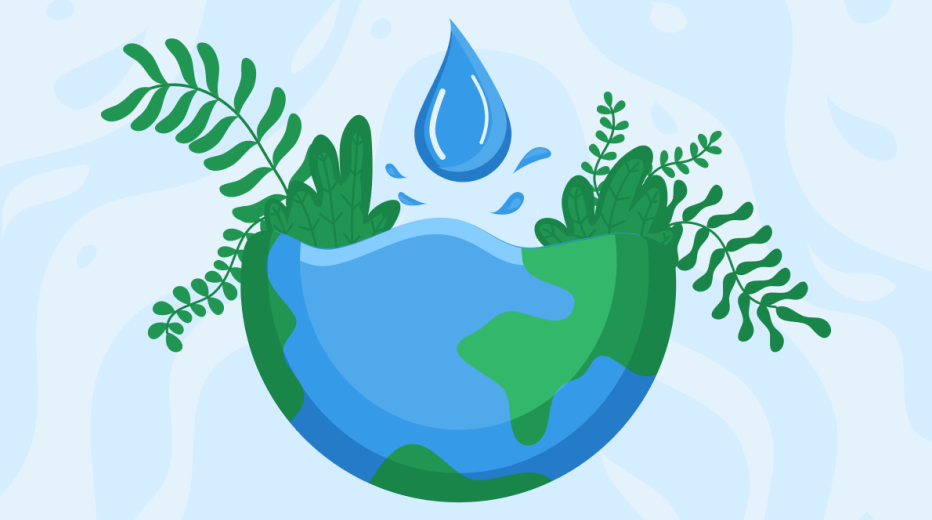
The Prime Minister of India Narendra Modi stressed on March 22 during World Water Day that people must preserve water together for present and future needs. The Ministry of Jal Shakti began Jal Shakti Abhiyan: Catch the Rain 2025 with the goal of promoting community involvement for water conservation efforts. The modifications in India's environmental picture require revising rural water policies to create both sustainable and efficient systems. The document details major water management problems while offering policy improvements for better water conservation solutions.
Key Issues in Water Conservation
-
Community Participation and Indigenous Knowledge
-
Property water strategies must combine the involvement of local residents with their traditional ecological habits.
-
Statutory bodies known as Water User Associations have no authority to make decisions in participatory irrigation management systems despite their established status.
-
Water governance policies exist as formal structures yet ignore traditional water preservation methods developed by the community.
-
-
Addressing Social and Economic Vulnerability
-
Water policies need to provide protection from environmental disasters to communities who face discrimination.
-
Currently applied policies need to include vulnerable groups in all decision-making processes as well as provide them tools to accomplish efficient resource management.
-
-
Integrated Water Management
-
The current policies handle forest management independently from water systems while operating independently from land management activities and also operate independently from biodiversity protection efforts.
-
Western Indian societies maintain orans as examples of traditional management structures which protect forests while enabling water storage and harvesting rainwater.
-
-
Ecological Considerations in Water Governance
-
Environmental governance practices worldwide adopt assessments that value nature beyond human needs because nature has its own worth.
-
The Indian judiciary stands behind natural rights but water governance continues to serve human interests.
-
The irrigation systems practiced traditionally in western regions of India support livestock water requirements because they adopted a balanced approach.
-
Impact of Climate Change on Water Resources
-
The increasing temperature of the globe intensifies the water shortage problems in India.
-
The focus of policy initiatives should center on developing water systems that resist climate change together with adaptation methods to handle water scarcity.
Conservation Strategies and Policy Initiatives
-
Preventing Water Pollution
-
The Central Pollution Control Board (CPCB) monitors water quality through the National Water Quality Monitoring Programme.
-
The Namami Gange scheme and National River Conservation Plan (NRCP) work towards river rejuvenation.
-
The Water (Prevention and Control of Pollution) Act of 1974 together with the Environment Protection Act of 1986 needs effective execution to achieve appropriate outcomes.
-
-
Recycling and Reuse of Water
-
The water from wastewater treatment plants is suitable for industrial processes that require cooling systems as well as fire suppression measures.
-
The government should endorse waste water recycling programs for urban landscape creation and general non-drinking water purposes.
-
The current rate of wastewater recycling in India amounts to thirty percent while showing ample room for growth.
-
-
Watershed Management
-
Surface and groundwater efficiency improves through the implementations of percolation tanks alongside recharge well systems.
-
Government schemes like Haryali support rural water conservation efforts through community-driven projects.
-
-
Agricultural Water Efficiency
-
The promotion of drip and sprinkler irrigation systems would lead to improved water-use efficiency.
-
Dryland agricultural practices need to become standard in all areas that receive low amounts of rainfall.
-
-
Rainwater Harvesting
-
The government supports rainwater harvesting projects throughout all regions including both rural and urban areas.
-
The revival of burial water storage systems which involve lakes along with irrigation tanks remains necessary.
-
Water scarcity in cities can be minimized through urban practices of rainwater collection.
-
-
Desalination and Interlinking of Rivers
-
Coastal desalination facilities serve as a source to produce drinkable water.
-
Projects which link rivers enable the movement of water from surplus zones to areas that experience deficits.
-

Major Policy Initiatives for Water Conservation in India
-
National Water Policy (2012)
-
Rainwater harvesting provides essential value to the concept of utilizing rainfall directly.
-
-
Central Ground Water Authority (CGWA)
-
The Central Ground Water Authority implements regulations for groundwater development and management by using provisions from the Environment (Protection) Act of 1986.
-
-
Jal Shakti Abhiyan (2019)
-
Focuses on five key aspects:
-
Water conservation and rainwater harvesting.
-
Renovation of traditional water bodies.
-
Reuse of water and recharge structures.
-
Watershed development.
-
Intensive afforestation.
-
-
-
Atal Bhujal Yojana (ABHY)
-
A Rs. 6000 crore scheme, with World Bank funding, for sustainable groundwater management in water-stressed regions.
-
The Master Plan for Artificial Recharge to Groundwater was launched in the year 2020
-
The document presents instructions to build recharge structures that adapt to various geographical terrains.
-
-
National Water Awards
-
The program honors smart water conservation initiatives from various regions of India.
-
-
Public Awareness and Capacity Building
-
Education about preserving water supply reaches the population through campaigns and training sessions in addition to artistic displays which draw attention to the need for conservation efforts
-
MGNREGS and PMKSY-WDC support rural water conservation projects.
-

Conclusion
Sustainable development requires both effective water conservation and managerial improvements because water demand surpasses fresh water supplies. The implementation of water pollution solutions along with reuse promotion and watershed integration and native conservation methods will create tangible improvements in water security. India needs policy implementations that enable communities alongside ecosystem dependency integration and climate-ready approaches to achieve water security across the nation.