

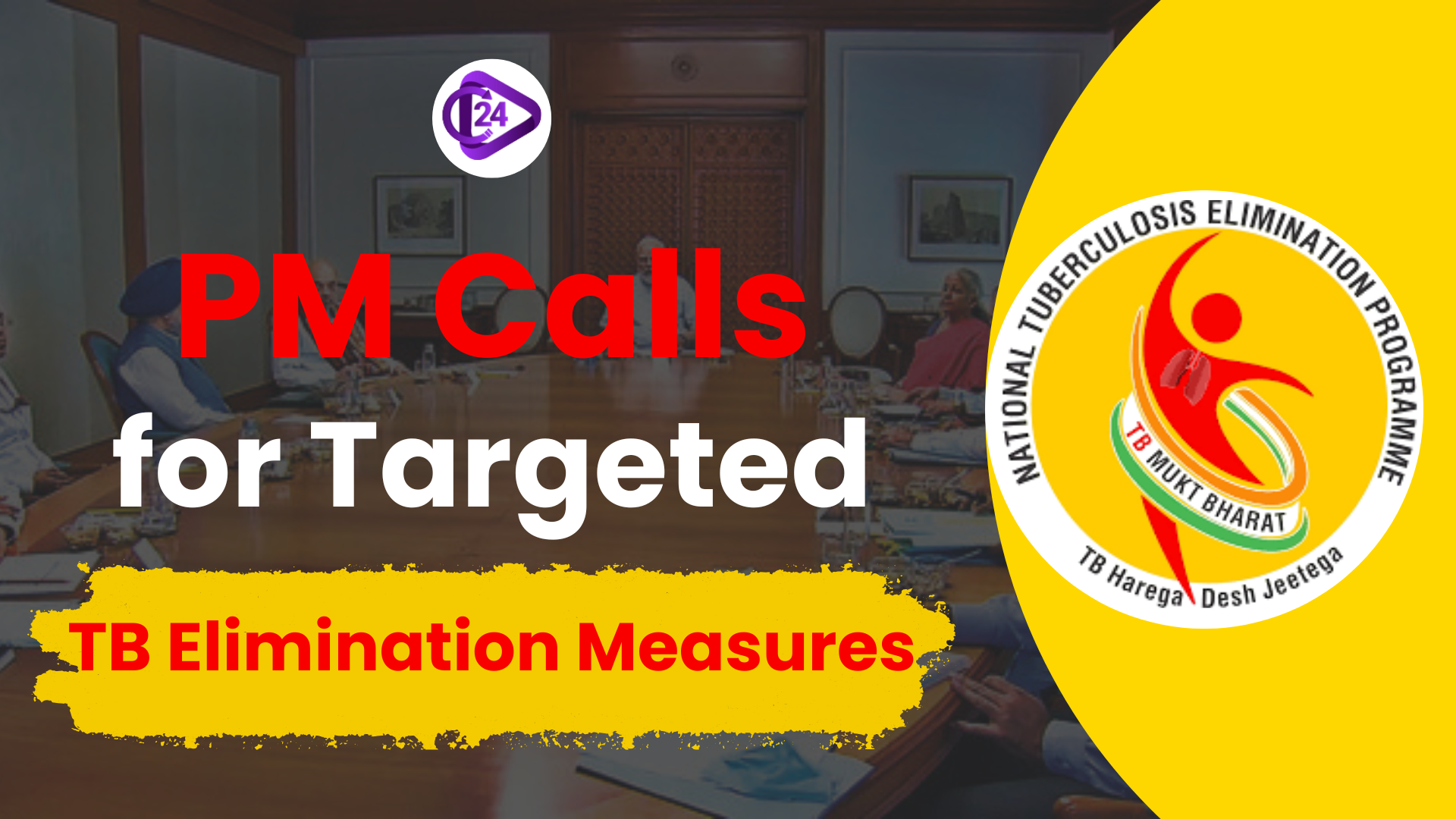
On Tuesday, Prime Minister Narendra Modi conducted a high-level review meeting of the National TB Elimination Programme (NTEP). He also called for targeted interventions, with a focus on technology-based outreach and data analytics. The target is for early TB diagnosis and treatment among vulnerable groups, such as workers in high-risk occupations. The Prime Minister underlined the achievement of 18% decline in TB incidence in India between 2015-2023.
Key Points:
-
PM Modi stresses targeted interventions and technology to eliminate TB.
-
Prioritizing the identification of high-risk groups like construction and mining workers.
-
Heartening figures reveal a huge 18% decline in the incidence of TB in India during the period from 2015 to 2023.
-
Upscaling diagnostic facilities, such as 8,540 NAAT and 87 culture/drug susceptibility testing labs.
-
Public awareness and hygiene stressed as the main driver of TB elimination.

About Tuberculosis (TB)
-
Definition: Tuberculosis (TB) is an infection caused by the bacterium Mycobacterium tuberculosis. It mostly infects the lungs but can infect other parts of the body as well, like the abdomen, glands, bones, and nervous system.
-
Transmission: TB is transmitted through air, primarily when small droplets from the cough or sneezes of an infected person with TB are breathed in.
Types of TB
|
Type of TB |
What It Is |
Is It Contagious? |
Symptoms |
|
Pulmonary TB |
TB that affects the lungs. |
Yes |
Persistent cough (sometimes with blood), chest pain, weight loss, fatigue. |
|
Latent TB |
TB bacteria are in the body but inactive. You don’t get sick. |
No |
No symptoms. You feel completely normal. |
|
Active TB |
TB bacteria become active and multiply, making you sick. |
Yes |
Persistent cough, weight loss, fever, tiredness — often more severe symptoms. |
Symptoms of TB
-
Cough that lasts longer than 3 weeks, sometimes with blood.
-
Weight loss, night sweats, high fever, tiredness.
-
Loss of appetite, chest pain, swollen lymph nodes.
Treatment & Prevention
-
Curable with Antibiotics: Takes 6-18 months of medication.
-
BCG Vaccine: Offers moderate protection, primarily for severe TB in children and infants.

Key Highlights of TB in India
-
Declining TB Incidence: Tuberculosis incidence in India fell to less than 200 per lakh (2022) from 237 per lakh (2015), a 16% reduction.
-
Reduction in TB Mortality: TB-related deaths have decreased by 18% since 2015, now at 23 per lakh population.
Improved Treatment Success Rates:
-
MDR-TB Treatment Success Rate: 74%.
-
Pre-XDR-TB Success Rate: 68%.
-
XDR-TB Success Rate: 45%
State-Wise TB Performance Index

-
Best Performing States: Himachal Pradesh, Odisha, Gujarat.
-
Lowest Performing States: Punjab, Bihar, Karnataka.
Conclusion:
India has progressed considerably in lowering TB incidence and mortality, and treatment success rates have been improving continuously. Sustaining such progress and attaining the target of TB elimination is made possible by targeting interventions, analysis of data, and public engagement. The initiatives taken by the government, especially to increase diagnostic facilities, play a pivotal role in addressing this chronic health problem.
UPSC Prelims Practice Questions
Q1. Read the following statements about Tuberculosis (TB) in India:
- TB is caused by a virus that acts mainly on the respiratory system.
- India has committed to eliminating TB by 2025.
- The BCG vaccine provides good lifelong immunity against TB across all ages.
Which of the above given statements is/are correct?
a) 1 and 2 only
b) 2 only
c) 2 and 3 only
d) 1, 2 and 3
UPSC Mains Practice Questions
Q.1 "India's war against Tuberculosis needs to transcend medicine to be a movement based on public education, targeted outreach, and technological interventions." Analyze the strategies and achievements under the National TB Elimination Programme with reference to recent trends. (250 words)