


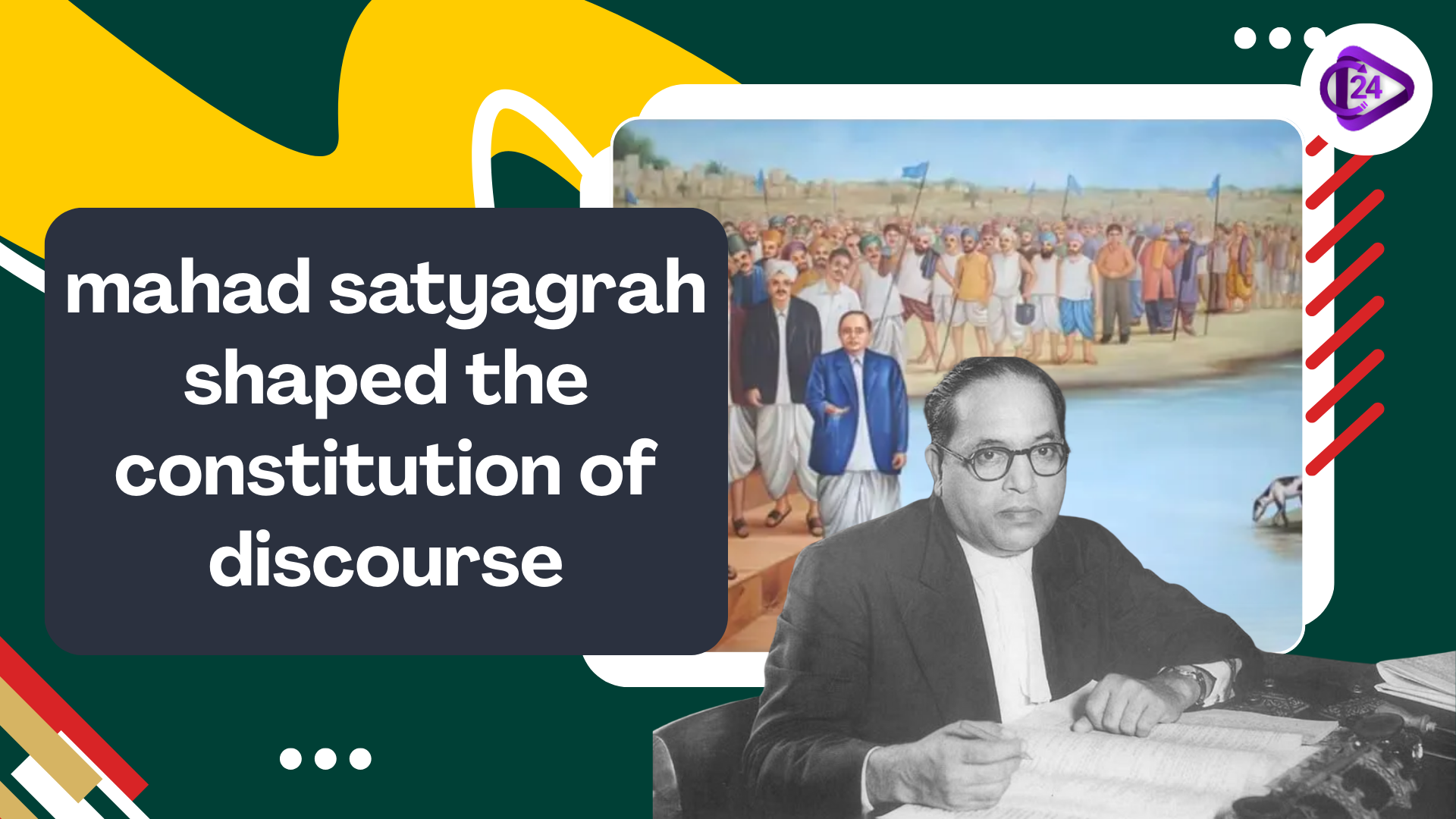
The Mahad Satyagraha was a historic movement against caste-based discrimination on 20 March 1927, led by B. R. Ambedkar. Its main goal was to take the right of Dalits to have a public water tank symbolising equality, dignity, and social justice. The movement was a strong affirmation of civil rights and a confrontation of the established social inequalities. It is generally considered to have been a milestone in the struggle of India against untouchability and discrimination. Conversely, no substantial historical data exists of a movement by the name of Madad Satyagraha, as none of the sources are credible or verifiable.
Significance of Mahad Satyagraha
-
Started the first significant Dalit civil rights movement headed by B. R. Ambedkar.
-
Claimed that oppressed communities had the right to use the public water sources.
-
Attacked the principles of caste-based discrimination in social places.
-
Prepared the groundwork for the future social justice movements in India.
-
Enhanced the concept of equality, dignity, and constitutional rights.
-
A leading social reformer through non-violent disobedience.
-
Later movements of legal and social emancipation were inspired.
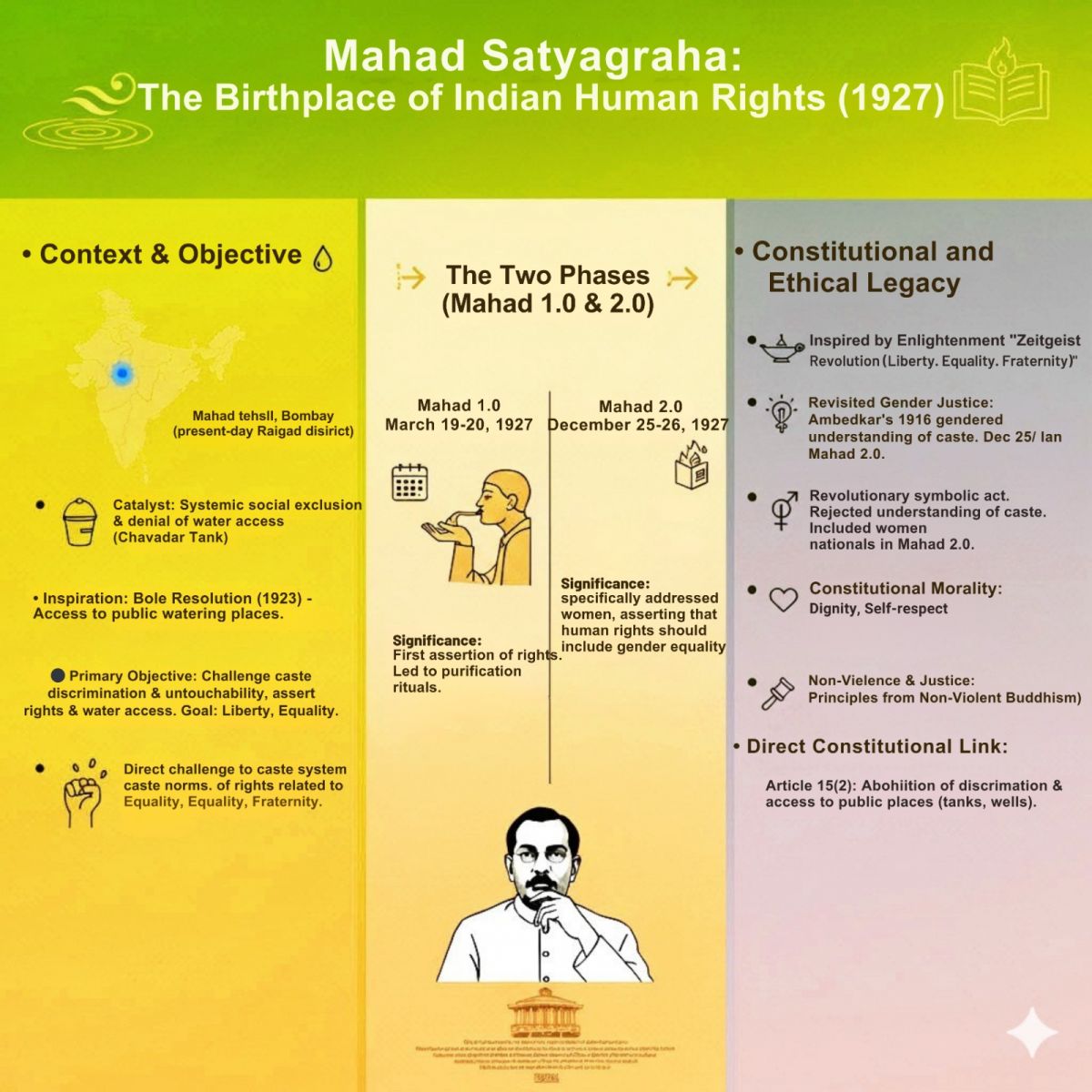
Recently Asked Questions About Mahad Satyagraha
| Exam Name / Year | Question | Options | Correct Answer | Explanation |
|---|---|---|---|---|
| SSC CGL 2023 | Mahad Satyagraha of 1927 was led by whom? | A) Gandhiji B) Ambedkar C) Jyotiba Phule D) Narayan Guru | B) Ambedkar | Ambedkar led the movement demanding equal access to public water sources. |
| RRB NTPC 2022 | Mahad Satyagraha was mainly related to which issue? | A) Tax protest B) Water access rights C) Land reforms D) Education equality | B) Water access rights | The movement sought Dalit rights to use the public tank at Mahad. |
| SSC CHSL 2023 | In which year did the Mahad Satyagraha take place? | A) 1919 B) 1927 C) 1932 D) 1942 | B) 1927 | The protest was held on 20 March 1927. |
| UPSC Prelims 2021 | Mahad Satyagraha is considered significant because it: | A) Started the Quit India Movement B) Initiated the civil rights struggle for Dalits C) Created the first Dalit political party D) Led to the Poona Pact | B) Initiated the civil rights struggle for Dalits | It was the first organised Dalit civil rights movement. |
Expected Quiz for Upcoming Exams (Mahad Satyagraha)
Mahad Satyagraha is considered a milestone because it:
A) Started the Quit India Movement
B) Launched India’s constitutional reforms
C) Marked the beginning of the organised Dalit civil rights struggle
D) Introduced reservations in India
Answer: C) Marked the beginning of the organised Dalit civil rights struggle
Description: Ambedkar used non-violent protest to claim basic human rights for oppressed communities.
During the Mahad Satyagraha, Ambedkar publicly burned which text?
A) Manusmriti
B) Arthashastra
C) Bhagavad Gita
D) Upanishads
Answer: A) Manusmriti
Description: Ambedkar burned the Manusmriti to protest caste-based discrimination and oppressive social norms.
The Mahad Satyagraha strengthened what long-term vision of Ambedkar?
A) Economic liberalisation
B) Social equality and annihilation of caste
C) Federal restructuring of states
D) Nationalisation of industries
Answer: B) Social equality and annihilation of caste
Description: It shaped Ambedkar’s lifelong mission to build a society based on dignity, rights, and equality.

Conclusion
Madad Satyagraha is an allegory that represents a broader fight for equality and dignity, which ultimately led to the adoption of the values incorporated in the Indian Constitution. It intensified the aspiration for constitutional rights championed by Dr. B. R. Ambedkar by arguing that social injustice is wrong and that people must fight it together, thereby reinforcing the values of justice, freedom, and equal rights for every citizen.