

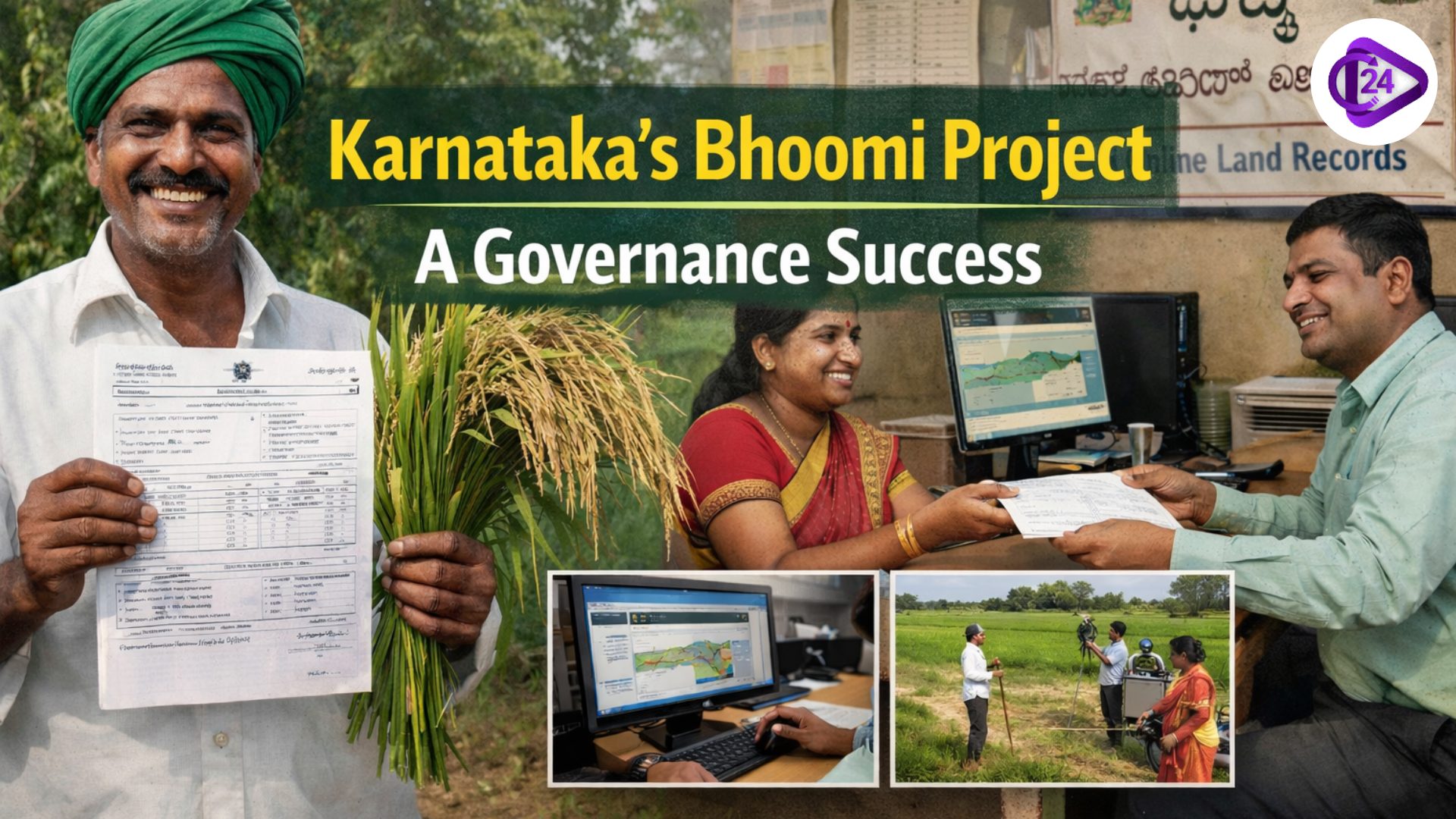
The Bhoomi Project is a masterpiece in digital land records management systems initiated by the Government of Karnataka to digitise the manual, paper-based land records system into an electronic system that is transparent, efficient, and accessible. The project has been in operation since 2000 and has computerised land records, including RTCs (Records of Rights, Tenancy, and Crops). It has also facilitated citizens' access to land documents through kiosks and online services. Serving as a means to facilitate safe mutation operations, verify land ownership, and automatically update status, Bhoomi helps minimise corruption rates and reliance on intermediaries, while enhancing citizens' access to information on property operations throughout the state.
What is Karnataka’s Bhoomi Project?
-
Bhoomi is the DER of the government of Karnataka, which is a software launched in 2000.
-
It was developed as part of eliminating manual land record keeping done on paper and replacing it with an electronic system.
-
The initiative makes Records of Rights, Tenancy and Crops (RTC) in the state digital.
-
Bhoomi offers online land ownership information and mutation.
-
It allows farmers and citizens to access and view, as well as download, land records without any issues.
-
The system has minimised corruption, intermediation, and time wastage in the exchange of land.
-
Bhoomi enhances land administration in terms of transparency, accuracy, and efficiency.
-
It aids in the safe updating and validation of changes of ownership of land.
-
It has its platform available via online portals and service centres across the state.
Benefits of Bhoomi Project for Farmers and Citizens
-
Allows quick online access to any place, like land records, RTC, anywhere.
-
Farmers are able to access, authenticate, and obtain land records without coming to the offices.
-
Facilitates real-time tracing of ownership and mutation status.
-
Assistance in the expedited handling of land records, subsidies, and agricultural insurance.
-
Eliminates reliance on distributors, minimising corruption and redundant delays.
-
Ensures transparency by use of tamper-proof digital land documentation.
-
Conserves time, traveling expenses, and time consumption by farmers and citizens.
-
Minimises the avarice of land due to the provision of accurate and verifiable titles.
-
Grants landowners secure and direct access to property information.

Conclusion (Karnataka’s Bhoomi Project)
The Bhoomi Project of Karnataka is an example of successful digital governance, as it has changed the realm of land administration by enhancing its transparency, efficiency, and access. Enabling farmers, decreasing corruption, and modernising land records, Bhoomi has created a more reliable drive by having faith in public services and providing a standard of other e-governments initiatives in India.