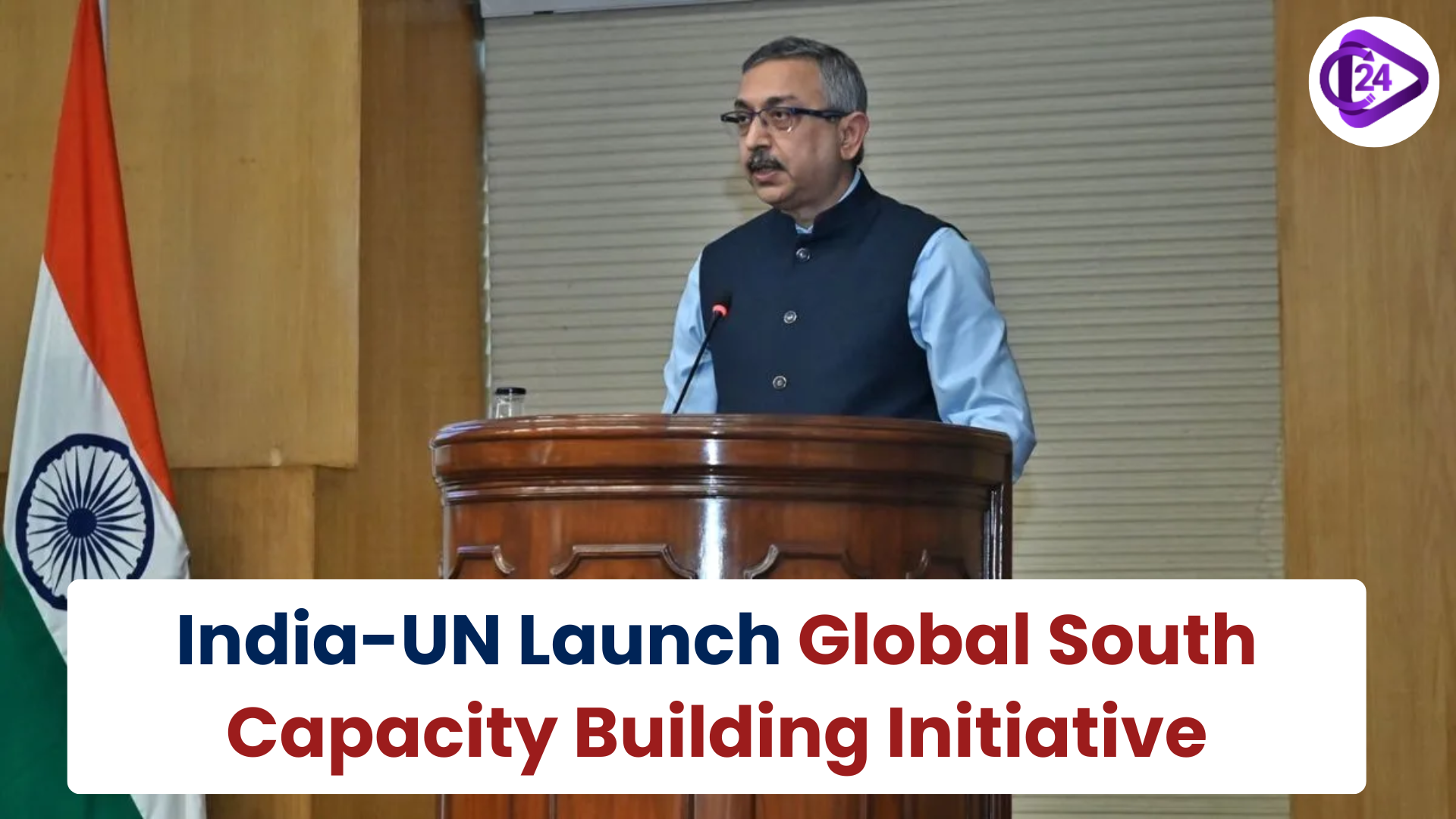
On August 1, 2025, India actually launched the initial group of projects as a part of the India-UN Global Capacity Building Initiative – a radical diplomatic and development initiative that would help to build South-South cooperation and speed up the achievement of the Sustainable Development Goals (SDGs) in the Global South. The initiative has been a new step in the field of the development diplomacy of India and it has served as a reinforcement of its status of being a Vishwa Mitra (Global Partner).
Key Points
Background and Context
-
In September 2023, then External Affairs Minister Dr. S. Jaishankar announced, on the sidelines of the 78th UN General Assembly, the India-UN Global Capacity Building Initiative.
-
It attempts to combine the traditional Indian model of development partnerships with multilateral assistance by UN agencies, to come up with custom solutions to low income and developing countries.
-
It complements the ITEC programme, which was the flagship India-origin programme, with a 58+ year history, that has trained 2.25 lakh+ participants to date, in more than 160 + countries.
Projects Launched Under Phase 1 (August 2025)
|
Project Theme |
Countries Involved |
Partner UN Agency |
|
Rice Fortification & Supply Chain |
Nepal |
World Food Programme (WFP) |
|
Digital Health Platforms |
Zambia and Lao PDR |
UNDP |
|
Census Preparedness |
Belize, Barbados, St Kitts & Nevis, Suriname, Trinidad & Tobago |
UN Population Fund (UNFPA) |
|
Vocational Training |
South Sudan |
UNESCO |
Importance of the Initiative
1. New Concept of South-South Cooperation
-
It highlights the rampant and proactive leadership within the joint development diplomacy.
-
Strengthens the partnerships free of conditionalities, which observe the national sovereignty and local priorities.
2. SDG-Centric Approach
-
Targeted actions include putting an end to hunger (SDG 2 on ZERO Hunger), achieving good health (SDG 3 on Good Health), quality education (SDG 4 on Quality Education), decent work (SDG 8 on Decent Work) and partnerships to achieve the goals (SDG 17 on Partnerships to achieve goals).
3. Strategic Soft Power
-
Amplifies the angle of India as a development partner, and not a donor.
-
Increases the international position of India in international institutions such as BRICS, G-20, and Voice of Global South Summit.
4. Multilateral Synergy
-
Includes organization by UN bodies, expertise, monitoring systems, and legitimated by the world community.
-
Why Does it Matter to the Global South
-
Most of the low-income countries are deprived of technical human capital and institutional readiness.
-
These projects provide
-
Technology transfer
-
Skill development
-
Design and “capacity building”
-
-
Reduces vulnerability issues in the areas of public health, food security, and data governance, and post-COVID situations
India’s Development Diplomacy: Evolution and Scope
|
Milestone |
Contribution |
|
ITEC (1964) |
Over 400 specialised training courses in sectors like IT, banking, healthcare, and agriculture |
|
Lines of Credit (LOCs) |
$32 billion committed to over 65 countries |
|
Solar Mamas (Barefoot College) |
Training rural women from Africa and Asia as solar engineers |
|
e-VBAB (Tele-education & Tele-medicine Africa) |
Digital platform for health and education exchange with African countries |
|
UNESCO/WHO/UNDP Partnerships |
Integration with multilateral mechanisms for quality assurance and transparency |
Challenges and Areas of Concern
|
Challenge |
Explanation |
|
Execution Monitoring |
Ensuring accountability and impact across diverse geographies |
|
Alignment with Local Needs |
Risk of misalignment between curriculum and on-ground realities |
|
Infrastructure Bottlenecks |
Many recipient countries face poor digital infrastructure or governance |
|
Sustainability & Follow-Up |
Need for post-training tracking, refresher support, and feedback loops |
Way Forward
-
Intensify Local Alliances
-
Liaise with the community based NGOs and regional institutions in host countries to contextualize the content of training.
-
-
Digital Platforms Across Scales
-
Increase hybrid and virtual modules to a broader reach with the help of systems like DIKSHA, e-Vidya, or Ayushman Bharat Digital Mission.
-
-
Multi-Stakeholder Involvement
-
Include Indian startups, Indian universities and Indian tech providers in international capacity building missions.
-
-
Outcomes-Based Framework
-
Ensure effective monitoring and evaluation (M&E) systems to be put into place with pre-determined SGD-linked indicators.
-
-
Institutional Branding
-
These efforts should be institutionalized through the establishment of an India International Institute of South-South Cooperation.
-
Conclusion
The India-UN Global Capacity Building Initiative is a remarkable and auspicious beyond-national-certaincy stage for intensifying development democratization. It shows how India has moved on to provide knowledge and capacity sharing resources most especially to the Global South, no longer the aid recipient.