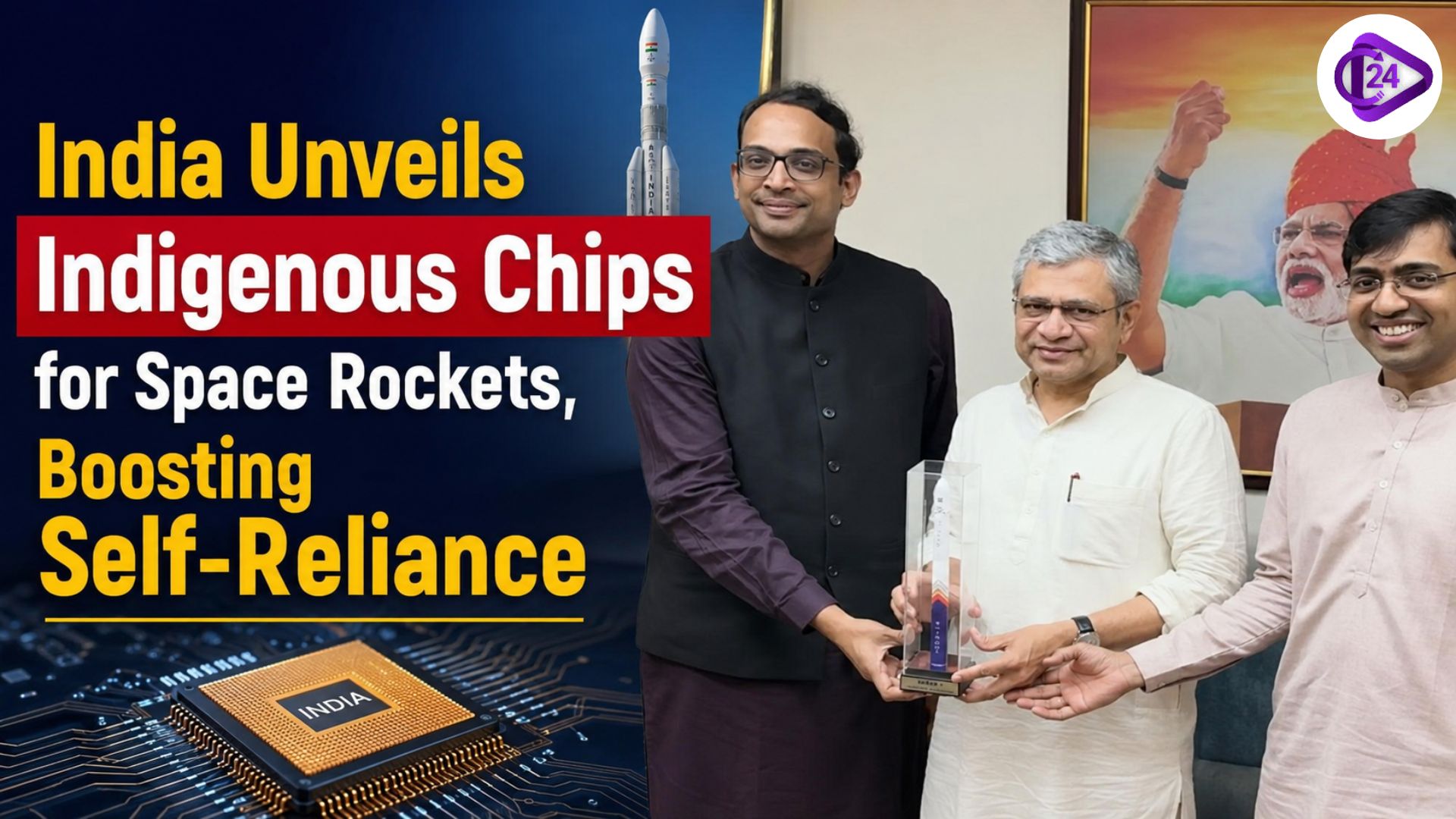


The country has been known for its premier software development status for many years and it continues to quickly advance toward hardware manufacturing excellence. India builds its position in the global electronics sector through five active semiconductor plant constructions. Minister Ashwini Vaishnaw from the Electronics and Information Technology department expects India to accomplish a big breakthrough this year through its initial Made in India semiconductor chip.
Advancements in the Digital and Electronics Sector
-
Technology alongside innovation continues to produce lasting transformations for every Indian citizen outside of research facilities.
-
The government supports basic model development through funding programs that produce national-specific artificial intelligence solutions and large language models (LLMs).
-
The four key strategic sectors which India is targeting through government initiatives are Digital Public Infrastructure (DPI) coupled with Artificial Intelligence and Semiconductors and Electronics Manufacturing.
-
The technological progress of India depends on semiconductors and electronics framework with DPI functioning as its powerful engine.
AI and Compute Facility Initiatives
-
Through a Common Compute facility India delivers GPU access to users and bills them under 100 rupees per hour for over 18,000 GPUs.
-
The project supports all AI development activities for startups and researchers and academic establishment working on foundational models.
-
The government is assembling large anonymous dataset collections for AI model training which helps decrease bias and enhances performance.
-
AI solutions in these domains will become operational by utilizing these anonymized datasets.
-
Various Centers of Excellence work together for developing fundamental AI models which maintain India's position as a leader in AI research.
India’s Digital Public Infrastructure: A Global Benchmark
-
The Digital Public Infrastructure across India stands as a standard which other nations admire.
-
Public funds from India's public-private approach allow the development of Aadhaar UPI and DigiLocker platforms through this approach.
-
Businesses can now reach advanced financial efficiency procedures while improving both service quality and governance frameworks because of AI platform integration.
-
Multiple G20 member nations displayed interest in adopting India’s DPI model during their summit meeting.
-
Japan issued a patent for India's UPI system because the platform displays highly successful characteristics suitable for worldwide adoption.
AI-Driven Management at Mahakumbh 2025
-
The simultaneous tracking of railway passenger populations through AI tools led to improved crowd distribution strategies.
-
Kumbh Sah'AI'yak worked as a translation service through Bhashini technology to help visitors maintain communications and locate things before providing updated information.
-
Through these innovations Mahakumbh became a benchmark for AI-based event organization.
-
The Digital Economy requires India to develop its workforce capabilities for improved performance in this space.
-
India's position as a worldwide center for research development and technological expertise is strengthened by the weekly establishment of one Global Capability Center (GCC).
-
The Government of India through the National Education Policy 2020 works to integrate AI and semiconductor design and 5G technologies into university learning programs.
-
These initiatives develop university graduates for digital economy work and simultaneously accelerate innovation.
AI Governance and Security Measures
-
India has chosen a practical method combining technological expertise and legal rules when managing artificial intelligence operations.
-
The government allocates funding into AI-based solutions that protect from deepfakes as well as deepfakes and safeguard privacy and cybersecurity elements.
-
The government should concentrate on building AI deployment methodologies that maintain accountability alongside developing an environment conducive to innovation through regulations.
Conclusion
-
India reached a crucial step in its technological development by introducing its homegrown indigenous semiconductor chip.
-
Service-based initiatives from the government are establishing India as a world leader in technology.
-
The future will combine digital inclusivity with technological advancement through existing investments directed towards education and research-based innovation.