
Day: March 7, 2025

India’s Bioeconomy to Reach $300 Billion by 2030: Union Minister

India’s bioeconomy is witnessing unprecedented growth, with its valuation skyrocketing from $10 billion in 2014 to $130 billion in 2024, as highlighted by Union Minister Dr. Jitendra Singh. The country’s vast biodiversity and strong research infrastructure position it as a leading player in biotechnology. Government initiatives, including increased funding for research and policy reforms, are accelerating this expansion. With India ranking among the top global biotech hubs, experts predict the bioeconomy to surpass $300 billion by 2030. This growth is further fueled by biotech innovations, agricultural advancements, and a thriving startup ecosystem.

Dr. Singh emphasized that the biotech sector in India experienced explosive growth because its value escalated from $10 billion in 2014 to more than $130 billion during 2024. The bioeconomy sector in India shows strong indications of reaching $300 billion by 2030 based on existing data. The biotech revolution in India continues to surge because of its substantial natural and biodiversity resources according to Dr. Singh. He drew parallels between this development and the IT boom that occurred in the West.

Since 2013-14 until 2025-26 the budget allocation for the Department of Biotechnology (DBT) increased by approximately 130% from ₹1,485 crores to ₹3,447 crores.

Jammu & Kashmir: A Hub for Agricultural Biotechnology

During this presentation Jammu & Kashmir demonstrates exceptional progress through agricultural biotechnology programs including the Aroma Mission and floriculture revolution. The initiatives allowed local farmers to become self-reliant through aromatic plant and flower cultivation that developed new essential oil-based and floriculture markets. The suitable environmental conditions of J&K position it as an excellent area for agricultural developments that rely on biotechnology.

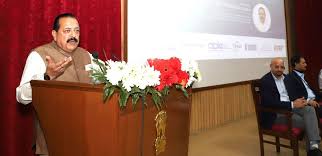
Dr. Singh praised the scientific and economic development achievements of Prime Minister Narendra Modi during his presentation at PBBCON-2025 in Jammu at the International and National Conference "Emerging Innovations in Biochemistry and Biotechnology for Holistic Development of Agriculture".

India’s Biotech Milestones in 2024

  • India has reached impressive achievements in biotechnology through stunning advancements across various fields during 2024.

  • World’s First HPV Vaccine: A breakthrough in cervical cancer prevention.

  • The discovery of Nafithromycin provides a domestically created antibiotic solution to fight antimicrobial resistance.

  • Medieval medical science has reached a zenith through Gene Therapy for treating patients with Hemophilia.

  • Mission Suraksha Initiative: Led to the development of indigenous DNA-based vaccines during the COVID-19 pandemic, contributing to the world’s largest vaccination drive.

India’s Global Standing in Biotechnology

  • The Asia-Pacific region positions India at number three for biomanufacturing which also makes it rank 12th worldwide. 

  • Dr. Dr. Singh explained that the recently implemented New BioE3 Policy directs its efforts towards biomanufacturing and bio-foundries to enhance India’s biotech ecosystem capabilities.

  • The 2024 budget allocated ₹50000 crores to Anusandhan National Research Foundation (NRF) for increasing private sector participation to 60 percent which will boost deep-tech and biotech startup development. 

  • The biotech startup sector of India has seen explosive growth since 2014 when it started with 50 initiatives until today when nearly 9000 such startups exist.

Scientific Achievements and Start-Up Growth

  • Throughout his talk Dr. Singh showcased how India emerged as an international force in scientific research combined with entrepreneurial growth:

  • The worldwide ranking position of Indian scientists surpasses 5352 researchers who are now part of the top 2 percent.

  • The Global Innovation Index position of India shifted from 80th place in 2014 to 39th position in 2024.

  • The "Start-Up India, Stand-Up India" program has fostered development of the third-biggest startup environment worldwide.

Conclusion

The event received remarks from SKUAST Vice Chancellor Prof. B.N. Tripathi and Dr. Sharma as the President of National Society of Biochemistry & Biotechnology in Agriculture concerning India's growth through sustained investment in research and biotechnology.

India to Launch First Indigenous Semiconductor Chip in 2025

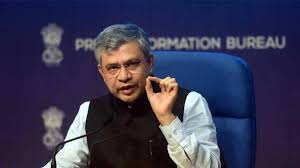
The country has been known for its premier software development status for many years and it continues to quickly advance toward hardware manufacturing excellence. India builds its position in the global electronics sector through five active semiconductor plant constructions. Minister Ashwini Vaishnaw from the Electronics and Information Technology department expects India to accomplish a big breakthrough this year through its initial Made in India semiconductor chip.

Advancements in the Digital and Electronics Sector

  • Technology alongside innovation continues to produce lasting transformations for every Indian citizen outside of research facilities.

  • The government supports basic model development through funding programs that produce national-specific artificial intelligence solutions and large language models (LLMs).

  • The four key strategic sectors which India is targeting through government initiatives are Digital Public Infrastructure (DPI) coupled with Artificial Intelligence and Semiconductors and Electronics Manufacturing.

  • The technological progress of India depends on semiconductors and electronics framework with DPI functioning as its powerful engine.

AI and Compute Facility Initiatives

  • Through a Common Compute facility India delivers GPU access to users and bills them under 100 rupees per hour for over 18,000 GPUs.

  • The project supports all AI development activities for startups and researchers and academic establishment working on foundational models.

  • The government is assembling large anonymous dataset collections for AI model training which helps decrease bias and enhances performance.

  • AI solutions in these domains will become operational by utilizing these anonymized datasets.

  • Various Centers of Excellence work together for developing fundamental AI models which maintain India's position as a leader in AI research.

India’s Digital Public Infrastructure: A Global Benchmark

  • The Digital Public Infrastructure across India stands as a standard which other nations admire.

  • Public funds from India's public-private approach allow the development of Aadhaar UPI and DigiLocker platforms through this approach.

  • Businesses can now reach advanced financial efficiency procedures while improving both service quality and governance frameworks because of AI platform integration.

  • Multiple G20 member nations displayed interest in adopting India’s DPI model during their summit meeting.

  • Japan issued a patent for India's UPI system because the platform displays highly successful characteristics suitable for worldwide adoption.

AI-Driven Management at Mahakumbh 2025

  • The simultaneous tracking of railway passenger populations through AI tools led to improved crowd distribution strategies.

  • Kumbh Sah'AI'yak worked as a translation service through Bhashini technology to help visitors maintain communications and locate things before providing updated information.

  • Through these innovations Mahakumbh became a benchmark for AI-based event organization.

  • The Digital Economy requires India to develop its workforce capabilities for improved performance in this space.

  • India's position as a worldwide center for research development and technological expertise is strengthened by the weekly establishment of one Global Capability Center (GCC).

  • The Government of India through the National Education Policy 2020 works to integrate AI and semiconductor design and 5G technologies into university learning programs.

  • These initiatives develop university graduates for digital economy work and simultaneously accelerate innovation.

AI Governance and Security Measures

  • India has chosen a practical method combining technological expertise and legal rules when managing artificial intelligence operations.

  • The government allocates funding into AI-based solutions that protect from deepfakes as well as deepfakes and safeguard privacy and cybersecurity elements.

  • The government should concentrate on building AI deployment methodologies that maintain accountability alongside developing an environment conducive to innovation through regulations.

Conclusion

  • India reached a crucial step in its technological development by introducing its homegrown indigenous semiconductor chip.

  • Service-based initiatives from the government are establishing India as a world leader in technology.

  • The future will combine digital inclusivity with technological advancement through existing investments directed towards education and research-based innovation.

Jan Aushadhi Diwas 2025: Affordable Quality Medicines for a Healthier Future

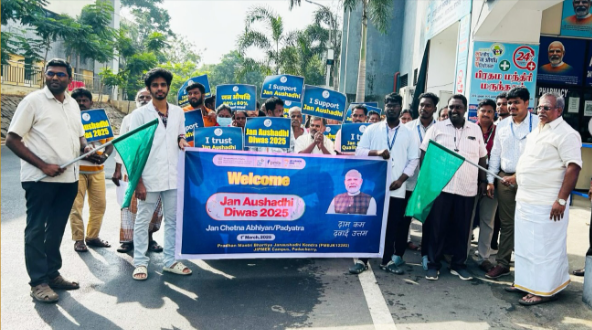
People celebrate 'Jan Aushadhi Diwas' on March 7th of each year to inform the public about the Pradhan Mantri Bhartiya Janaushadhi Pariyojana (PMBJP) and its generic medications. Over seven days starting March 1st various healthcare-related information is disseminated throughout national locations for 'Jan Aushadhi Diwas'.

PMBJP received attention during its Yearly festival start date of March 1st across the National Capital Region (NCR). The Department of Pharmaceuticals established PMBJKs as a part of the PMBJP initiative which began in November 2008 through the Ministry of Chemicals & Fertilizers for delivering affordable quality medicines.

Key Objectives of PMBJP

  • PMBJP provides every person with broad access to affordable generic medications. The program conducts several primary tasks that include:

  • The public needs to learn about generic drugs as they offer superior quality but cost much less than brand-name products.

  • Healthcare professionals across government hospitals should adopt the practice of prescribing generic medications since this approach decreases patient treatment expenses.

  • The accessibility of important medicines from different therapeutic groups increases because of PMBJK's broad network spread.

  • As India holds its position as a dominant exporter of generic medicines in the world its population continues to encounter limitations in accessing reasonably priced medication. The initiative PMBJP aims to remove barriers to generic medicine access through its program of providing unbranded drugs across many locations.

Major Initiatives Under PMBJP

1. Suvidha Sanitary Napkins

  • The initiative launched Jan Aushadhi Suvidha Oxo-biodegradable Sanitary Napkins for women’s health on August 27, 2019. 

  • People can access PMBJP Suvidha sanitary pads for a price of ₹1 each through 15,000 PMBJP Kendras spread across India. 

  • The sales of 72 crore suvidha napkins established menstrual hygiene for all women at the lowest possible prices from January 31 2025.

2. Jan Aushadhi SUGAM Mobile App

  • Since its August 2019 introduction the app provides users with three main functions.

  • Users can easily access Jan Aushadhi Kendras through the Google Maps platform.

  • Users should access the app to search generic medications while the system presents comparison data between generic and branded options.

  • Calculate savings on medicines.

Features of PMBJP

  • Under the Dual Operation Model the government runs the program together with private entrepreneurs.

  • The generic medicine price structure delivers savings that range from 50% until 80% compared to branded pharmaceuticals.

  • Quality Assurance ensures that the app acquires medicines from manufacturers with WHO-GMP certification and tests these products at NABL-accredited laboratories.

Financial Incentives:

  • The PMBJP Kendras receive monthly financial incentives to reach up to ₹20,000 through incentives of 20% that vary based on stocking requirements.

  • The program offers a single payment of ₹2 lakh to Kendra operators in Northern states or Himalayan states and islands and aspirational districts and also benefits female-run or ex-servicemen/challenges-affected/self-identifies/tribal-identifies owned outlets.

Growth of PMBJP

  • The PMBJP program has seen major growth over successive years.

  • More than 15,000 PMBJP Kendras exist throughout all districts in India.

  • PMBJP offers more than 1,800 generic medicines and 280 surgical & medical devices to customers.

  • Jan Aushadhi Diwas 2025: 7 Days of Celebration

Conclusion

Through PMBJP India achieved healthcare affordability breakthroughs by offering top-quality medicines at highly reduced prices to its citizens. The 15,000 operating Janaushadhi Kendras offer both drug price affordability to patients and business opportunities for entrepreneurs.

Public health together with rural entrepreneurship will get stronger through government expansions of generic medicine access while PMBJP carries out its mission. The annual Jan Aushadhi Diwas event emphasizes the significance of affordable healthcare together with the sustained initiative to provide accessible medicines for all Indian citizens.

Bangus Valley: Emerging Ecotourism Hub in Kashmir’s Pristine Landscape

Bangus Valley in Jammu and Kashmir has recently emerged as a destination of interest following ecological tourism initiatives from the government. The Kupwara district contains this valley which boasts unforgettable landscapes as well as complete biodiversity alongside an untouched natural setting. The valley's future development relies on network improvements alongside conservation-based tourism policies which will position Bangus Valley as a top ecotourism attraction in the area.

Geographical Location & Connectivity:

  • The valley exists in Kupwara district about 100 kilometers from Srinagar having Pir Panjal range as its basis near the Line of Control (LoC).

Comprises two distinct valleys:

  • The Boud Bangus (Big Bangus) region reaches 300 square kilometers while surrounded by Rajwar, Mawar and Shamasbury mountain ranges.

  • The valley known as Lokut Bangus (Small Bangus) exists as a smaller area which lies to the northeast of Big Bangus and features active trekking activities and attractive sights.

  • The source of Bangus derives from Sanskrit origins where “Van” means forest and “Gus” means grass therefore the term signifies forest of grass.

Connectivity:

  • Handwara via Reshwari Mawer (shortest and most preferred route).

  • Handwara via Rajwar (trekking route).

  • Kupwara via Chowkibal (road under development, expected completion by 2025).

  • Road connectivity via Handwara completed in June 2022

Ecological Significance:

  • The valley functions as a biodiversity hotspot because it includes more than 50 animal species together with greater than ten species of birds.

  • The valley contains these important mammal species: Musk deer, antelope, snow leopard, brown bear, black bear, red fox, monkeys.

  • Birdlife: Tragopan, monal pheasant, black partridge, bush quail, wild fowl.

  • Traditional herbal medicine draws from sources of medicinal plants and wildflowers found in this region which supports ongoing practices of medicinal herbalism.

Water Conservation:

  • The area comprises 14 water sources Roshan Kul, Tillwan Kul, and Douda Kul that flow into the Pohru River.

  • Plays a crucial role in the region’s hydrological balance.

  • The region faces threats to climate sensitivity as glacial melting occurs while precipitation patterns undergo modifications because of climate change.

Government Initiatives & Ecotourism Development:

  • As a part of its initiative the J&K government sets its sights on establishing Bangus Valley as an important destination for ecotourism development.

  • The sustainable development framework consists of managed tourism in addition to waste management activities together with forest protection and wildlife preservation efforts.

  • The development strategy includes promoting adventure activities such as trekking together with camping as well as nature trails and wildlife photography.

  • The local community should participate in tourism activities which aims to create stable socio-economic growth.

  • The development of infrastructure will proceed with new road construction and eco-lodges alongside visitor facilities which will not destroy the sensitive biodiversity of the area.

Significance of Ecotourism in Bangus Valley:

  • The area represents a tourism option superior to mass-scale visits that helps conserve Kashmir's natural landscapes.

  • Sustainable tourism initiatives create better employment positions for the locals.

  • The practice of responsible tourism protects the environment from harm while operating.

  • The conservation of wildlife receives support through active policies that provide tourists with exclusive nature-based encounters.

Other valleys:

Valley

State

Kashmir Valley

Jammu and Kashmir

Chenab Valley

Poonch Valley

Tawi Valley

Sind Valley

Lidder Valley

Gurez Valley

Lolab Valley

Yusmarg Valley

Basoli Valley

Tulail Valley

Zanskar Valley

Ladakh

Nubra Valley

Suru Valley

Shyok Valley

Indus Valley

Drass Valley

Markha Valley

Rupshu Valley

Conclusion

Both natural beauty and ecotourism policies will make Bangus Valley a top travel destination attracting nature enthusiasts and adventurers. Sustainable development initiatives targeted by the government protect the pristine environment of the valley and also support regional growth through community-focused involvement. Bangus Valley is progressing toward establishing its position as one of India’s leading ecotourism sites where visitors can experience Kashmir’s extraordinary natural environment.

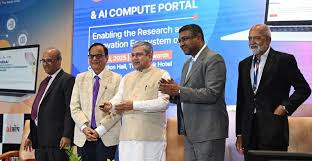
IndiaAI Mission Marks Major Milestone with the Launch of AIKosha and AI Compute Portal

The Ministry of Electronics and Information Technology (MeitY) launched multiple AI-based initiatives to build up India’s AI framework. The transformative AIKosha system and IndiaAI Compute Portal function as primary platform tools for boosting AI research activities and development together with deployment processes. Few of these initiatives work within the IndiaAI Mission to build AI innovation and create equal AI resource accessibility for all users.

Key Initiatives and Features:

AIKosha: IndiaAI Datasets Platform

  • A secured repository offering over 300 datasets and 80+ AI models for research and development.

  • Features an AI sandbox with an integrated development environment, tools, and tutorials.

  • The platform uses multiple security features that consist of data encryption protocols along with secure API interfaces and immediate network traffic control mechanisms.

  • Users can find content through the platform while datasets receive AI readiness scoring scores

  • The platform promotes consenting datasets obtained ethically which functions to minimize dependency on artificial and imported data sources.

IndiaAI Compute Portal

  • The AI compute platform functions through the cloud to provide affordable GPU resources for customers.

  • The program assists all levels of startup businesses and academic units, researchers and government institutions.

  • The system features  GPUs including NVIDIA H100, H200, A100, L40S, AMD MI300x, and Intel Gaudi 2.

  • The platform provides essential network and storage along with development platform services for AI tasks.

  • Through its AI compute service program the organization grants financial assistance of up to 40%.

  • The GPU deployment for AI support in India starts with 10,000 GPUs which will grow to reach 8,693 additional GPUs to sustain AI progress nationwide.

AI Competency Framework for Public Sector Officials

  • The government plans to establish an organized education system for enhancing AI abilities of its officials.

  • The policy-making and implementation of AI follows international standards of best practice for knowledgeable guidance.

  • This segment center planning around AI competency development together with employee skill enhancement projects.

  • The application delivers governance training through AI-based learning platforms that build capacity.

iGOT-AI: AI-Powered Personalized Learning Platform

  • A system that utilizes artificial intelligence technology provides personalized learning experiences through its recommendation function.

  • iGOT Karmayogi incorporates this system to educate government personnel.

  • This initiative aims to expand AI adoption within the government operations alongside public services.

  • The AI system applies machine learning technology to develop unique learning sequences for training officials.

IndiaAI Startups Global Acceleration Program

  • A collaborative initiative with STATION F and HEC Paris.

  • IndiaAI Startups Global Acceleration Program delivers both mentoring relationships and business development services alongside network connection solutions to Indian AI startup organizations.

  • The startup selection process leads companies to participate in a Paris-based acceleration program that continues for four months.

  • The Global Acceleration Program allows Indian AI startups to find both international exposure along with investment channels.

IndiaAI Innovation Challenge

  • The initiative received 900 AI solutions which were targeted toward Healthcare, Governance, Agriculture, Climate Change and Learning Disabilities sectors.

  • Simultaneously a total of 30 solutions entered a program for advancement through three distinct development phases as Idea, Prototype, and Existing Solutions.

  • The initiative aims to expand significant AI applications for social and economic development in society.

  • The initiative delivers applications that improve health care effectiveness and governance functionality alongside approaches to manage climate change consequences.

IndiaAI FutureSkills Fellowship

  • The system strives to build up education and research in the field of Artificial Intelligence.

  • The program accommodates students at the undergraduate level and postgraduate stage and Doctoral candidates.

  • The development of AI Data Labs throughout the regions of Tier 2 and Tier 3 cities will help improve AI skill levels.

  • The educational programs designed for Data Annotators and Data Curators operate in healthcare along with education and manufacturing sectors.

  • The fellowship program of IndiaAI exists to benefit students from various institutions including IITs, NITs, IIITs and private educational institutions.

  • AI skill training initiatives work to build up necessary AI competencies for future Indian professionals.

Government AI Initiatives and Policies:

  • IndiaAI Mission received approval in March 2024 while receiving funding of Rs. 10,372 crore to enhance AI implementation across the nation.

  • The National Strategy for Artificial Intelligence (NSAI) represents a policy structure which aims for AI progress through ethical usage of AI and governance development.

  • Digital Public Infrastructure (DPI) for AI: Ensuring responsible AI through transparency, security, and ethical AI deployment.

  • AI Safety Institute exists as a regulatory body for AI security and compliance that supports techno-legal AI frameworks.

  • Indian AI Safe and Trusted initiative works to create native AI systems while establishing ethical standards in core national infrastructure.

  • The National Program on Artificial Intelligence functions as a national initiative to make India compete as a global AI center through innovation and AI skill development.

  • The country collaborates with OECD, G20 and leading AI economies through global partnerships to advance research development of AI innovation while implementing responsible AI governance practices.

Significance & Future Prospects:

  • The country holds the number one position worldwide for AI skill penetration while standing among the 10 leading nations in AI development.

  • IndiaAI Mission benefits from Rs. 10,372 crore obtained from the government to drive its structured development of AI.

  • The development projects support PM Modi's goal for 'Viksit Bharat by 2047' while making AI available across society while fostering technological progress.

  • The AI Safety Institute serves as a crucial measure under which India demonstrates its dedication to building AI ethically while developing responsible artificial intelligence systems.

  • Indian AI development receives support through these efforts thereby minimizing AI model imports from other nations.

  • The initiative creates new infrastructure which supports research operations among educational institutions and startup enterprises and public sector artificial intelligence applications.

Conclusion:

These AIKosha and AI Compute Portal deployments along with IndiaAI initiatives represent a defining stage in the development of AI for India. These measures have been established to both lower AI barriers for public use and build India's AI foundation for global dominance. Through continued investments and innovation initiatives India will establish leadership roles in AI technology while using AI to promote economic growth together with social change. The structured AI strategy of the government enables equal access to AI technology while establishing rules and standards to deploy AI ethically and promote regulatory compliance that positions India as a leading force in the worldwide AI sector.

Frequently Asked Questions (FAQs)

The current affairs cover recent national and international events related to UPSC, SSC, Banking, Railways, and State PCS.

You need to read about the current affairs daily, and revise them every week and every month to keep them longer in your memory.

Yes, Class24 provides free downloadable Daily Current Affairs PDFs for easy revision.

Yes, you can practice MCQs and quizzes to boost your exam preparation.

Absolutely. The content is written in simple, easy-to-understand bilingual language suitable for beginners.

Go to class24.com and click on the current affairs section directly, where you find everything that you need.

ssc-toppers

Start Learning Today with Class24

Related current affairs

Class24 offers free video lectures for smart preparation, covering CGL, CPO, CHSL, MTS, and GD exams. Learn from expert faculty, revise concepts easily, practice with PYQs, and improve speed and accuracy through high-quality, exam-focused video lessons anytime, anywhere.

Get success in your hand. Start study anytime anywhere.

The journey becomes simple and enjoyable when you start taking interest in it. And through our app “Class24”, we will be your trusted partners in developing that interest.

Daily Quizzes
Mock Tests
Ongoing

No ongoing tests right now.