


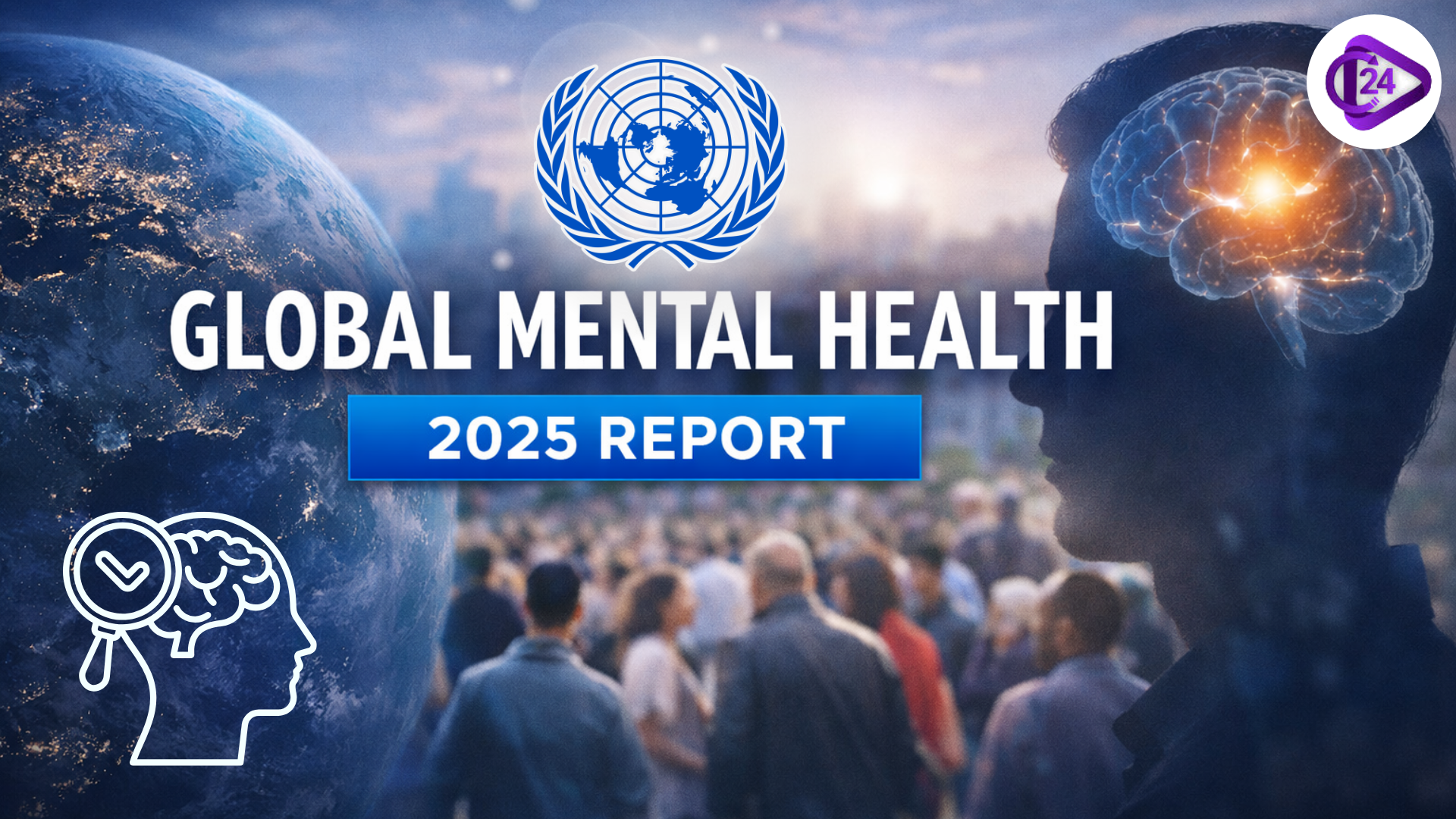
The Global Mental Health 2025 Report emphasises the urgent need for improved mental health services and policies worldwide. It reveals that over 1 billion people globally suffer from mental health conditions, including anxiety and depression. However, a significant portion of them lack access to proper care and treatment. Mental health disorders are among the leading causes of disability worldwide, contributing to social and economic challenges. The report stresses the importance of increased funding, the development of community-based services, and a strong focus on prevention. Additionally, it calls for multisectoral collaboration to address the growing mental health crisis and reduce treatment gaps, especially in low- and middle-income countries where resources are scarce.
Key Insights from the Global Mental Health Report 2025
- More than 1 billion people globally experience mental health conditions such as depression and anxiety, but most lack adequate access to treatment and support.
- Mental health disorders remain a leading cause of disability worldwide, with suicide representing a significant portion of global deaths.
- In low- and middle-income countries, there are severe shortages of mental health professionals, resources, and infrastructure to provide necessary care.
- The economic burden of conditions like depression and anxiety amounts to nearly $1 trillion annually due to lost productivity.
- The report calls for expanded funding for mental health services, emphasising the importance of community-based care to improve accessibility.
- Global efforts to track and address mental health conditions are hindered by data gaps, highlighting the need for better global monitoring and reporting.
- A multisectoral approach is essential, requiring collaboration between governments, the private sector, and civil society to reduce the growing mental health crisis.
India’s Mental Health: Current Challenges and the Path Forward
- 15% of adults in India experience mental health issues that require professional intervention.
- The lifetime prevalence of mental health disorders in India stands at about 13.7%.
- Mental health conditions are more prevalent in urban areas (13.5%) compared to rural areas (6.9%).
- A significant treatment gap exists, with many individuals not receiving the mental health care they need.
- India is facing a shortage of mental health professionals, as well as a lack of infrastructure and awareness.
- Government efforts like the Tele-MANAS 24/7 helpline and improved mental health services in recent budget plans aim to bridge this gap.
- To move forward, India needs to address stigma, improve mental health care at primary health centres, and invest in comprehensive mental health policies.
Asked Previous Year Questions and Answers
| Question | Options | Answer |
| The outer covering of the human brain is _________. | (A) Coracoid (B) Piamater (C) Duramater (D) Arachnoid | (C) Duramater |
| Part of the brain that helps in regulation & maintenance of muscular activity is ______. | (A) Medulla oblongata (B) Midbrain (C) Cerebrum (D) Cerebellum | (D) Cerebellum |
| In the nervous system, which part receives incoming electrical signals from other neurons? | (A) Axon terminal (B) Dendrite (C) Soma (D) Nucleus | (B) Dendrite |
| The parasympathetic nervous system does not _________. | (A) Slow heartbeat (B) Accelerate heart rate (C) Stimulate salivary secretion (D) Stimulate peristalsis | (B) Accelerate heart rate |
| If there is an injury in the hypothalamus region of the brain, it is most likely to affect ______. | (A) Regulation of body temperature (B) Decision-making (C) Co‑ordination of movement (D) Memory | (A) Regulation of body temperature |
| How many neurons does the human brain contain? | (A) 100 billion (B) 100 million (C) 3 billion (D) 1 billion | (A) 100 billion |
| At what age does the human brain become fully formed? | (A) 21 (B) 26 (C) 25 (D) 18 | (C) 25 |
| Which is not a characteristic of a mentally healthy person? | (A) Emotional balance (B) Social adaptability (C) Impatience (D) Optimistic outlook | (C) Impatience |
| Which of the following is not an objective of mental hygiene? | (A) Realisation of potential (B) Maintaining good mental health (C) Increase intelligence (D) Prevention of mental illness | (C) Increase intelligence |
| Which of the following is expected in a patient diagnosed with an organic mental disorder? | (A) Intact memory (B) Appropriate behaviour (C) Disorganised thoughts (D) Orientation to person/place/time | (C) Disorganisation of thoughts |
Rob Jetten Becomes the Netherlands’ Youngest-Ever PM
Conclusion (Global Mental Health 2025)
The Global Mental Health 2025 Report emphasises the urgent need for expanded mental health services and policies worldwide. With over 1 billion people affected, the report calls for increased funding, community-based care, and better global monitoring to bridge treatment gaps, reduce stigma, and promote mental well-being for all.