


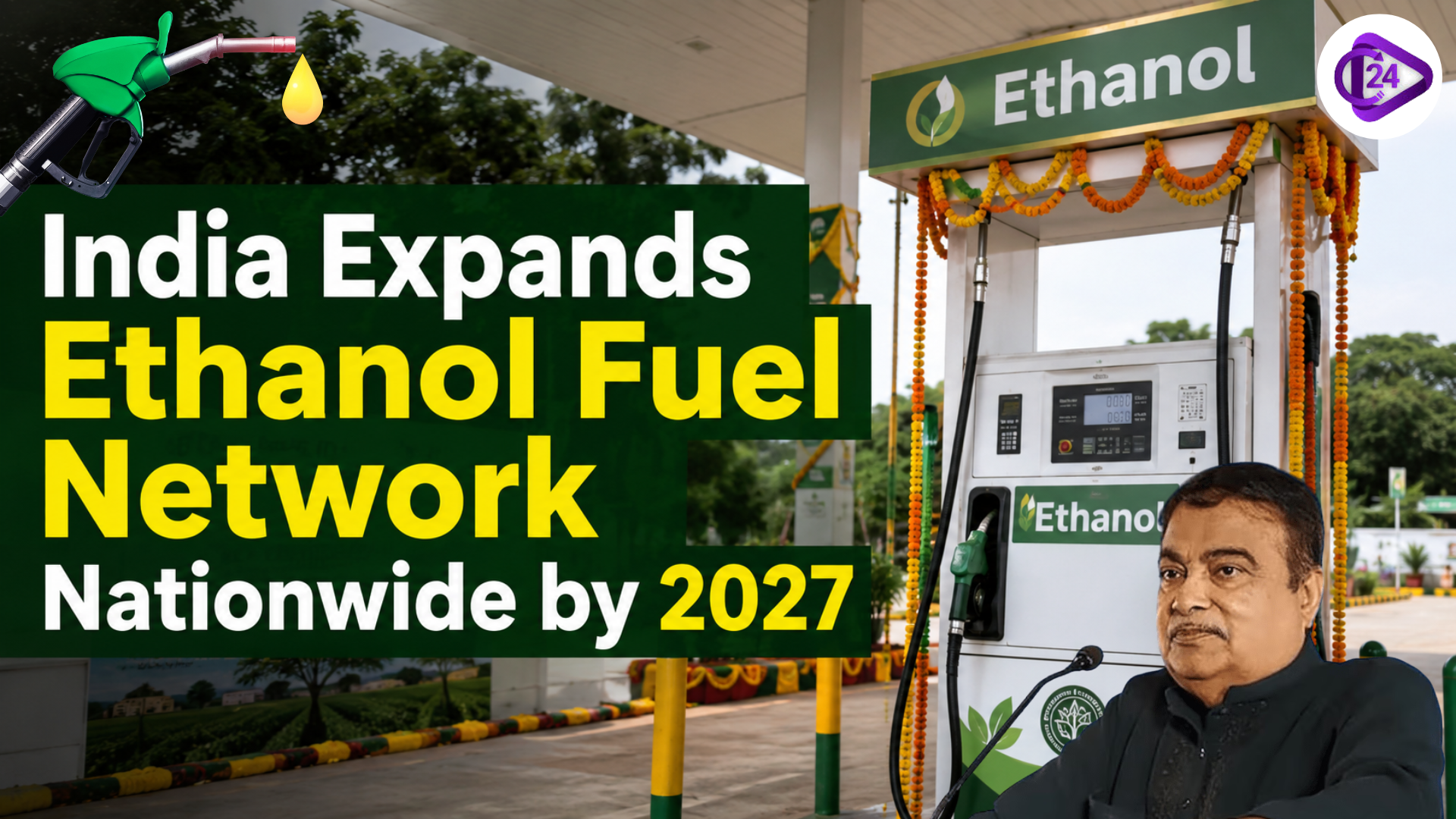
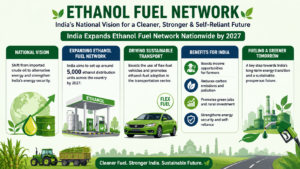
Ethanol Fuel Network: The Indian Government’s National Vision of a vision to shift reliance on imported crude oil to alternative energy resources and boost the security of the energy supply, has taken a step forward with India Expands Ethanol Fuel Network across the entire nation by 2027. India is aiming to build around 5,000 ethanol distribution units across the country by the year 2027 by the government of the nation. This initiative will boost the use of flex-fuel vehicles as well as help move towards ethanol-fuel usage in the transportation sector.
India’s move to expand the biofuel industry by 2027, as announced by India Expands Ethanol Fuel Network Nationwide, is likely to bring positive outcomes to the farmers, cut down carbon emissions, and drive sustainable economic progress. Also, the growth project falls into line with India’s long-term energy transition objectives and its transition to cleaner fuel alternatives.
Key Highlights of India Expands Ethanol Fuel Network Nationwide by 2027
| Particulars | Details |
| Initiative | Nationwide Expansion of Ethanol Fuel Network |
| Target Year | 2027 |
| Planned Ethanol Stations | Approximately 5,000 |
| Initial Rollout | Delhi-NCR, Mumbai, Pune, Ahmedabad and other cities |
| Objective | Promote ethanol-based mobility |
| Key Benefit | Reduced crude oil imports |
| Supporting Technology | Flex-Fuel Vehicles (FFVs) |
| Fuel Types | E20, E22, E25, E27, E30, E85, E100 |
What do you mean by Ethanol Fuel Network?
An ethanol fuel network can be defined as a series of “ethanol stations” with convenient access to the distribution of fuels containing ethanol blends and/or ethanol-only fuels to facilities capable of operating vehicles that utilise them. Ethanol is a renewable biofuel that is mostly manufactured from sugarcane, maize and other agricultural materials.
The announcement of India Expands Ethanol Fuel Network (E2N) Nationwide By 2027 aims to establish a network infrastructure to facilitate expansion of ethanol fuels in the country. The government has successfully blended almost 20% ethanol in fuels, and is now working to make more fuels available to boost future ethanol blending targets.
Why India Expands Ethanol Fuel Network Nationwide by 2027
India is planning to develop a network of ethanol fuel stations across the nation by 2027, and there is a reason behind it. India is a big importer of crude oil. Therefore, boosting the domestic production of biofuels can help to achieve both energy security and reduce import bills.
Major Reasons Behind the Expansion
- Cut down on the reliance on imported crude oil.
- Bring energy security in India to a great height.
- Encourage that cleaner fuels be used for car travel.
- Enable farmers in the interest of enhancing the demand of agriculture raw materials.
- Lower emissions that contribute to the greenhouse effect.
- Encourage adoption of flex-fuel vehicles.
- Build an alternative fuel value chain across the country.
Practice MCQs on India Expands Ethanol Fuel Network
| Question | Options | Answer |
| By which year does India plan to establish around 5,000 ethanol dispensing stations? | A. 2025 B. 2026 C. 2027 D. 2030 | C. 2027 |
| Which fuel blend target has India already achieved? | A. E5 B. E10 C. E15 D. E20 | D. E20 |
| Ethanol is primarily used in India as a blend with which fuel? | A. Diesel B. Petrol C. Kerosene D. LPG | B. Petrol |
| Flex-fuel vehicles can run on? | A. Diesel only B. Petrol only C. Ethanol blends and petrol D. CNG only | C. Ethanol blends and petrol |
| One major benefit of ethanol blending is? | A. Higher crude imports B. Increased emissions C. Reduced oil dependence D. Increased fossil fuel consumption | C. Reduced oil dependence |
Odisha Selected for PM Surya Ghar Excellence Awards
Conclusion on India to Strengthen Ethanol Fuel Infrastructure by 2027
India aims to make “Energy Transition” on India Expands Ethanol Fuel Network Nationwide” a significant milestone in India’s energy transition journey. India is working to create 5,000 stations that dispense ethanol, as well as flex-fuel mobility to decrease crude oil imports, increase energy security and help sustainable development. In addition, the expansion will support farmers and promote the use of clean energy and make transportation more resilient. India has been emerging as a leader in the burgeoning ethanol sector, leading the world in the use of biofuel for mobility.