
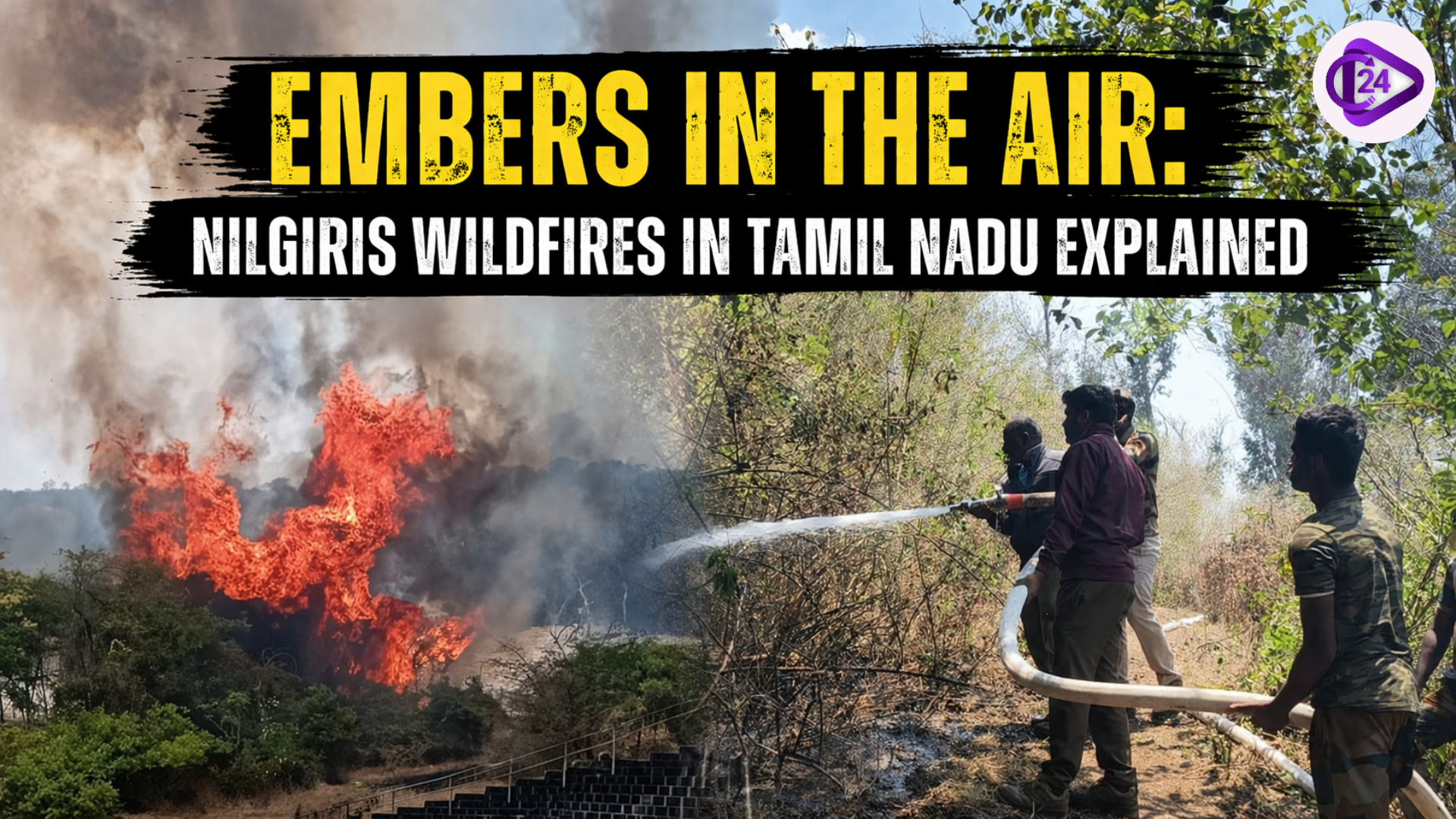
The Nilgiris district of Tamil Nadu is at risk of wildfires due to the presence of dry vegetation, high-wind speeds and dry weather. The fires in the Parsons Valley and Pykara forest ranges have resulted in recent flames that led to a massive emergency response, including forest staff, disaster response groups and aerial support. The Tamil Nadu Forest Department has a State Forest Fire Control Centre, which gives real-time alerts and organises the quick response. Seasonal wildfires endanger the biodiversity, air quality and livelihoods of the locals. The prevention efforts to keep this ecologically sensitive landscape safe are also carried out by authorities through patrols, fire lines, surveillance, and public awareness.
Nilgiris Wildfires in Tamil Nadu Explained – Official Updates, Causes
- The Nilgiris is a Tamil Nadu hill district, biodiverse and a system within the Western Ghats.
- The area has forests, grasslands, wildlife habitats, plantations, and tourism areas.
- The danger of wildfires tends to increase during summer and hot seasons, which are musty and dry.
- With such conditions, dry leaves, grass and undergrowth are capable of catching fire very easily.
- Powerful winds on hill slopes have the potential to propagate flames quickly.
- The Parsons Valley forest range and the Pykara forest range were the recipients of recent Nilgiris fires.
- It was reported that almost 5,000 acres were burnt in the big fire.
- Several hundred staff were to be engaged in firefighting tasks.
- Ground crews were forced to walk through tricky ground in an attempt to control the fire.
- Helicopter operations were supported aerially using helicopter buckets.
- There were instances when aerial firefights were affected due to high winds.
- The manual tools and methods of containment were applied on the ground by forest staff.
- Tamil Nadu has set up a state forest fire control centre.
- Satellites alert the centre to fires in real time.
- There is a rapid dissemination of alerts to district and field teams to act.
- Local response activities are supported by District Forest Fire Control Centres.
- Fire lines are developed to reduce or eliminate the spread of fire.
- The patrol groups watch over sensitive areas of forest in high seasons.
- The air quality of neighbouring towns can be diminished by smoke caused by wildfires.
- Large fires can have devastating environmental impacts on wildlife.
- The migration of the elephants in the region was said to be endangered.
- Repeated fires may cause soil erosion and water contamination.
- The visitors must keep away from lighting fires in forests and picnic areas.
- Smoke or flames should be reported promptly to the authorities by the citizens.
- The main focus on prevention is communication and quick reaction.
About Nilgiris Wildfires
The Nilgiris is a hill district of northwestern Tamil Nadu, where Tamil Nadu, Kerala, and Karnataka come into the Western Ghats. It is a constituent of the Nilgiri Biosphere Reserve and is famous for Ooty, tea gardens, a cool climate, and rich biodiversity. This area consists of forests, grasslands, or animal homes and great vacation spots. Nilgiris wildfires are typical heat-induced, wind-induced, dry vegetation, human negligence-induced wildfires that typically happen during the dry summer. Fire has the capacity to devastate forests, endanger wildlife, worsen air quality, and impact tourism. The Forestation Department of Tamil Nadu focuses on patrol, fire line and the use of satellites to prevent and contain.
Lok Sabha May Expand to 850 Seats Ahead of 2029 Elections
Conclusion – Tamil Nadu Forest Fire Concerns Grow
The increasing forest fire concerns in Tamil Nadu reflect the pressing need of using an effective prevention regime, quick response measures, and social education. The Nilgiris have sensitive areas where the heat, wind and negligence of people are putting extreme strain during dry seasons. Wildfires have the potential to destroy biodiversity, wildlife, and affect local communities. On-going surveillance, fire lines, satellite alerts and responsible tourism is necessary. Conservation of forests nowadays is crucial in conserving the ecological, water resources and natural heritage of Tamil Nadu to the generations to come.