

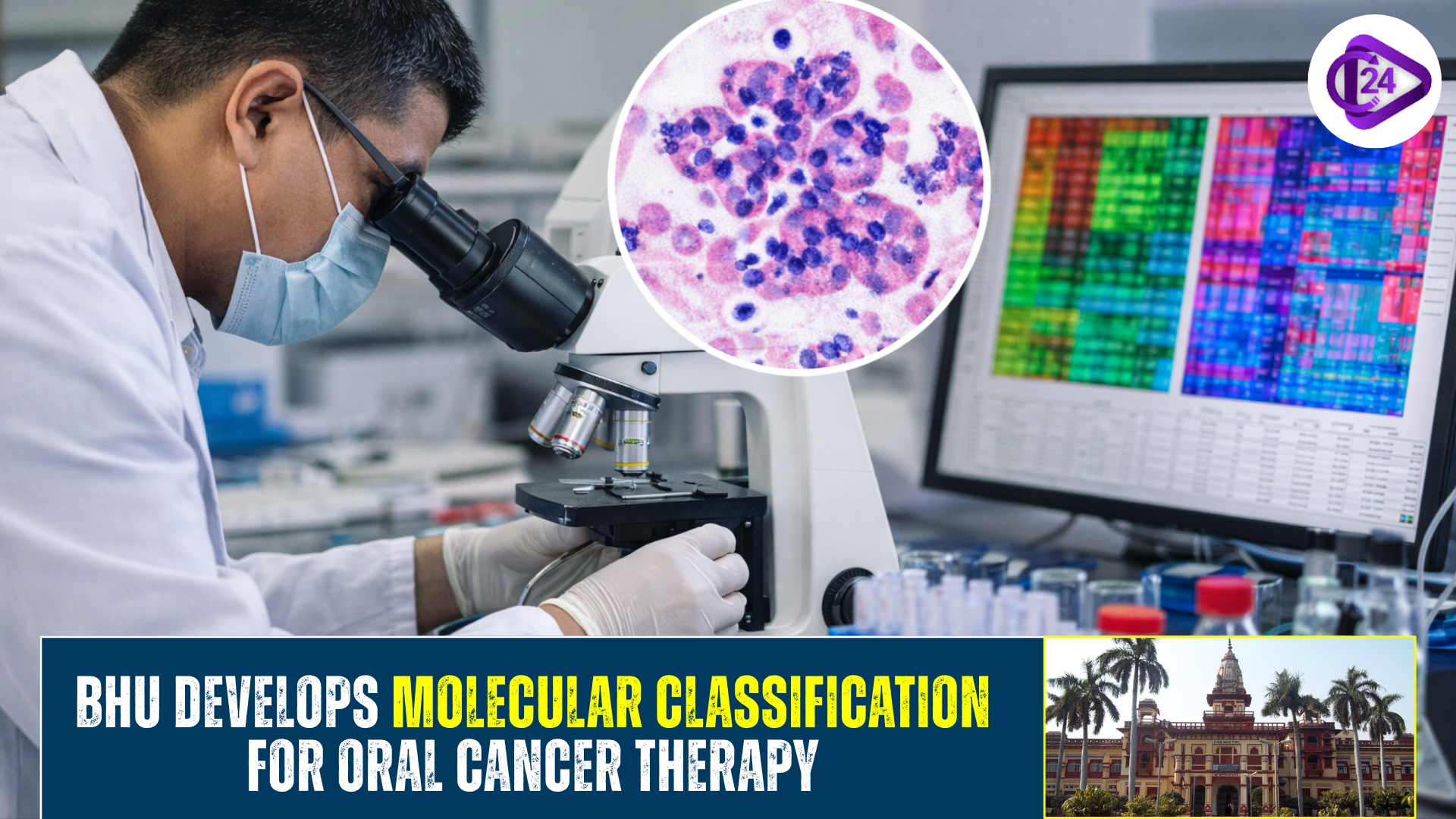
Researchers at Banaras Hindu University have created the first systematic molecular classification of oral cancer worldwide, providing a precision therapy roadmap for personalised treatment. On the 25th of December 2025, the journal Mutation Research/Reviews in Mutation Research published the study, which used genomic data and literature to define five molecular subtypes of oral cancer, each associated with specific genes and pathways. The new framework now transcends standard morphology-based diagnosis, allowing clinicians to model specific therapies rather than apply standard chemotherapy. It has major India-specific relevance, as the incidence of oral cancer is high in India because of the consumption of tobacco and betel quid.
Five Key Molecular Pathways Identified for Precision Oral Cancer Therapy
-
The first systematic molecular classification of oral cancer was developed by researchers at Banaras Hindu University, who analyzed genomic data and literature to arrive at the classification.
-
The study has established five distinct biological pathways in the development of oral cancer, namely Cell-Cycle Dysregulation, Immune-Mediated, Xenobiotic Metabolism-Associated, Inflammatory Pathway Activation, and Viral Protein Activation.
-
Each pathway is associated with specific genes or molecular processes, all of which are amenable to new treatments.
-
The model enables oncologists to customize precision treatments rather than rely on existing homogeneous chemotherapy.
-
The model is particularly applicable to high-incidence areas, including India, as it focuses on tobacco- and betel quid-related pathways.
Conclusion
BHU pioneered a significant advance in more precise oncology by the development of a molecular classification of oral cancer. It reveals five different pathways, which allow individualized treatment by enhancing the results and decreasing non-productive treatments. This innovation is especially essential to high-incidence areas such as India that will ensure guided and effective management of cancer.