
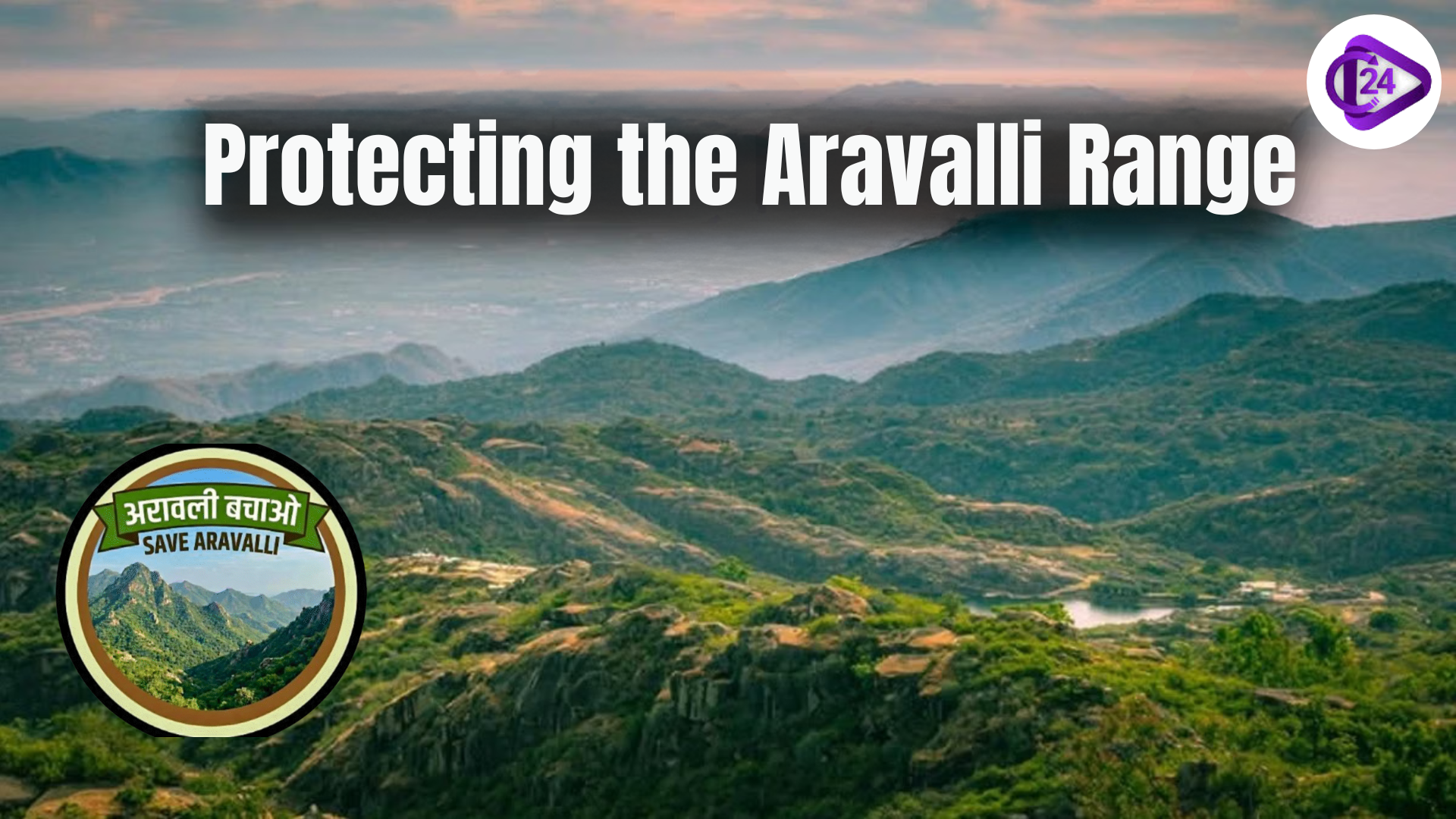
One of the oldest mountain systems in the world, the Aravalli Range is vital in climate stability, water security and biodiversity in north-west India. It also serves as a natural buffer to desertification by the Thar Desert, and it controls the rainfall and temperatures of the region, affecting the monsoon winds and placing the plains under the protection of the strong winds. Through the hills, groundwater recharge and river systems that support agriculture and livelihoods are particularly supported in arid regions. The range is a significant biodiversity hotspot because it hosts a great number of flora and fauna, including their forests and various habitats. The Aravallis need to be put into preservation to help stop ecological degradation, water shortage, and wildlife loss, and keep the climate sustainable throughout the region.
Aravalli Mountain Range: Geographic Features and Ecological Importance
-
Ancient Geological Formation: Aravalli Mountain Range is one of the oldest mountain ranges in the world, with an approximate age of about two billion years, giving us a lot of information about the early geology of the Earth.
-
Geographic Extent: The range extends over an area of approximately 650km and crosses Haryana, Rajasthan and Gujarat, forming a crucial ecological link in north-western India.
-
Obstacle to the desertification: On the side, the Aravallis serve as an ecological barrier; the Thar Desert cannot expand eastward on the fertile Indo-Gangetic plains.
-
Climate and Water Regulation: The range is important to balance the local climate and to control rainfalls, as well as groundwater recharge in the semi-arid areas.
-
River Systems: Some significant rivers, such as the Chambal, Sabarmati, and Luni, are formed or fed by the Aravalli system.
-
Biodiversity Hotspot: The forests accommodate different flora and fauna, thereby providing the ecological balance of the region.
-
Mineral Wealth and Degradation: Good mineral deposits brought a lot of mining,g which has caused loss of forest, groundwater depletion and poor air quality, particularly in NCR.
Know About the Aravalli Green Wall Project
-
The Aravalli Green Wall Project is a state-wide project to create a 5-km-wide green belt around the Aravalli range in Haryana, Rajasthan, Gujarat, and Delhi in order to restore the degraded ecosystems.
-
The central and state governments worked together to launch it on World Environment Day, 5 June 2025.
-
The project is designed with the aim of afforestation, reforestation and restoration of landscapes with native species.
-
Some of the important goals are to fight desertification, increase recharge of the groundwater and increase biodiversity.
-
It also seeks to generate another carbon sink, climate commitments, as well as local employment, by involving the community.
PYQs on the Aravalli Range
| Exam | Question | Answer |
|---|---|---|
| UPSC CSE (Prelims) | With reference to the Aravalli Range, consider the following statements: (1) It is one of the oldest mountain ranges in the world, (2) It lies in western and north-western India, (3) It acts as a barrier against desertification, (4) Its highest peak is Arma Konda. Which of the statements are correct? | Statements (1), (2), and (3) are correct. The highest peak is Guru Shikhar, not Arma Konda. |
| UPSC CSE (Prelims) | Which of the following statements best describes the ecological role of the Aravalli Range? | It prevents the eastward expansion of the Thar Desert and supports groundwater recharge. |
| RPSC / Rajasthan State Exams | Which is the highest peak of the Aravalli Range? | Guru Shikhar (Mount Abu). |
| Rajasthan State Exams | The Aravalli Range extends in which direction? | South-west to north-east direction. |
| Rajasthan CET / State GK | The Aravalli Range is an example of which type of mountains? | Residual (old fold) mountains. |
| SSC / General Studies | The Aravalli Range stretches from which region to Gujarat? | From Delhi through Haryana and Rajasthan to Gujarat. |
| UPSC / State PSC (Mains-type) | Explain how the Aravalli Range acts as a natural green wall. | It checks desertification, stabilises soil, regulates climate, and supports biodiversity. |
Conclusion (Protecting the Aravalli Range)
The Aravalli Range protection is the key to the ecological balance in India, desertification prevention, and water security. The conservation activities protect biodiversity, control climate and stabilise the soil. This ancient mountain range is a treasure that should be preserved for the new generations through the application of sustainable management, afforestation, and heavy control of mining.