Day: December 19, 2025

India and Oman Sign the Comprehensive Economic Partnership Agreement (CEPA)

India and Oman have entered into an agreement of Comprehensive Economic Partnership (CEPA) in order to considerably enrich the economic and trading ties between the two nations. The agreement was finally signed in Muscat on 18 December 2025, when the Commerce and Industry Minister of India and the Minister of Commerce of Oman signed the agreement in the presence of Prime Minister Narendra Modi and Sultan Haitham bin Tarik. The CEPA is designed to strengthen the cooperation between the two countries in terms of trade, investment and services to ease trade, movement of goods and services and opening up opportunities in strategic areas like energy, technology and manufacturing. It also provides almost universal and duty-free access to Indian exports, which would be a huge milestone in Indian interactions with the Gulf region.

Key Highlights of India–Oman CEPA

  • Near-universal duty-free treatment: Oman grants zero-duty treatment on approximately 98% of its tariff lines to Indian exports of the key industries: textiles, gems and jewellery, leather goods, engineering products, pharmaceuticals and automobiles.

  • Tariff liberalisation by India: India agrees to liberalise tariffs on various imports of Oman, except those that are sensitive to domestic industries as protected by exclusion lists and tariff-rate quotas.

  • Services and investment: The CEPA allows Indian firms 100 per cent foreign direct investment (FDI) in the services industry in Oman.

  • Professional mobility: The professional mobility is improved by providing longer stays and improved quotas to Indian professionals within the mobility framework of the agreement.

  • Strategic benefits: The agreement enhances bilateral trade relations, new market experiences, and facilitates the establishment of further economic collaboration between India and Oman.

About: Comprehensive Economic Partnership Agreement (CEPA)

  • Definition: CEPA is a general trade and economic cooperation agreement that includes goods, services, investment and economic cooperation among countries. 

  • Recent India CEPA: On 18 December 2025, India and Oman signed CEPA in an attempt to enhance trade, investment, and services. 

  • Current CEPAs with India: India has CEPAs with South Korea, Japan and the UAE, which have increased market access and decreased tariffs. 

  • CEPAs are designed to develop favourable access to the market, remove (or lower) tariffs, and encourage foreign investment among partners.

Conclusion (CEPA)

India and Oman are the signatories to the Comprehensive Economic Partnership Agreement (CEPA), and this is a significant move toward enhancing bilateral trade and investments. The agreement will result in increased economic collaboration, improved access to markets, and opportunities in economic areas, such as manufacturing, services, and energy, and will establish further strategic and economic relations between the two countries.

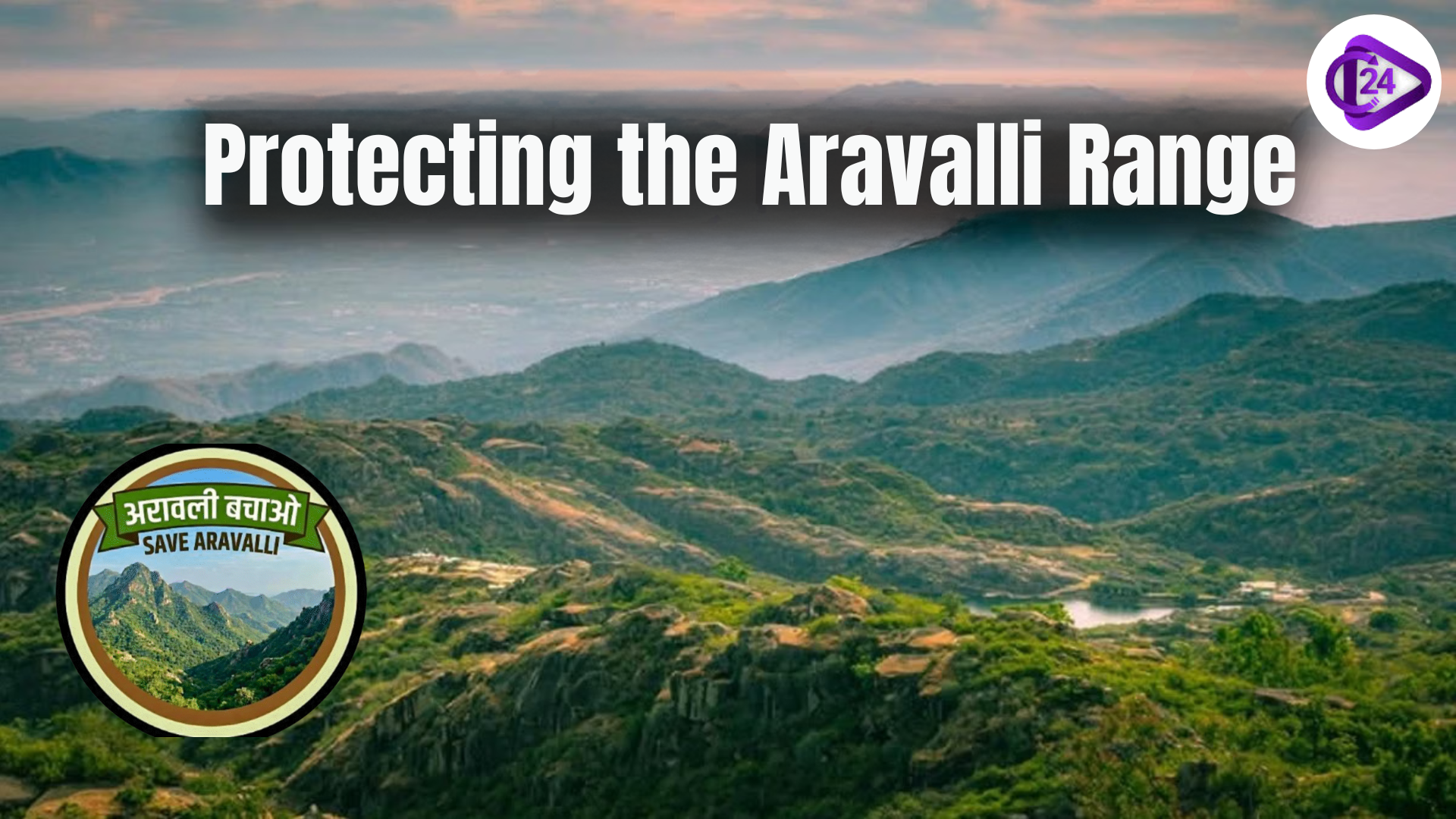
Why Protecting the Aravalli Range Matters for Climate, Water, and Biodiversity

One of the oldest mountain systems in the world, the Aravalli Range is vital in climate stability, water security and biodiversity in north-west India. It also serves as a natural buffer to desertification by the Thar Desert, and it controls the rainfall and temperatures of the region, affecting the monsoon winds and placing the plains under the protection of the strong winds. Through the hills, groundwater recharge and river systems that support agriculture and livelihoods are particularly supported in arid regions. The range is a significant biodiversity hotspot because it hosts a great number of flora and fauna, including their forests and various habitats. The Aravallis need to be put into preservation to help stop ecological degradation, water shortage, and wildlife loss, and keep the climate sustainable throughout the region.

Aravalli Mountain Range: Geographic Features and Ecological Importance

  • Ancient Geological Formation: Aravalli Mountain Range is one of the oldest mountain ranges in the world, with an approximate age of about two billion years, giving us a lot of information about the early geology of the Earth.

  • Geographic Extent: The range extends over an area of approximately 650km and crosses Haryana, Rajasthan and Gujarat, forming a crucial ecological link in north-western India.

  • Obstacle to the desertification: On the side, the Aravallis serve as an ecological barrier; the Thar Desert cannot expand eastward on the fertile Indo-Gangetic plains.

  • Climate and Water Regulation: The range is important to balance the local climate and to control rainfalls, as well as groundwater recharge in the semi-arid areas.

  • River Systems: Some significant rivers, such as the Chambal, Sabarmati, and Luni, are formed or fed by the Aravalli system.

  • Biodiversity Hotspot: The forests accommodate different flora and fauna, thereby providing the ecological balance of the region.

  • Mineral Wealth and Degradation: Good mineral deposits brought a lot of mining,g which has caused loss of forest, groundwater depletion and poor air quality, particularly in NCR.

Know About the Aravalli Green Wall Project

  • The Aravalli Green Wall Project is a state-wide project to create a 5-km-wide green belt around the Aravalli range in Haryana, Rajasthan, Gujarat, and Delhi in order to restore the degraded ecosystems.

  • The central and state governments worked together to launch it on World Environment Day, 5 June 2025.

  • The project is designed with the aim of afforestation, reforestation and restoration of landscapes with native species.

  • Some of the important goals are to fight desertification, increase recharge of the groundwater and increase biodiversity.

  • It also seeks to generate another carbon sink, climate commitments, as well as local employment, by involving the community.

PYQs on the Aravalli Range

Exam Question Answer
UPSC CSE (Prelims) With reference to the Aravalli Range, consider the following statements: (1) It is one of the oldest mountain ranges in the world, (2) It lies in western and north-western India, (3) It acts as a barrier against desertification, (4) Its highest peak is Arma Konda. Which of the statements are correct? Statements (1), (2), and (3) are correct. The highest peak is Guru Shikhar, not Arma Konda.
UPSC CSE (Prelims) Which of the following statements best describes the ecological role of the Aravalli Range? It prevents the eastward expansion of the Thar Desert and supports groundwater recharge.
RPSC / Rajasthan State Exams Which is the highest peak of the Aravalli Range? Guru Shikhar (Mount Abu).
Rajasthan State Exams The Aravalli Range extends in which direction? South-west to north-east direction.
Rajasthan CET / State GK The Aravalli Range is an example of which type of mountains? Residual (old fold) mountains.
SSC / General Studies The Aravalli Range stretches from which region to Gujarat? From Delhi through Haryana and Rajasthan to Gujarat.
UPSC / State PSC (Mains-type) Explain how the Aravalli Range acts as a natural green wall. It checks desertification, stabilises soil, regulates climate, and supports biodiversity.

Read Also : 

Conclusion (Protecting the Aravalli Range)

The Aravalli Range protection is the key to the ecological balance in India, desertification prevention, and water security. The conservation activities protect biodiversity, control climate and stabilise the soil. This ancient mountain range is a treasure that should be preserved for the new generations through the application of sustainable management, afforestation, and heavy control of mining.

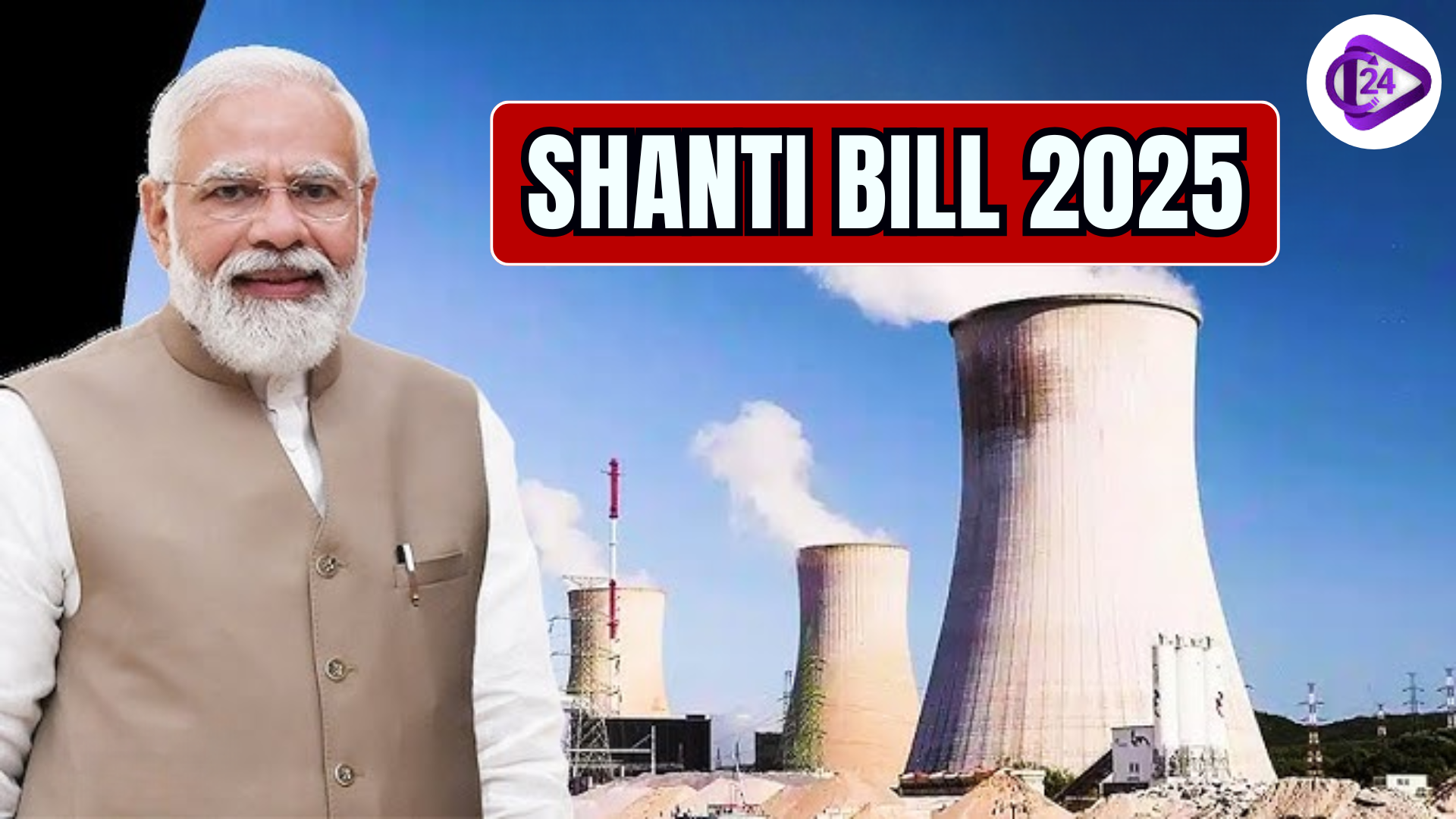
SHANTI Bill 2025

One of the most notable legislative acts enacted by the Parliament to reorganise the country’s nuclear energy system is the Sustainable Harnessing and Advancement of Nuclear Energy for Transforming India (SHANTI) Bill, 2025. It supersedes previous laws, such as the Atomic Energy Act of 1962 and the Civil Liability for Nuclear Damage Act of 2010, to establish a new, coherent, comprehensive legal framework for nuclear energy. The bill is the first to permit regulated involvement by the private sector in the construction and operation of nuclear facilities, thereby increasing investment, adopting new technologies, and expanding capacity. India aims for 100 GW by 2047. It also grants statutory effect to the regulatory body, the Atomic Energy Regulatory Board, strengthening safety regulation and updating liability regulations to support new technologies and international collaboration.

Key Provisions of the SHANTI Bill, 2025 Explained

  • Replacement of Existing Nuclear Laws: The SHANTI Bill, 2025, replaces the Atomic Energy Act, 1962 and the Civil Liability for Nuclear Damage Act, 2010 and consolidates the two into one comprehensive law. Such consolidation makes the governance of the civil nuclear sector in India easier and the regulatory approvals and liability processes easier.

  • Liberalisation of Sector: The Bill is the first since independence to allow non-government entities, including Indian joint ventures and foreign companies, to build, own, operate, and decommission nuclear power plants, and NPCIL will no longer have the exclusive right to operate.

  • Retention of Strategic State Control: Although the wider participation, the government still has the authority to control sensitive areas like nuclear fuel production, heavy water plants and radioactive waste management to serve the national security and non-proliferation commitments.

  • Increase in Nuclear Regulators' Statutory Status: The Atomic Energy Regulatory Board is given statutory power and is responsible to Parliament, thereby enhancing both independence and transparency, as well as nuclear safety.

  • New Nuclear Liability Regime: The Nuclear liability regime is revised, whereby the suppliers do not have a role to play in compensation, and only the operators are concerned. The operator's liability is limited and tied to the plant's capacity, which lowers the financial risk and makes the investment more attractive.

Important Previous Year Questions (PYQs) on India’s Nuclear Energy

Exam Year Question Answer
UPSC CSE (Prelims) 2013 Which of the following is/are the advantage(s) of nuclear energy? High energy density; low greenhouse gas emissions
UPSC CSE (Prelims) 2016 India is a member of which of the following export control regimes? NSG (except full membership earlier), MTCR, Wassenaar Arrangement
UPSC CSE (Prelims) 2018 Thorium is used as a nuclear fuel in which reactors? Fast Breeder Reactors (3-stage programme)
UPSC CSE (Prelims) 2021 India’s three-stage nuclear power programme is based on which fuel sequence? Uranium → Plutonium → Thorium
UPSC CSE (Mains) 2012 Discuss India’s nuclear energy programme and its role in energy security. Focus on 3-stage programme and thorium
UPSC CSE (Mains) 2018 Explain the significance of thorium reserves in India’s nuclear strategy. Energy independence and sustainability
UPSC CSE (Mains) 2023 Evaluate the role of nuclear energy in India’s clean energy transition. Baseload power; low emissions
SSC CGL 2017 Which element is commonly used as nuclear fuel in India? Uranium
SSC CGL 2020 Where is India’s first nuclear reactor located? Tarapur, Maharashtra
NDA 2019 What is nuclear fission? Splitting of a heavy nucleus releases energy
CDS 2021 Which organisation regulates nuclear safety in India? Atomic Energy Regulatory Board (AERB)
State PSCs Various Which department controls nuclear energy in India? Department of Atomic Energy
Railway Exams 2018 Nuclear power plants use which reaction to generate energy? Controlled nuclear fission
UPSC CSE (Prelims) 2022 Small Modular Reactors (SMRs) are associated with which benefit? Flexibility and lower capital cost

Read Also : 

Expected MCQs for SHANTI Bill 2025

The SHANTI Bill, 2025, primarily aims to do which of the following?
A. Privatise nuclear fuel production
B. Consolidate and modernise India’s nuclear energy laws
C. End government control over nuclear energy
D. Promote nuclear weapons development

Correct Answer: B
Explanation: The Bill repeals older laws and creates a unified legal framework for civil nuclear energy.


Which two Acts are repealed by the SHANTI Bill, 2025?
A. Atomic Energy Act, 1948 and Energy Conservation Act, 2001
B. Atomic Energy Act, 1962 and CLND Act, 2010
C. Electricity Act, 2003 and Environment Protection Act, 1986
D. Nuclear Safety Act, 2011 and CLND Act, 2010

Correct Answer: B
Explanation: The Bill replaces both the Atomic Energy Act, 1962 and the Civil Liability for Nuclear Damage Act, 2010.


What major change does the SHANTI Bill introduce regarding nuclear power plant operations?
A. Only foreign companies can operate plants
B. NPCIL monopoly is removed
C. State governments gain control
D. Plants can operate without regulation

Correct Answer: B
Explanation: Private Indian companies and joint ventures are allowed to operate nuclear plants, ending NPCIL’s exclusive role.


Which areas remain under exclusive government control despite private participation?
A. Reactor design and construction
B. Nuclear fuel, heavy water, and radioactive waste
C. Electricity distribution
D. Plant maintenance

Correct Answer: B
Explanation: Strategic areas are retained by the state to ensure national security and non-proliferation.


The SHANTI Bill grants statutory status to which body?
A. Department of Atomic Energy
B. Nuclear Power Corporation of India Ltd
C. Atomic Energy Regulatory Board
D. National Security Council

Correct Answer: C
Explanation: AERB gets statutory backing and becomes accountable to Parliament, strengthening safety oversight.


Under the revised nuclear liability framework, who is responsible for compensation in case of an accident?
A. Equipment suppliers
B. Foreign partners
C. Nuclear plant operators
D. Central government

Correct Answer: C
Explanation: Supplier liability is removed; operators bear sole responsibility.


Operator liability under the SHANTI Bill is capped based on:
A. Extent of damage caused
B. Market value of the plant
C. Installed capacity of the plant
D. Duration of operation

Correct Answer: C
Explanation: Liability limits are linked to installed capacity to reduce financial uncertainty.


How does the SHANTI Bill align India with global nuclear practices?
A. By allowing nuclear weapons exports
B. By removing safety regulations
C. By aligning liability norms with international conventions
D. By ending state oversight

Correct Answer: C
Explanation: Removal of supplier liability brings India closer to global nuclear liability standards.

Conclusion (SHANTI Bill 2025)

SHANTI Bill, 2025, is a landmark decision in the nuclear energy policy of India, as it will modernise the old laws of the sector and allow regulated participation in the sector by the private sector. It will achieve this by enhancing the safety control and maintaining the strategic state control in order to increase the clean energy capacity, secure investment and facilitate long term energy security agenda of India.

India, UAE Launch Desert Cyclone II Military Exercise to Boost Defence Cooperation

The second edition of the joint military exercise, India and the United Arab Emirates have unveiled the Desert Cyclone II exercise in Abu Dhabi, which is designed to enhance defence co-operation and strategic alliance between these two countries. The contingent of an Indian Army consisting mostly of a mechanised infantry battalion, consisting of about 45 people, has come to the UAE to be part of the exercise, which is scheduled to be held between December 18 and 30 in an urban training environment. The drill aims at enhancing interoperability, tactical coordination, and joint operational capabilities in sub-conventional situations, developing mutual understanding, and preparedness for peacekeeping and stability operations.

Highlights of Desert Cyclone II Military Exercise

  • Desert Cyclone II, a bilateral defence cooperation and joint training exercise between India and the UAE, is in Abu Dhabi, between December 18 and 30.

  • A 45-strong contingent of the Indian Army of mechanised infantry is attending with a UAE Land Forces unit.

  • The drill will prepare interoperability and tactical coordination between the two forces in cities and sub-conventional settings.

  • Training will involve fighting in built-in locations, heliborne operations, mission planning, and UAS/counter-UAS exercises.

  • The exercise highlights the enhanced military relationship and collaboration between India and the UAE.

All Important Questions About Military Exercise with India (PYQs)

Question Asked Answer Exam Name Year
“Exercise Vajra Prahar” is conducted between India and which country? USA RRB NTPC 2023
“Exercise Shakti” is a joint military exercise between India and which country? France SSC CHSL 2022
“Exercise Malabar” involves India and which countries? USA, Japan, Australia UPSC Prelims 2021
Which Indian Army contingent participates in “Yudh Abhyas”? Indian Army troops with the USA SSC GD 2020
“Indra” exercise is conducted with which country? Russia RRB Group D 2019
“Hand-in-Hand” exercise is conducted with which country? China SSC CPO 2018
“Exercise Garuda” is conducted between India and which country? France SSC MTS 2021
“Exercise Nomadic Elephant” is conducted with which country? Mongolia SSC CHSL 2024
“Exercise Tiger Triumph” is conducted with which country? USA SSC GD 2023
India and the UAE conduct which joint exercise to enhance desert warfare capabilities? Desert Cyclone RRB NTPC 2025
“Exercise Sampriti” is conducted with which country? Bangladesh UPSC Prelims 2020
“Exercise Yudh Abhyas” is conducted annually with which country? USA SSC CGL 2022
Which exercise focuses on counter-terrorism and urban warfare with Singapore? Exercise Bold Kurukshetra SSC CHSL 2021
India conducts “Exercise Mitra Shakti” with which country? Sri Lanka RRB Group D 2022

Read Also: 

Conclusion (Desert Cyclone II Military Exercise)

India-UAE defence relationships were strengthened through the Desert Cyclone II Military Exercise that boosted interoperability, tactical interdependence, and urban warfare. The joint exercise was a demonstration of the interest of both countries in the regional security, military diplomacy and strategic partnership, as well as experience to the troops and maximization of the readiness to resist peacekeeping and operational tasks.

Frequently Asked Questions (FAQs)

The current affairs cover recent national and international events related to UPSC, SSC, Banking, Railways, and State PCS.

You need to read about the current affairs daily, and revise them every week and every month to keep them longer in your memory.

Yes, Class24 provides free downloadable Daily Current Affairs PDFs for easy revision.

Yes, you can practice MCQs and quizzes to boost your exam preparation.

Absolutely. The content is written in simple, easy-to-understand bilingual language suitable for beginners.

Go to class24.com and click on the current affairs section directly, where you find everything that you need.

ssc-toppers

Start Learning Today with Class24

Related current affairs

Class24 offers free video lectures for smart preparation, covering CGL, CPO, CHSL, MTS, and GD exams. Learn from expert faculty, revise concepts easily, practice with PYQs, and improve speed and accuracy through high-quality, exam-focused video lessons anytime, anywhere.

Get success in your hand. Start study anytime anywhere.

The journey becomes simple and enjoyable when you start taking interest in it. And through our app “Class24”, we will be your trusted partners in developing that interest.

Daily Quizzes
Mock Tests
Ongoing

No ongoing tests right now.