


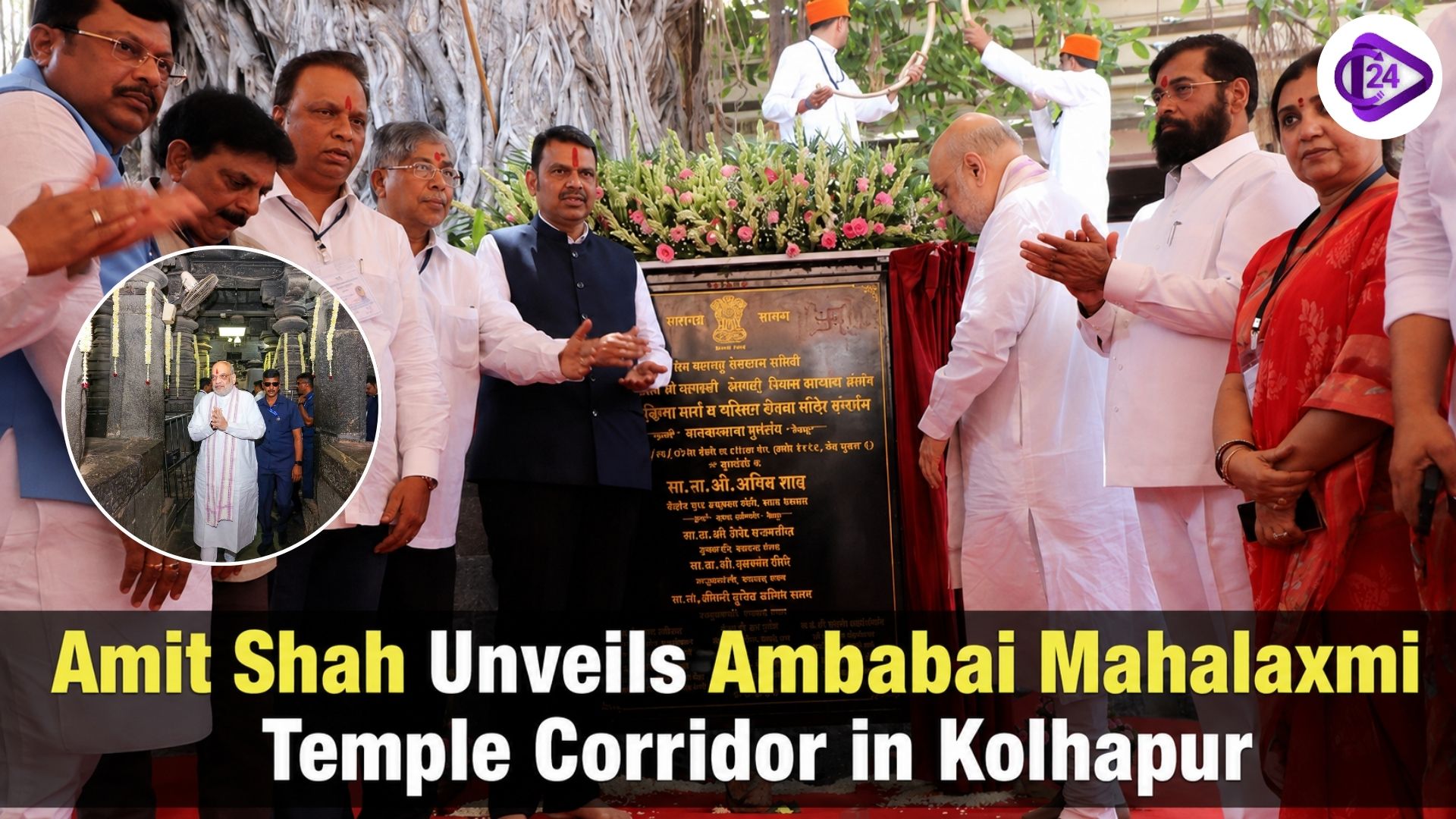
Amit Shah, the Union Home Minister, inaugurated the Ambabai Mahalaxmi Temple Corridor in Kolhapur, which is an effective move towards the preservation of the cultural heritage of the place and facilities for the worshippers. The project’s goal is to support the development of Ambabai Mahalaxmi Temple’s area and the promotion of religious tourism and area growth. The project will offer a hassle-free experience for devotees coming to visit one of the holiest places of Maharashtra.
Overview of the Ambabai Mahalaxmi Temple Corridor Project
| Particulars | Details |
| Project Name | Ambabai Mahalaxmi Temple Corridor |
| Location | Kolhapur, Maharashtra |
| Temple | Ambabai Mahalaxmi Temple |
| Unveiled By | Union Home Minister Amit Shah |
| Objective | Improve pilgrim facilities and preserve heritage |
| Key Focus Areas | Infrastructure, accessibility, tourism, conservation |
| Expected Impact | Increased tourism and economic growth |
Significance of the Ambabai Mahalaxmi Temple
Ambabai Mahalaxmi Temple, or Mahalaxmi Temple of Kolhapur, is one of the most significant temples for spirituality in the western part of India. The temple is dedicated to Goddess Mahalaxmi and is a place of worship for millions of people each year. This temple is famous for its distinctive architectural style and historical importance. It is a sacred place and attracts pilgrims from all over the world for its religious ceremonies for centuries. An increased number of visitors have given great importance to improving the infrastructure. Thus, the unveiling of the temple corridor is anticipated to resolve existing issues with crowd management, accessibility and the convenience of visitors.
Why Amit Shah Unveils Ambabai Mahalaxmi Temple Corridor
- Ambabai Mahalaxmi Temple is one of the most dedicated Shakti temples in India, which receives millions of devotees each year.
- One of the aims of the corridor project is to enhance the facilities for pilgrims and their ease of access and crowd control around the temple precinct.
- Promoting the preservation of historic Hemadpanti architecture and the cultural heritage of the temple, it helps.
- The project is anticipated to further boost Kolhapur’s status as a key pilgrimage hub for western India.
- Improper infrastructure development can augment the visitors’ budget and provide job opportunities for the local community.
- The project is in sync with the mission of creating world-class pilgrimage centres in India.
- The overall pilgrimage experience will be improved with the enhanced amenities, sanitation and security.
- The development plan is designed to achieve the balance between modern infrastructure and conservation concerns.
- The improved public infrastructure and connectivity are expected to bring relief during festivals like Navratri and Kirnotsav.
- The government’s dedication to promoting sustainable tourism and preserving the spiritual and cultural heritage of India is evident in the Columbia Wardrobe designed for the corridor. The Columbia Wardrobe created for the corridor demonstrates the commitment to promote sustainable tourism and preserve the spiritual and cultural heritage of India.
UNESCO-Recognised Temples in India
| Temple / Temple Complex | State | UNESCO World Heritage Site Name | Year of Inscription | Religion | Key Significance |
| Mahabodhi Temple Complex | Bihar | Mahabodhi Temple Complex at Bodh Gaya | 2002 | Buddhism | Site where Gautama Buddha attained enlightenment |
| Sun Temple, Konark | Odisha | Sun Temple, Konark | 1984 | Hinduism | Famous for its chariot-shaped Kalinga architecture |
| Great Living Chola Temples | Tamil Nadu | Great Living Chola Temples | 1987 (Extended in 2004) | Hinduism | Includes Brihadisvara Temple, Gangaikonda Cholapuram Temple, and Airavatesvara Temple |
| Group of Monuments at Mahabalipuram | Tamil Nadu | Group of Monuments at Mahabalipuram | 1984 | Hinduism | Includes the Shore Temple and Pallava-era rock-cut shrines |
| Khajuraho Group of Monuments | Madhya Pradesh | Khajuraho Group of Monuments | 1986 | Hinduism & Jainism | Renowned for intricate sculptures and Nagara-style architecture |
| Group of Monuments at Hampi | Karnataka | Group of Monuments at Hampi | 1986 | Hinduism | Includes the Virupaksha Temple and Vittala Temple complex |
| Group of Monuments at Pattadakal | Karnataka | Group of Monuments at Pattadakal | 1987 | Hinduism & Jainism | Showcases a blend of Dravidian and Nagara architectural styles |
| Elephanta Caves | Maharashtra | Elephanta Caves | 1987 | Hinduism | Known for rock-cut cave temples dedicated to Lord Shiva |
| Ellora Caves | Maharashtra | Ellora Caves | 1983 | Hinduism, Buddhism & Jainism | Features the Kailasa Temple, one of the world’s largest monolithic structures |
| Kakatiya Rudreshwara (Ramappa) Temple | Telangana | Kakatiya Rudreshwara (Ramappa) Temple | 2021 | Hinduism | Celebrated for its star-shaped platform and intricate Kakatiya craftsmanship |
| Sacred Ensembles of the Hoysalas | Karnataka | Sacred Ensembles of the Hoysalas | 2023 | Hinduism | Comprises the Chennakeshava, Hoysaleswara, and Keshava temples |
France to Build Its First Traditional Hindu Temple Using Indian Stones
Conclusion on the Mahalaxmi Temple Corridor Project Launched
The opening ceremony of Amit Shah, presenting the Ambabai Mahalaxmi Temple Corridor located at Kolhapur, has become a milestone for the religious tourism industry in Maharashtra. The project aims to enhance pilgrim facilities, conserve cultural heritage and provide new economic opportunities to the local community. The use of modern infrastructure with the adjustment of the conservation of the historic heritage of the Ambabai Mahalaxmi Temple Corridor would be able to bring about a good improvement to the overall experience of the devotees and contribute to the conservation of historical heritage. The project will enhance the accessibility and attractiveness of Kolhapur as a pilgrimage destination in the future.