

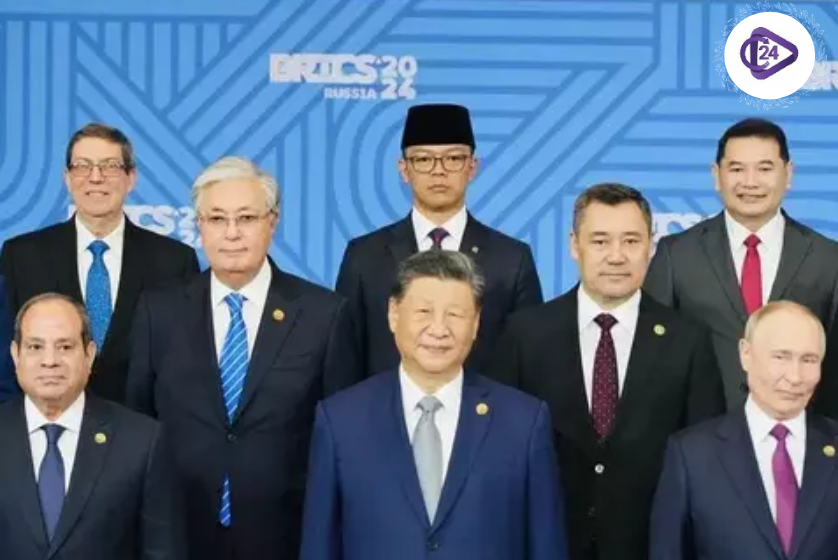
This is a big addition to the BRICS, as it expands the group’s reach among the emerging powers. Today BRICS accounts for 35% of the world economy and holds 46% of the global population, and therefore has significant potential in terms of trade and investments. The company opposes the hegemonic systems in the International Monetary System and calls for a shift to the post-American order and a decrease the reliance on the US dollar. It also seeks change within international organizations such as the IMF and the UN including the criterion of, getting better representation from developing nations.
About BRICS
-
BRICS is a leading intergovernmental organization of five large developing and rapidly growing economies.
-
Formation: The BRIC association was formed in 2001 During the same year the organization had its first inaugural meeting in Russia in 2009.
-
Founding Members: The four founding members of BRIC are Brazil, Russia, India, and China(2009).
-
Brazil – 2009
-
Russia- 2009
-
India- 2009
-
China-2009
-
South Africa-2010
-
Iran- 2024
-
UAE- 2024
-
Egypt- 2024
-
Ethiopia- 2024
-
Saudi Arabia- 2024
-
Argentina- 2024
-
Indonesia-2025
Economic Influence
-
Together the five countries of BRICs have a total GDP of around one-third of the total international GDP.
-
Cover 46% of the world and represent an immense market and human resource base.
-
The bloc holds a crucial position in boosting trade and investment among the various emerging economies.
A counterbalance to Western Dominance
-
BRICS provides an avenue for new economic powers to compete with G7 and other Western-dominated financial systems.
-
Here the group’s stance is for a multipolar world whereby they aim at diversifying from the American and European dominance most particularly in the areas of trade and finance.
Focus on Local Currencies and Non-Dollar Transactions
-
BRICS has one of its aims to bring down the influence of the US dollar in its Cross-border transactions.
-
The objective is to encourage the use of physical currencies in local areas and develop a less degenerate financial environment that fully relies on dollars.
Advocacy for Global Institutional Reforms
-
BRICS is demanding more voice and vote reform in international organizations like the IMF and UN where the landscapes of international governance are shaped and where emerging economies like BRICS seek seats at the high table of decision-making.
Collaboration Among Emerging Economies
-
Shows cooperation in technology, sustainable development, and others through BRICS.
-
The group fosters mutually beneficial knowledge of each other to address common issues which include global warming, disease outbreaks, and other adverse issues.
Energy and Resource Security
-
BRICS has many of its members as significant producers and consumers of energy, for instance, Russia, Brazil, and China, thus making it a strategic cooperation for energy security and development.
Support for Multilateralism
-
BRICS supports the concept of collective management through multilateral systems since it opposes the provision of individuals for every global issue.
Challenges Faced by BRICS
-
Diverse Economic Interests:
-
Currently, as it was mentioned before, BRICS is the union of countries with tremendously dissimilar economies – from the developed ones as China and India to the countries with oil-generating economies as Brazil and Russia.
-
These differences inevitably entail divergence of interest, particularly on matters to do with trade relations, economic liberalization, and foreign investments hence, making d [it] difficult to agree on some of the policies.
-
-
Political Differences
-
However, BRICS nations have certain levels of common objectives in place however politically they differ from one another.
-
For instance, Sino-Indian, border disputes and the Russian struggle for a place with the West can affect the groups consensus in addressing certain aspects on the international relations platform.
-
-
Geopolitical Rivalries
-
The conflict of interest in geopolitical nature equally impacts BRICS cohesion negatively where China and India have been in conflict and so have Russia with Western countries.
-
Further, relations with other countries that compose other alliances such as India with the US or an isolated Russia may make up some of the BRICS coalition creating differences in their total strength.
-
-
Economic Dependence on Global Markets:
-
While BRICS members strive for the block to become quite autonomous financially, most countries of this block are tied to World trade networks that are still dominated by the West.
-
This restrains the full liberation of BRICS and how they create their financial systems or shift from dollarization in the global economy.
-
Conclusion
Membership in BRICS makes Indonesia one of the new working group members and strengthens the position of the conglomerate as a counterpoint to the dominance of the West in the regulation of the world economy. However, politically different paradigms, economically conflicting interests, and allied affiliations depict a picture of a continuously challenging nature that may hinder the group from behaving as a consolidated force.