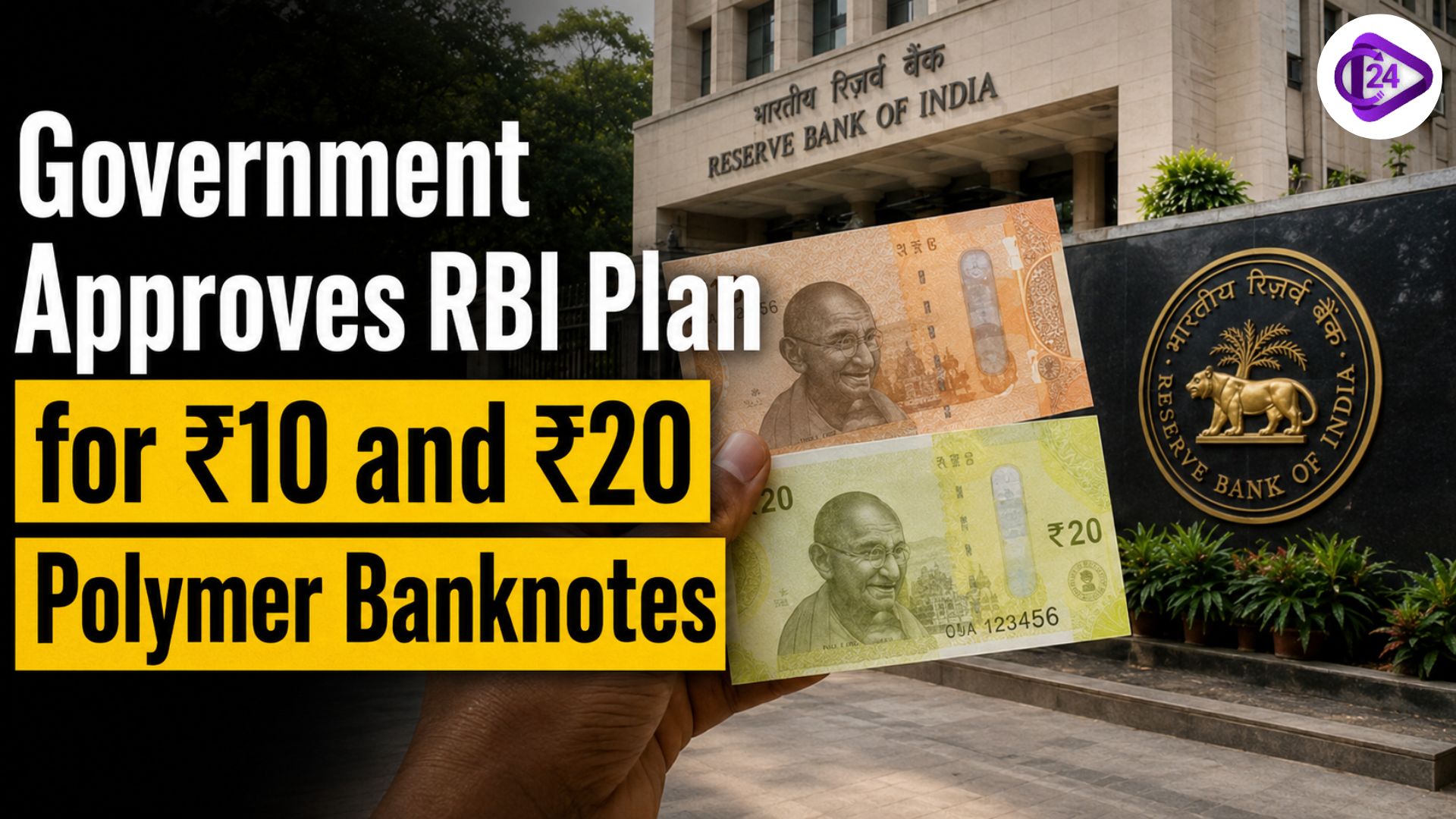


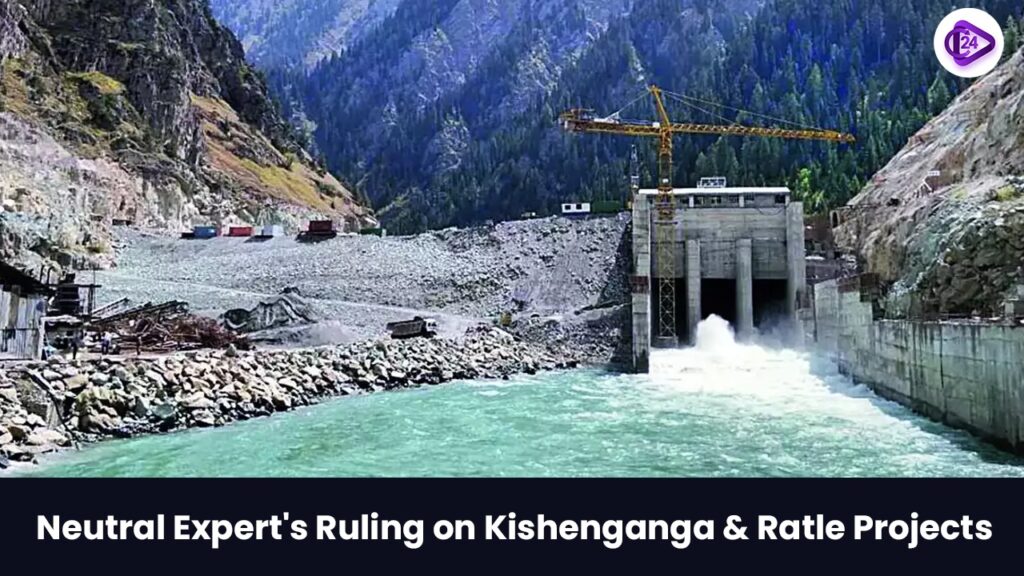
Neutral Expert’s Ruling on Kishenganga and Ratle Projects a Win for India in Indus Waters Dispute

The Indus Waters Treaty (IWT) World Bank appointee Neutral Expert made a major decision to handle the dispute between India and Pakistan about their hydroelectric projects at Kishenganga and Ratle. The expert concluded that his technical background qualifies him to make decisions about the design differences for these power plants....

Neutral Expert’s Ruling on Kishenganga and Ratle Projects a Win for India in Indus Waters Dispute

The Indus Waters Treaty (IWT) World Bank appointee Neutral Expert made a major decision to handle the dispute between India and Pakistan about their hydroelectric projects at Kishenganga and Ratle. The expert concluded that his technical background qualifies him to make decisions about the design differences for these power plants. Pakistan disputed the projects even though the schemes followed canal watercourse ideas since they did not physically alter river flow. In 2015 Pakistan wanted the World Bank to appoint a Neutral Expert but decided to pursue PCA arbitration in its place. Recent legal judgment supports India's argument that the Neutral Expert should handle this matter instead of bringing in additional international agencies.

Indus Water Treaty (IWT)

On September 19, 1960, India and Pakistan formed an agreement known as the Indus Water Treaty to regulate how they use water from six rivers including the Indus River. After long negotiations, the World Bank helped create the treaty which seeks to boost relations between India and Pakistan while overseeing their joint control of water resources.

Key Provisions of the Treaty

  • The treaty divides the Indus River system into two groups of rivers:

    • Eastern rivers: Sutlej Beas and Ravi rivers stay entirely accessible to India.

    • Western rivers: Indus, Jhelum, Chenab (Pakistan's use, with certain rights for India, such as hydroelectric projects)

  • India maintains unrestricted use of the Sutlej Beas and Ravi rivers while Pakistan controls western river access plus maintains limited hydroelectric project rights in those rivers.

  • Under the IWT, Pakistan controls 80% of the river water while India utilizes 20%.

  • Since the treaty's creation, it placed the Permanent Indus Commission (PIC) in charge of overseeing ongoing cooperation and scheduled meetings.

Dispute Resolution Mechanism

The IWT includes a three-step dispute resolution process:

  • Step 1: The Permanent Indus Commission (PIC) handles all disputes first.

  • Step 2: When disputes persist the World Bank selects a Neutral Expert to handle the case.

  • Step 3: Once both parties fail to settle their disagreement the dispute moves to the Court of Arbitration.

Pakistan’s Position

In 2016 Pakistan chose to skip the PIC process and start direct arbitration proceedings. India maintains that treaty principals demand dispute resolutions must progress through each designated step before nations can deviate to other methods. During 2022 the World Bank worked with both Named Neutral Expert and Court of Arbitration proceedings which brought rising conflicts between India and Pakistan.

India’s Recent Actions

  • India withdrew from PIC talks in May 2022 to negotiate new terms with Pakistan.
  • Since 2023 India has sent four official invitations for dialogue but Pakistan has not given any official answers.

Neutral Expert (NE) Clarification

Under the treaty's terms, the Neutral Expert confirmed his power to resolve technical matters between India and Pakistan about their planned Kishenganga and Ratle projects. According to Neutral Expert’s ruling, the seven disputed matters for him to resolve cannot proceed to the Arbitration Court. Under treaty rules the parties respect and accept Neutral Expert decisions as valid outcomes.

Next Steps

The Neutral Expert must now hold hearings with both parties to decide if the Kishenganga and Ratle project designs fulfill the requirements of the IWT. The NE needs to make its last decision based on all information received from both parties.

Water Management Challenges

Despite being meant for water resource management the Indus Water Treaty serves as a sign of ongoing geopolitical rivalry between the involved nations. These two nations need to solve their shared water management problems because they support millions of people living around river basins.

Conclusion

The Neutral Expert decision supports India's diplomatic achievement by proving the Indus Waters Treaty's dispute resolution process remains the proper platform for technical hydroelectric project discussions. This court decision enables India to develop its water needs under the treaty while maintaining treaty implementation. Water treaty struggles can be resolved through treaty rules and the results demonstrate India can use water resources freely for development needs.
Bangladesh Hit by Worst Measles Outbreak in Decades, Child Deaths Surge
India Conducts Maiden Test of Nuclear-Capable ICBM Off Odisha Coast
NITI Aayog Report Flags Poor Student Retention and Learning Outcomes in India
Bengaluru Records Highest Number of Cybercrime Cases in India
Shashi Shekhar Vempati Appointed New CBFC Chairman
India to Host First IBCA Summit in June 2026
09 May 2026
08 May 2026
07 May 2026
06 May 2026
05 May 2026
04 May 2026
02 May 2026
01 May 2026
30 April 2026
29 April 2026

Start Learning Today with Class24

Class24 Mobile Application

Class24 also has a mobile application so that it becomes easily accessible and convenient. This can be downloaded on an Android device. Users have appreciated this app and the content provided as 4.1 out of 5 is its rating in the App Store. People loved it because Class24 is giving content which is extremely rich in every sense. The app comprises a wide variety of features for smooth learning:

  • User-Friendly Interface: The app is categorized into various sections so that students can navigate and access various resources with ease.
  • Offline Access: The study materials can be downloaded and the student can access them even when not connected to the internet.
  • Inbuilt eBook Reader: There is a lightning-fast reader for eBooks within the app, so reading is seamless.
  • Progress Tracking: The app tracks student’s progress in preparation and keeps them organized and focused.

Courses and Subjects Offered

The total syllabus will be covered, and there are in-depth practice materials so as to give deep preparation in the courses designed to each one of them. All the subjects come under the aegis of courses offered by Class24 to meet different needs of various aspirants such as:

Preparation Tips for All Exams

Preparation tips for all exams mentioned below:

  • Previous Year Papers: Try to attempt at least 5-10 years of question papers to know the pattern of questions, how much difficulty one would face while answering, and how many frequently asked topics were in the examination.
  • Take Mock Tests: Attempt Mock Tests regularly in order to time and accuracy. You may analyze the performance and make an improvement for weak areas.
  • Focus on Time Management: Solve questions in the given time to make a habit of having speed and efficiency. Allocate time sensibly between Paper 1 and Paper 2, while appearing in the examination.
  • Current Affairs: For Current Affairs and TET exams, be updated about current affairs, teaching aptitude, and general awareness.
  • Regular Revision: Spend your daily and weekly time for revisions to not forget concepts and formulas. Use flashcards or do self-summary notes for quick revisions.
  • Understand the Exam Pattern and Syllabus: Understand the pattern of your exam paper and syllabus very well. Both Current Affairs and CSIR NET examinations are two-tier ones and involve both Paper 1, which consists of general aptitude and Paper 2 that involves specific aptitude subjects.
  • Make a Study Plan: Divide the preparation time into three phases of concept building, revision, and mock tests. Allocate more time to weaker areas while maintaining equilibrium with stronger sections.
  • Online Coaching or Study Groups: Enroll in online coaching programs like Class24 to get proper guidance and a structured approach to the study. Study groups will be useful to discuss doubts and share resources.
  • Stay Consistent and Motivated: Maintain a steady study schedule. Stay motivated by making small achievable goals.
  • Use Quality Study Materials: Suggested study material refers to a textbook, a set of previously published question papers, and web sources such as Class24.

Conclusion

Class24 is a one stop solution for aspirants preparing for Current Affairs, CSIR NET, SET, UP PGT English, UP TGT PGT, UPHESC Assistant Professor, TET, IGNOU B.Ed and other competitive exams. There are structured courses, live classes, mock tests along with the guidance of experts to assist candidates in achieving success in their respective fields.

Get success in your hand. Start study anytime anywhere.

The journey becomes simple and enjoyable when you start taking interest in it. And through our app “Class24”, we will be your trusted partners in developing that interest.

Daily Quizzes
Mock Tests
Ongoing

No ongoing tests right now.