

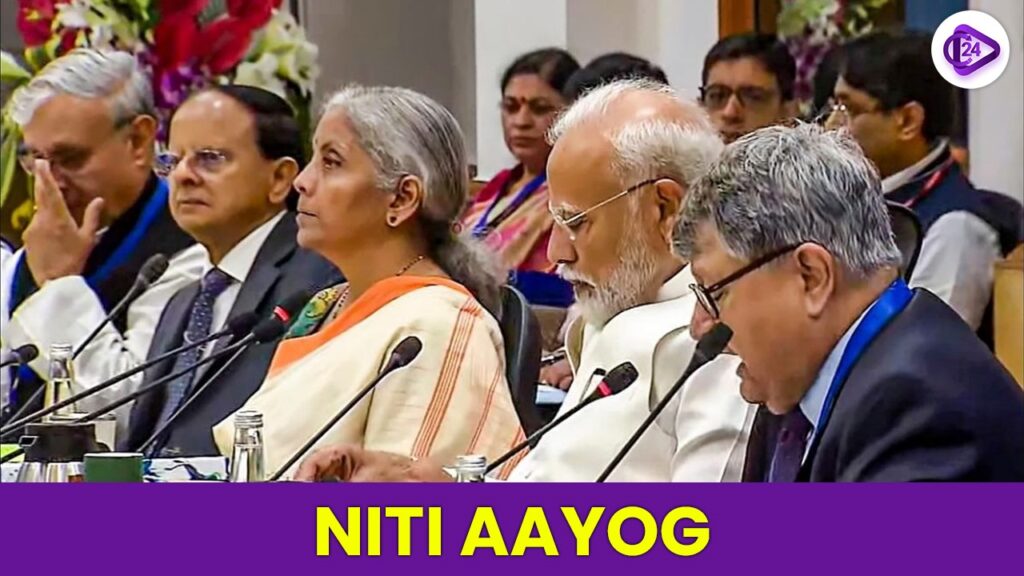
The findings of “From Borrowers to Builders: Women’s Role in India’s Financial Growth Story” emerged from the partnership between NITI Aayog and TransUnion CIBIL and MicroSave Consulting. The Report demonstrates the need to support women both economically and to include them in financial sector activities. Empowering women involves giving women the power to direct their lives and their money and their social impact. The purpose of women's empowerment functions across three areas that allow society to gain equality and social justice.
The empowerment of women in India receives support through several federal programs together with established legal protection along with basic rights in its national constitution. Despite substantial progress the challenge of patriarchy together with gender-based violence and economic inequity and limited participation persist therefore requiring ongoing support to address them.
Key highlights of the report:
-
Growth in Women’s Financial Participation:
-
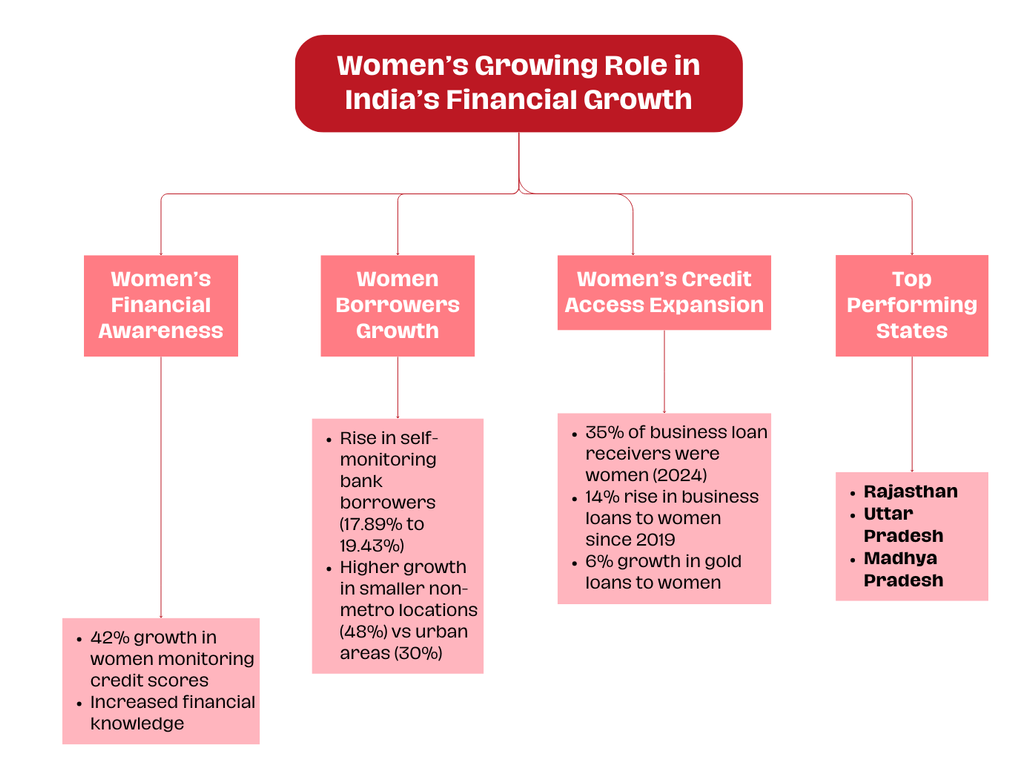
Women who monitored their credit scores exhibited a 42% growth because they became more knowledgeable about financial matters.
-
Self-monitoring bank borrowers revealed a growth of women borrowers from 17.89% to 19.43% during 2024 period versus 2023 data.
-
The financial inclusion growth rate for smaller non-metro locations surpassed (48%) that of major urban areas (30%).
-
-
Women expand their access to credit:
-
By the end of 2024 a total of 35% of business loan receivers were women indicating higher levels of female business participation.
-
The percentage of business loans originated to businesses increased by 14% since 2019 and gold loans provided to women customers experienced a 6% growth during this period.
-
The states of Rajasthan and Uttar Pradesh and Madhya Pradesh achieved the most significant growth in the number of women borrowers.
-
-
Government Initiatives and Financial Inclusion:
-
The Women Entrepreneurship Platform (WEP) seeks to develop a more inclusive financial network through training programs about money management combined with credit availability services and mentoring features and helpful support from government officials.
-
The Women Financing Collaborative serves WEP by creating a platform to inspire finance institutions toward developing gender-sensitive financial products.
-
The Principal Economic Advisor Anna Roy declared that female entrepreneurship promotion would produce between 150 million to 170 million new employment positions and increase economic growth.
-
-
Challenges and Opportunities:
-
Women encounter three financial hurdles including banking reluctance and inadequate service quality as well as problems securing collateral and limited qualifications to obtain credit.
-
The growing knowledge about finance creates business possibilities for banks to build gender-specific financial solutions that address feminine requirements.
-
Sustainable financial empowerment requires both increased policy backing as well as enhanced stakeholder relationship support to thrive.
-
What is Women Empowerment?
-
The empowerment of women requires enabling them to get control of life decisions while obtaining power to guide social development. Such a system integrates three societal elements which work together to build a balanced and equitable social structure.
-
Women's empowerment receives backing through different Indian government programs in addition to legal systems and constitutional protections. To overcome present challenges related to patriarchy and gender-based violence alongside economic inequality and minimal political engagement more continuous interventions are required.
Dimensions of Women Empowerment
Various fundamental elements form the basis of Women Empowerment as an operational framework.
-
Socio-Cultural Empowerment:
-
People should allow women complete control over their educational decisions and marriage choices along with their reproductive decisions.
-
The implementation of gender-sensitive policies needs to guarantee equal involvement for women in all social settings.
-
The empowerment process demands focus on eliminating social taboos together with preventing child marriage and tackling domestic violence.
-
-
Economic Empowerment:
-
Being financially independent enables women to secure their future because it brings them dignity along with security.
-
The economic stability improves when women receive equal pay together with equal opportunities for work and access to credit such as microfinance.
-
To build a better economy women must be promoted for business leadership and active participation in the mainstream workplace.
-
-
Political Empowerment:
-
Women must engage fully in designing policies along with governing functions and taking leadership positions.
-
The Indian Parliament through reservation policies has established the mandate of requiring all state legislative bodies to include women as 33% of their total membership.
-
The eradication of hierarchical marriages between village chiefs and their spouses needs to happen to establish honest political leadership.
-
Status of Women Empowerment in India
The existence of constitutional protection and laws has failed to eliminate the persistent gender differences throughout the country:
-
Education & Literacy:
-
The National Family Health Survey identified that female literacy at 70.3% trails the male literacy at 84.7% during 2019-21.
-
School dropouts among girls happen because of social customs and arranged marriages as well as insufficient educational infrastructure.
-
-
Health & Nutrition:
-
High maternal mortality rate (97 per lakh live births, 2018-20).
-
The measurement indicates that 53% of women between ages 15-49 are anemic as per NFHS-5.
-
-
Economic Participation:
-
Female Labor Force Participation Rate (FLFPR) stands at 32.8% (PLFS, 2021-22).
-
Women receive just 21% of the income compared to men according to Global Gender Gap Report 2021.
-
-
Political Representation:
-
Parliament consists of only 14.94% women representatives.
-
Currently women represent only 13.9% of State Legislators.
-
Despite 46.94% representation in Panchayats, many remain figureheads under male dominance.
-
Importance of Women Empowerment in India
-
Social Importance:
-
Woman empowerment through gender equality helps establish justice while reducing domestic abuse along with dowry death instances and harassment against women.
-
Education gives women the power to select better healthcare options which results in reduced child deaths and stronger families.
-
-
Economic Importance:
-
Economic development and national prosperity grow to a greater extent when women actively take part in the workforce.
-
Organizations that embrace equal job rights gain multiple abilities along with creative problem-solving solutions.
-
Financial independence reduces gender-based vulnerabilities.
-
-
Political Importance:
-
Welfare schemes together with healthcare and education form the basic priorities of women-led administrations.
-
Politically expanded representation brings together an empowered governance system through its inclusive structure which includes diverse participation.
-
Constitutional & Legal Provisions Supporting Women Empowerment
-
Constitutional Provisions:
-
Article 14: Right to Equality
-
Article 15(3): Special provisions for women
-
Article 16: Equal opportunities in employment
-
Article 39: Equal pay for equal work
-
Article 42: Maternity relief provisions
-
Article 243D & 243T: Reservation for women in Panchayats and Urban Local Bodies
-
-
Legal Provisions:
-
Domestic Violence Act, 2005 – Protection from abuse.
-
Equal Remuneration Act, 1976 – Equal pay for equal work.
-
Female employees receive financial compensation through the Maternity Benefit Act of 1961.
-
POSH Act, 2013 – Protection against workplace harassment.
-
Prohibition of Child Marriage Act, 2006 – Prevents early marriages.
-
Government Schemes for Women Empowerment
-
Social Empowerment Schemes:
-
Beti Bachao Beti Padhao (BBBP): Promotes education and awareness against gender discrimination.
-
One Stop Centre Scheme operates as a support system which offers women dealing with violence access to legal help combined with medical treatment and psychological counseling.
-
-
Economic Empowerment Schemes:
-
The Stand Up India Scheme enables women to obtain business loans through its provisions.
-
Mahila E-Haat: An online platform for women entrepreneurs.
-
Pradhan Mantri Jan Dhan Yojana (PMJDY): Ensures financial inclusion.
-
-
Political Empowerment Schemes:
-
Nari Shakti Vandan Adhiniyan (Women’s Reservation Act, 2023) – 33% reservation for women in Parliament & State Assemblies.
-
Various leadership preparation programs exist for female Panchayati Raj institution members.
-
Challenges to Women Empowerment
-
Social Barriers:
-
Patriarchy: Restricts women’s decision-making power.
-
Society restricts women to perform household activities only.
-
Gender-Based Violence: High incidents of rape, harassment, and domestic abuse.
-
-
Economic Barriers:
-
The presence of women in work remains limited because they encounter obstacles to workplace engagement.
-
Wage Gap: Unequal pay for equal work.
-
Women face obstacles securing credit and owning property which prevents them from establishing their financial independence.
-
-
Political Barriers:
-
The numbers of women participating in political life remain exceptionally scarce.
-
Some elected female leaders lose their authority to their spouses due to the 'Sarpanch-Pati' Culture norm.
-
Way Forward for Women Empowerment
-
Social Reforms:
-
Gender sensitization in education & media.
-
Strict enforcement of anti-harassment laws.
-
Promoting equal parenting roles.
-
-
Economic Reforms:
-
Encouraging women entrepreneurs through skill training & financial aid.
-
The laws regarding Equal Pay and Maternity Benefits need to receive better and stronger enforcement.
-
-
Political Reforms:
-
Applying 33% reservation must happen for Parliament along with State Legislative bodies.
-
Women should participate in leadership programs that focus on entering politics and taking roles in governance.
-
-
Technological & Digital Inclusion:
-
Digital literacy initiatives aimed at women will enhance their market accessibility for both employment and business ownership.
-
Online platforms for legal and financial awareness.
-
Conclusion
The research highlights how women in India have started increasing their financial role by becoming more aware of credit and taking on loans. The initiative makes obvious advancements although basic framework issues continue to exist thus requiring specific policy approaches together with innovative funding avenues. NITI Aayog and financial institutions combined with government policies will assist women to transform from borrowers into builders so they can actively drive Indian economic expansion.