


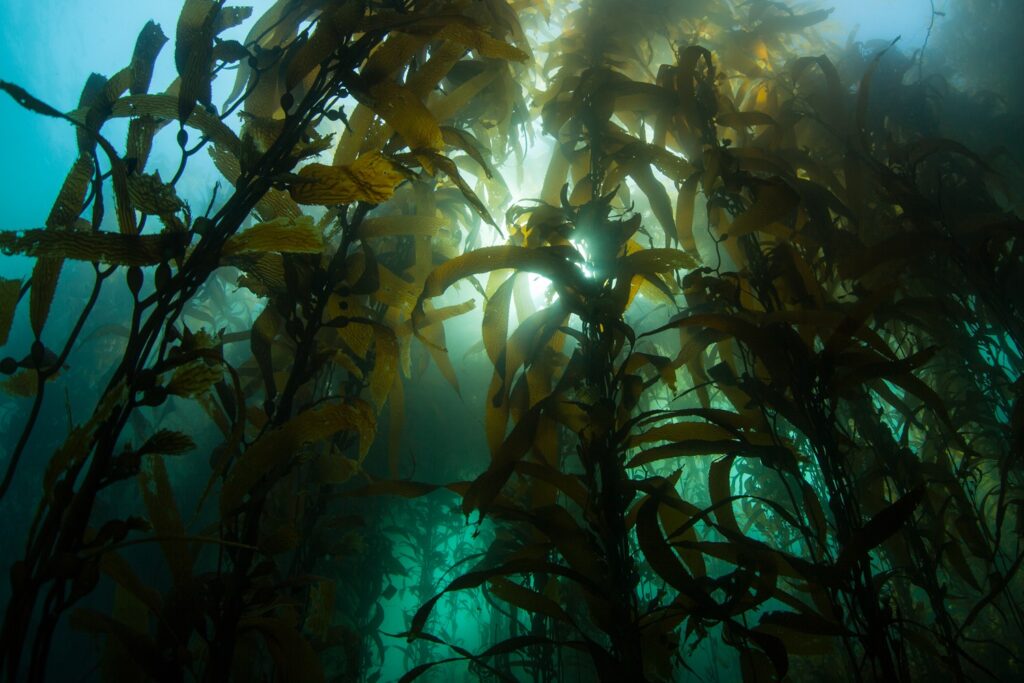
Ocean plants called seaweed contain essential nutrients due to which scientists value them both for medical applications and monetary opportunities. The nutritional profile of seaweed comprises 54 different nutrient traces which protect against the onset of cancer and diabetes alongside arthritis and heart conditions and high blood pressure diseases. The cultivation of seaweed happens independently of land availability and it needs neither freshwater nor fertilizers thus establishing itself as an eco-friendly agricultural system. Government programs like the Pradhan Mantri Matsya Sampada Yojana (PMMSY) aim to enhance seaweed farming production through industry growth that could exceed 1.12 million tonnes in the next five years.
-
Government programs like the Pradhan Mantri Matsya Sampada Yojana (PMMSY) aim to enhance seaweed farming production through industry growth that could exceed 1.12 million tonnes in the next five years.
-
Seaweed production has emerged as a sustainable and profitable industry because India has 7,500 km of coastline.

What are seaweeds?
-
Seaweed is a nutrient-rich marine plant, packed with vitamins, minerals and amino acids.
-
It contains 54 trace elements and essential nutrients that help fight diseases like cancer, diabetes, arthritis, heart problems and high blood pressure.
-
Seaweed is a sea plant that grows in the ocean and seas.
-
Seaweed cultivation requires no land, freshwater, fertilizers or pesticides, making it sustainable.
-
The $5.6 billion seaweed industry is booming, with India’s production increasing steadily.
-
Under one of its components, the Pradhan Mantri Matsya Sampada Yojana (PMMSY) aims to boost seaweed production to 1.12 million tonnes in five years.

Unlocking the Potential of Seaweed
Seaweed serves various industrial applications:
-
The food and cosmetic and medical industries use brown seaweed alginate which achieves annual sales of US$ 213 million.
-
The production of agar (US$ 132 million) occurs through extracting red seaweed substances for use in confectionery preparations and scientific experiments along with jam creation.
-
The extract known as carrageenan (US$ 240 million) exists in Irish Moss which forms part of the red seaweed family and finds application in dairy items and toothpaste production.

Market Insights:
-
People have consumed seaweed since the 4th century when Japan began its practice and the 6th century when China started using it.
-
The three countries of Japan, China and South Korea drive most of the seaweed market consumption worldwide.
-
A projection indicates that the market value of this sector will reach US$ 11.8 billion during the period from 2020 to 2030.
Promoting Seaweed Farming in India
The Indian government takes a proactive approach to support seaweed farming as a solution to combat national malnutrition problems while pursuing economic development.
Key Statistics:
-
844 seaweed species in Indian waters, with 60 commercially valuable.
-
The PMMSY scheme (worth ₹20,050 crore) targets seaweed farming together with fishery development through its financial plan.
-
Revenue of ₹640 crore (2020-2025) was allocated which includes ₹194.09 crore specifically targeted for building the Multipurpose Seaweed Park in Tamil Nadu and the Seaweed Brood Bank in Daman and Diu.
-
Production Target: 1.12 million tonnes in five years.

Key Benefits of Seaweed Production
-
Environmental and Economic Advantages
-
The use of seaweed-based biostimulants within agricultural practices helps strengthen both soil conditions and plant resistance to adverse conditions.
-
Organic Farming Support: Promoted under schemes like PKVY and MOVCDNER.
-
The productive use of seaweed benefits both climate change reduction and improves ocean environmental conditions.
-
Economic Upliftment:
-
Alternative livelihood for coastal communities.
-
The Kappaphycus alvarezii farming business generates annual revenue of ₹13,28,000 per hectare.
-
High demand for seaweed-based biofuels and fertilizers.
-
-
Key Developments in India

-
Empowering Women Through Seaweed Farming
-
Tamil Nadu women participants in PMMSY training programs established 36,000 tonnes of seaweed production success.
-
The research required an initial fund of ₹27,000 which TAFCOFED provided for funding.
-
Outcome: Financial independence and job creation for other women in the community.
-
-
Tissue culture to strengthen seaweed cultivation operations.
-
The scientists at CSIR-CSMCRI developed tissue culture methods for Kappaphycus alvarezii in Tamil Nadu.
-
The farm output achieved a 20-30% surplus by farmers in Ramanathapuram, Pudukottai and Tuticorin districts.
-
The production of high-quality carrageenan enables better commercial opportunities.
-
Conclusion
Seaweed cultivation provides sustainable business along with financial stability to coastal indigenous communities in India. While seaweed production presents several obstacles that consist of climate-related threats coupled with market difficulties and infrastructure limitations. The present growth expansion of the seaweed industry occurs through government backing of PMMSY and Seaweed Park in Tamil Nadu alongside research advancements. The nation will reach global leadership in seaweed farming through investment and creative development which will propel economic benefits together with environmental advantages.