

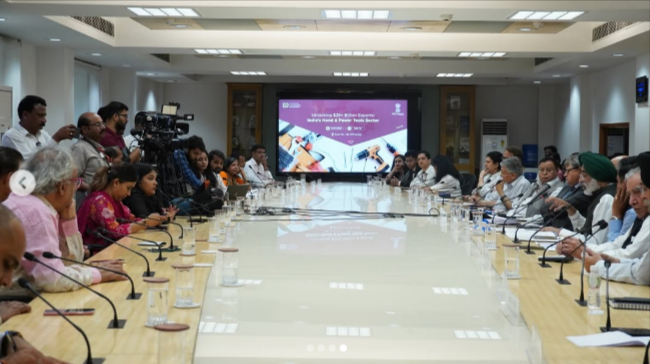
The hand & power tools sector of India will experience a massive export boost of $25+ billion according to "Unlocking $25+ Billion Export Potential – India’s Hand & Power Tools Sector" which NITI Aayog recently released. India seeks to grow its power tool sector exports to 10% of the world market while aiming for 25% of hand tool exports by 2035 which will generate about 35 lakh employment positions. The analysis reveals Chinese tools compete at 14–17% lower costs yet proposes three essential solutions to develop first-rate tool clusters and resolve industry blockages and provide temporary cost reduction support. The proposed industrial reforms support India to establish itself as a competitive global manufacturing center that delivers reliable products for the international market in line with its Make in India and Viksit Bharat @2047 plans.
Context
-
Launch Date: April 16, 2025
-
Dominance: China holds 50% of hand tools and 40% of power tools market share.
-
Current Export Figures: $600 million (hand tools), $470 million (power tools).
-
Global market: Valued at $100 billion (2024), expected to reach $190 billion by 2035.
-
India’s Target: $25+ billion exports in 10 years; 35 lakh new jobs.

Key Points
-
Sector Significance:
-
Hand and power tools are foundational to manufacturing, construction and DIY sectors.
-
Opportunity to expand “Make in India” and achieve Viksit Bharat@2047 Goals.
-
-
Export Potential & Employment:
-
Achieve 10% global share in power tools and 25% in hand tools can:
-
Boost exports to $25 billion.
-
Create 35+ lakh employment opportunities.
-
Strengthen MSMEs and domestic value chains.
-

-
Current Constraints:
-
Structural cost disadvantages from:
-
High raw material costs (steel, plastic).
-
High logistics and interest rates.
-
Labour productivity and overtime regulation issues.
-
-
Three Key Strategic Interventions:
-
Cluster Based development
-
Create 3-4 world class tool manufacturing clusters (4,000 acres).
-
Public-Private Partnership (PPP model).
-
-
Market and policy reforms:
-
Rationalize import duties on steel, motors
-
Reform EPCG scheme and reduce regulatory penalties.
-
Alignment with National Goals:
-
Supports “ Make in India”, employment generation and domestic industrialization.
-
Empowers MSME and boosts global trust in Indian manufacturing quality.
-
Conclusion
NITI Aayog’s roadmap for unlocking the export potential of India’s hand and power tools sector highlights a pragmatic yet ambitious vision for transforming India into a global manufacturing hub. By tackling cost disadvantages, fostering innovation and building integrated industrial clusters, India can expand its global footprint and create millions of jobs.