
Day: April 16, 2025

Synergising Hydrogen Generation and Electricity Storage: A Pathway to India’s Net-Zero Future

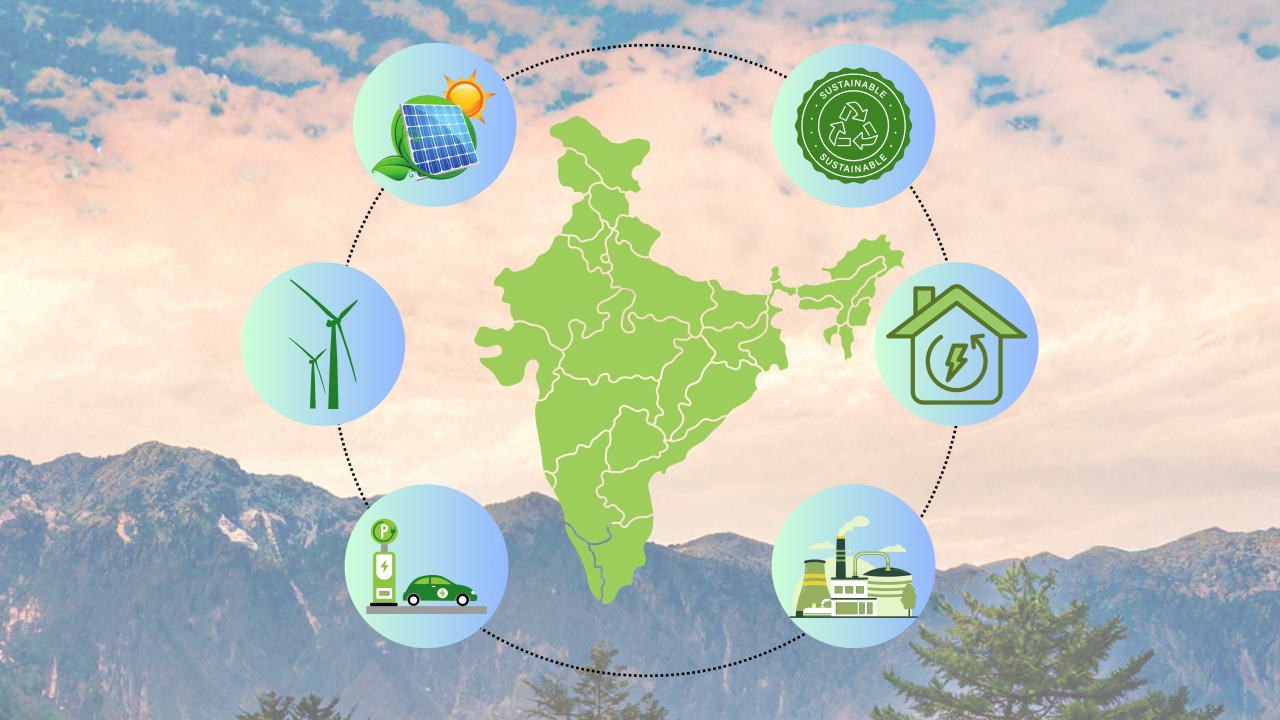
A net-zero economy depends on both extensive electrical grid transformation alongside mass use of hydrogen as an essential industrial fuel. The increasing power requirements of India lead to nuclear energy expansion with simultaneous development of solar power and wind power and hydroelectric facilities. Nuclear power gives stable base load generation yet does not provide enough flexibility to adjust output according to peak demand requirements as solar and wind energy does. High-cost nuclear plant flexibility is inefficient because the production of hydrogen through electrolysers works best when utilizing surplus electricity. The produced hydrogen enables industrial operations to reduce their fossil fuel consumption. The model requires two policy changes which define low-carbon hydrogen to include nuclear energy alongside green hydrogen and develop combined hydrogen generation and electricity storage systems for cost-effective decarbonization.

Context:

  • Power Expansion: The increasing power requirements throughout the nation will dramatically increase after India electrifies its economy for zero-carbon operations.

  • Hydrogen role: The industrial applications of hydrogen make it essential because it functions as a fossil fuel alternative during steel production and fertilizer manufacturing.

  • India’s aim: The Indian government aims to establish 100 GW of nuclear capacity along with planned new small reactor projects conducted by NPCIL towards 2047.

  • Hydrogen Production: The generation of hydrogen demonstrates effective capabilities for flexible power use and scalability when storing electricity.

Key Points:

  • Hydrogen in Industrial Transformation:

    • Replaces carbon in steel and natural gas in ammonia production.

    • The technology provides sustainable replacement options to industrial plants that find it difficult to reduce their emissions.

  • Expanding India's Nuclear Capacity:

    • The nuclear power company NPCIL is progressing with developments of 700 MW PHWR units and 220 MW Bharat Small Reactor systems.

    • The government targets 26 PHWR units while developing nuclear partnerships with Indian Railways and other industries.

    • Nuclear power operators identify it as a dependable facility for producing base power which delivers dependable energy security benefits.

  • Challenges with Nuclear Flexibility:

    • The high initial expenses coupled with limited profitability make nuclear plants ineffective when they operate at sub-maximum levels.

    • The technology limitations in load-following functionality make it impossible to perform flexing operation.

    • The surplus electricity supply should be redirected for hydrogen production through the alternative approach.

  • Hydrogen as a Grid-Balancing Solution:

    • The operation of electrolysers works with wind/solar energy that exceeds demand.

    • The production of hydrogens through electrolysis does not enable its conversion back into electricity since industries employ it directly.

    • The approach reduces both power storage requirements for batteries and unnecessary restriction of renewable energy production.

  • Green vs. Low-Carbon Hydrogen Taxonomy:

    • Current definition excludes nuclear-based hydrogen.

    • A proposal suggests the redefinition of green hydrogen to low-carbon hydrogen through established emission limits (≤2 kg CO₂/kg H₂).

    • The new definition secures nuclear energy as a part of clean hydrogen strategies.

  • Synergy Between Hydrogen and Electricity Storage:

    • The current industry separation prevents cost-efficiency from being achieved.

    • Research evidence confirms the combination of batteries with hydrogen systems creates financial benefits while enhancing operational performance.

    • A complete assessment method leads to better results for renewable integration along with industrial decarbonization.

About Hydrogen Energy

What is Hydrogen Energy?

  • The zero-emission fuel functions inside fuel cells yet it also produces heat or electricity when burned.

  • Non-toxic, odorless, colorless, and highly energy-dense.

  • The hydrogen technology exists as an acceptable replacement option for traditional fossil fuels in different industrial applications.

Hydrogen Energy in India:

  • Formation of National Hydrogen Energy Board in 2003.

  • The Hydrogen Energy Road Map established its main emphasis on power generation and transportation systems during this year (2006).

  • India became part of Mission Innovation Challenge to dismantle the worldwide challenges in hydrogen production.

  • The government targets to generate 75% of its hydrogen supply through renewable resources by the year 2050.

  • Ongoing R&D in production, storage, and application.

Benefits of Hydrogen Energy:

  • Environmental: Zero CO₂ emission in Green Hydrogen.

  • By implementing hydrogen energy systems India can decrease its reliance on fossil fuels in foreign imports while securing its energy needs.

  • Industrial Applications: Decarbonises sectors like steel and fertilizer.

  • The energy source possesses adaptability since it functions together with grid systems and renewable energy overproduction and storage facilities.

Conclusion

India’s path to a net-zero economy hinges on strategic alignment of low-carbon technologies. The upcoming power demand boom requires a mixed energy system of nuclear sources and solar power and wind sources and hydroelectric power backed up by intelligent grid technology. The efficient conversion of nuclear power excess into hydrogen production represents an advanced and practical energy outcome instead of inefficient plant transitions. The implementation of a new hydrogen policy structure which supports low-carbon hydrogen generation methods and combines this production with electricity storage systems will produce substantial economic and environmental advantages. The created policy frameworks will boost Indian industrial competitiveness and enhance its role as a powerhouse in global clean energy transitions.

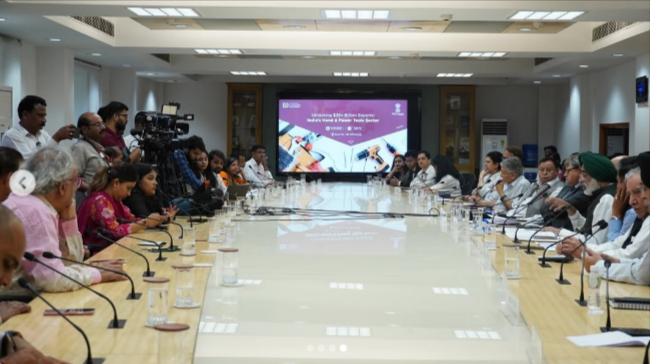
Unlocking India’s $25 Billion Export Potential in Hand and Power Tools Sector: NITI Aayog’s Strategic Roadmap

The hand & power tools sector of India will experience a massive export boost of $25+ billion according to "Unlocking $25+ Billion Export Potential – India’s Hand & Power Tools Sector" which NITI Aayog recently released. India seeks to grow its power tool sector exports to 10% of the world market while aiming for 25% of hand tool exports by 2035 which will generate about 35 lakh employment positions. The analysis reveals Chinese tools compete at 14–17% lower costs yet proposes three essential solutions to develop first-rate tool clusters and resolve industry blockages and provide temporary cost reduction support. The proposed industrial reforms support India to establish itself as a competitive global manufacturing center that delivers reliable products for the international market in line with its Make in India and Viksit Bharat @2047 plans.

Context

  • Launch Date: April 16, 2025

  • Dominance: China holds 50% of hand tools and 40% of power tools market share.

  • Current Export Figures: $600 million (hand tools), $470 million (power tools).

  • Global market: Valued at $100 billion (2024), expected to reach $190 billion by 2035.

  • India’s Target: $25+ billion exports in 10 years; 35 lakh new jobs.

Key Points

  • Sector Significance:

    • Hand and power tools are foundational to manufacturing, construction and DIY sectors.

    • Opportunity to expand “Make in India” and achieve Viksit Bharat@2047 Goals.

  • Export Potential & Employment:

    • Achieve 10% global share in power tools and 25% in hand tools can:

    • Boost exports to $25 billion.

    • Create 35+ lakh employment opportunities.

    • Strengthen MSMEs and domestic value chains.

  • Current Constraints:

    • Structural cost disadvantages from: 

    • High raw material costs (steel, plastic).

    • High logistics and interest rates.

    • Labour productivity and overtime regulation issues.

  • Three Key Strategic Interventions:

    • Cluster Based development

    • Create 3-4 world class tool manufacturing clusters (4,000 acres).

    • Public-Private Partnership (PPP model).

  • Market and policy reforms:

    • Rationalize import duties on steel, motors

    • Reform EPCG scheme and reduce regulatory penalties. 

    • Alignment with National Goals:

    • Supports “ Make in India”, employment generation and domestic industrialization.

    • Empowers MSME and boosts global trust in Indian manufacturing quality.

Conclusion

NITI Aayog’s roadmap for unlocking the export potential of India’s hand and power tools sector highlights a pragmatic yet ambitious vision for transforming India into a global manufacturing hub. By tackling cost disadvantages, fostering innovation and building integrated industrial clusters, India can expand its global footprint and create millions of jobs.

Telangana Becomes First State to Enforce SC Sub-Categorisation with 2025 Act

The first Indian state to establish Scheduled Castes (SC) sub-categorization became history when Telangana enacted the Telangana Scheduled Castes (Rationalisation of Reservations) Act of 2025 on April 14, 2025. This legislation follows a 2024 Supreme Court decision to create three distinct clusters of SC communities by applying backwardness criteria for socio-economic development and educational standing so the benefits of reservation maintain better distribution. Members of Group I who are the most underprivileged castes hold 1% of total reservations and Groups II and III possess 9% combined with 5% separate reservations. The decision relies on researched evidence to address strained relationships within the population. This social justice breakthrough affects upcoming political scenarios because it affects the reservation limit beyond 50%.

Context

  • About: Telangana became the pioneer among Indian states to implement Scheduled Castes (SC) sub-categorification through the Telangana Scheduled Castes (Rationalisation of Reservations) Act, 2025.

  • Implementation Date: April 14, 2025 (Ambedkar Jayanti).

  • Law: Telangana Scheduled Castes (Rationalisation of Reservations) Act, 2025.

  • The Telangana government established judicial backing through the Supreme Court ruling regarding SC/ST categorization which happened in August 2024.

  • Gazette Notification: Issued after governor's assent on April 8, 2025.

Key Points:

Details of Sub-Categorisation:

  • Number of SC Groups in Telangana: 59.

  • New Categorisation:

    • Group I (1%): 15 most backward SC sub-castes.

    • Group II (9%): 18 sub-castes with marginal gains.

    • Group III (5%): 26 sub-castes relatively better off within SCs.

  • The government aims at directing Target reservation support to those parts of the SC population having genuine socio-economic deprivation.

Historical and Legal Background:

  • The initiative aims to correct the persistent complaint that top sub-groups have received most benefits through SC reservation schemes.

  • Supreme Court Judgment (2024): Established legality of intra-group reservation sub-categorisation of SCs/STs.

Social Justice and Equity:

  • The approach uses actual socio-economic facts collected through education data and employment records and income measurements.

  • The approach matches the upliftment philosophy for marginalized communities that Dr B.R. Ambedkar envisioned.

  • Promotes inclusive reservation policy.

Political Implications:

  • During the local election season the Congress party aims to gain support from its voters in the Scheduled Caste and Other Backward Class groups.

  • The government increased the OBC quota to 42% which led to a public discussion regarding the 50% reservation limit.

  • Other state governments might adopt similar demands after this implementation.

Impact and Future Prospects:

  • Immediate impact on government job recruitment and educational admissions.

  • The system allows adjustments in seat reservations starting from 2026 based on changes in the SC community numbers during the following population enumeration.

  • The approach might set an example for other states provided it receives appropriate acceptable political and legal frameworks.

Conclusion

Telangana took a courageous step toward improving affirmative action through SC sub-categorization measures that help eliminate disparities between different SC groups. The policy bases its approach on judicial authorization and standardized information which aims to offer state opportunities to all SC sub-groups with equal access. The policy implementation leads to multiple constitutional challenges regarding the 50% quota limits and questions about federal control of reserving policies and prospects for copying this approach among other states. Telangana's approach represents a model which India could use to achieve both historical fairness and present-day systemic needs on its road to inclusive administration and equal treatment.

Operation Chakra V: Tackling Digital Arrest Cyber Frauds in India

Under Operation Chakra V the Central Bureau of Investigation (CBI) captured four individuals who conducted digital arrest frauds through cyber scams that trick victims into believing law enforcement officials had them under arrest. The CBI conducts nationwide searches after taking an aggressive stance toward cybercrime control. Numerous government initiatives did not stop cyber frauds from keeping their position as a major national security issue since perpetrators maintain anonymity while leveraging international communication networks and leveraging digital tools that advance quickly.

Context

  • CBI runs Operation Chakra V as an investigative maneuver to arrest criminals operating digital arrest scams.

  • Police officers conducted arrests in Mumbai and Moradabad while conducting 12 locations during their search operation.

  • The offender conducted mental manipulation of the victim by performing video calls to extract ₹7.67 crore.

  • The increasing number of digital arrest scam victims reached beyond 92,000 during 2024 throughout India.

  • The Prime Minister discussed the arrest scam in his Mann Ki Baat broadcast to spread knowledge and instruct victims to file reports.

What is Digital Arrest?

  • An arrest carried out through digital platforms constitutes a Digital Arrest Scam.

  • Electronic criminals pretend to be representatives of CBI, ED and RBI organizations in their attacks.

  • Victims get deceptive communications which display hollow arrest documents and receive false announcements about criminal action against them.

  • Because of intimidation the victims end up handing over money to resolve the fake case.

Modus Operandi:

  • The scam technique utilizes artificial intelligence voice simulation alongside counterfeit police uniforms together with digital courtroom settings and artificial legal terminologies.

  • During these scams authorities prevent their targets from checking the accuracy of statements made to them.

  • The perpetrators obtain money by collecting funds through UPI, crypto and e-wallet channels.

Vulnerability of Victims:

  • Lack of legal awareness.

  • Fear of social stigma and legal trouble.

  • Easy manipulation through psychological fear and digital realism.

  • The perpetrators specifically seek out their targets among elderly adults along with people who have minimal experience with technology.

Status of Cybercrime in India:

  • Online cyber complaints reached a total of 11 lakh during 2023.

  • Since 2021 the total money lost due to cyber scams has reached ₹27,914 crore.

  • The losses from digital arrest scams reached ₹1,616 crore.

Key Government Initiatives:

  • Indian Cyber Crime Coordination Centre (I4C).

  • National Cyber Crime Reporting Portal and Helpline 1930.

  • Digital Personal Data Protection Act, 2023.

  • Cyber Swachhta Kendra, CERT-In, and Cyber Surakshit Bharat.

Challenges in Tackling Cyber Fraud:

  • Crime prevention includes operating through VPNs along with offshore networks while using encryption technology.

  • Regulatory gaps and lack of cross-border cooperation.

  • Rapid evolution of tactics and malware.

  • Low public cyber hygiene and awareness.

Conclusion

Digital arrest scams represent a significant leap forward in cybercrime because they exploit human fear together with both technological tools and basic lack of legal knowledge. The CBI's Operation Chakra V demonstrates effective action but the extensive nature of cybercrime needs four major solutions including enhanced laws and security systems in addition to national education campaigns combined with international counter threat initiatives. Every citizen needs to practice alertness because they should both validate claims and report any suspicious activities that they encounter. 

India Launches First Native Seed Germination Database for Ecological Restoration

Through the Ecological Restoration Alliance-India (ERA-I) India will start freely providing a seed germination database for general access. The database contains more than 1000 seed germination methods which cover 465 native plant species to provide essential information to restoration practitioners alongside both nursery professionals and native plant enthusiasts. The database provides essential support to Indian restoration activities under its commitment to restore 26 million hectares of degraded land through the Bonn Challenge.

Context:

  • About: India will introduce its initial seed germination database which anyone can access at no cost through work from the Ecological Restoration Alliance-India (ERA-I).

  • Launch Date: April 16, 2025.

  • Initiative by: Ecological Restoration Alliance-India (ERA-I).

  • Objective: The planned system will facilitate ecological restoration through providing methods to make native Indian plant species germinate.

  • Database Content: 1,000+ techniques for 465 native species.

  • ERA-I provides database services to uphold India's commitments towards restoring 26 million hectares of degraded land by 2030 as per the Bonn Challenge.

Key Points on Seed Germination Database:

  • Significance of Native Plants in Restoration:

    • Native species support ecological balance due to evolved relationships with local fauna and climatic conditions.

    • Established systems need no further human management which makes them optimal for developing resilient climate-friendly landscapes.

  • Bridging the Knowledge Gap:

    • Before professional restoration practitioners began seed germination experiments they used to experiment with seeds through trial and error methods.

    • Standardised and tested protocols for germination in the new database increase the success rates of germinal production in nurseries.

  • Scientific and Practical Impact:

    • The platform provides access to methods which boost native plant cultivation results.

    • Native saplings achieve increased survivability through this program hence promoting land restoration efforts.

  • India’s Role in Global Restoration Goals:

    • The initiative stands to back the Bonn Challenge as it seeks global restoration of 350 million hectares of land before 2030.

About Seed Germination:

What is Seed Germination?

  • A biological process transforms seed into a seedling that later matures into a fully developed plant through seed germination. 

  • The initial developmental phase of plant lives serves as a vital basis for agricultural output together with natural environment recovery.

Stages of Seed Germination:

  • Imbibition: Water absorption occurs in imbibition which first softens the seed coat then stimulates enzyme activation.

  • Metabolism Activation: The seed enters a phase where metabolic processes such as respiration together with protein synthesis start.

  • Emergence: During the emergence phase both the radicle root will appear first followed by the plumule shoot.

  • Growth: The seedling emerges through cell multiplication along with cellular elongation.

Prerequisites for Germination:

  • Water: Required for metabolic activation and enzymatic functions.

  • Oxygen: Needed for cellular respiration.

  • Temperature: Temperature influences germination span within 25–30°C while exact temperatures vary among different plant species.

  • Light/Darkness: Acts as an environmental cue for many species.

External Factors Affecting Germination:

  • The condition of water resources either too little or too excessive creates barriers toward seed germination.

  • Very high or suboptimal temperatures act as barriers to seed germination.

  • The lack of available oxygen because of deep burial environments prevents metabolic processes from functioning normally.

Internal Factors:

  • Seeds maintain dormancy as a natural delay system that makes them incapable of germination when favorable environmental conditions exist.

  • Causes of Dormancy:

    • Hard seed coat.

    • Immature embryo.

    • Presence of growth inhibitors.

    • Requirement for after-ripening.

Conclusion

India established its first seed germination database which created an important breakthrough in ecological restoration together with sustainable land management. The initiative organizes seed propagation information to strengthen nationwide restoration operations which both protect biodiversity and create climate-resilient environments. India’s ambitious pledge under the Bonn Challenge demands such scientific resources for creating large-scale meaningful impact. The database connects years of missing ecological knowledge while simultaneously opening ecological expertise to all stakeholders for improved restoration programs. The active Indian response toward ecological challenges demonstrates essential methods to match scientific understanding with conservation initiatives worldwide.

India’s Evolving Approach to Artificial Intelligence Governance and Regulation

The worldwide effort to regulate Artificial Intelligence faces distinct approaches between countries that result from their socio-economic and political backgrounds. India opts for mission-based development instead of standardized legal and strategic frameworks when approaching Artificial Intelligence governance and lawmaking. India's initiatives support adaptability to emerging technologies yet the country lacks official AI strategy or regulation which creates uncertainty about responsibility and accessibility together with ethical AI utilization and readiness. India can develop an equitable and sustainable AI policy through global benchmarking and utilization of the Digital Personal Data Protection (DPDP) Act, 2023 to define its AI integration strategies.

Context:

  • Global Trends: Global trends show that numerous countries created AI strategy documents together with AI laws to support ethical development of inclusive AI systems.

  • India’s position: India operates without an established AI law while using both the IndiaAI mission and advisory bodies along with no formal strategy.

  • Policy Gap: The current Indian approach is flexible yet it has no defined goals and measurable targets and does not establish accountability frameworks.

  • Urgency for regulation: Restrained AI adoption across critical sectors requires India to build official regulations as well as commence discussions about AI governance.

Key Points:

Global Regulatory Landscape:

  • AI-specific laws now exist in the EU, China and Canada as well as other nations.

  • More than 85 international nations together with the African Union have created official AI strategy documents.

  • The United States uses a divided-by-sectors system while the EU implements its governance through central control.

India’s Current Approach:

  • Indian institutions have yet to introduce approved national AI legislation or strategic guidelines from the government.

  • The 2018 AI strategy developed by NITI Aayog has not been executed yet.

  • The IndiaAI mission stimulates innovation through a seven-pillar organizational system.

  • Special expert groups composed of advisors have been developing initial governance recommendations.

Advantages of India’s Approach:

  • India has the capability to change and respond to new technological developments along with international relations and economic shifts.

Limitations and Risks:

  • Lack of clarity on national vision, implementation, and accountability.

  • Absence of public engagement and transparent algorithmic use, especially in public services.

  • Risk of reactive policy-making and dependence on leadership continuity.

  • AI technologies pose three particular dangers which include the production of fake information alongside privacy violation and biased practices.

Comparative Lessons from Abroad:

  • The DPDP Act in India follows the EU GDPR concept by establishing central authority and targeting all sectors with their provisions.

  • China implements specific laws to regulate deep synthesis systems together with generated content created by artificial intelligence technology.

  • The establishment of a hybrid model should utilize India's foundational structure of digital data protection to enhance its potential performance.

A structured AI policy required:

  • India must establish a precise declaration about its future outlook for Artificial Intelligence development.

  • The establishment of capacity development together with infrastructural improvements should include ethical guidelines.

  • The initiative should focus on selecting crucial sectors which include healthcare together with agriculture and education.

  • The policy should establish which authorities will oversee enforcement and responsibilities.

  • The public needs to engage in dialogue about AI issues with their government and citizens.

Conclusion

The time is now for India to develop its framework regarding Artificial Intelligence governance. The polycentric approach of mission-focused development helps India adapt to technological changes but leaves space for doubts about responsibility and ethical practices and public trust in AI applications. India should define a complete AI policy now because artificial intelligence will strongly incorporate itself into key industrial applications.

Frequently Asked Questions (FAQs)

The current affairs cover recent national and international events related to UPSC, SSC, Banking, Railways, and State PCS.

You need to read about the current affairs daily, and revise them every week and every month to keep them longer in your memory.

Yes, Class24 provides free downloadable Daily Current Affairs PDFs for easy revision.

Yes, you can practice MCQs and quizzes to boost your exam preparation.

Absolutely. The content is written in simple, easy-to-understand bilingual language suitable for beginners.

Go to class24.com and click on the current affairs section directly, where you find everything that you need.

ssc-toppers

Start Learning Today with Class24

Related current affairs

Class24 offers free video lectures for smart preparation, covering CGL, CPO, CHSL, MTS, and GD exams. Learn from expert faculty, revise concepts easily, practice with PYQs, and improve speed and accuracy through high-quality, exam-focused video lessons anytime, anywhere.

Get success in your hand. Start study anytime anywhere.

The journey becomes simple and enjoyable when you start taking interest in it. And through our app “Class24”, we will be your trusted partners in developing that interest.

Daily Quizzes
Mock Tests
Ongoing

No ongoing tests right now.