

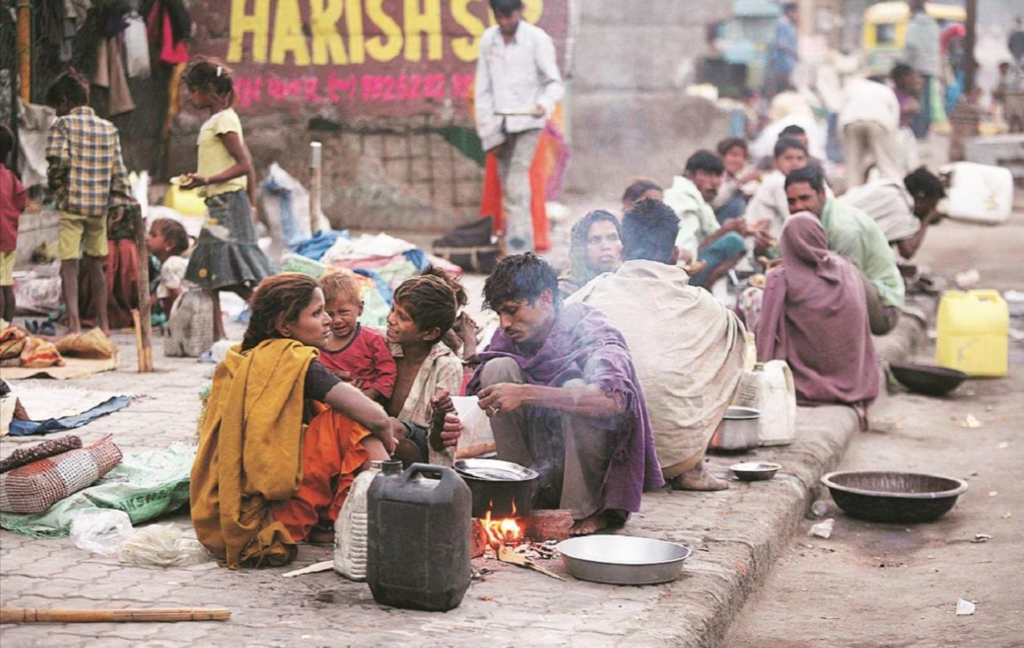
The World Bank issued its Spring 2025 Poverty and Equity Brief as a detailed overview of poverty and inequality throughout more than 100 countries that are developing. India stands among the most successful nations in recent history regarding poverty reduction miracles. The achievement stands out during worldwide attempts to achieve Sustainable Development Goal (SDG 1: No Poverty). The extreme poverty rate decreased from 16.2% in 2011-12 to 2.3% in 2022-23, according to recent statistics. The achievement of reducing poverty levels stems from universal development progress in both rural and urban areas, and robust employment opportunity expansion combined with welfare program interventions
Context:
-
During the last ten years World Bank identified India as a successful case that lifted 171 million citizens above extreme poverty conditions.
-
A reduction of extreme poverty occurred from 16.2% during 2011-12 to 2.3% during 2022-23.
-
Rural and urban-based progress, along with employment growth and specific welfare schemes, enabled this achievement.

Key Points:
Reduction in Extreme Poverty:
-
Alternate survey data indicates a major reduction of extreme poverty as the percentage of people living below $2.15 per day decreased from 16.2% (2011-12) to 2.3% (2022-23).
-
The number of extremely poor individuals in India dropped to 171 million.

Broad-Based Progress in Rural and Urban Areas:
-
Rural poverty fell from 18.4% to 2.8%.
-
Urban poverty dropped from 10.7% to 1.1%.
-
The gap between poverty levels between rural and urban areas decreased from 7.7% to 1.7% during the studied period.

Gains at Lower-Middle-Income Poverty Line ($3.65/day):
-
Overall poverty fell from 61.8% to 28.1%.
-
378 million lifted out of poverty.
-
The overall poverty level decreased in both rural areas from 69% to 32.5% while urban areas went from 43.5% to 17.2%.
Role of Key States:
-
Two-thirds of all poverty relief occurred in Uttar Pradesh together with Maharashtra and Bihar along with West Bengal and Madhya Pradesh.
Decline in Multidimensional Poverty:
-
MPI fell from 53.8% (2005-06) to 16.4% (2019-21).
-
Multidimensional Poverty now at 15.5% in 2022-23.
Income Inequality Reduction:
-
The consumption-based Gini measurement showed improvement from its initial value of 28.8 to reach 25.5.

Employment and Workforce Trends:
-
Post-2021, the employment rate increased more rapidly than the working-age population expansion.
-
Current urban unemployment stands at 6.6% during the first quarter of the economic year 2024-2025, marking the most significant decline since 2017-18.
-
Increased self-employment, particularly among women and rural workers.
About Poverty in India
Meaning of Poverty:
-
Defination: A person lacks the means to obtain necessary resources needed for a standard level of living.
-
Multidimensional: Includes lack of income, education, healthcare, and social mobility opportunities.
Classification of Poverty:
-
This level of poverty describes the inability to satisfy the fundamental life requirements including food together with shelter and appropriate clothing.
-
Relative Poverty: Economic inequality relative to others within a society.

Measurement of Poverty:
-
Poverty Line: Minimum income or consumption threshold.
-
The Multidimensional Poverty Index (MPI) serves to evaluate the nature of health and education and living standard deprivations.
-
Gini Coefficient: Measures income inequality.

Causes of Poverty:
-
Economic Factors: Low income, unemployment, lack of industrialization.
-
The factors that stem from social inequalities include caste, gender and ethnic discrimination which combine with restricted educational opportunities.
-
Health Challenges: Poor health, high medical costs.
-
Geographic and Environmental Factors: Natural disasters, droughts, urban-rural divide.
-
Governance and Policy Gaps: Corruption, poor infrastructure investment, weak social security systems.
Impact of Poverty:
-
Health: Increases disease vulnerability and malnutrition.
-
Education: Reduces literacy and employability.
-
Economic Growth: Lowers productivity and national development.
-
Increased deprivation and social agitation appear as direct consequences of unstable social conditions.
-
Various economic difficulties transfer from one generation to another as poverty continues throughout extended periods of time.
Global and National Efforts to Alleviate Poverty:
-
United Nations:
-
The United Nations aims to eliminate all kinds of poverty worldwide before 2030 through SDG 1.
-
Government of India Initiatives:
-
MGNREGA: Employment guarantee in rural areas.
-
PMJDY delivers financial access to all through bank accounts.
-
NFSA: Subsidized food grains for the poor.
-
Skill India Mission: Vocational training and skill development.
-
International Organizations:
-
World Bank: Poverty reduction programs.
-
IMF: Financial aid and policy support.

Challenges in Poverty Alleviation:
-
Population growth straining resources.
-
Urbanization leading to slum proliferation.
-
Climate change increasing vulnerability.
-
Global economic disruptions (e.g., pandemics).
-
Inefficient policy implementation and corruption.
Strategies to Address Poverty:
-
Economic Development: Inclusive growth, technology adoption, microfinance.
-
Social Interventions should focus on improving education and on providing healthcare services to every citizen.
-
The development of infrastructure requires better connectivity together with adequate housing and utilities.
-
Good Governance: Transparent, accountable policymaking.
-
Environmental Sustainability: Climate-resilient infrastructure, renewable energy.
Conclusion:
The reduction of poverty throughout India stems from focused government initiatives and economic reforms and grassroots welfare programs. The development process has achieved three important outcomes as it brings rural and urban areas closer together and reduces poverty gaps while creating more job,s particularly for women. The progressive outcomes create several fundamental opportunities for India to speed up its efforts against poverty and inequality on its way to becoming a developed nation by 2047.