


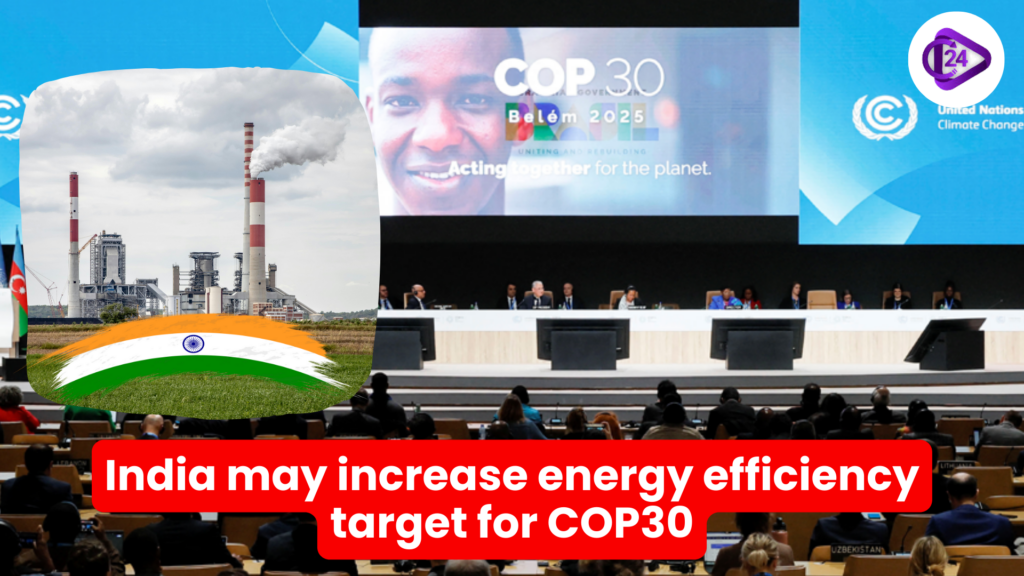
India is likely to submit an updated version of its Nationally Determined Contributions (NDCs) at the UN Climate Change Conference (COP30) in Brazil on November 10, 2025. The revised NDCs may include an enhanced target for energy efficiency improvements, as sources within the Environment Ministry suggested to The Hindu. The NDCs are a vital component of the Paris Agreement, where countries pledge their commitments to limit global temperature rise to below 2°C above pre-industrial levels, with efforts to restrict it to 1.5°C.
Key Features of India’s NDCs:
-
Previous Commitments: In 2022, India set ambitious targets, including:
-
A 45% reduction in the emissions intensity of GDP (compared to 2005 levels) by 2030.
-
Sourcing 50% of electric power capacity from non-fossil fuel sources.
-
Creating a carbon sink of at least two billion tonnes by 2030.
-
-
Progress So Far:
-
By December 2023, India had reduced its emissions intensity by 33% from 2005 to 2019.
-
By June 2025, India reported that 50% of its installed power capacity had been sourced from non-fossil fuel sources.
-
Global Climate Ambition:
-
Brazil’s COP30 Focus: Brazil, which will host COP30, will assess the challenges countries face in achieving their NDCs and the gaps that remain. Despite efforts, experts suggest that even if all commitments are achieved, global temperatures could rise by 3°C by the end of the century, far from the Paris Agreement's targets.
-
EU Climate Targets: The European Union has yet to announce a 2035 target, although it has proposed a 90% emission cut by 2040. The EU is expected to finalize its targets ahead of COP30, but some countries like France and Germany have postponed the decision on a 2035 target.
-
Australia’s Updated NDCs: Australia recently updated its NDCs to aim for 62%-70% emission cuts from 2005 levels by 2035.
-
Challenges for Developed Countries: The United States has exited the Paris Agreement, and China’s stance on further ambitious commitments is still unclear.
India’s Strategy for Emission Reductions:
-
Joint Crediting Mechanism (JCM): India has signed an agreement with Japan to jointly develop clean energy projects and share the resulting carbon credits. India is in talks with other countries for similar agreements.
-
Carbon Market and Emission Targets: By 2026, India is expected to launch the India Carbon Market, which will set mandatory emission intensity targets for 13 major sectors. The market will allow industries to trade emission reduction certificates.
Conclusion
India’s updated NDCs ahead of COP30 are expected to reflect an increased focus on energy efficiency and enhanced climate action. While India’s efforts are commendable, global cooperation remains key, especially in terms of finance and technology transfer from developed countries to support the climate goals of developing nations. The India Carbon Market and JCM agreements are steps in the right direction, aiming to bridge the gaps in emission reductions and climate financing.