Day: September 24, 2025

Satellite Internet in India 2025: Bridging the Digital Divide

India's space advancements are directly contributing to making life easier for its citizens, especially by addressing the digital divide. With 1,002.85 million internet subscribers as of April–June 2025, India has made substantial progress in digital connectivity. However, there remains a significant gap in internet access, especially in rural and remote regions. Satellite internet is emerging as a key solution to bridge this gap, providing connectivity to areas where terrestrial networks are either economically unviable or difficult to reach.

Key Features of Satellite Internet:

  • Global Reach: Satellite internet can provide internet access anywhere, especially to hard-to-reach areas like remote villages, hilly terrains, islands, and border regions.
    Next-Generation Connectivity: India is transitioning from traditional Geostationary (GEO) satellites to Low Earth Orbit (LEO) and Medium Earth Orbit (MEO) satellite systems, which offer faster, low-latency, and more reliable broadband services.

  • Increased Private Sector Participation: Following space sector reforms in 2020, private sector players like Starlink, Jio Satellite Communications, and OneWeb have been licensed to provide satellite internet services, opening the door for innovation and competition.

India’s Regulatory Landscape for Satellite Internet:

  1. Department of Telecommunications (DoT): Regulates satellite communications under the Unified License Regime, enabling satellite services such as VSAT and GMPCS to extend connectivity to unserved areas.

  2. Telecom Regulatory Authority of India (TRAI): In May 2025, TRAI released recommendations to balance satellite spectrum utilization efficiently, allowing for flexible periods and efficient market conditions.

  3. Indian National Space Promotion & Authorisation Centre (IN-SPACe): Facilitates private sector participation, ensuring smooth interaction between the private sector and ISRO to drive satellite internet.

  4. New Space India Ltd. (NSIL): As the commercial arm of ISRO, NSIL operates satellites like GSAT-24 and GSAT-20 for DTH and broadband connectivity.

Shifting to LEO and MEO Satellites:

India is transitioning from GEO satellites to LEO and MEO satellites due to their lower latency, higher bandwidth, and faster communication capabilities. These systems are ideal for providing internet services across remote and underserved regions.

  • LEO Satellites: Positioned 400-2,000 km above Earth, they provide fast, low-latency communication, ideal for internet services.

  • MEO Satellites: Positioned 8,000-20,000 km above Earth, they offer broader coverage and are suited for larger regions, though with slightly higher latency than LEO.

Key Satellite Communication Services:

India’s satellite internet landscape is evolving, with more private sector players joining the space:

  • Starlink received approval in June 2025 to operate satellite internet services.

  • Jio Satellite Communication and OneWeb are also part of the growing satellite internet market in India.

Government Initiatives:

  • Digital Bharat Nidhi (DBN): Supports the expansion of broadband services to rural areas.

  • Comprehensive Telecom Development Plan (CTDP): Enhances connectivity in remote islands like the Andaman and Nicobar Islands and Lakshadweep, as well as the North-Eastern region.

  • National Broadband Mission 2.0 (NBM 2.0): Aims to provide broadband access to 1.7 lakh villages across the country, with a focus on satellite-based solutions under BharatNet.

India’s Operational Satellites and Impact:

India’s operational communication satellites, including GSAT-19, GSAT-29, GSAT-11, and GSAT-N2, play a crucial role in expanding broadband services in underserved regions. They use advanced spot-beam technology, boosting satellite broadband infrastructure and complementing ground-based networks like BharatNet.

Conclusion:

In alignment with the vision of Viksit Bharat 2047, satellite internet is a key enabler of digital connectivity in India, providing access to remote and underserved regions while strengthening critical sectors like defence and disaster management. By embracing LEO/MEO satellite systems, promoting private-sector participation, and ensuring strong government initiatives, India is well-positioned to bridge its digital divide and emerge as a leader in space-based communications.

Why Bihar Congress is Protesting the Adani Project: A Breakdown

Last week, the Bihar Congress organized a protest march from its Patna office at Sadakat Ashram to Dr. Rajendra Prasad’s memorial at Bans Ghat, in opposition to the Bihar government's decision to lease 1,050 acres of land in Bhagalpur to the Adani Group at a token rate of ₹1 per year for setting up a thermal power plant.

Key Points of the Protest:

  • Land Deal: Congress argues that leasing 1,050 acres of fertile agricultural land to Adani for such a nominal rate is a “gift” to the corporation.

  • Environmental Concerns: Allegations include the cutting of 10 lakh trees for the project, which Congress claims would have significant environmental repercussions.

  • Farmland Conversion: The Congress has also raised concerns over the reclassification of fertile agricultural land as barren land to facilitate the project.

What is the Pirpainti Thermal Power Plant?

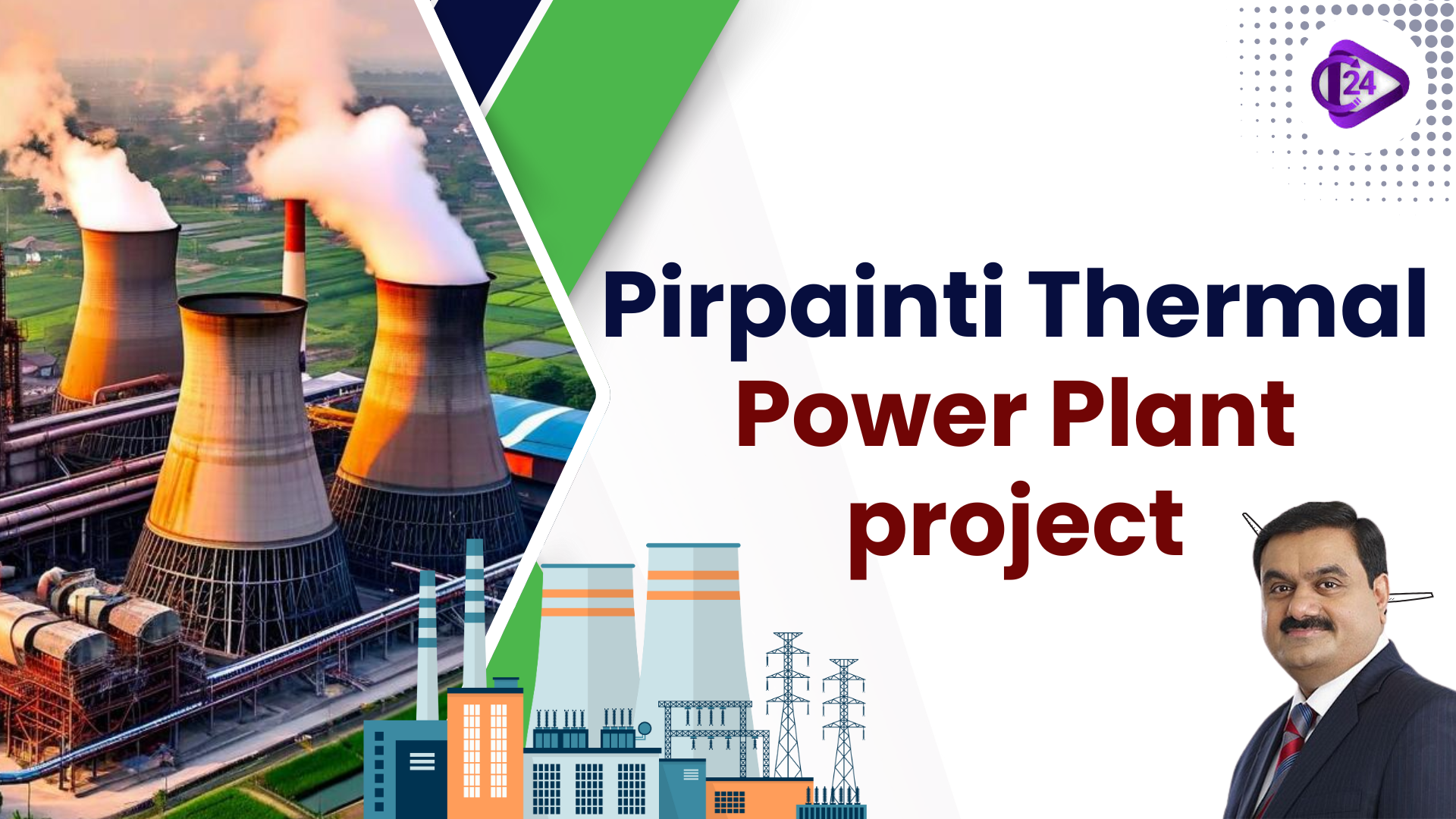
The Pirpainti Thermal Power Plant is a 2,400-MW coal-fired project being developed by Adani Power Limited in Bhagalpur. The project represents the largest private-sector investment in Bihar, valued at $3 billion, and will create up to 12,000 jobs during construction and about 3,000 permanent jobs once operational.

Congress’s Allegations:

  1. Token Land Transfer: The 1,050 acres have been leased to Adani for just ₹1 per year for 33 years, which Congress claims is highly preferential.

  2. Environmental Damage: Congress alleges that the plant will lead to the cutting of 10 lakh trees and the destruction of the ecosystem.

  3. Farmland Misuse: Congress asserts that fertile land is being wrongly declared barren to facilitate the project’s land acquisition.

  4. Expensive Power: The Congress points out that electricity generated from this thermal plant will cost ₹6.075 per unit, which is much higher than the rates in other states.

Government’s Defense:

  • Transparent Process: Bihar Industries Minister Nitish Mishra rejected the allegations, stating that the project followed a transparent bidding process and was crucial for the state's development.

  • Land Deal: The state government clarified that the land was leased at ₹1 per year to Bihar State Power Generation Company (BSPGCL) in 2022, before the bidding process. The token rate was intended to reduce power generation costs, while the ownership of the land remains with the Bihar government.

  • Policy Precedent: The policy offering land at ₹1 to large investors is not unique to Adani. It’s part of Bihar’s broader investment policy to attract industrial development and create jobs.

Environmental Concerns:

  • The government clarified that although 10,055 trees were counted, only those within the power plant and coal handling areas (300 acres) will be cut. Additionally, the state will implement a compensatory afforestation plan to develop a green belt on 100 acres.

How Adani Won the Project:

  • The Pirpainti Power Plant is part of a series of efforts that began over a decade ago but faced multiple delays due to corruption scandals and protests from farmers. The government stated that Adani won the project through a competitive bidding process as per Section 63 of the Electricity Act.

What About the Re 1 Land Transfer?

  • The Re 1 lease rate is part of the state’s broader industrial investment policy. In 2025, the Bihar cabinet approved the “Bihar Industrial Investment Promotion Package,” offering land at a token rate of ₹1 for investors who meet specific criteria, including job creation and investment amounts.

Is This a Common Practice?

  • No, this land deal isn’t unique to Adani. Under Bihar’s investment promotion policy, land at token rates is available to various investors, including large corporations, based on their investment and job creation commitments.

Power Pricing Concerns:

  • The government defended the cost of thermal power, stating that while renewable energy costs ₹3–₹3.50 per unit, it is inconsistent because of weather conditions. In contrast, thermal power, although more expensive, is always available, leading to higher costs.

Similar Controversies in Other States:

  • Adani’s land acquisition efforts have faced opposition in other states as well. For example, in Jharkhand’s Godda, there have been allegations of forced land acquisition and police intimidation during the construction of a 1,600 MW thermal power plant.

Political Context:

  • This issue has emerged just ahead of Bihar’s Assembly elections. Congress claims that the “gifts” to Adani are part of a pattern where the government rewards the Adani Group when facing electoral setbacks. The BJP counters by accusing Congress of obstructing Bihar’s development.

Land Acquisition Process:

  • The land acquisition for the Pirpainti project involved acquiring 988.335 acres of private land, affecting 919 landowners. The compensation process involved both the older 1894 Land Acquisition Act and the newer 2013 Act, leading to variations in compensation amounts for different landowners.

Conclusion

The controversy surrounding the Pirpainti thermal power plant project highlights the tension between developmental initiatives and environmental, economic, and political considerations. As the project progresses, it is likely to continue fueling debates over the sustainability of large-scale industrial projects in sensitive areas and the role of government policies in balancing development and public welfare.

Education Ministry to Hold Virtual Buildathon Contest for Students from Classes 6 to 12

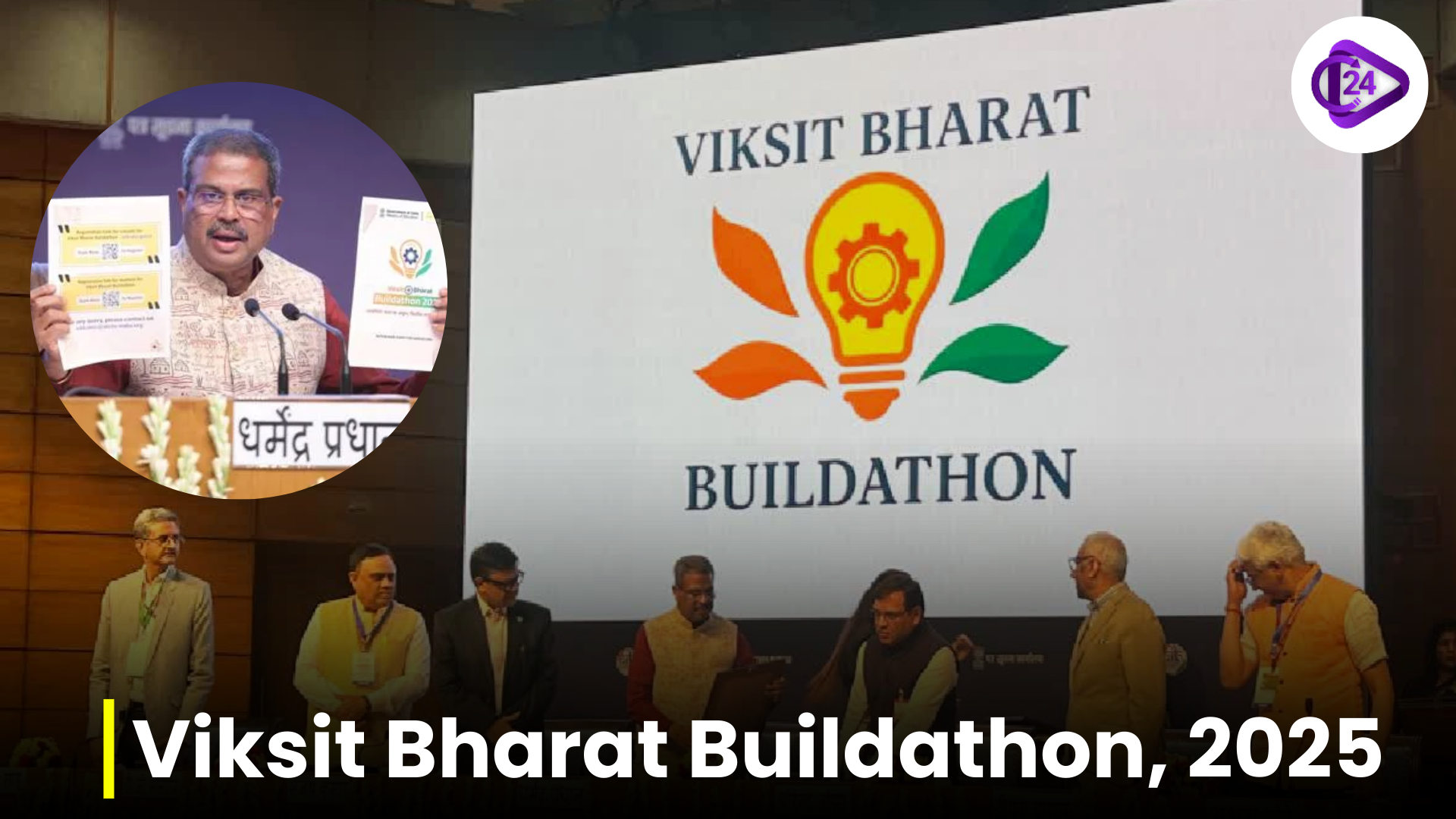
The Union Ministry of Education will host a virtual Buildathon contest for students from Classes 6 to 12 across the country in October 2025. The initiative aims to encourage students to generate ideas and create products focused on self-reliance, indigenous knowledge, and sustainability, contributing to India’s goal of becoming a developed nation by 2047.

Key Details of the Viksit Bharat Buildathon, 2025:

  • Launch: The contest will be officially launched by Education Minister Dharmendra Pradhan on October 13, 2025, with a two-hour live innovation event.

  • Participants: Students from 6 lakh schools across India, both government and private, will participate. The contest is aimed at 12 crore students.

  • Focus Areas: The contest seeks ideas/products that align with the vision of self-reliance, sustainability, and indigenous knowledge to help India advance towards its goal of becoming a developed nation by 2047.

  • Prize Pool: A ₹1-crore prize pool will be awarded to the best ideas and products. Winners will be selected at the district, state, and national levels.

Buildathon Process and Timeline:

  1. Registration: Students can register for the Buildathon via a QR code that will be distributed in all schools. Registration will remain open until October 6, 2025. Teachers will then have a week to help students prepare for the live event.

  2. Live Innovation Event: On October 13, students will participate in the two-hour brainstorming session in teams of 3-4 students. They will work on innovative ideas related to India's future development.

  3. Submission: Following the event, students will have the rest of October to submit their ideas and prototypes on the Buildathon portal.
     

  4. Evaluation: A panel of experts will review the submissions from November to December 2025, selecting winners at district, state, and national levels.

  5. Announcement of Winners: The winners will be announced in January 2026.

Significance of the Buildathon:

  • Encouraging Innovation: The contest aims to engage the youth in solving problems and generating ideas for India's future development, focusing on practical and sustainable solutions.

  • Empowering Students: By involving students from across the country, the Buildathon offers them an opportunity to contribute to national development, while enhancing their creativity and problem-solving skills.

  • Promoting Self-Reliance: The contest encourages students to create solutions that can contribute to making India more self-reliant, aligning with the government’s focus on Atmanirbhar Bharat.

Conclusion

The Viksit Bharat Buildathon 2025 offers a platform for young innovators to engage in creating solutions that can have a tangible impact on India’s journey towards development. By focusing on sustainability, indigenous knowledge, and self-reliance, the Buildathon aims to foster the next generation of leaders and innovators who will contribute to India’s vision of becoming a developed nation by 2047.

India to Increase Energy Efficiency Target for COP30

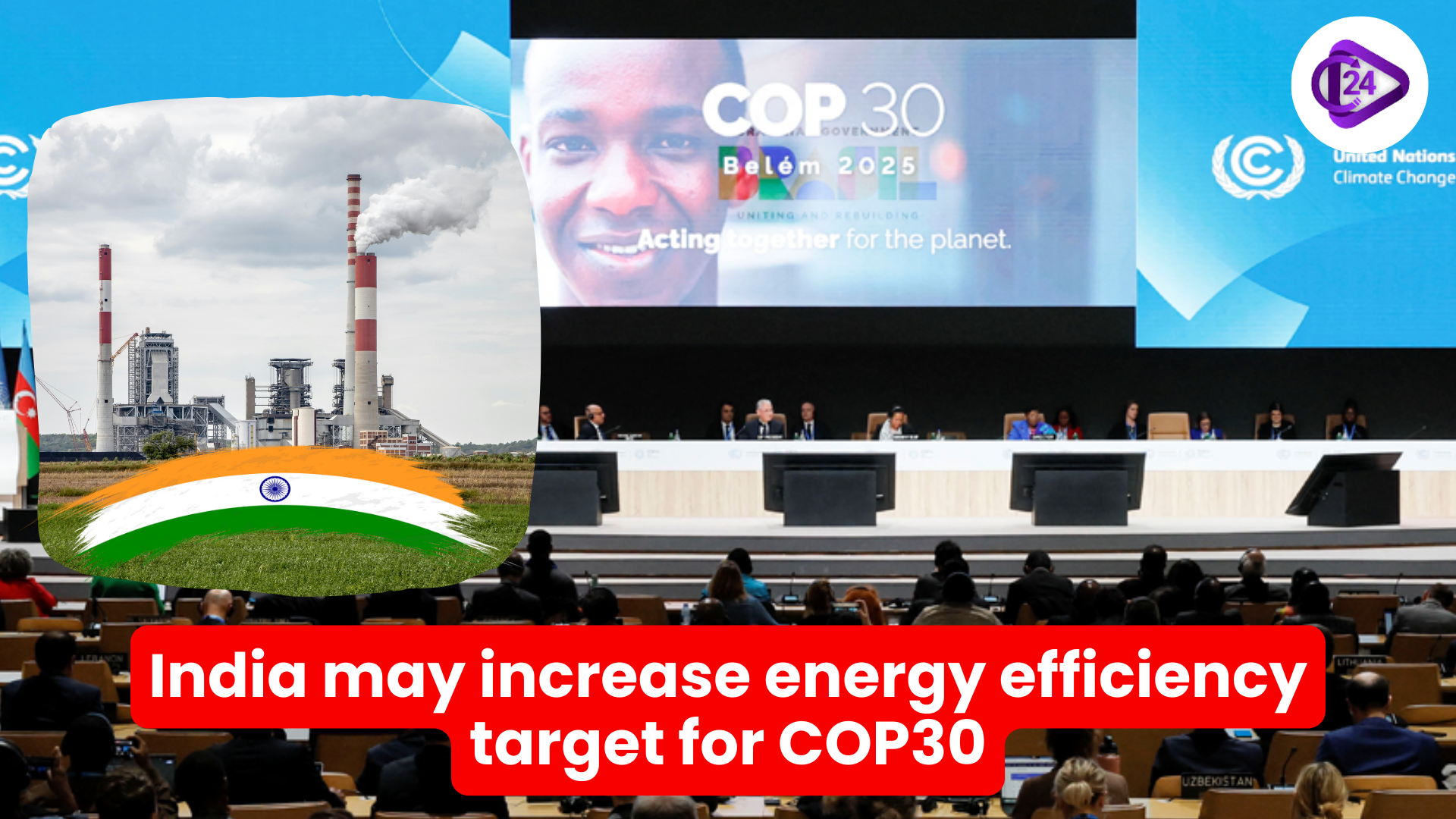
India is likely to submit an updated version of its Nationally Determined Contributions (NDCs) at the UN Climate Change Conference (COP30) in Brazil on November 10, 2025. The revised NDCs may include an enhanced target for energy efficiency improvements, as sources within the Environment Ministry suggested to The Hindu. The NDCs are a vital component of the Paris Agreement, where countries pledge their commitments to limit global temperature rise to below 2°C above pre-industrial levels, with efforts to restrict it to 1.5°C.

Key Features of India’s NDCs:

  • Previous Commitments: In 2022, India set ambitious targets, including:

    • A 45% reduction in the emissions intensity of GDP (compared to 2005 levels) by 2030.

    • Sourcing 50% of electric power capacity from non-fossil fuel sources.

    • Creating a carbon sink of at least two billion tonnes by 2030.

  • Progress So Far:

    • By December 2023, India had reduced its emissions intensity by 33% from 2005 to 2019.

    • By June 2025, India reported that 50% of its installed power capacity had been sourced from non-fossil fuel sources.

Global Climate Ambition:

  • Brazil’s COP30 Focus: Brazil, which will host COP30, will assess the challenges countries face in achieving their NDCs and the gaps that remain. Despite efforts, experts suggest that even if all commitments are achieved, global temperatures could rise by 3°C by the end of the century, far from the Paris Agreement's targets.

  • EU Climate Targets: The European Union has yet to announce a 2035 target, although it has proposed a 90% emission cut by 2040. The EU is expected to finalize its targets ahead of COP30, but some countries like France and Germany have postponed the decision on a 2035 target.

  • Australia’s Updated NDCs: Australia recently updated its NDCs to aim for 62%-70% emission cuts from 2005 levels by 2035.

  • Challenges for Developed Countries: The United States has exited the Paris Agreement, and China’s stance on further ambitious commitments is still unclear.

India’s Strategy for Emission Reductions:

  • Joint Crediting Mechanism (JCM): India has signed an agreement with Japan to jointly develop clean energy projects and share the resulting carbon credits. India is in talks with other countries for similar agreements.

  • Carbon Market and Emission Targets: By 2026, India is expected to launch the India Carbon Market, which will set mandatory emission intensity targets for 13 major sectors. The market will allow industries to trade emission reduction certificates.

Conclusion

India’s updated NDCs ahead of COP30 are expected to reflect an increased focus on energy efficiency and enhanced climate action. While India’s efforts are commendable, global cooperation remains key, especially in terms of finance and technology transfer from developed countries to support the climate goals of developing nations. The India Carbon Market and JCM agreements are steps in the right direction, aiming to bridge the gaps in emission reductions and climate financing.

Frequently Asked Questions (FAQs)

The current affairs cover recent national and international events related to UPSC, SSC, Banking, Railways, and State PCS.

You need to read about the current affairs daily, and revise them every week and every month to keep them longer in your memory.

Yes, Class24 provides free downloadable Daily Current Affairs PDFs for easy revision.

Yes, you can practice MCQs and quizzes to boost your exam preparation.

Absolutely. The content is written in simple, easy-to-understand bilingual language suitable for beginners.

Go to class24.com and click on the current affairs section directly, where you find everything that you need.

ssc-toppers

Start Learning Today with Class24

Related current affairs

Class24 offers free video lectures for smart preparation, covering CGL, CPO, CHSL, MTS, and GD exams. Learn from expert faculty, revise concepts easily, practice with PYQs, and improve speed and accuracy through high-quality, exam-focused video lessons anytime, anywhere.

Get success in your hand. Start study anytime anywhere.

The journey becomes simple and enjoyable when you start taking interest in it. And through our app “Class24”, we will be your trusted partners in developing that interest.

Daily Quizzes
Mock Tests
Ongoing

No ongoing tests right now.