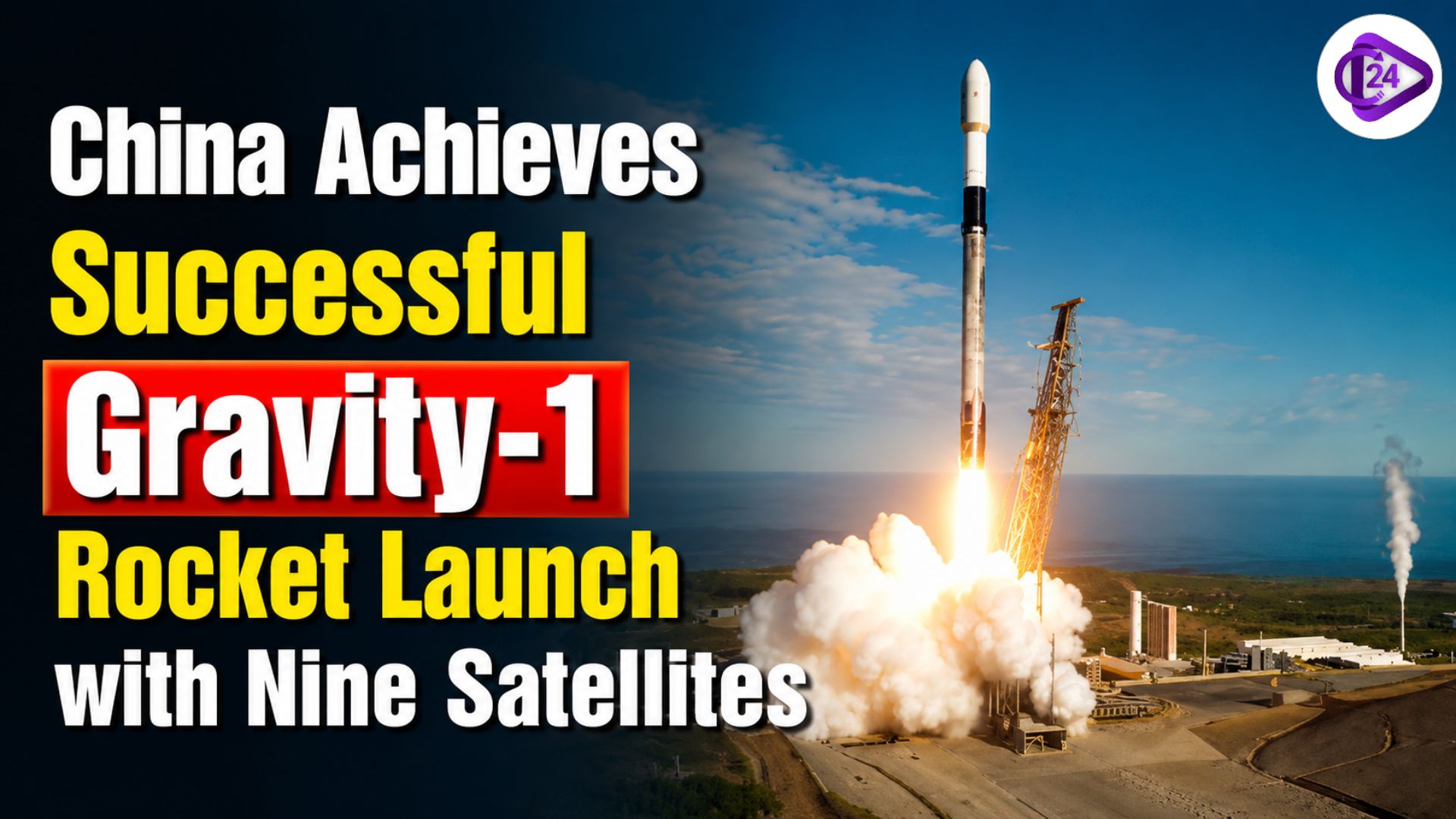


China, yet again, has enjoyed the success of its own rapidly growing commercial space programme when it launched its Gravity-1 (Yinli-1) commercial rocket that successfully put nine satellites into orbit. Gravity-1 is one of the world’s most powerful solid-fuel-based launch vehicles, developed by a private aerospace company, Orienspace. The successful mission highlights China’s onboard skill in the deployment of satellites, reusable launch-derived technology and commercial space services. Moreover, it enhances China’s aspiration of being a leader in the fast-growing space field expanding at a global scale.
Why in News?
China’s success in launching the Gravity-1 rocket, carrying 9 satellites, is being reported as the nation gets underway with a new rocket. China launches its new rocket with nine satellites in orbit successfully. The mission was a demonstration of China’s growing commercial launch capabilities and the growing importance of private space companies in China’s space industry. The supposed applications of the launch are satellite communication, Earth observation and more in space.
Key Highlights of Gravity-1 Rocket
- China has completed the ChinaSpace commercial rocket Gravity-1 (Yinli-1) launch.
- The rocket had a capacity to launch 9 satellites into orbit.
- It was a Chinese private aerospace company (Orienspace) that performed the mission.
- Gravity-1 is one of the world’s most powerful solid fuel launch vehicles.
- The launch marks an improvement in China’s commercial satellite launching power.
- It is conducive to China’s long-term development of the space economy.
- The mission is part of China’s increasing trend of private industry ventures into space.
About Gravity-1 Rocket
| Particular | Details |
| Rocket Name | Gravity-1 (Yinli-1) |
| Country | China |
| Developer | Orienspace |
| Rocket Type | Commercial Solid-Fuel Launch Vehicle |
| Payload | Nine Satellites |
| Purpose | Satellite Launch Services |
| Launch Capability | Low Earth Orbit (LEO) Missions |
About Orienspace
- Orienspace is a top private space aerospace enterprise founded in 2020 in China.
- The company has its headquarters in Beijing City, China.
- It specialises in commercial launch vehicles and launch services, focusing on satellite launch services.
- Orienspace has designed the Gravity-1 (Yinli-1) rocket, which is one of the world’s strongest solid-fuel rockets.
- The company is determined to make low-cost, reliable and high-frequency launch services to the satellite possible.
- It has set a foundation to grow the Chinese space trade.
- The company Orienspace is one of the major private space enterprises that are competing with other companies like LandSpace, Galactic Energy, Space Pioneer, iSpace, among others.
Significance of the Gravity-1 Launch
- Another big milestone in China’s commercial space programme.
- Showcases the strengths of China’s private aerospace industry.
- Boosts China’s strength in the “satellite launching market.”
- Improves the country’s launch capacity.
- Performs applications such as communications, Navigation, earth observation, weather forecasting, and science studies.
- Supports the development of cost-effective commercial launch services.
- Minimises reliance on government-operated launch vehicles for customer-carrying missions.
- Supports the development of the space economy worldwide.
- Facilitates the use of Low Earth Orbit (LEO) orbital constellations.
About China’s Commercial Space Programme
- Exerts its best effort to create a commercial space industry which is competitive on a global scale.
- Promotes investment and innovation in the aerospace industry by the private sector.
- Specialisations in satellite launch, reusable rockets, satellite Internet, space vehicles.
- With the aid of government organisations like CNSA, CASC and CASIC.
- Top companies include Orienspace, LandSpace, Galactic Energy, Space Pioneer and iSpace.
- The applications include but are not limited to satellite communication, satellite navigation, disaster management, Earth observation, weather forecasting and scientific research.
- Supports China’s other space programmes, such as the Tiangong space station, lunar and deep space programmes.
- Aims to cut down launch expenses and boost commercial Space Missions.
What is the importance of this Launch?
- Enhances China’s global commercial launch industry.
- Improves the commercial capabilities of the country to launch satellites.
- Shows the fast-growing business of private space companies in China.
- Backs growth of Low Earth Orbit (LEO) Satellite Constellations.
- Makes satellite launch operator services more price- and performance-effective.
- Encourages new commercial space launch methods.
- Boosts China’s competitiveness in the global space economy.
- Powers up the development of next-generation satellites for communication and Earth observation.
- Supports the current trend toward commercialisation of space in today’s modern world.
Killai Becomes Tamil Nadu’s First Climate-Resilient Village
Gravity-1 Rocket Launch: Conclusion
The addition of the Gravity-1 Rocket Launch is an impressive achievement in China’s fast-developing commercial space programme. The mission was a success, with the launch of all nine satellites into Low Earth Orbit (LEO), showcasing the technological prowess of Orienspace and the growing dominance of private companies in China’s space industry. The launch propels China into a more prominent role in the commercial launch market and bolsters its desire to become a premier space power. With an expanding space-based communications, navigation, and Earth observation industry, missions such as the Gravity-1 Rocket Launch will be key to the future of the space economy.