

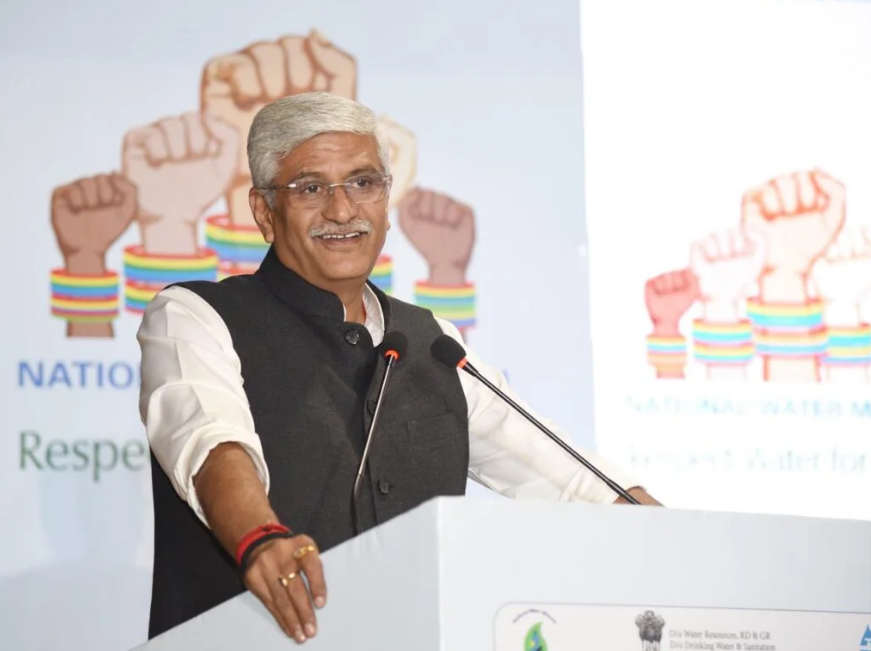
The Nari Shakti Se Jal Shakti initiative, launched under the Jal Shakti Abhiyan: Catch the Rain-2024, is a water conservation group that aims to train women to solve issues resulting from water scarcity in India. This innovative and unique program aims at weaponing women on how to save water, how not to waste it, and how to protect natural water sources to conserve these scarce resources. This fits well with the United Nations Sustainable Development Goals: SDG 5: Gender Equality, and SDG 6: Clean Water and Sanitation Management of which women are presented as agents in bringing change.
India has one of the worst water situations in the world, as by 2030, 40% of Indians will be without clean water source. Working hand in hand with governmental programs like Atal Bhujal Yojana and the National Aquifer Mapping Programme, women are restoring traditional water structures and practicing new technological methods like micro-irrigation and rainwater harvesting.
This initiative shows that women’s leadership can effectively introduce and respond to the need to enhance water security and advance sustainable development in the community.
Overview
-
The Nari Shakti Se Jal Shakti campaign involves the Union government of India to spearhead a change and tap the capability of women in the challenge of water scarcity in the country.
-
Launched as part of the fifth edition of the Jal Shakti Abhiyan: Catch the Rain-2024 is a program, where women and girls are encouraged to take up the responsibility of management of water in a sustainable manner.
Key Objectives
-
Women-Led Action: Women are rallying different communities on how to save water, prevent wastage and also safeguard natural sources of water, this is developing into a ground-level movement.
-
Sustainability Focus: Incorporating women’s leadership, the program provides for the continuity of water conservation practices as practices are integrated into people’s lifestyles.
-
Empowering Women: The initiative empowers women as policy implementation agents and allows them to drive sustainable water conversation reforms through public participation and capacity.
-
Alignment with SDGs: As for its applicability to modern society the initiative is closely connected with the United Nations Sustainable Development Goals (SDGs):
-
SDG 5: Enhancing gender parity and women’s right.
-
SDG 6: Sustainable management of water and sanitation for everyone on the planet.
-
Water Crisis in India
Today, India is experiencing a critical water deficit, and the situation is not going to improve, based on the UN data, by 2030 about 40% of the population of the country will have no access to clean drinking water. About 80% of water goes into agriculture and it is completely reliant on unpredictable monsoon rains.
Data related to water crisis in India:
-
Access to Clean Drinking Water:
-
According to UNICEF future water vision, by the year 2030, 40% population of India will have no access to safe and easily available drinking water.
-
-
Groundwater:
-
India stands highest with its extraction percentage of 24% for the global extraction of water from the ground.
-
16% of the recharge sources are over drafted and 14% of the recharge sources are critical.
-
-
Agriculture’s Role:
-
The agriculture sector uses about 80% of the water that is available in the country, with major accesses to groundwater and monsoon water.
-
It also noted that poor irrigation techniques account for a loss of 60% to 70% of water.
-
-
Rainfall Dependency:
-
Monsoon season is from June to September for which India receives 80% of its annual rainfall on an average.
-
In arid and semi-arid regions, water stress is as a result of uneven rains distribution.
-
-
Urban Demand:
-
Urban India is projected to face severe water shortages by 2030, and its water demand would be twice the available water supply.
-
-
Water Stress
-
The available water per head of population has reduced from 5,177 cubic meters in 1951 to 1,544 cubic meters in 2022.
-
India may well turn into a water-deficient country by 2050 when per capita availability of water may be less than 1,000 cubic meters.
-
-
Economic Impact:
-
The water deficit may decrease India’s GDP by 6% by 2050 because of low crop production and industrial performance.
-
-
Health Concerns:
-
According to the survey, 75% of the households did not have access to portable water in the home and this has resulted into waterborne diseases such as diarrhea, cholera, and typhoid.
-
Government Initiatives for Water Conservation
-
National Aquifer Mapping Programme (NAQUIM): To define and describe the nature of aquifers to classify the aquifer systems properly.
-
Jal Kranti Abhiyan: An effective utilisation of the idea in which water conservation was achieved by all parties involved.
-
Atal Bhujal Yojana: A way of improving their management so as to support communities in the regions that are most disadvantaged within the water situation.
-
Jal Jeevan Mission (JJM): Other goals include; Ensuring that every rural household accesses piped water supply also known as Har Ghar Jal by 2024.
-
Mission Amrit Sarovar: Floodwater harvesting to enhance the groundwater recharge and to conserve water quality.
Women’s Role in Water Conservation
-
The survey reveals that women are also participating in water user budgeting at least 33% involvement in Gram Panchayat level Water User Associations.
-
Organization of many women groups in Rajasthan, Maharashtra & Himachal Pradesh have started renewing traditional water structure, constructing check dams & practicing other scientific water management.
Case Studies
-
Rajasthan: Women have also reconstructed traditional water bodies and built check dams.
-
Maharashtra: Increased adoption by females of micro irrigation technology has prompted efficient utilization of water in farming in addition to improved yields.
-
Himachal Pradesh: Engaging women in rain water harvesting programmes.
Conclusion
The Nari Shakti Se Jal Shakti is a uniquely conceived model of social transformation that recognizes women’s potential of promoting sustainable water management in the future of India’s water resources. With various ministries working hand in hand with NGOs, and Civil society, the initiative enhances the structural and efficient methods in water management systems.