Day: January 1, 2025

India Biotechnology Revolution: Pioneering Innovation and Sustainability

India’s Ascension as a Global Leader in Biotechnology: Steering Change for Innovation, Sustainability and Economic Development. Modern India’s fast growth in biotechnology has placed the country at a strategic place of global importance to determine more and more of the future of world technologies, society, and economy, environmental solutions, and innovations. Through visionary leadership, strategic policies, and commitment to fundamentals of scientific advancement and innovation, India is poised to lead a Biotechnology Revolution to solve global challenges and to build mankind’s sustainable and inclusive future.

Piloting the biotechnology revolution in India is the current PM Narendra Modi whose government has focused on innovation and technology advancement. Modi led India into its first Biotechnology policy, BIO-E3 which means Biotechnology for Economy, Employment, and Environment. This progressive policy is intended to more quickly advance the industry of biotechnology, promote economic growth, increase employment, and protect the environment. Originally approved in Modi Government 3.0, BIO-E3 seeks to incorporate biotechnology in as many fields as possible with an intention of making biology central to development in the country.

Launch of BIO-E3 Policy

  • The first Biotechnology policy of India, BIO-E3 (Biotechnology for Economy, Employment, and Environment) has setup the Indian Biotechnology Industry.

  • The policy under Prime Minister Narendra Modi’s leadership and intends to develop bioeconomy, employment and environmental conservation.

Rise in the Growth Rate of Biotechnology Industry

  • Bioeconomy increased from 10 billion USD in 2014 to 130 billion USD in 2024.

  • Globally it is anticipated to increase to $ 300 billion by 2030.

  • India produces 60% vaccines globally and has the second-largest facilities approved by the USFDA outside America.

Breakthrough Achievements

  • The indigenous DNA based therapeutic vaccines for COVID-19.

  • Creation of the world’s first vaccine against HPV and indigenous Nafithromycin for respiratory diseases.

  • New Gene therapy development for Haemophilia disease.

Startup and Innovation Ecosystem

  • Currently, it is the start-ups that are ruling the employment sphere with sustainable biotechnology products such as non human milk.

  • Mission Suraksha during Covid-19 helped to enhance the indigenous capability in Biotechnology.

Integration and Collaboration

  • The collective efforts of 14 previously decentralized organizations to create synergy with a “WASN” or “whole of Science, Government, and Nation” mentality.

  • Notable initiatives: Deep Sea Mission and an Anusandhan National Research Foundation (NRF) that is well supported by private funding.

More extensive Technological Dominance

  • Quantum technology as well as space exploration is not exempted from India’s leadership.

  • Indian-origin astronaut to become part of US Space Station program.

  • These are achievements under the Quantum Mission that make India to be seen as one of the technological hub nations.

Long-Term Goal Map

  • Dr. Jitendra Singh emphasized biotechnology as a pillar of the Fourth Industrial Revolution.

  • India’s success in biotechnology stems from its focus on the concerning area as well as the country’s and abundant resources in forms of bio-diversity.

  • From being technology takers to being technology makers is the new direction for India.

Collaborative Approach

Successful the important contributions have been made through the cooperation of different institutions in India. India has created a synergistic scientific environment by integrating 14 disparate research institutions. Some projects like the Deep Sea Mission and the Anusandhan National Research Foundation (NRF) are focusing on developing a remarkable model with an equal partnership between government, academic institutions and the private sector.

On the leading of the emerging technologies

Besides biotechnology, India is setting its eyes on the next bigger goals like quantum technology and space technology. The recent creation of a Quantum Mission and the proposed Indian origin astronaut in the US Space Station depicts glimpses ofthe  leadership of India in high-impact emerging domains specializing in verticals. These advancements make India the acknowledged technological epicenter of the world.

Conclusion

This represents India’s evolution to a world biotechnology hub guided by innovation, sustainability, and inclusion. In the future BIO-E3 policy and progress in science, the country has set up the biotechnology revolution and become a symbol of optimism and progress for the whole world. Being India still making its influence on the development of the biotechnology industry, it is important to note that foresight and cooperation are the keys to sustainable changes in the world.

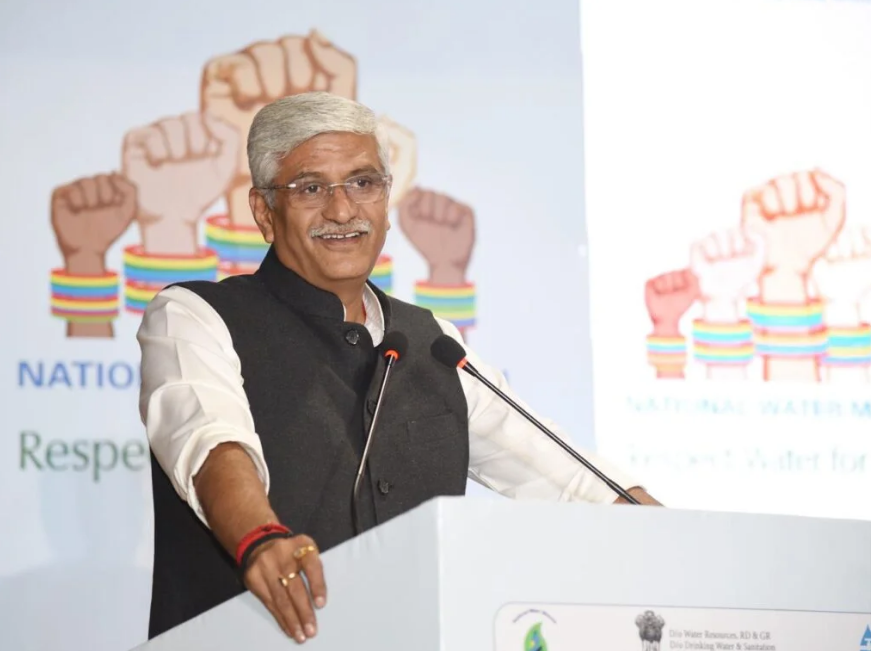
Nari Shakti Se Jal Shakti Initiative: Empowering Women for Water Conservation

The Nari Shakti Se Jal Shakti initiative, launched under the Jal Shakti Abhiyan: Catch the Rain-2024, is a water conservation group that aims to train women to solve issues resulting from water scarcity in India. This innovative and unique program aims at weaponing women on how to save water, how not to waste it, and how to protect natural water sources to conserve these scarce resources. This fits well with the United Nations Sustainable Development Goals: SDG 5: Gender Equality, and SDG 6: Clean Water and Sanitation Management of which women are presented as agents in bringing change.

India has one of the worst water situations in the world, as by 2030, 40% of Indians will be without clean water source. Working hand in hand with governmental programs like Atal Bhujal Yojana and the National Aquifer Mapping Programme, women are restoring traditional water structures and practicing new technological methods like micro-irrigation and rainwater harvesting.

This initiative shows that women’s leadership can effectively introduce and respond to the need to enhance water security and advance sustainable development in the community.

Overview

  • The Nari Shakti Se Jal Shakti campaign involves the Union government of India to spearhead a change and tap the capability of women in the challenge of water scarcity in the country.

  • Launched as part of the fifth edition of the Jal Shakti Abhiyan: Catch the Rain-2024 is a program, where women and girls are encouraged to take up the responsibility of management of water in a sustainable manner.

Key Objectives

  • Women-Led Action: Women are rallying different communities on how to save water, prevent wastage and also safeguard natural sources of water, this is developing into a ground-level movement.

  • Sustainability Focus: Incorporating women’s leadership, the program provides for the continuity of water conservation practices as practices are integrated into people’s lifestyles.

  • Empowering Women: The initiative empowers women as policy implementation agents and allows them to drive sustainable water conversation reforms through public participation and capacity.

  • Alignment with SDGs: As for its applicability to modern society the initiative is closely connected with the United Nations Sustainable Development Goals (SDGs):

    • SDG 5: Enhancing gender parity and women’s right.

    • SDG 6: Sustainable management of water and sanitation for everyone on the planet.

Water Crisis in India

Today, India is experiencing a critical water deficit, and the situation is not going to improve, based on the UN data, by 2030 about 40% of the population of the country will have no access to clean drinking water. About 80% of water goes into agriculture and it is completely reliant on unpredictable monsoon rains.

Data related to water crisis in India:

  • Access to Clean Drinking Water:

    • According to UNICEF future water vision, by the year 2030, 40% population of India will have no access to safe and easily available drinking water.

  • Groundwater:

    • India stands highest with its extraction percentage of 24% for the global extraction of water from the ground.

    • 16% of the recharge sources are over drafted and 14% of the recharge sources are critical.

  • Agriculture’s Role:

    • The agriculture sector uses about 80% of the water that is available in the country, with major accesses to groundwater and monsoon water.

    • It also noted that poor irrigation techniques account for a loss of 60% to 70% of water.

  • Rainfall Dependency:

    • Monsoon season is from June to September for which India receives 80% of its annual rainfall on an average.

    • In arid and semi-arid regions, water stress is as a result of uneven rains distribution.

  • Urban Demand:

    • Urban India is projected to face severe water shortages by 2030, and its water demand would be twice the available water supply.

  • Water Stress

    • The available water per head of population has reduced from 5,177 cubic meters in 1951 to 1,544 cubic meters in 2022.

    • India may well turn into a water-deficient country by 2050 when per capita availability of water may be less than 1,000 cubic meters.

  • Economic Impact:

    • The water deficit may decrease India’s GDP by 6% by 2050 because of low crop production and industrial performance.

  • Health Concerns:

    • According to the survey, 75% of the households did not have access to portable water in the home and this has resulted into waterborne diseases such as diarrhea, cholera, and typhoid.

Government Initiatives for Water Conservation

  • National Aquifer Mapping Programme (NAQUIM): To define and describe the nature of aquifers to classify the aquifer systems properly.

  • Jal Kranti Abhiyan: An effective utilisation of the idea in which water conservation was achieved by all parties involved.

  • Atal Bhujal Yojana: A way of improving their management so as to support communities in the regions that are most disadvantaged within the water situation.

  • Jal Jeevan Mission (JJM):  Other goals include; Ensuring that every rural household accesses piped water supply also known as Har Ghar Jal by 2024.

  • Mission Amrit Sarovar: Floodwater harvesting to enhance the groundwater recharge and to conserve water quality.

Women’s Role in Water Conservation

  • The survey reveals that women are also participating in water user budgeting at least 33% involvement in Gram Panchayat level Water User Associations.

  • Organization of many women groups in Rajasthan, Maharashtra & Himachal Pradesh have started renewing traditional water structure, constructing check dams & practicing other scientific water management.

Case Studies

  • Rajasthan: Women have also reconstructed traditional water bodies and built check dams.

  • Maharashtra: Increased adoption by females of micro irrigation technology has prompted efficient utilization of water in farming in addition to improved yields.

  • Himachal Pradesh: Engaging women in rain water harvesting programmes.

Conclusion

The Nari Shakti Se Jal Shakti is a uniquely conceived model of social transformation that recognizes women’s potential of promoting sustainable water management in the future of India’s water resources. With various ministries working hand in hand with NGOs, and Civil society, the initiative enhances the structural and efficient methods in water management systems.

Frequently Asked Questions (FAQs)

The current affairs cover recent national and international events related to UPSC, SSC, Banking, Railways, and State PCS.

You need to read about the current affairs daily, and revise them every week and every month to keep them longer in your memory.

Yes, Class24 provides free downloadable Daily Current Affairs PDFs for easy revision.

Yes, you can practice MCQs and quizzes to boost your exam preparation.

Absolutely. The content is written in simple, easy-to-understand bilingual language suitable for beginners.

Go to class24.com and click on the current affairs section directly, where you find everything that you need.

ssc-toppers

Start Learning Today with Class24

Related current affairs

Class24 offers free video lectures for smart preparation, covering CGL, CPO, CHSL, MTS, and GD exams. Learn from expert faculty, revise concepts easily, practice with PYQs, and improve speed and accuracy through high-quality, exam-focused video lessons anytime, anywhere.

Get success in your hand. Start study anytime anywhere.

The journey becomes simple and enjoyable when you start taking interest in it. And through our app “Class24”, we will be your trusted partners in developing that interest.

Daily Quizzes
Mock Tests
Ongoing

No ongoing tests right now.