

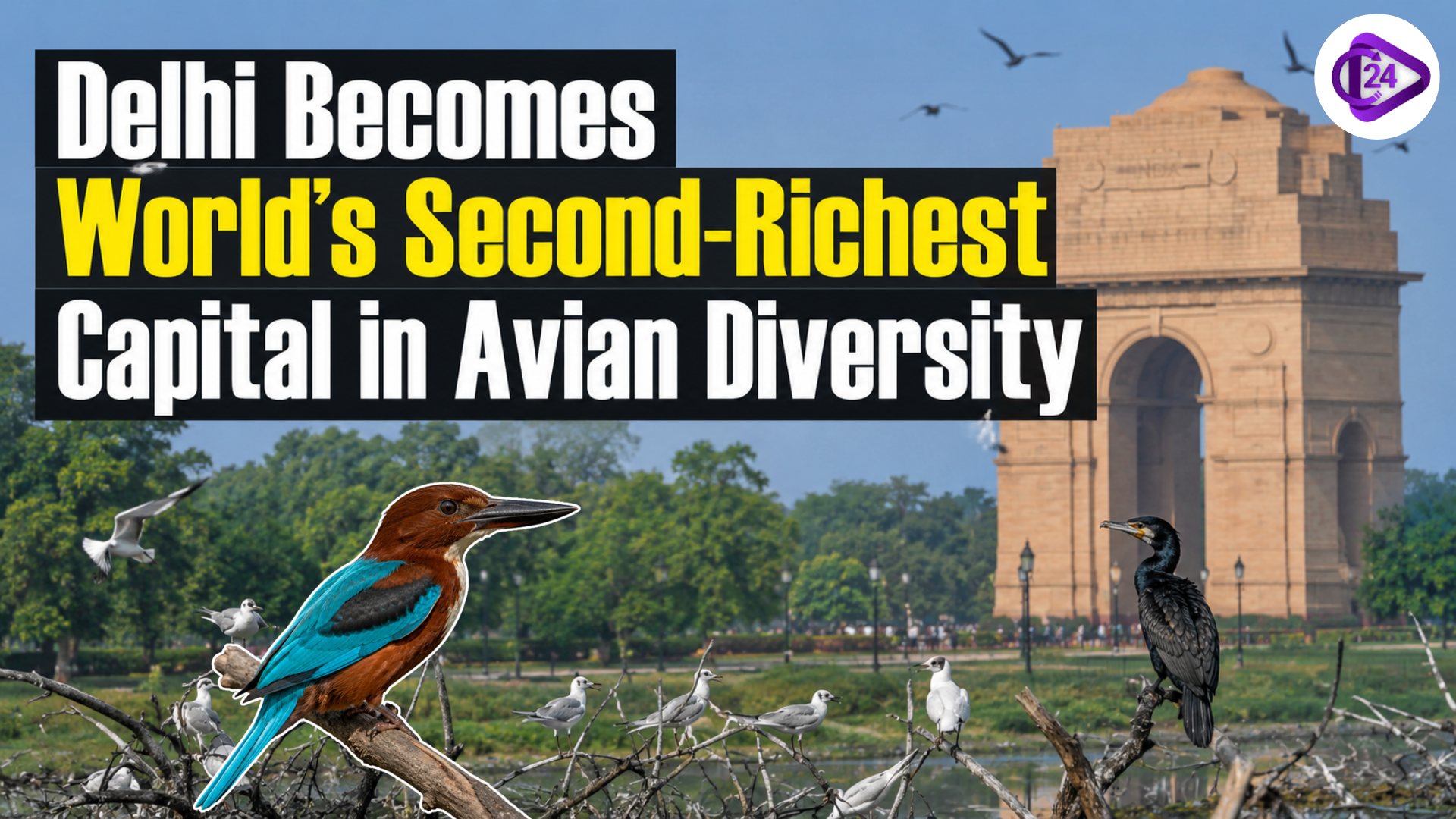
Delhi Becomes World’s Second-Richest Capital in Avian Diversity

Avian diversity is a concept that describes the number of different species and the abundance of each species in a given geographical area. It is widely viewed as one of the most vital indicators of ecological integrity and biodiversity. One of the reasons why birds are so essential and their absence even a brief one can disrupt the balance of this nature is because they were naturally given by mother nature to pollinate, transport seeds, eliminate insects, or present but negligible organisms, contribute with eating lots of insects; without this natural cycle these insects proliferate numerously while the drastic ecological imbalance created makes us feel guilty for all that was lost. Despite rapid urbanization delhi becomes world second richest capital in avian diversity. Also, large numbers of bird species are another pointer that Delhi still could hold many habitats in its bosom capable of holding both resident and migratory birds.
Why is Delhi in the News?
Delhi World’s 2nd-Richest Capital For Birds: Over 450 Species Recorded By Wetlands, Forests, River System And Urban Greenery. Delhi now ranks second only to Nairobi, Kenya – the richest capital in the world when it comes to bird diversity. This acknowledgement is a testament to the effective conservation actions taken, measures on habitat restoration implemented and rise in awareness regarding urban biodiversity. This also shows that when conservation is engaged, large metropolitan cities can survive alongside rich ecosystems.
Reason for Bird Diversity in Delhi
Diverse Habitats
Delhi has an extraordinary mix of wetlands, forests, grasslands, urban parks and river ecosystems. These diverse habitats offer food, nesting sites and shelter for a wide variety of birds year-round. Consequently, migratory and resident birds have been shown to benefit from these conditions for both provisioning and reproduction.
Presence of the Yamuna Floodplains
Yamuna floodplains are one of the most vital bird habitats in Delhi. These wetlands are home to aquatic vegetation that is important in supporting fish populations, insects and wetland ecosystems that attract birds of all kinds. As a result, ornithologists note that various migratory species flock to the region during winters.
Protected Areas and Biodiversity Parks
Bird Conservation: The biodiversity parks and protected green zones of Delhi, which create a climate quite suitable for birds. Such parks, urban forests and wildlife sanctuaries are safe spaces for birds. Finally, some restoration projects have improved habitat quality and increased species richness.
Strategic Location on Migratory Routes
Delhi is located on major migratory bird routes and serves as a significant stopover site for birds travelling between Central Asia, Europe, & the Indian sub-continent. Thus, there is a huge contribution from more migratory birds to the overall avifauna diversity in the city during seasons.
Major Bird Habitats in Delhi
| Habitat | Importance |
| Yamuna Floodplains | Wetland and migratory bird habitat |
| Asola Bhatti Wildlife Sanctuary | Forest bird diversity |
| Biodiversity Parks | Conservation and breeding grounds |
| Urban Parks | Resident bird populations |
| Wetlands and Lakes | Waterfowl and migratory species |
| Ridge Forest Area | Native forest bird habitat |
Common Bird Species Found in Delhi
| Bird Group | Examples |
| Water Birds | Painted Stork, Heron, Egret |
| Raptors | Black Kite, Shikra |
| Migratory Birds | Bar-headed Goose, Northern Pintail |
| Forest Birds | Indian Peafowl, Woodpecker |
| Urban Birds | House Sparrow, Rock Pigeon |
PYQs on Biodiversity and Birds
| Exam | Year | Question | Options | Answer |
| UPSC Prelims | 2023 | Which of the following is used as an indicator of environmental health? | A. Bird Diversity B. Mineral Resources C. Road Density D. Population Growth | A |
| UPSC Prelims | 2020 | Migratory birds generally migrate in search of: | A. Better breeding and feeding grounds B. Minerals C. Water Only D. Forest Products | A |
| CDS | 2022 | Wetlands are important because they support: | A. Mining B. Biodiversity C. Urban Expansion D. Industrial Development | B |
| State PCS | 2023 | Which ecosystem is most important for migratory birds? | A. Wetlands B. Deserts C. Mountains D. Industrial Areas | A |
5 Countries Elected to UN Security Council for 2027–2028 Term
Conclusion
Delhi Becomes World’s Second-Richest Capital in Avian Diversity (Part of the Journey of Urban Biodiversity Conservation Success). Delhi can now claim to be a global model for development at the same time making sure that its wetlands, forests, biodiversity parks and the Yamuna floodplains support over 450 bird species. Moreover, ongoing protective measures will ensure that this colourful winged treasure trove continues to survive for future generations and buttresses India’s venerated role as an environmental steward in the world.
FAQs
Delhi has become the world’s second-richest capital in avian diversity, with more than 450 bird species.
Nairobi, Kenya, ranks first among world capitals in avian diversity.
Avian diversity refers to the variety and abundance of bird species in a particular area.
More than 450 bird species have been recorded.
The Yamuna floodplains are among the most important bird habitats.