
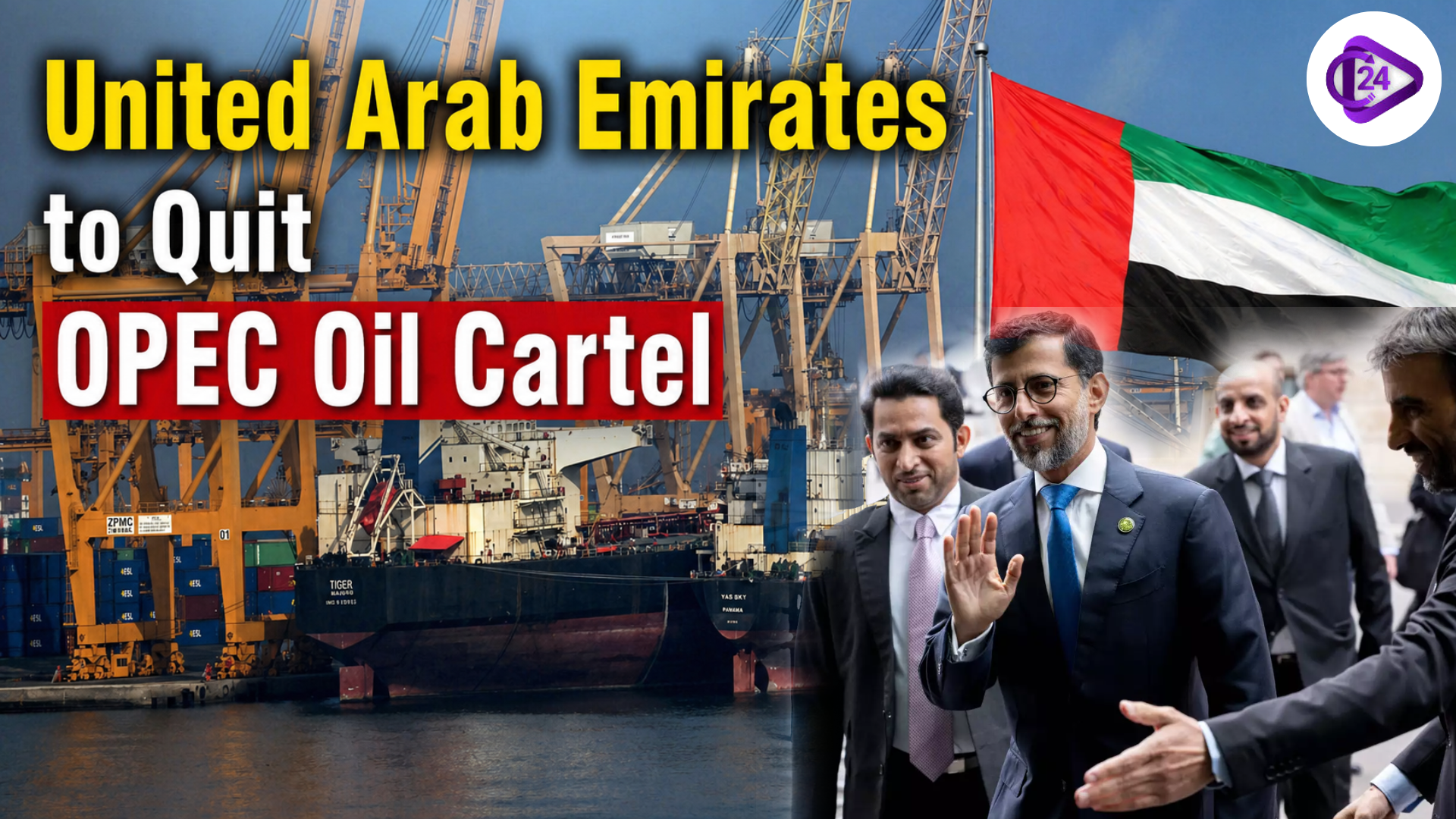
United Arab Emirates to Quit OPEC Oil Cartel
The United Arab Emirates (UAE) has formally declared it will withdraw from the OPEC oil cartel, in what is one of the most important developments in international oil politics in recent years. This is part of the country’s long-term plans to increase oil production capacity and become less dependent on OPEC production quotas, according to the government and international media reports. The UAE has been a member of OPEC for almost 60 years. The move is likely to have far-reaching implications for the global energy market, potentially diminishing OPEC’s control over oil production and prices and giving the UAE more freedom to set its own energy and economic strategies.
United Arab Emirates Exit from OPEC Oil Cartel – Global Impact
- The United Arab Emirates (UAE) has confirmed it will leave the OPEC oil bloc on May 1, 2026.
- The UAE’s official media and government statements confirmed the move, citing shifts in its long-term energy policies.
- The UAE explained the decision aligns with its “long-term strategic and economic vision” and energy needs.
- The UAE has been an OPEC member for almost 60 years, following its establishment soon after OPEC’s formation.
- UAE’s officials stressed greater investment in the national energy sector and expanding production.
- A major factor in the decision is that the UAE disagreed with OPEC over production quotas that it deemed limiting.
- Experts say the UAE has been making efforts to expand its capacity to produce more oil to increase its production in the long term.
- This is likely to have a negative effect on OPEC market share.
- Analysts say the move could enable the UAE to push for higher oil output outside of the cartel.
- The UAE’s exit might allow for more flexibility in pricing and production.
- There may be greater volatility in the global oil market, some experts predict.
- The decision follows geopolitical conflicts and logistical issues affecting energy supplies.
- The UAE also affirmed its role as a leading energy supplier to the world.
- It is a significant change in the organisational dynamics of OPEC and beyond.
- The UAE’s decision signifies a major shift in global oil dynamics and output policy.
OPEC Explained Key Facts, Structure and Global Role
- OPEC: Organisation of the Petroleum Exporting Countries
- Created on 14 September 1960 in Baghdad, Iraq
- Members: Iran, Iraq, Kuwait, Saudi Arabia, Venezuela
-
- An intergovernmental organisation and oil cartel
- Headquartered in Vienna (Austria)
-
- Purpose: to coordinate the oil policies of its member nations
- Seeks to stabilise world oil markets and prices
- Regulates oil production and supply
- Influences international oil prices and the economy
- Impacts global oil prices and the economy
- Causes changes in world inflation and prices
- Countries are big oil exporters
- Currently 12 member-nations
- Countries from the Middle East, Africa and South America are members
-
- Ensures regular oil supply to consumers
- Enhances economic benefit for producers
- Imposes production quotas
- OPEC Conference makes decisions
- The Secretary General is the OPEC CEO
- Elected by member nations for a term
- Irani Fuad Rouhani, first Secretary General
- The current Secretary General is Haitham Al Ghais (Kuwait)
-
- Took Office in 2022 and still serves
- The Secretary General is the legal representative of OPEC
- OPEC Secretariat carries out day-to-day work
- Secretariat at headquarters in Vienna
- Issue reports such as the Annual Statistical Bulletin

PM Inaugurates Samrat Samprati Museum
Conclusion – United Arab Emirates Leaves OPEC
The departure of the United Arab Emirates (UAE) from OPEC has far-reaching implications. The decision is consistent with the UAE’s investment in its own production capacity and seeking its own energy strategies outside of the cartel. This could affect OPEC’s role in setting global energy prices and ensuring market stability. But equally, it indicates shifting priorities among key energy producers, which could result in a more competitive and adaptable energy market in the years ahead.