Day: January 10, 2026

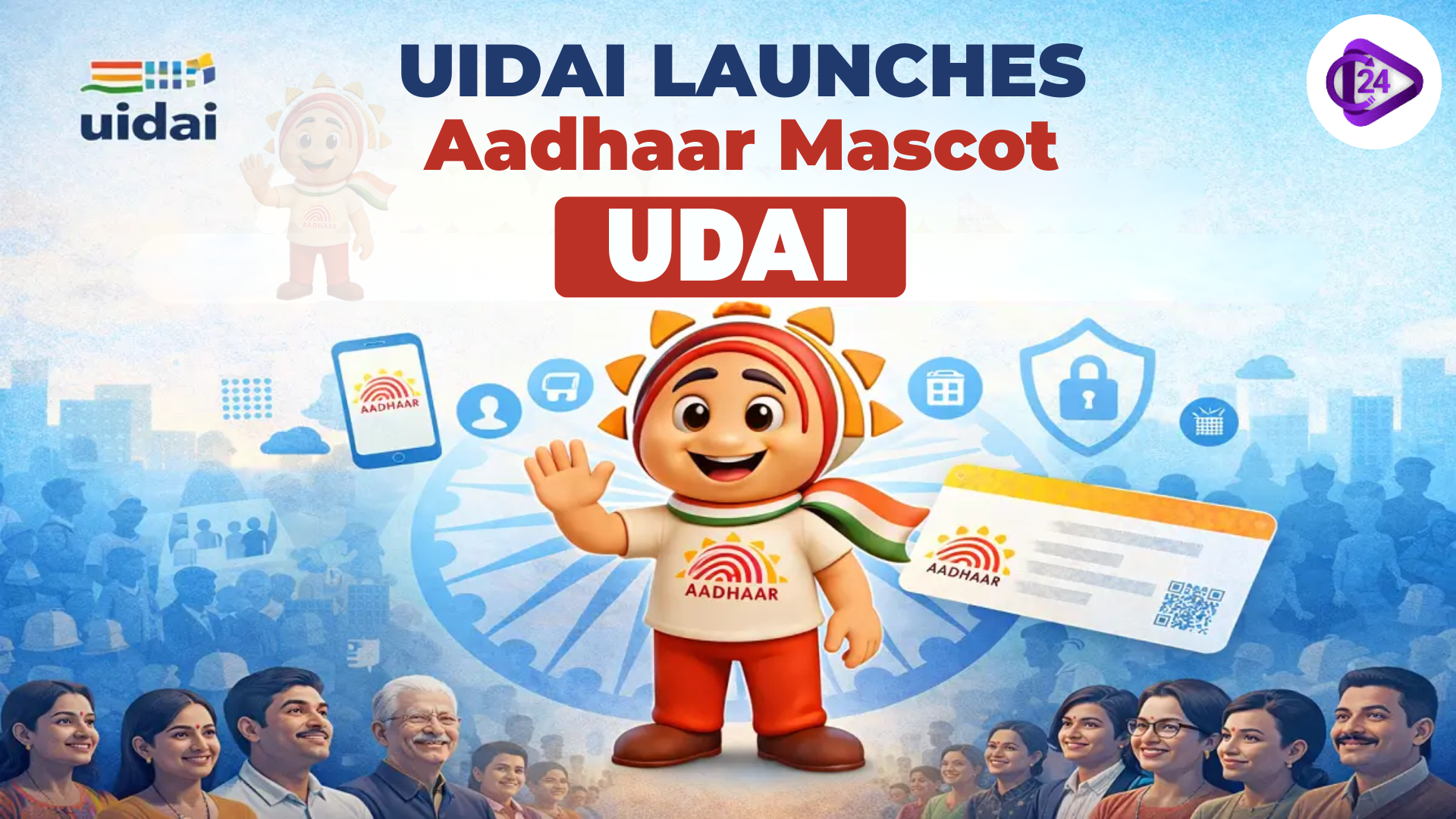
UIDAI launches Aadhaar Mascot Udai

Resident-facing communication companion. The Unique Identification Authority of India (UIDAI) has unveiled an Aadhaar mascot called Udai (उदय) to help people easily understand the services offered by Aadhaar. Udai will be designed to make Aadhaar information more relatable and user-friendly, providing clarification on key concepts, including updates, authentication, offline verification, selective sharing of information, the introduction of new technology, and responsible use. The mascot was chosen as a result of a national competition to design and name it on the MyGov site, which received 875 entries from all over India. UIDAI Chairman Neelkanth Mishra launched Udai and handed prizes to the winners of the competition at an event held in Thiruvananthapuram.

Why UIDAI Introduced the Aadhaar Mascot ‘Udai’

  • UIDAI introduced the Aadhaar mascot, Aadhaar, who became known as Udai, the resident-facing communication companion. As a result, Aadhaar services have become easier for people to comprehend.

  • Updates, authentication, offline verification, selective data sharing, adoption of new technology, and well-intended use of Aadhaar are some of the issues that are explained through the mascot.

  • In order to inspire the confidence of users, Udai has a mission of wanting to display Aadhaar information in a manner that is relatable and user-friendly as opposed to the technical language.

  • The design and naming were decided on by way of a nationwide design and naming competition on the MyGov platform, such that the people would be inclined to accept it.

Exam Year Question Answer
UPSC Prelims 2018 Consider the statements: (1) An Aadhaar card can be used as proof of citizenship or domicile, and (2) Once issued, the Aadhaar number cannot be deactivated/omitted by UIDAI. Which are correct? Neither statement 1 nor 2 is correct – Aadhaar is not proof of citizenship; Aadhaar can be deactivated/rejected under provisions.
SSC CPO 2020 The Unique Identification Authority of India (UIDAI) is a statutory authority under the Ministry of ___? Ministry of Electronics and Information Technology
UPSC Prelims (Polity MCQ) Various Which of the following statements about Aadhaar? (1) It is a 12-digit unique ID for residents, (2) It includes biometric information, (3) It is a national identity and citizenship card. Only statements (1) and (2) are correct – Aadhaar is not a national identity or citizenship card.

Expected Questions and Answers for UIDAI

Q1. Consider the following statements regarding Aadhaar:

  1. Aadhaar is proof of identity and residence for Indian residents.

  2. Aadhaar is proof of citizenship of India.

  3. Aadhaar authentication can be performed using biometric or OTP methods.

Which of the statements given above is/are correct?
A) 1 and 2 only
B) 1 and 3 only
C) 2 and 3 only
D) 1, 2, and 3

Answer: B
Explanation: Aadhaar establishes identity and residency, not citizenship. Authentication can be done using biometrics or OTP.

Q2. The Unique Identification Authority of India (UIDAI) is:
A) A constitutional authority under Article 324
B) A statutory authority under the Ministry of Electronics and Information Technology
C) An autonomous organisation under NITI Aayog
D) A department of the Ministry of Home Affairs

Answer: B
Explanation: UIDAI was established as a statutory authority under the Aadhaar Act, 2016, under MeitY.

Q3. With reference to Aadhaar, conider the following statements:

  1. It can be voluntarily deactivated by residents.

  2. Aadhaar is mandatory for opening a bank account.

  3. Aadhaar can be used to access welfare benefits through Direct Benefit Transfer.

Which of the statements given above is/are correct?
A) 1 and 3 only
B) 2 and 3 only
C) 1, 2, and 3
D) 1 only

Answer: A
Explanation: Aadhaar can be deactivated under certain provisions. While it is widely used for DBT, it is not mandatory for bank accounts (Supreme Court judgment 2018 clarified this).

Q4. “Udai,” the Aadhaar mascot, was introduced to:
A) Replace Aadhaar enrollment centers
B) Increase public awareness and simplify communication about Aadhaar services
C) Issue Aadhaar numbers offline
D) Monitor biometric authentication centrally

Answer: B
Explanation: Udai was introduced to make Aadhaar communication user-friendly and relatable, increasing adoption and awareness.

Q5. Consider the following regarding UIDAI and the Aadhaar Act:

  1. UIDAI can share Aadhaar data with private companies for commercial purposes.

  2. The Act allows for Aadhaar authentication to access subsidies and welfare schemes.

  3. The Supreme Court ruled that Aadhaar is not mandatory for services like mobile connections.

Which of the above statements is/are correct?
A) 1 and 2 only
B) 2 and 3 only
C) 1, 2, and 3
D) 3 only

Answer: B
Explanation: UIDAI cannot share Aadhaar data for commercial purposes. The Act allows Aadhaar for subsidies, and the SC judgment ruled it is not mandatory for mobile connections.

Q6. Which of the following statements regarding Aadhaar authentication is correct?
A) Biometric authentication is mandatory for all services.
B) OTP-based authentication can be used as an alternative to biometrics.
C) Authentication can only be performed at government offices.
D) Aadhaar numbers can be used as proof of citizenship during authentication.

Answer: B
Explanation: Aadhaar allows both biometric and OTP authentication; it is not proof of citizenship.

Conclusion (UIDAI launches Aadhaar Mascot Udai)

The introduction of Aadhaar mascot Udai by UIDAI also enhances the interaction and awareness regarding Aadhaar services among the people. It makes complex procedures such as authentication, updates and data privacy work in a friendly manner that fosters trust in India and globally through the digital inclusion of everyone in India and prudent utilisation of the unique identification system in the country.

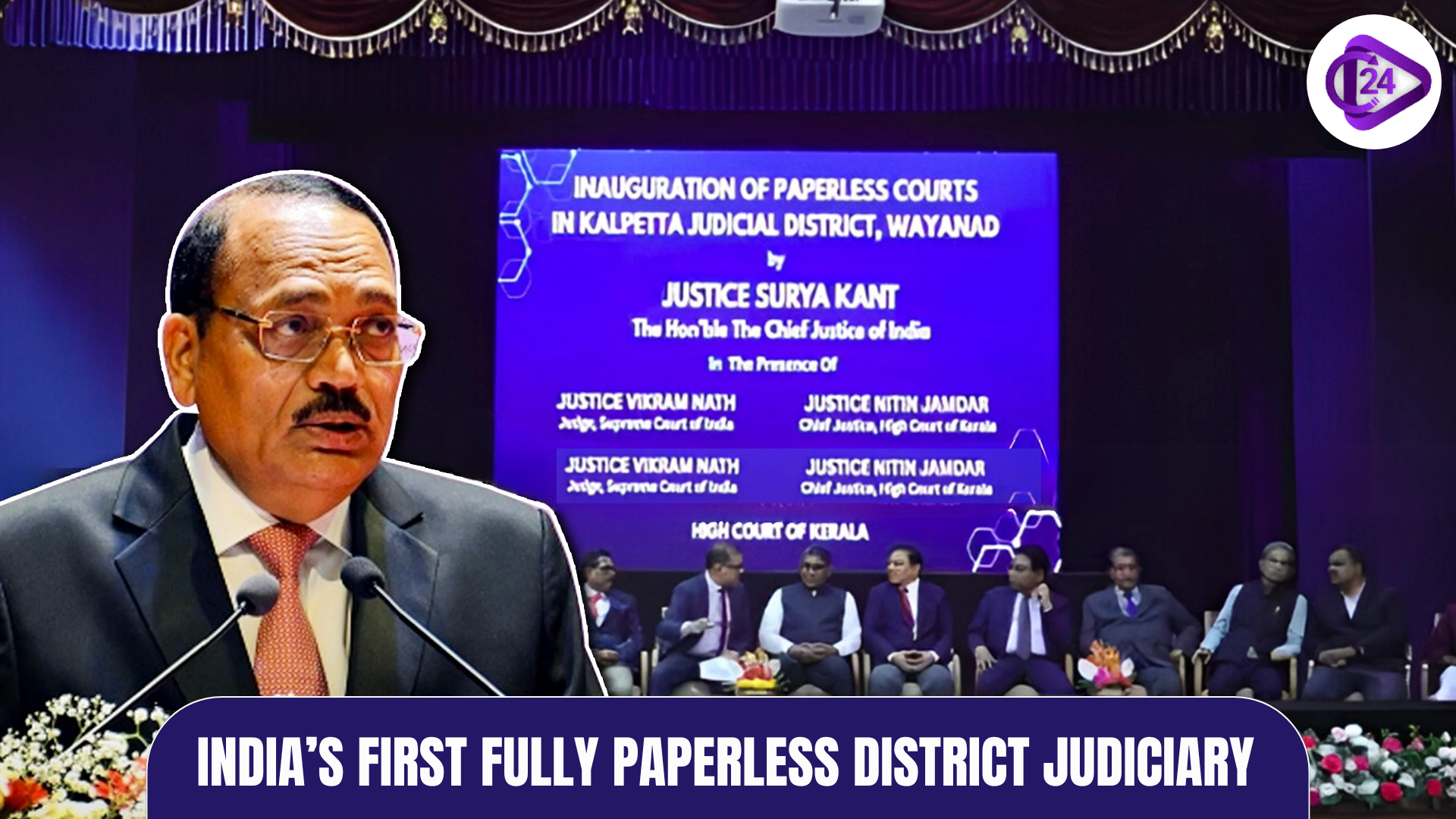
India’s First Fully Paperless District Judiciary Launched

A milestone in judicial reform in India was achieved with the opening of the first fully paperless district judiciary in Kalpetta, Wayanad, Kerala. The programme was virtually launched by Chief Justice of India Surya Kant and marked the complete transition of the district judiciary to digital operations, from electronic case filing to the issuance of verdicts. The judicial process, including filing, scrutiny, hearings, and judgement, will now be conducted digitally with the assistance of AI-enabled judicial solutions and secure digital signatures. The Kerala High Court has developed its own system to improve efficiency, reduce costs, promote access to justice, and support sustainable green jurisprudence.

First Fully Paperless District Judiciary in India: Key Details and Impact

  • Kalpetta in Wayanad, Kerala, became the first paperless district judiciary in India, with all the judicial proceedings being done electronically, i.e. starting with case registration all the way up to judgement.

  • The system relies on AI-based tools to summarise cases, engage in digital annotation, and use voice-to-text to transcribe.

  • Digital signatures provide legal validity, integrity and security of orders and judgements.

  • The initiative facilitates efficiency, transparency, low cost, and quick dispute resolution.

  • It promotes green jurisprudence through the removal of paperwork and the increase of fair access to justice.

Important PYQs About Judiciary 

Exam Year Question Answer
UPSC CSE Prelims 2024 Under which article of the Constitution has the Supreme Court of India placed the right to privacy? Article 21
UPSC CSE Prelims 2024 A writ of Prohibition is issued by the Supreme Court or High Court to? Prevent a lower court from exceeding its jurisdiction
SSC CGL / Bank / RRB 2023 The highest and final judicial tribunal of India is? Supreme Court
SSC CGL / Bank / RRB 2022 Which High Court has jurisdiction over more than one state/union territory? Guwahati High Court
SSC CGL / Bank / RRB 2021 Who decides the number of judges in the Supreme Court? Parliament
SSC CGL / Bank / RRB 2020 Disputes between the states of India come to the Supreme Court under? Original jurisdiction
UPSC / SSC 2019 What does 'judicial review' in India mean? Reviewing laws/executive orders against the Constitution

Conclusion (India’s First Fully Paperless District Judiciary)

A significant move towards digital justice is the introduction of the first fully paperless district judiciary in India, in the Kalpetta, Wayanad district. It is more efficient, transparent, and fast; it consumes less paper, and it guarantees safe and AI-supported court procedures, which can become a model of sustainable, accessible, and modernised court systems in the country.

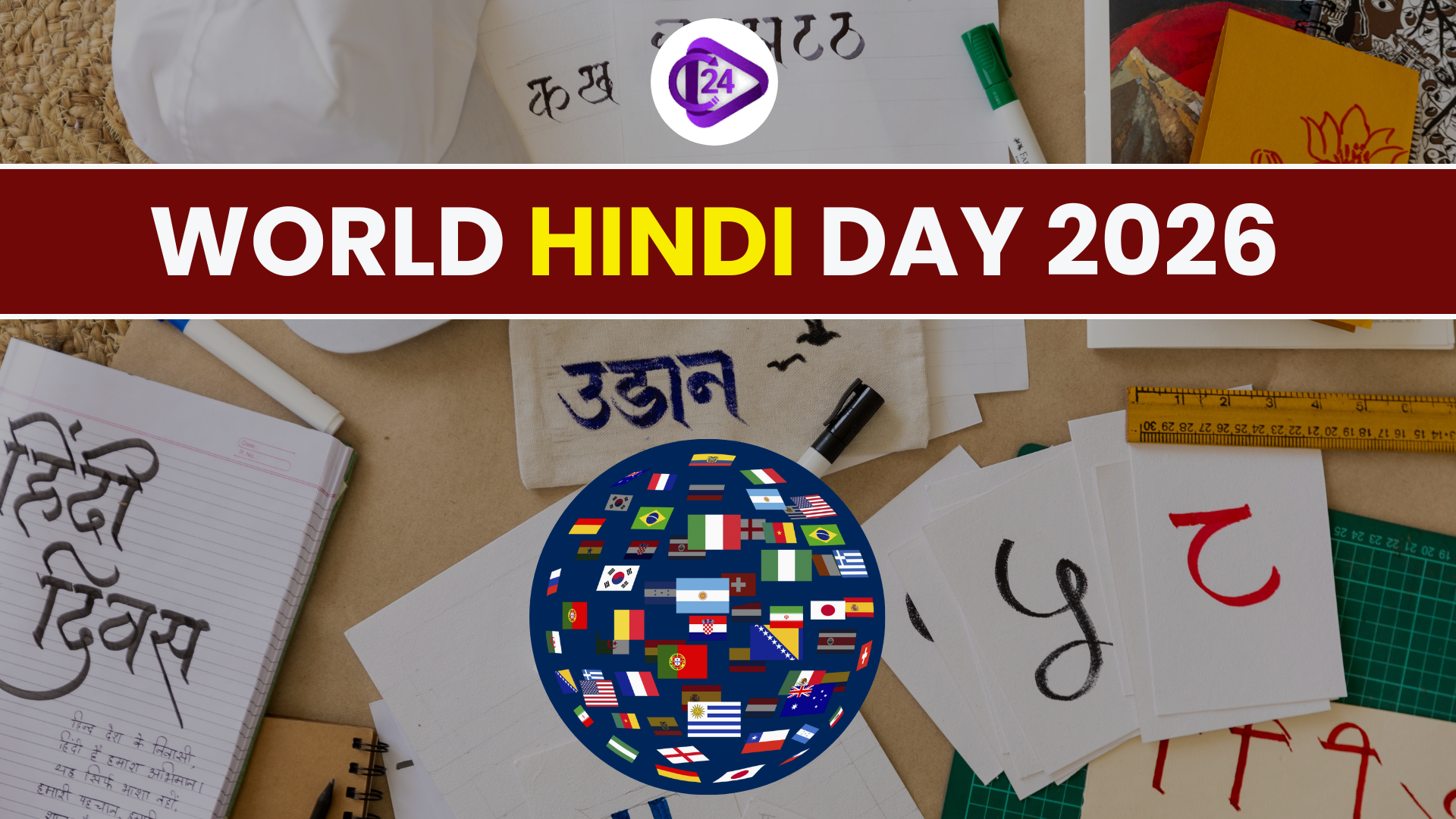
World Hindi Day 2026

World Hindi Day, or Vishwa Hindi Diwas, is annually held on 10 January to recognize the significance and dissemination of the Hindi language worldwide. This is the day that the first World Hindi Conference was held on 10 January 1975 in Nagpur, where Hindi scholars and enthusiasts throughout the world joined in order to spread the language to other countries. In 200,6 the Government of India officially started celebrating this day in order to identify and promote the use of Hindi in the world, to appreciate its cultural diversity, and to make its presence more prominent on the global platform with activities such as speeches, cultural shows, and discussions.

Significance of World Hindi Day 2026

  • Advocates the Hindi language as an international one, not just in India.

  • Point out the foreign recognition and level of acceptance of Hindi in other nations.

  • Promotes the use, learning, and respect of Hindi all over the world.

  • Enhances cultural diplomacy by linking countries together using language.

  • Praises the Indian heritage and literature as well as history.

  • Favors the proliferation of Hindi studies in other universities and institutions abroad.

  • Encourages the Indian diaspora not to forget their language background.

  • Promotes Hindi in technology, media, and on the digital platform.

  • Creates consciousness of the need to have linguistic diversity and unity in the world.

World Hindi Day 2026 Theme

The theme of World Hindi Day 2026 is called Hindi: Traditional Knowledge to Artificial Intelligence, which illustrates the idea of how Hindi made its way to the digital and AI age. Its 2025 theme was Hindi: A Global Voice of Unity and Cultural Pride, and its international cultural relations and cohesion.

Expected Questions for World Hindi Day

 When was World Hindi Day officially started by the Government of India?
A) 1995
B) 2000
C) 2006
D) 2010

Answer: C — The Government of India began formally observing it from 2006.

World Hindi Day is observed on 10 January because it marks:
A) Adoption of Hindi as the Official Language
B) First World Hindi Conference inauguration
C) Formation of Central Hindi Directorate
D) Publication of Hindi dictionary

Answer: B
Explanation: 10 January 1975 was the inaugural day of the first World Hindi Conference at Nagpur.

Q. Which institution mainly acts as the nodal agency for World Hindi Day celebrations abroad?
A) Ministry of Education
B) Sahitya Akademi
C) Indian Council for Cultural Relations
D) Ministry of External Affairs

Answer: D
Explanation: Indian embassies and missions under the Ministry of External Affairs coordinate global events.

Q. Which statement best distinguishes World Hindi Day from Hindi Diwas?
A) One is cultural, the other is political
B) One is global, the other is national
C) One is academic, the other is administrative
D) One is literary, the other is religious

Answer: B
Explanation: World Hindi Day promotes Hindi globally; Hindi Diwas focuses on its national status.

Q. Which of the following conferences directly led to the institutionalisation of World Hindi Day?
A) Second World Hindi Conference
B) Fourth World Hindi Conference
C) Seventh World Hindi Conference
D) First World Hindi Conference

Answer: D
Explanation: The first conference in 1975 laid the foundation for global Hindi promotion.

Q. World Hindi Day primarily contributes to India’s:
A) Soft power diplomacy
B) Trade diplomacy
C) Military diplomacy
D) Space diplomacy

Answer: A
Explanation: Language and culture are instruments of soft power.

Conclusion (World Hindi Day 2026)

World Hindi Day 2026 has been embracing the Hindi language as a living and global language that unites cultures, communities, and generations. It emphasises the increasing global aspects of Hindi and its contribution to cultural diplomacy, education, and digital communication, as well as encourages the people of the world to observe, study, and foster linguistic diversity and harmony.

Frequently Asked Questions (FAQs)

The current affairs cover recent national and international events related to UPSC, SSC, Banking, Railways, and State PCS.

You need to read about the current affairs daily, and revise them every week and every month to keep them longer in your memory.

Yes, Class24 provides free downloadable Daily Current Affairs PDFs for easy revision.

Yes, you can practice MCQs and quizzes to boost your exam preparation.

Absolutely. The content is written in simple, easy-to-understand bilingual language suitable for beginners.

Go to class24.com and click on the current affairs section directly, where you find everything that you need.

ssc-toppers

Start Learning Today with Class24

Related current affairs

Class24 offers free video lectures for smart preparation, covering CGL, CPO, CHSL, MTS, and GD exams. Learn from expert faculty, revise concepts easily, practice with PYQs, and improve speed and accuracy through high-quality, exam-focused video lessons anytime, anywhere.

Get success in your hand. Start study anytime anywhere.

The journey becomes simple and enjoyable when you start taking interest in it. And through our app “Class24”, we will be your trusted partners in developing that interest.

Daily Quizzes
Mock Tests
Ongoing

No ongoing tests right now.