
Day: August 11, 2025

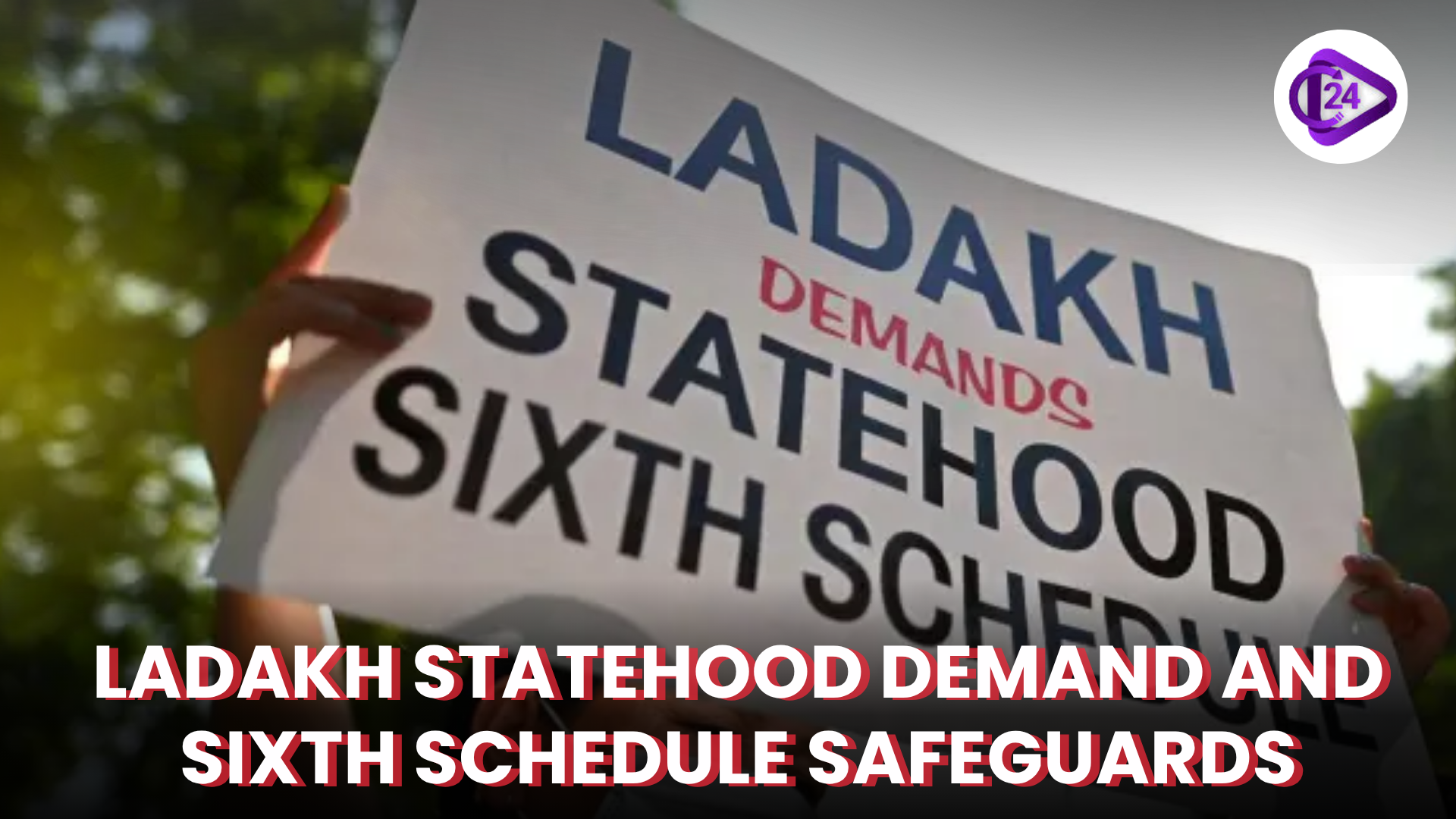
Ladakh Statehood & Sixth Schedule Demand Intensifies

The current hunger strike in Kargil, led by people of climate activist and change maker Sonam Wangchuk and Leh Apex Body leadership figures, has now become a greater demand of Ladakh full statehood and Scheduled 6 inclusion. Ever since Ladakh became a Union Territory in 2019 following the repealing of Article 370, it has been accused of having no political independence and protection to its native people. Protestors always demand law making authority, job reservations, protection of land, language, and culture. Mistrust has been fuelled by delays in dialogue on the part of the Centre. The most important question is to balance security imperative with the democratic rights.

Context

  • A prolonged instance of hunger strike in Kargil participated by Sonam Wangchuk and Chering Dorjay.

Key Points 

Demands:

  • Ladakh should have full Statehood.

  • Protection under Sixth Schedule of the rights of natives.

  • Dissatisfaction with the type of governance following the 2019 status of UT because autonomy and protection will not be present.

Background

  • Pre-2019: Integral part of J&K; Buddhist-majority Leh had frequently complained of having to be ignored.

  • After 2019: UT accordingly with development and security, but no legislature, Sixth Schedule immunity.

Primary Demands

  • Statehood-More political independence, powers of legislature.

  • Sixth Schedule Inclusion-Land, language, culture and employment are shielded.

  • Job Reservation-Special percentages to youth of Ladakh.

  • Better representation in the form of separate Parliamentary Constituency- Leh & Kargil.

Provisions in Constitution and Law

  • Article 3: Parliament is capable of making/ amending states; UT changes do not require the approval of the state legislature.

  • Sixth Schedule: (Assam, Meghalaya, Tripura, Mizoram) Autonomous Councils constituting some legislative power and judicial power and safeguard of tribal land.

Reason Motives Behind UT status

  • Borders China & Pakistan: Security.

  • Administrative efficiency: Direct central control: infrastructure push.

  • Cultural difference: Buddhist Leh, Muslim Kargil- different expectations.

Concerns in the existing System

  • Political Deficit: There is no elected legislature and therefore, there is little self-rule.

  • Cultural Insecurity: Recklessness of demography & resource raiding.

  • Environmental Issues: Endangered ecosystem in danger.

  • Centre the Local Disconnect: Slow conversation, suspicion.

Reasons To Include Sixth Schedule

  • Saves the tribal identity, and land alienation.

  • Enables local government to be self-reliant with policies that fit.

  • Successful precedent in Northeast India.

Arguments Against

  • Possibly make strategic security difficult.

  • The bureaucracy of the UT overlaps with administration.

Way Forward

  • Structure Dialogue: Centre, Leh Apex Body, Kargil Democratic Alliance.

  • Interim Safeguards: Land & job protection prior to the statehood decision.

  • Environmental Protection Clause: Legal environmental protection.

  • Phased Devolution: Replacing the power in stages by the people's assembly.

Conclusion

The demands of Ladakh are about the underlying questions of identity, autonomy and sound development in a geopolitically watchful area. This should be a balanced process in national security and constitutional protection that needs a calibrated response on national security and local aspirations.

Rudrastra: Asia’s Longest Freight Train by Indian Railways

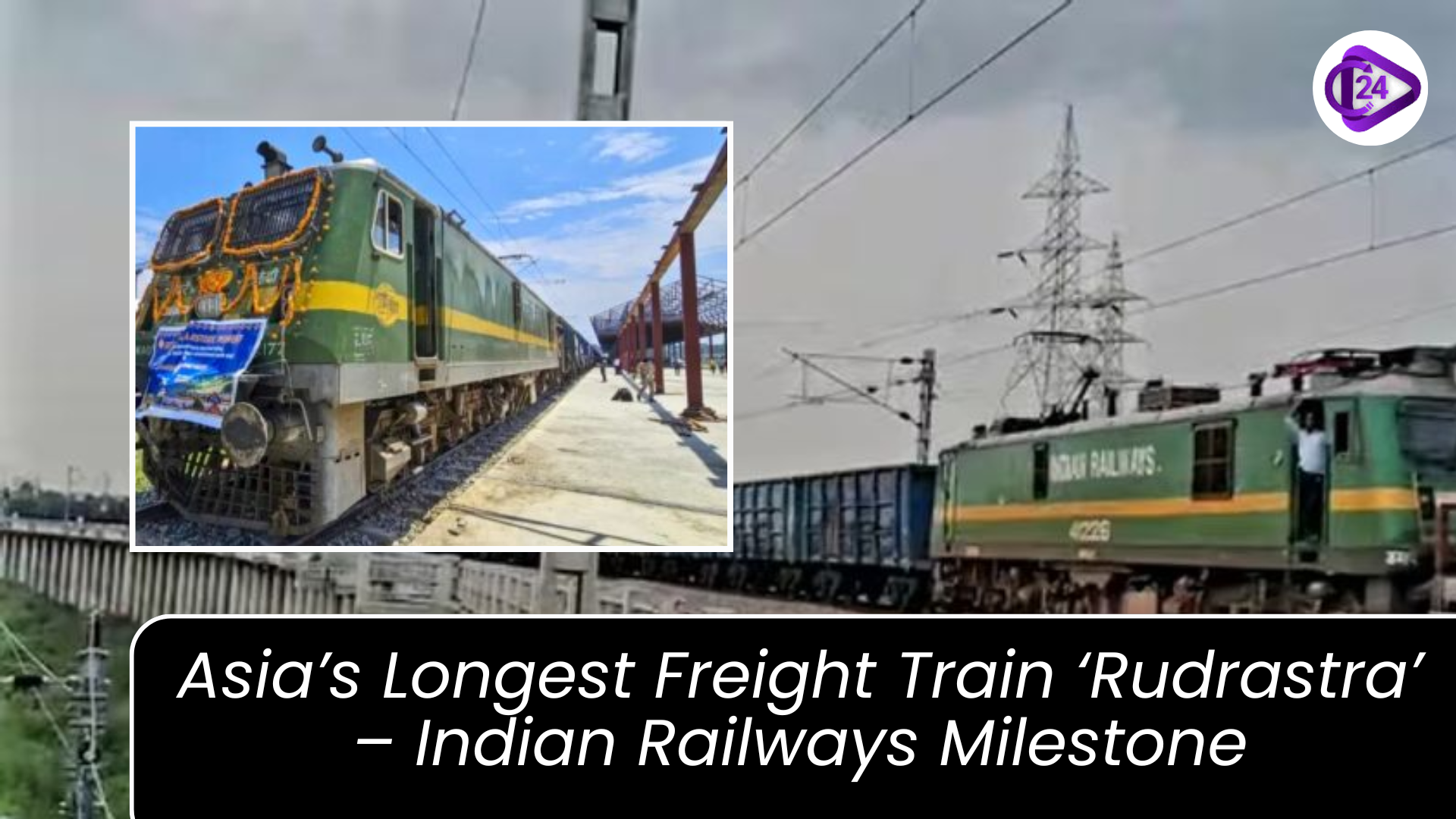
Indian Railways has been able to make a trial run of the longest freight train in Asia, named Rudrastra that covered around 4.5 km and 345 wagons. The trial was over Ganjkhwaja (UP) to Garhwa (Jharkhand) over 209 km in 5 hours 10 minutes at an average of 40.5 km/h. Three long-haul racks each of 59 bogies were bolted together to form the train hauled by seven engines. The innovation is directed towards minimizing turnaround time, ensuring the efficiency of the freights, and saving resources. The successful test opens the way to the more rapid and cost-effective transportation of goods all over India.

Context

  • Indian Railways successfully tested Asia-longest freight train named Rudrastra and it was a turning point in long-distance freight business.

Key Details

  • Longitude: 4.5 km.

  • Total Wagons- 345; capacity of an empty wagon: 72 tonnes.

  • Engines: 7 (two at the front, one between each 59 bogeys).

  • Building: Three high distance racks (each having 2 goods trains).

  • Route: Ganjkhwaja (UP) to Garhwa (Jharkhand), 209 km in 5h 10m; Avg. 40.5 km/h.

Significance

  • Operation Efficiency: It puts together several freight trains in order to improve congestion.

  • Savings of time: High rate of loading and transportation.

  • Cost Effectiveness: less crew and locomotives used per tonne-km carried.

  • Environmental Impact: Reduced use of fuel on a per-tonne-of-cargo basis.

Technological Aspect

  • Long Haul Operation: Application of distributed power control acceleration/braking.

  • Load Management: A homogeneous use of power will avoid derailment, and minimize stress on couplers.

Challenges

  • Necessitates the increased passing loops and platforms at stations.

  • Complicated signalling synchronisation.

  • Greater exposure to failure in the case of mechanical.

Way Forward

  • Widen long-haul freight corridors in heavily utilized patterns.

  • Modernize infrastructure to support long trains using ultra-long trains.

  • Connected to Dedicated Freight Corridors (DFC).

Conclusion

Rudrastra is also a first in Indian freight logistics and in line with the vision of Indian Railways to expand capacity, speed and efficiencies and reduce operational costs, in the journey to becoming a global freight leader.

PM Modi honours revolutionaries on Kakori Conspiracy Case on 100th Anniversary

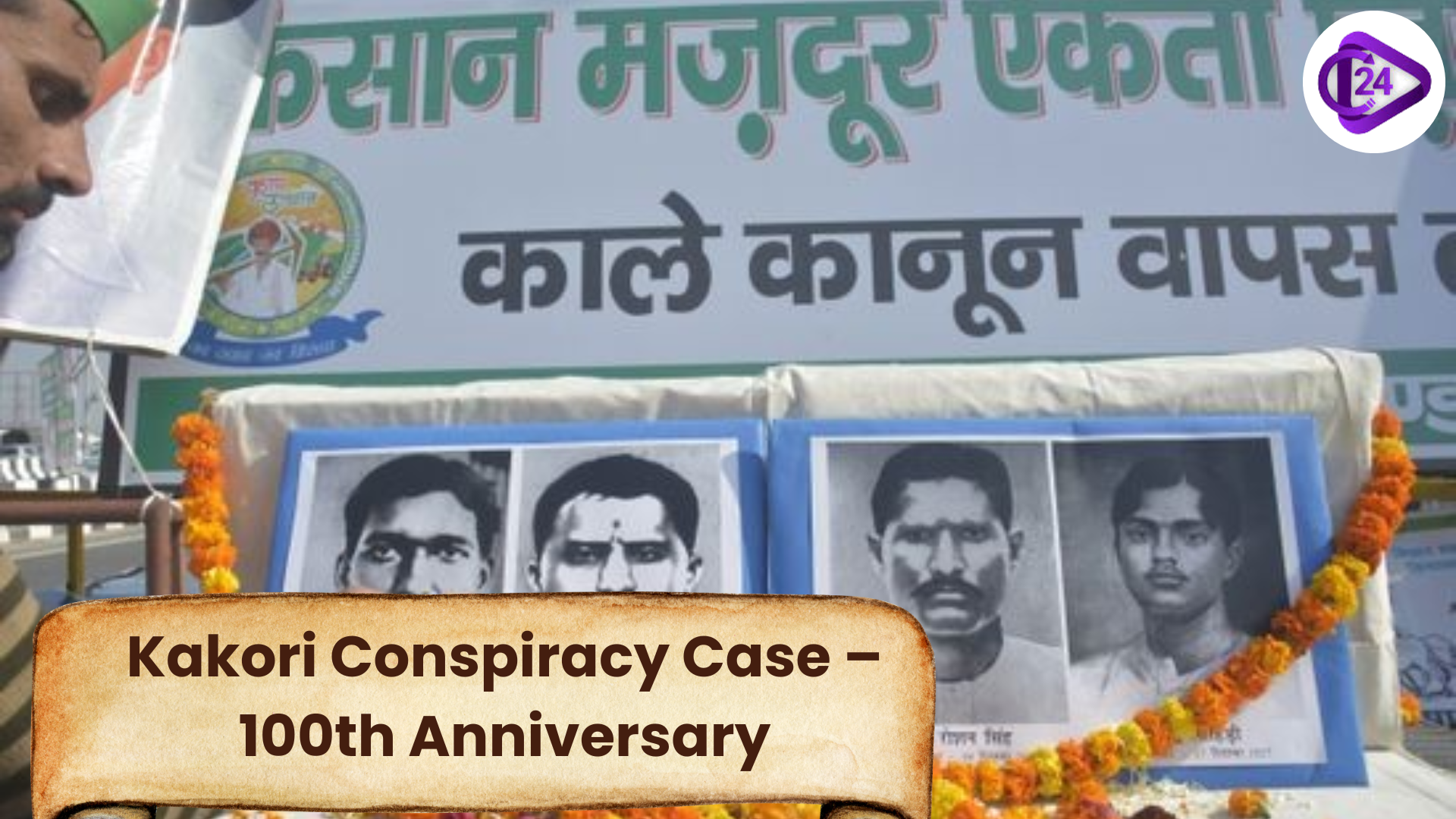
On the 100th anniversary of the Kakori Conspiracy Case, Prime Minister Narendra Modi honored the revolutionaries during his visit, which he remembered as fighting against colonial exploitation. In the 1925 Kakori train robbery case, a group of people who belonged to Hindustan Republican Association (HRA) robbed a train that was transporting British government money in Kakori, Uttar Pradesh. The act was presided over by leaders such as Ram Prasad Bismil and Ashfaqulla Khan, which was devoted to finance the revolutionary actions and generate the nationalist feeling. The British responded by massive arrests, executions and deportation. It turned into a symbol of the sacrifice and has had an impact over subsequent revolutionaries and has been a guiding light on the ideological basis of the Hindustan Socialist Republican Association (HSRA).

Context

  • Prime Minister and Home Minister marked the centenary of Kakori Train Robbery, one of the signpost events of Indian freedom struggle.

Key Points 

Background

  • Prior to 1925: Increasing disappointment in the non-violent approach saw the new generations of nationalism acquire armed struggle.

  • HRA Formation: The organization was established to fight British rule by direct action.

Kakori Conspiracy events

  • Time: 9 August 1925.

  • Action: The number 8 down Train (Shahjahanpur-Lucknow) was halted close to Kakori by members of HRA.

  • Procedure: chain yanked; 8,000 tax revenue-bucks stolen out of cabin of guard.

  • Leaders Involved: Ram Prasad Bismil, Ashfaqulla Khan, Rajendra Lahiri, Sachindranath Sanyal, Thakur Roshan Singh, Chandrashekhar Azad ( managed to escape).

Trial & Sentences

  • British Crackdown: The vast majority of the conspirators caught in one month.

Punishments:

  • Death: Bismil, Ashfaqulla Khan, Rajendra Lahiri, Thakur Roshan Singh.

  • Deportation: Sachindranath Sanyal and others Reports: Kala Pani.

  • Several of them will have to face life imprisonment.

Objectives

  • Financial: Fund revolutionary activities with funds of the British government.

  • Political: Spread an assertive message of rebellion as a source of inspiration to Indians.

  • Symbolic: Rage against excessive taxation of the colonies.

Impact

  • Martyrdom: Leaders who had been executed became symbols of martyrs.

  • Inspiration: The inspiration to the group was Bhagat Singh and HSRA, and other revolutionary organizations.

  • Shifts in Organisation: HRA renamed HSRA in 1928 to add a socialist outlook.

Conclusion

The Kakori Conspiracy Case is an incident that should always be remembered in the freedom struggle in India not because it resulted in material benefits but more so because it sparked off the spirit of sacrifice and rebellion. Its memory still fills the world with vision of great and independent India.

Frequently Asked Questions (FAQs)

The current affairs cover recent national and international events related to UPSC, SSC, Banking, Railways, and State PCS.

You need to read about the current affairs daily, and revise them every week and every month to keep them longer in your memory.

Yes, Class24 provides free downloadable Daily Current Affairs PDFs for easy revision.

Yes, you can practice MCQs and quizzes to boost your exam preparation.

Absolutely. The content is written in simple, easy-to-understand bilingual language suitable for beginners.

Go to class24.com and click on the current affairs section directly, where you find everything that you need.

ssc-toppers

Start Learning Today with Class24

Related current affairs

Class24 offers free video lectures for smart preparation, covering CGL, CPO, CHSL, MTS, and GD exams. Learn from expert faculty, revise concepts easily, practice with PYQs, and improve speed and accuracy through high-quality, exam-focused video lessons anytime, anywhere.

Get success in your hand. Start study anytime anywhere.

The journey becomes simple and enjoyable when you start taking interest in it. And through our app “Class24”, we will be your trusted partners in developing that interest.

Daily Quizzes
Mock Tests
Ongoing

No ongoing tests right now.