
Day: July 24, 2025

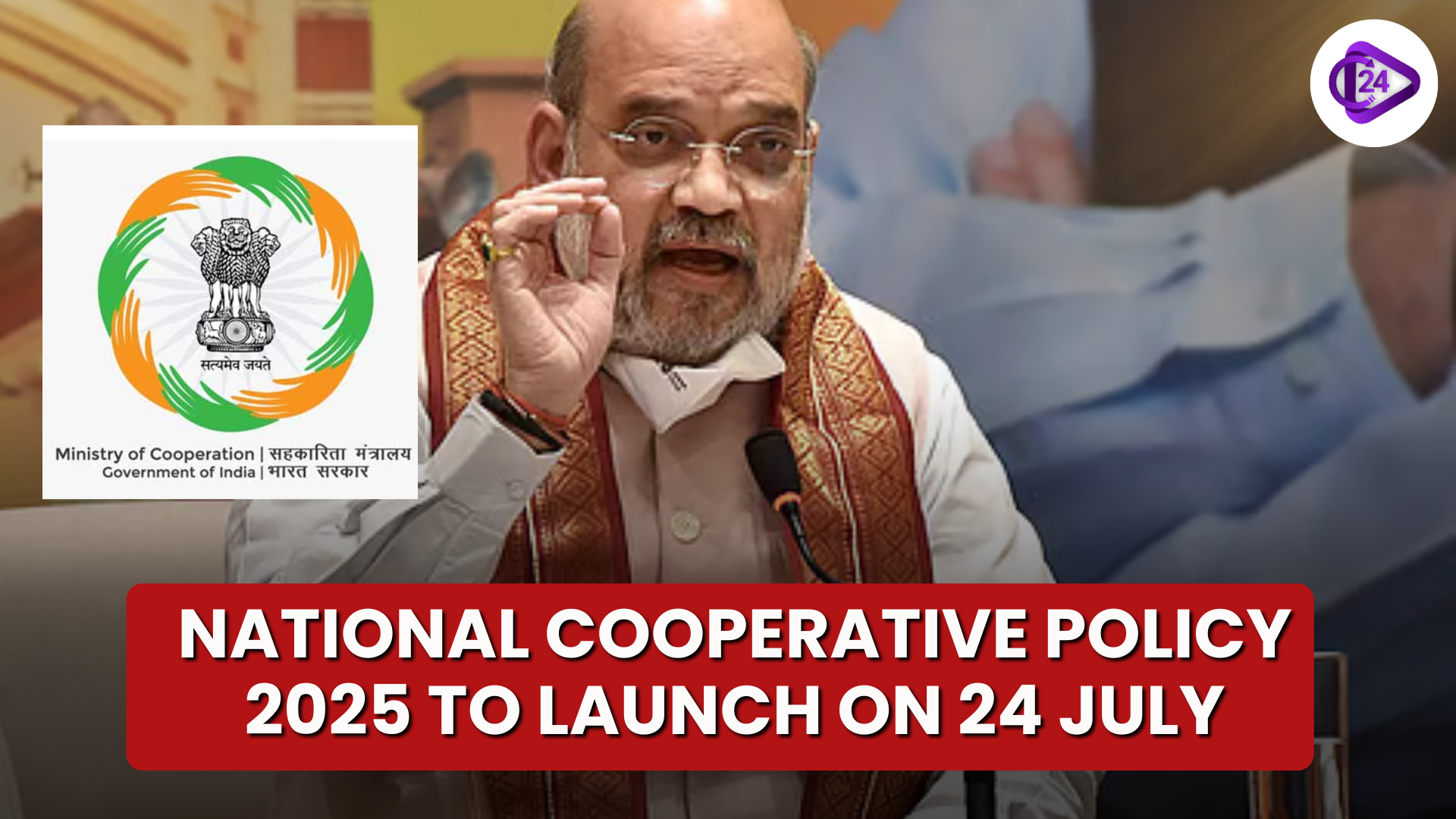
National Cooperative Policy 2025 to Launch on 24 July

National Cooperative Policy 2025 shall be launched by Union Home and Cooperation Minister Amit Shah on 24 July 2025 at Atal Akshay Urja Bhawan, New Delhi. It is a policy report drafted by the committee of 48 members whose chairman is Suresh Prabhu and envisioning modernization of the cooperative sector in India between 2025 and 2045. It qualifies with the vision of PM Modi of Sahkar se Samriddhi and it will help make rural India a little more inclusive with professional management and job creation. This new policy supersedes the first cooperative policy of 2002 which was based on the extent of changes caused by globalization and technology. What is sought is to place cooperatives as an instrument of serious consideration towards achieving Viksit Bharat by 2047.

Context

  • The initial National Cooperative Policy was initiated in the year 2002 in India.

  • The world and the country have since undergone drastic changes in their global and domestic fronts, and hence the need for a new roadmap.

  • Now the cooperative sector requires revival, innovation, and grassroot involvement to carry the vision of national development referred to as Viksit Bharat@2047.

Key Points of National Cooperative Policy 2025

Launching Details

  • Unveiled by Union Home and Cooperation Minister Amit Shah

  • Date & venue: 24 July 2025, Atal Akshay Urja Bhawan, New Delhi

  • Names of organisations involved: NCDC, NCCT, VAMNICOM, cooperative unions and ministry officials

Policy goals

  • Rebuild and modernize the cooperative sector of India.

  • Develop a grassroot development roadmap.

  • Realize the dream of the PM Modi of “Sahkar se Samriddhi” (Prosperity through Cooperation).

  • Ensure that cooperatives are inclusive, and professionally run and future oriented.

  • Create mass jobs and livelihood particularly in rural India.

Policy Timeline and Vision

Feature

Detail

Coverage Period

2025 to 2045

Long-term National Vision

Contributing to Viksit Bharat 2047

Predecessor

First Policy in 2002

Guiding Framework

Inclusive, participatory, future-oriented

Doing the Committee and the Consultations

  • Chaired by: Suresh Prabhu, ex Union Minister

  • Members: 48, of which representatives of:

  • National/State cooperative federations

  • Central and States Government Ministries

  • Joint societies in the industries

  • Stakeholders and academicians

  • Number of meetings held: 17 national and 4 regional workshops:

  • Ahmedabad, Bengaluru, Gurugram and Patna

  • Stakeholder involvement: 648 ideas are considered based on the feedback of the population

Relationship to Rural and Cooperative Development

  • Rew right Dividends to Rural India

  • Agricultural, dairy, and allied employment and livelihood boost

  • Emphasis should be on bottom up planning and inclusion of finances

  • Development of infrastructure by collaborative institutions

Contribution in Viksit Bharat 2047

  • Enhances community practices of economic development

  • Improves collaborative involvement in such sectors as digital economy, green energy, rural supply chains

  • Aspires to set cooperatives as a contributor to the target of the Indian economy to achieve $5 trillion.

Comparative Snapshot: 2002 vs 2025 Policy

Aspect

2002 Policy

2025 Policy

Focus

Management framework

Transformation, growth & Viksit Bharat 2047

Approach

Basic structure

Participatory, inclusive, and grassroots

Policy Environment

Pre-globalisation adjustments

Post-globalisation, tech-enabled cooperatives

Public Consultation

Limited

648 suggestions from stakeholders

Conclusion

The National Cooperative Policy 2025 has become the turning point in the history of the cooperative movement in India. It has been tasked to streamline the sector with a contemporary, encompassing, and job-focused plan that suits the country's ambitions. It will make an immense contribution to turning into a Viksit Bharat by 2047 by empowering cooperatives at the grassroot.

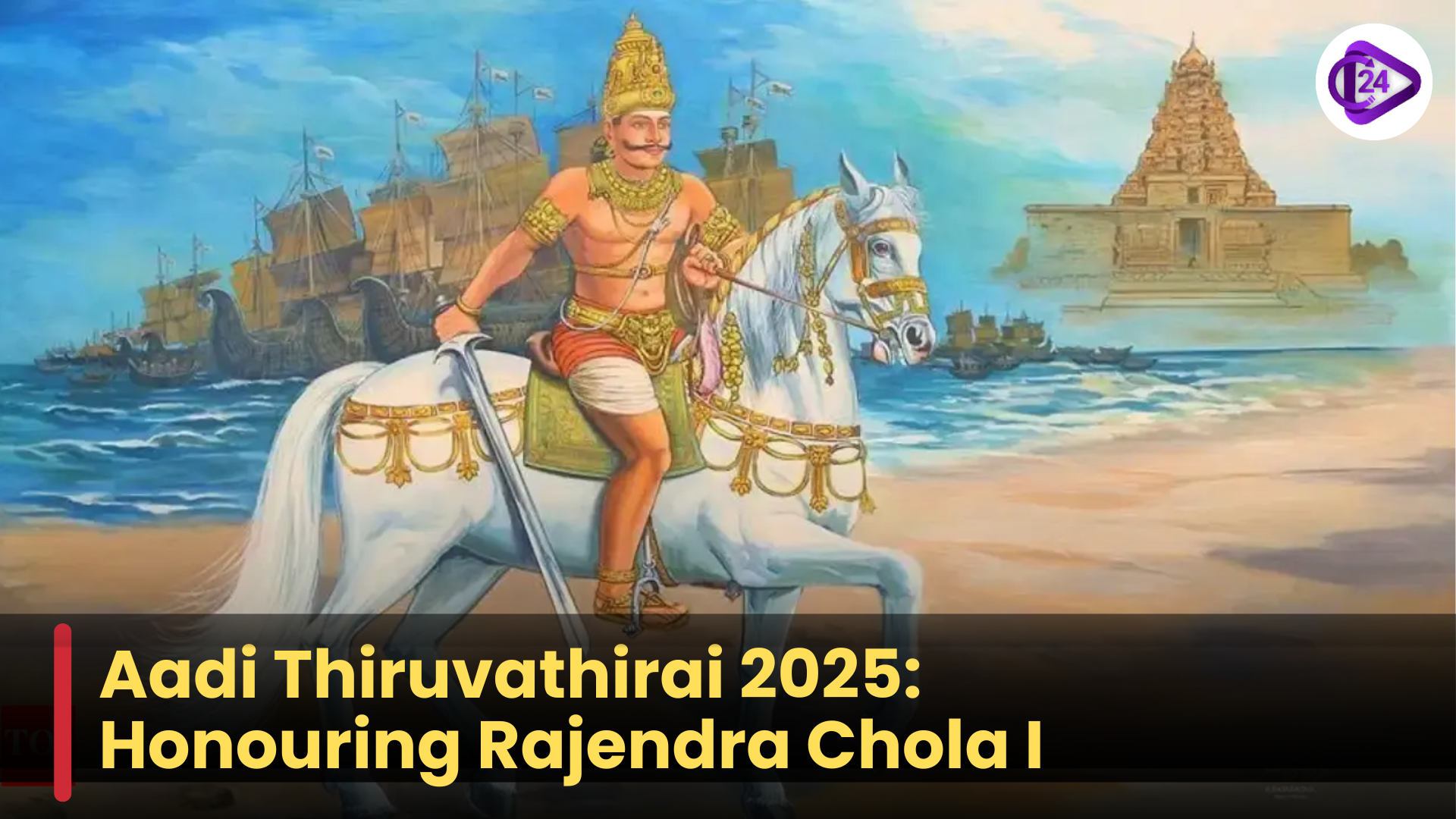
Aadi Thiruvathirai 2025: Honouring Rajendra Chola I with Grand Festival

To mark the birth anniversary of Rajendra Chola I, the Ministry of Culture has been organizing the Aadi Thiruvathirai Festival along with its Anniversary Festival to be held between 23-27 July 2025 at Gangaikonda Cholapuram, Tamil Nadu. The Prime Minister Narendra Modi and other dignitaries will be present as the grand finale is held on 27 th July. It is a commemoration of one-thousand years since the Southeast Asian expedition of Rajendra Chola, and the starting of construction of the temple of Gangaikonda Cholapuram. Cultural performances, heritage walks, ASI exhibits and a musical recital by Ilaiyaraaja will highlight traditions of the Chola era. The festival latterly honors Shaiva Bhakti, Tamil culture and the Chola Empire legacy, which lasted many centuries.

Context

  • The festival marks the historical and cultural success of one of the greatest emperors in India, Rajendra Chola I. 

  • It celebrates his visionary departure from the maritime and construction of the imperial capital, and his building of the UNESCO World Heritage temple at Gangaikonda Cholapuram.

The Festival and Cultural Events

  • Dates: 23rd to 27th of July 2025

  • Venue: Gangaikonda Cholapuram at Ariyalur district, Tamil Nadu

Daily Events (23th- 26th July)

  • Bharatanatyam and devotional music concert dances

  • Students singing Devaram there at South Zone Cultural Centre, Thanjavur

  • ASI walks and tours Heritage walks

  • Exhibitions on:

    • Chola Shaivism

    • Temple architecture

    • Chola bronzes and inscriptions

Historical Significance of Rajendra Chola I

Feature

Details

Reign

1014–1044 CE

Major Achievement

Maritime expedition to Southeast Asia around 1025 CE

Capital Shift

Founded Gangaikonda Cholapuram as the new Chola capital

Cultural Patronage

Supported Shaivism, Tamil literature, temple building, and arts

Legacy

Gangaikonda Cholapuram temple – UNESCO World Heritage Site

Shaiva Siddhanta Tamil Bhakti Tradition

  • Festival aligns with Thiruvathirai (Ardra) star, the birth star of Rajendra Chola

  • Celebrates Nayanmars, the 63 saint-poets of Tamil Shaivism

  • Focuses on Shaiva philosophy, Tamil devotional literature and spiritual background

Chola Architectural Existence

  • The Gangaikonda Cholapuram temple is a culmination of Dravidian temple structure

  • Features include:

    • Granite sculptures

    • Intricate inscriptions

    • Chola bronze idols

Goals of the Festival

  • It is the 1,000th anniversary of the Chola maritime mission

  • Shaiva Siddhanta philosophy should be highlighted

  • Naming contribution of Rajendra Chola I and Nayanmars

  • Publicise Chola temple architecture and Tamil arts

  • Encourage national identity in the Indian civilisation heritage

Rajendra Chola I (1014-1044 CE) 

  • Succession: The son of Rajaraja Chola I; came in 1014 CE in his place.

  • Name: He is titled Gangaikonda Chola (The one who brought the Ganga).

  • Capital Shift: Created a new capital in Gangaikondacholapuram.

Major Conquests

  • North India: conquest of defeated Pala king, Mahipala; introduced Ganga water to the south.

  • Sri Lanka: Rajaraja had begun conquest; his success was completed and the King Mahinda V. was taken into custody.

  • South India: Rested Pandyas and Ceras; made his son a Viceroy.

  • Western Chalukyas: They crushed Jayasimha II on the battlefield of Maski.

  • Eastern Chalukyas: assisted Rajaraja Narendra in regaining Vengi.

  • Abroad (1025 CE): defeated Srivijaya Kingdom (Sumatra, Malaya, Java); took control of the capital Kadaram.

Naval Strength

  • Powerful navy to be employed on overseas campaigns and the control of trade routes in the Indian Ocean.

  • Dominated strategic sea stations in the vicinity of Malacca Strait.

Legacy

  • Patron of culture: Constructed the magnificent Gangakkondacholeswaram Temple.

  • Management: Used sons in old age as leaders in the armed forces.

  • Imperial Peak: Empire in a time of territorial and Naval triumph.

  • Diplomacy: Participated in diplomatic work with China and Southeast Asian kingdoms.

Conclusion

The Aadi Thiruvathirai Festival of 2025 cannot be discussed as mere cultural celebration, but rather as the national collective memory of a sight, artistic and spiritual heritage of Rajendra Chola I and Chola dynasty. This Tamil and Indian civilisational heritage has tremendous historic background and modern value as it is observed with the presence of the Prime Minister.

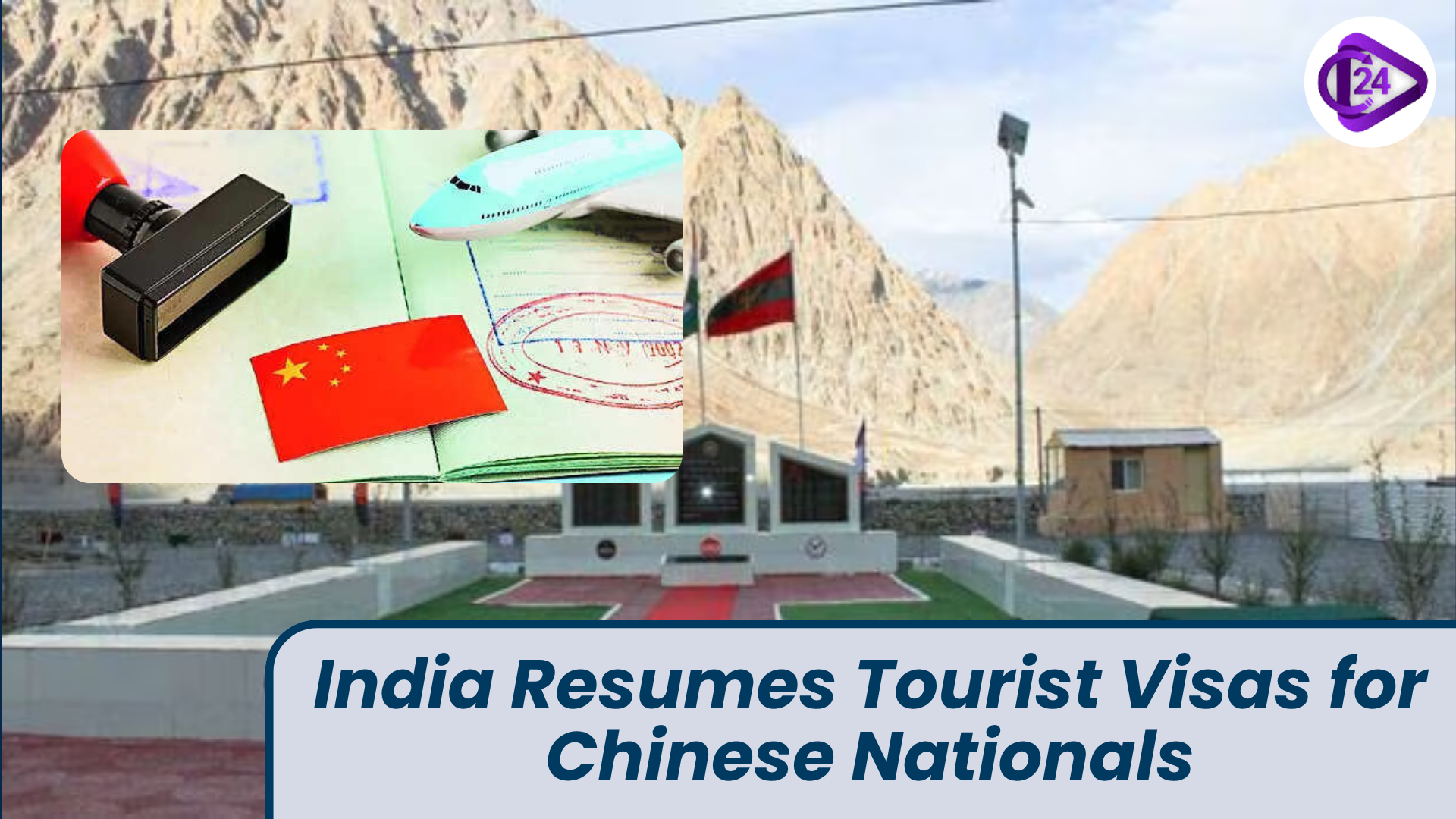
India Resumes Tourist Visas for Chinese Nationals

India has resumed issuing of Chinese tourist visas after a five year hiatus brought about by COVID-19 and the 2020 Galwan clashes. This is in a bid to normalize bilateral relations. They now qualify to apply online and have embassy appointments in Beijing, Shanghai and Guangzhou. This step was termed as positive by the Chinese Foreign Ministry. This is after discussing this at the highest level where External Affairs Minister S. Jaishankar recently travelled to China.

Context: 

  • The relationship between India and China became bad after the 2020 Galwan Valley fight.

  • Most of the flights and visa services to both nations were suspended.

  • India was already back to business and student visas but not to the tourist visas- up until now.

  • Such a decision is part of softening the relations which has also been reflected in SCO meetings and Kailash Yatra talks.

Highlights of Visa Announcement

  • Tourist Visa Resumption: On July 24, 2025, Indian Embassy in Beijing announced the resumption of tourist visas.

  • Application Process:

  • Online application begins on Thursday

  • Their physical attendance is needed at the Indian Embassy (Beijing), and/or Consulates (Shanghai, Guangzhou).

  • Chinese response: The Chinese MFA describes the move as encouraging and intended to smooth international travel across borders.

Pre-COVID Travel Data

Category

India to China

China to India

Tourist Numbers (2019)

8,69,000

3,00,000

Visas Issued by China (Jan-Jun 2025)

~85,000

Preceding Diplomatic Relation

  • Modi-Xi Meeting October 2024, Kazan, Russia – deal to reestablish relationship.

  • July 2025 Visit to EAM Jaishankar: met Wang Yi and President Xi Jinping.

  • Kailash Manasarovar Yatra: China put it in the limelight as a goodwill gesture.

Brahmaputra river Hydropower Conflict

  • Medog hydropower station on Yarlung Tsangpo (Brahmaputra).

  • Issues of India and Bangladesh: Possible consequences of the downstream.

  • The Chinese position: Asserts sovereignty; ensures contact and sharing of data with the downstream nations.

Strategies and Diplomacy Implications

  • It is a major improvement in sour India-China relations after the Galwan.

  • May set the stage to greater tourism, commercial, and cultural interaction.

  • Restart of Kailash Yatra and issuance of visas imply the reestablishment of trust.

  • Otherwise ameliorating relations are another fraying point when it comes to river disputes.

Conclusion

Restoration of the tourist visa is a good indication of diplomatic relations between China and India. Although there is tension in the water-sharing disputes, both countries do strive to normalize the relationships with the help of people-to-people contacts and high-level diplomacy.

India-UK Free Trade Deal Set to Boost £25.5 Billion in Annual Trade

The visit of India Prime Minister Narendra Modi to the UK is a milestone in India-UK relations as a Free Trade Agreement (FTE) will be signed. The deal includes major areas, including clean energy, technology,  defence and investment, since the latter is projected to increase bilateral trade between the two countries by an annual average of 25.5 billion pounds. The FTA caps the preceding 2021 roadmap 2030 with a wider roadmap 2035. The schedule of President Modi consists of his visits where he will meet UK PM Keir Starmer and King Charles III. This agreement will enhance strategic and economic relations between both democracies.

Context:

  • An enhanced and deeper trading relationship as well as strategy is being sought by India and the UK particularly with regard to post Brexit and as India has embarked upon its economic diplomacy initiatives to expand its contact with the world. 

  • FTA has reflected this change, and is in the agenda of the two nations relating to innovation, security, and sustainable development.

Key Points:

PM Narendra Modi’s visit to UK

  • Key Meetings:

    • PM Keir Starmer

    • King Charles III

  • UK-India 2035 Vision 

    • Replaces the earlier ‘2030 Roadmap’ signed in 2021.

    • Focus on a “modern, reinvigorated partnership”.

  • Focus Areas:

    • Trade & Investment

    • Technology & Innovation

    • Climate and Clean Energy

    • Defence & Security

    • Migration and Mobility

Key Provisions of the Trade Agreement

Area

Details

Trade Value Boost

£25.5 billion annually

Tariff Reductions

From average 15% to 3% for British goods

Product Access

Soft drinks, cosmetics, cars, medical devices in Indian market

Clean Energy Access

UK firms get full entry to India's public procurement in clean energy

Financial Services

Equal treatment for UK insurers & service providers in India

Strategic and Economic Advantages

  • Boosts the Comprehensive Strategic Partnership

  • Builds on:

    • 2023 Tech & Security Programme

    • India UK Defence Industrial Cooperation

    • Current bilateral investment treaty (BIT) negotiations

  • Peace brings employment, increases joint research and development and improves resilience in strategic sectors

Conclusion

India-UK Free Trade Agreement is the beginning of a new era of bilateral diplomacy. The bargain ensures a futuristic partnership between India and the UK due to better market access, lower tariffs, and commitment to Vision 2035 as a strategic initiative. It opens up the process of a more interrelated, safer, and economically dynamic relationship even in the next decades.

Frequently Asked Questions (FAQs)

The current affairs cover recent national and international events related to UPSC, SSC, Banking, Railways, and State PCS.

You need to read about the current affairs daily, and revise them every week and every month to keep them longer in your memory.

Yes, Class24 provides free downloadable Daily Current Affairs PDFs for easy revision.

Yes, you can practice MCQs and quizzes to boost your exam preparation.

Absolutely. The content is written in simple, easy-to-understand bilingual language suitable for beginners.

Go to class24.com and click on the current affairs section directly, where you find everything that you need.

ssc-toppers

Start Learning Today with Class24

Related current affairs

Class24 offers free video lectures for smart preparation, covering CGL, CPO, CHSL, MTS, and GD exams. Learn from expert faculty, revise concepts easily, practice with PYQs, and improve speed and accuracy through high-quality, exam-focused video lessons anytime, anywhere.

Get success in your hand. Start study anytime anywhere.

The journey becomes simple and enjoyable when you start taking interest in it. And through our app “Class24”, we will be your trusted partners in developing that interest.

Daily Quizzes
Mock Tests
Ongoing

No ongoing tests right now.