Day: July 22, 2025

Parliament Passes ‘Bills of Lading, 2025’ to Modernize Maritime Trade Law

On day one of the Monsoon Session 2025, Parliament enacted the Bills of Lading, 2025, to replace the Indian Bills of Lading Act, 1856 that was 169 years old. The Bill presented by Union Minister Sarbananda Sonowal seeks to modernise India's trade documentation system in the maritime sector. It makes law simpler, complies with international best practice and fosters Ease of Doing Business (EoDB). It is one of the joint efforts of India to get rid of colonial-era laws. The bill has since waited to get Presidential assent to be law.

Context

  • The Indian maritime industry plays a crucial role in global trade however, the industry was regulated by an old-fashioned colonial history act which was a law dating back to 1856. 

  • Coming to this realization, the Government of India introduced the Bills of Lading, 2025 which was meant to coincide with international shipping customs, greater legal certainty, and also with faster dispute settlement so that India could be more competitive in her trading activities worldwide.

What are the Bills of Lading, 2025?

Key Features of the Bill

Provision

Description

Replaces

Indian Bills of Lading Act, 1856 (169 years old)

Tabled by

Union Minister of Ports, Shipping & Waterways, Sarbananda Sonowal

Passed by

Lok Sabha (March 2025), Rajya Sabha (21 July 2025)

Status

Passed by Parliament; awaits Presidential assent

Objective

Modernize shipping documentation, reduce disputes, boost EoDB

Legal Alignment

Aligns with international maritime documentation standards

Language

Simplified, business-friendly legal terms

Enabling Clause

Allows Central Govt. to issue implementation directions

Repeal and Saving Clause

Preserves legal continuity for actions under the old Act

Why was there a need to reform?

  • Colonial legacy: The Indian Bills of Lading Act, 1856 was not keeping in pace with the trade and was too old-fashioned.

  • Legal Ambiguity Old provisions were complex hence they brought about legal uncertainties and delays.

  • Global Integration: India had to seek a contemporary framework that was compatible with the international laws of maritime trade.

  • Ease of Doing Business: A streamlined legal system will bring in easier and dispute-free business.

Major Modern Reforms 

  • Uniformity of Legal Provisions to correspond with the global shipping practices

  • Transparency of ship owners, consignees rights and duty

  • E-Bill of Lading systems language-friendly to the future digitization era

  • Promotes the development of trade by guaranteeing a quick development of cargo and documentation

Symbolism: Free yourself of the Colonial Means

  • The enactment of this Bill forms a bigger national movement to:

  • Substitute the outdated colonial laws with modern Indian structures

  • Realise the Dream of Viksit Bharat @2047

  • Assert India maritime economic sovereignty

  • Formulate law-making institutions in line with the Constitutional spirit of India

Conclusion

The Bills of Lading, 2025, is one of the first milestones of the cluster of changes in the maritime legal system of India. It does not only make the trade documentation much easier but also indicates the desire of India to be a global trading center. This shows that India passed an archaic garbled colonial law with a modern law to enforce its stand on reforms, self-reliance and international leadership in international trade.

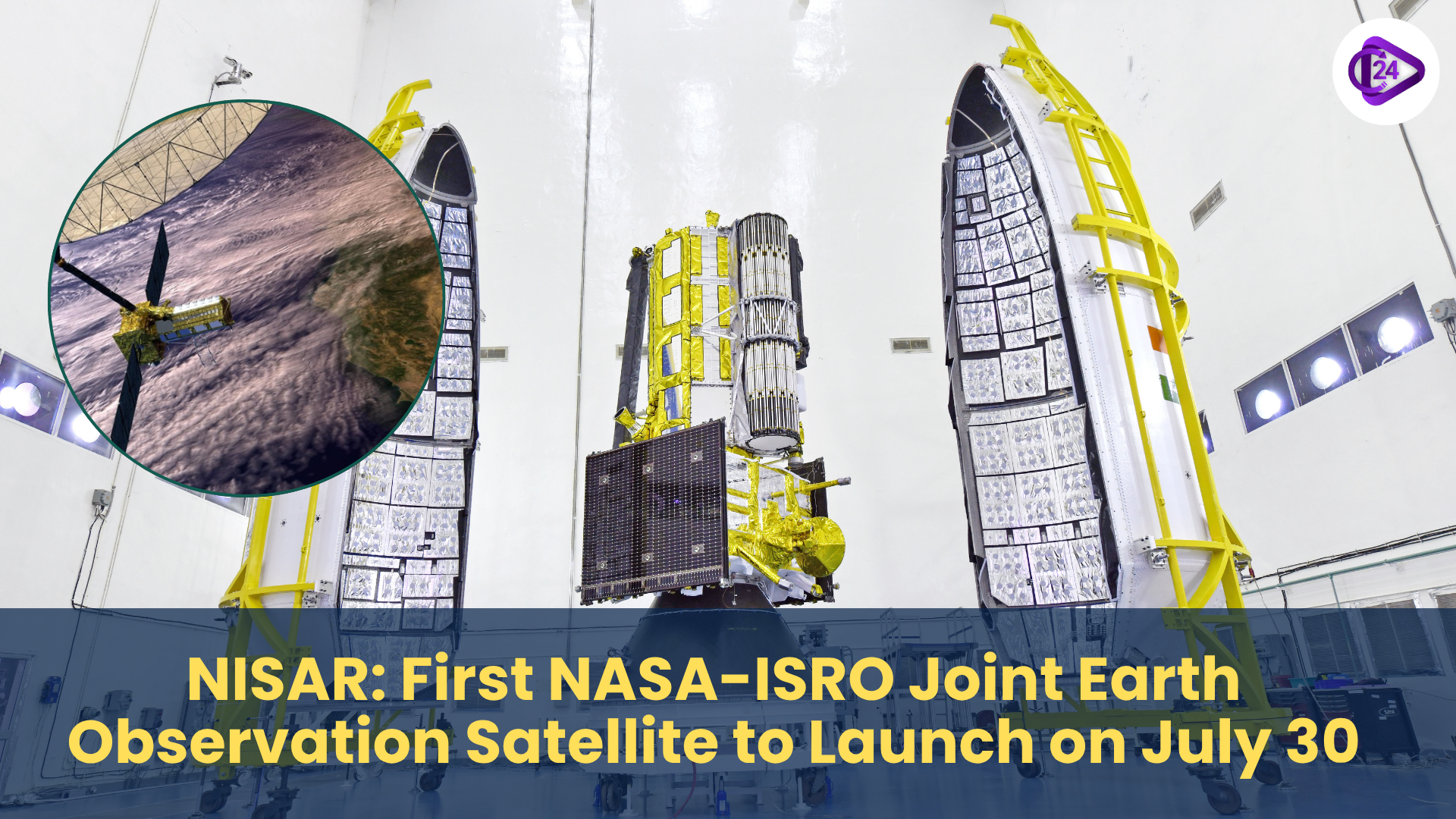
NISAR: First NASA-ISRO Joint Earth Observation Satellite to Launch on July 30

NISAR will be India and the United States first shared satellite, and it will be tested on July 30, 2025, at 5:40 p.m. at the Sriharikota station on a GSLV- F16 rocket. NASA-ISRO Synthetic Aperture Radar or NISAR as it is known is an innovative earth observation satellite that is equipped with dual-frequency radar technology of both the space agencies. Its application will include disaster monitoring, mapping of glaciers, and soil moisture analysis, in high-resolution and all-weather. Its weight of 2,392 kg is going to be injected in a sun-synchronous orbit at 743 km distance. The partnership is indicative of more than ten years of technical cooperation between ISRO and NASA s Jet Propulsion Laboratory (JPL).

Context

  • The NASA-ISRO collaboration serves as a breakthrough in international regards to cooperation in space. 

  • In particular, the collaboration concerns the earth sciences and climate observation. The deployment of NISAR indicates the abilities of Indian space technologies and is in accordance with the trends on the global level to track the changes in the environment in real-time with the help of innovative satellite data.

Key Features of NISAR

Launch Details

Detail

Specification

Launch Date

July 30, 2025

Time

5:40 PM IST

Launch Site

Satish Dhawan Space Centre, Sriharikota

Launch Vehicle

GSLV-F16

Orbit

743 km Sun-synchronous orbit, 98.4° inclination

Satellite Mass

2,392 kg

Distinct Technicalities

  • Dual-frequency SAR:

  • NASA L-band radar

  • ISRO-S-band radar

  • NASA 12m unfurlable mesh reflector antenna is used

  • It is based on the modified variant of I3K satellite bus produced by ISRO

  • Extended-swath-and increased-resolution SweepSAR technology

  • First of its kind capability to scan a 242 km wide swathe keeping accuracy high

  • Revisit interval: Twelve days world wide

Applications of NISAR

Area

Application Example

Earth Surface Monitoring

Detecting land deformation and subsidence

Cryosphere Studies

Tracking glacier movement and ice sheet changes

Agriculture & Forestry

Monitoring vegetation, soil moisture, and crop patterns

Disaster Management

Flood mapping, earthquake deformation, cyclone effects

Maritime Surveillance

Ship detection, shoreline mapping, sea ice dynamics

Water Resource Management

Mapping surface water bodies and seasonal changes

ISRO-NASA Cooperation Background

Factor

Description

Collaboration Started

Over a decade ago

Main U.S. Partner

NASA’s Jet Propulsion Laboratory (JPL), California

Indian Partner

Indian Space Research Organisation (ISRO)

Joint Technology Used

Radar systems, reflector antenna, satellite platform

Goal

To jointly develop a high-precision Earth monitoring tool

The importance of NISAR

  • The synonym of India-U.S. strategic technological collaboration

  • Enhances the capabilities of India in remote sensing

  • Allows climate change studies, ecologically sound farming and disaster reduction

  • It improves the accessibility of data by Indian scholars and governmental institutions

  • Poses ISRO as the major actor in the world in the missions of Earth observation

Conclusion

The introduction of NISAR is history in the space cooperation agreement between India and the U.S. It can serve as a strong example of how a global way of partnerships can contribute to such a global good-driven innovation. NISAR is going to transform research on earth and practical solutions to natural and environmental challenges with applications to agriculture to climate resilience.

FIDE Confirms Chess World Cup 2025 in India

The International Chess Federation (FIDE) has confirmed officially that India will host the FIDE Chess World Cup 2025 between October 30 and November 27. The actual host city has not been announced, but it is Goa that is coming up as the favorite. It is a very prestigious knockout tournament where 206 players will participate, and it will also qualify the 2026 Candidates Tournament. It is the second time that the country is holding the event with the first one having taken place at Hyderabad in 2002. Indian hopefuls such as D. Gukesh and R. Praggnanandhaa are likely to cause an impact.

Context

  • Again India is reestablishing herself in the world chess map. With the successful hosting of Chess Olympiad 2022 at Mamallapuram, the move made by FIDE to host the World Cup in India is a sign that the country is gaining considerable influence and infrastructure within the context of the game. 

  • The tournament is going to happen when India has a new breed of world-class players.

Key Highlights

Host Nation and Potential Venue

  • Host: India

  • Tentative Destination: Goa (confirmed)

  • Period: October 30 2025 November 27 2025

  • Type of event: 206 players knockout tournament

Importance of World Cup

  • Is a qualifier to the FIDE Candidates Tournament 2026

  • One of the FIDE largest events

  • Indian players chance of qualifying to the World Championship

Hosting & Legacy by India in the Past

  • In 2002, held in Hyderabad and won by Viswanathan Anand

  • Mamallapuram hosted Chess Olympiad 2022 successfully

  • India has emerged as a competitive force in world chess and it is all because of the base of young chess players in the country

Future Indian Chess competitors in 2025

  • D. Gukesh- Current World Champion

  • R. Praggnanandhaa

  • Arjun Erigaisi

  • Vidit Gujrathi and the other highest caliber grandmasters had been expected to feed in it

About FIDE

Aspect

Details

Full Form

Fédération Internationale des Échecs (World Chess Federation)

Founded

July 20, 1924, in Paris, France

HQ

Lausanne, Switzerland

Motto

Gens Una Sumus – "We are one family"

IOC Recognition

Since 1999

Member Federations

201 (as of December 2023)

About FIDE World Cup

Feature

Description

Started

2000

Format Since 2005

128-player single-elimination tournament (now expanded to 206 in 2025)

Qualification

Top finishers qualify for FIDE Candidates Tournament

Match Style

7 rounds of 2 classical games + tiebreaks (rapid & blitz); 4 games in Final

Importance

A key step in the World Chess Championship cycle

Conclusion

The move by FIDE to bring the 2025 Chess World Cup to India is a landmark experience in the making of the chess game in the land. India has the potential of Coasting the best of this world opportunity with a subsequent number of upstarts and a well-developed infrastructure. In addition to enhancing Indian chess, the event shall also strengthen the international sports hub status of the country.

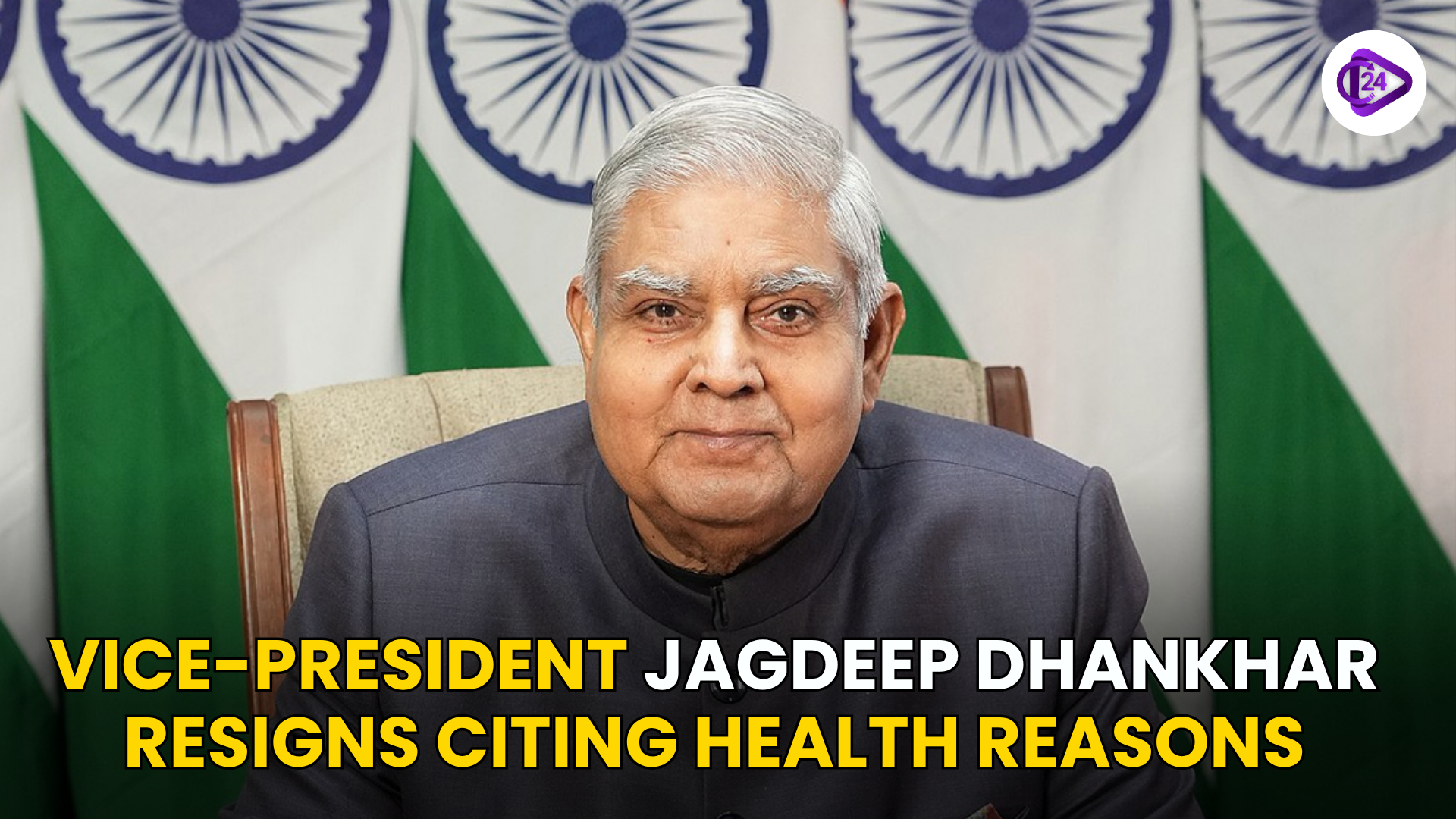
Vice-President Jagdeep Dhankhar Resigns Citing Health Reasons

On July 22, 2025, Vice-President Jagdeep Dhankhar tendered his resignation on ground of medical advice and health conditions. His resignation took place quite unexpectedly on the opening day of the Parliament Monsoon Session. Dhankhar (the 14th Indian Vice-President) had two years remaining before his tenure ended. In his letter addressed to President Murmu, he referred to Constitution Article 67 (a). The resignation sheds light concerning the constitutional provisions in regard to the office of the Vice-President.

Context

  • A resignation of serving Vice-President is an unprecedented situation in Indian political life. Till the day he resigns, Dhankhar has been active as per his schedule, presiding in the Rajya Sabha proceedings. 

  • His move, citing health reasons has triggered political speculation and debate as to how the succession process will be and at what time.

Vice-President of India: Constitutional Provisions

Article-Wise Overview

Article

Provision

63

There shall be a Vice-President of India.

64

Vice-President is the ex-officio Chairman of the Rajya Sabha.

65

Acts as President in case of vacancy or absence.

66

Election and qualifications of the Vice-President.

67

Term and removal process of the Vice-President.

68

Time of holding an election to fill a vacancy.

69

Oath or affirmation before entering office.

92

Bar on the Chairman from presiding when removal resolution is under discussion.

Resignation

  • According to Article 67(a), the Vice-President can quit the office by relinquishing a letter to the president.

  • The resignation takes effect instantly when received but as a rule, it is regarded as being accepted.

Article 67(b): Removal

  • Needs a resolution, taken by an efficient majority in Rajya Sabha.

  • Should be consented by the Lok Sabha.

  • Before moving the resolution, 14 days of notice in advance must be given.

  • No reason necessary to remove.

  • The Vice-President is not allowed to preside when he is removed in a proceeding (Article 92).

Election and Eligibility

Election Process

  • As scrutinised by an Electoral College comprising elected and nominated hands of both houses namely, Lok Sabha and Rajya Sabha.

  • Proportional representation under a system of single ballot by transferable vote.

  • It is regulated by Article 324 (powers of the Election Commission).

Eligibility (Article 66)

  • Indian citizen.

  • Aged 35 years and above.

  • He can be elected as a member of Rajya Sabha.

  • Shall not be holding any office of profit under the Union or State government or any authority under it.

Term of Office

  • The Vice-President serves a five year mandate (Article 67).

  • It persists until the new governor takes over.

  • Is eligible to re-election into the same position.

Powers and Functions

Function

Details

Chairman of Rajya Sabha

Presides over House sessions, adjourns meetings, and ensures order.

Legislative Role

Can cast a deciding vote in case of a tie in Rajya Sabha.

Administrative Role

Appoints members to Parliamentary Committees, chairs Business Advisory Committee, Rules Committee, and General Purposes Committee.

Disqualification

Decides on disqualification of Rajya Sabha members under the 10th Schedule (anti-defection law).

Interpretation

Interprets rules and constitutional provisions related to the Rajya Sabha.

Key Facts about Jagdeep Dhankhar

Attribute

Details

Born

18 May 1951

Former Positions

Governor of West Bengal, Senior Advocate, Member of Parliament

Vice-President

Elected as the 14th Vice-President in August 2022

Notable

Known for vocal interventions and confrontations with Opposition in Rajya Sabha

Predecessor

M. Venkaiah Naidu

Historical Note

  • Initially, the Vice-President used to be chosen during a joint session of the two Houses.

  • This has undergone an amendment by the 11th Constitutional Amendment Act, 1961 making the process simpler.

 Conclusion

The abrupt resignation of the Vice-President Jagdeep Dhankhar has brought constitutional and political concerns. It emphasises a necessity of knowing the powers, functions and constitutional processes concerning the second-highest constitutional office of India. The Vice-President is very instrumental in the legislative process and the institutional stability in Parliament.

Frequently Asked Questions (FAQs)

The current affairs cover recent national and international events related to UPSC, SSC, Banking, Railways, and State PCS.

You need to read about the current affairs daily, and revise them every week and every month to keep them longer in your memory.

Yes, Class24 provides free downloadable Daily Current Affairs PDFs for easy revision.

Yes, you can practice MCQs and quizzes to boost your exam preparation.

Absolutely. The content is written in simple, easy-to-understand bilingual language suitable for beginners.

Go to class24.com and click on the current affairs section directly, where you find everything that you need.

ssc-toppers

Start Learning Today with Class24

Related current affairs

Class24 offers free video lectures for smart preparation, covering CGL, CPO, CHSL, MTS, and GD exams. Learn from expert faculty, revise concepts easily, practice with PYQs, and improve speed and accuracy through high-quality, exam-focused video lessons anytime, anywhere.

Get success in your hand. Start study anytime anywhere.

The journey becomes simple and enjoyable when you start taking interest in it. And through our app “Class24”, we will be your trusted partners in developing that interest.

Daily Quizzes
Mock Tests
Ongoing

No ongoing tests right now.