
Day: June 28, 2025

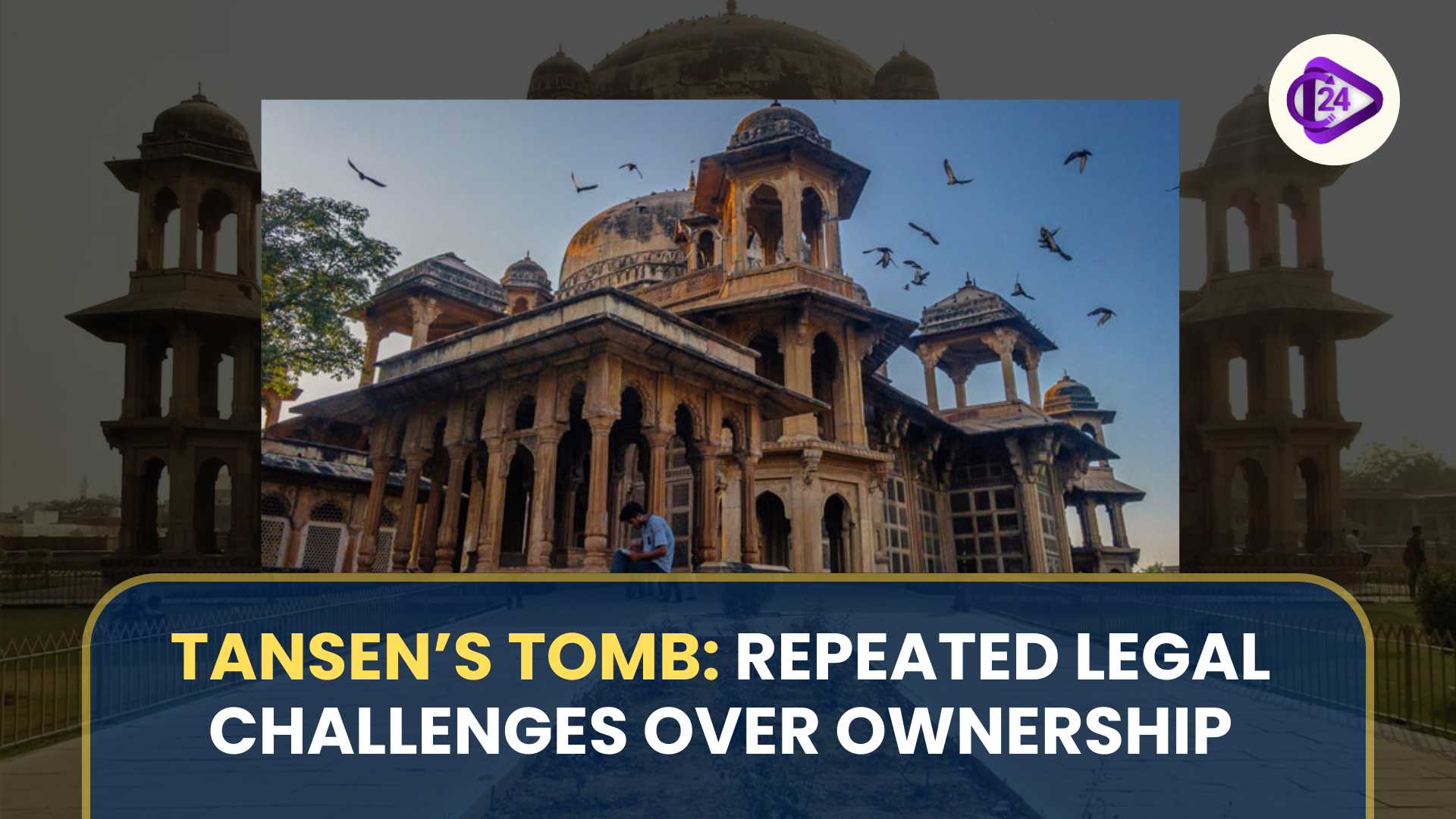
Bid to Snatch Control of Tansen’s Tomb: Repeated Legal Challenges Over 16th Century Monument

A new request for religious gatherings by the tomb of Sufi saint Sheikh Muhammad Ghaus in Gwalior, where the great musician Tansen is also buried has been rejected by the Madhya Pradesh High Court. The ASI-protected area is under the Ancient Monuments Act that has continuously been subject to religious control using the legal system. The court stressed that legalizing such activities would lose the heritage value of the monument. ASI referred to the damage ruining the structure due to historical unlicensed operations. Petitioners remained in pursuit of the site control even after several court setbacks since the year 1995.

Context

  • A new court challenge was filed to allow religious and cultural access to a centrally preserved monument of Mughal-era Gwalior, the tomb of Sheikh Muhammad Ghaus, the tomb also of Akbar court musician, Tansen. 

  • The refusal of the court embraces a protracted legal campaign supporting the guardianship of ASI on historical monuments.

About Monument

  • In Gwalior under Akbar reign, the tomb of Sufi saint Sheikh Muhammad Ghaus (1563) was built.

  • At the corner, just across, lies the grave of Tansen, legendary musician, who studied under the saint.

  • The construction is a centrally guarded site under the Ancient Monuments and Archaeological Sites and Remains Act, 1958 and kept under custody of ASI since 1962.

  • It is architecturally important which inspired Mughal construction of its tombs and features such as chhatris and jali screens.

New Petition and Court decision

  • Petitioner: Syed Sabla Hasan who poses as the legal heir and Sajjada Nashin of the saint.

  • Demand: Acceptance to have Urs and other religious/cultural practices.

  • ASI Objection: Illicit activities such as electrical wiring and drilling on the walls damaged the monument.

  • Verdict: The HC decided in favour of ASI based on the grounds of legal finality and threat to structural and cultural integrity.

Possession of Tombs Legal History

  • 1995: Peerzada Syed Ali Hasan lodged a civil case at the Civil Judge Court (Class-II) at Gwalior demanding the right of the tomb.

  • Status: Dismissed.

  • 2004: His two sons and his two daughters filed a First Appeal which was also rejected on a detailed judicial order.

  • 1996: Yet another civil suit by Syed Muhammad Hasan (a son of Ali Hasan).

  • Removed in 1999.

  • 2002: A civil revision application against the 1999 order was turned down.

  • 2015: A second appeal was rejected too.

  • 2016: A review petition submitted in the Supreme Court was not allowed.

  • 2019: A new case was filed by Syed Sabla Hasan in front of Madhya Pradesh Waqf Tribunal, asserting ownership and also religious jurisdiction over the tomb.

  • 2022: the Waqf Tribunal rejected the application and upheld the side of Archaeological Survey of India (ASI).

Court Observations

  • This “originality, sanctity and vitality” of the Monument should be maintained.

  • The permit of the religious events would mean national loss of historical value.

  • No one of the petitioners has a legal title or right of religious property in the location.

Conclusion

Since time immemorial, there has been a conflict over who should be able to take control over the tomb and what religion should use it, which has determined the status of the tomb through several successful lawsuits in favour of heritage preservation. The recent High Court verdict confirms the powers of the ASI and states the accountability of the Government to safeguard the cultural heritage of India that is endangered by encroachment as well as degradation despite high winds of petitions being filed in the interest of the petitioner on personal or on religious grounds.

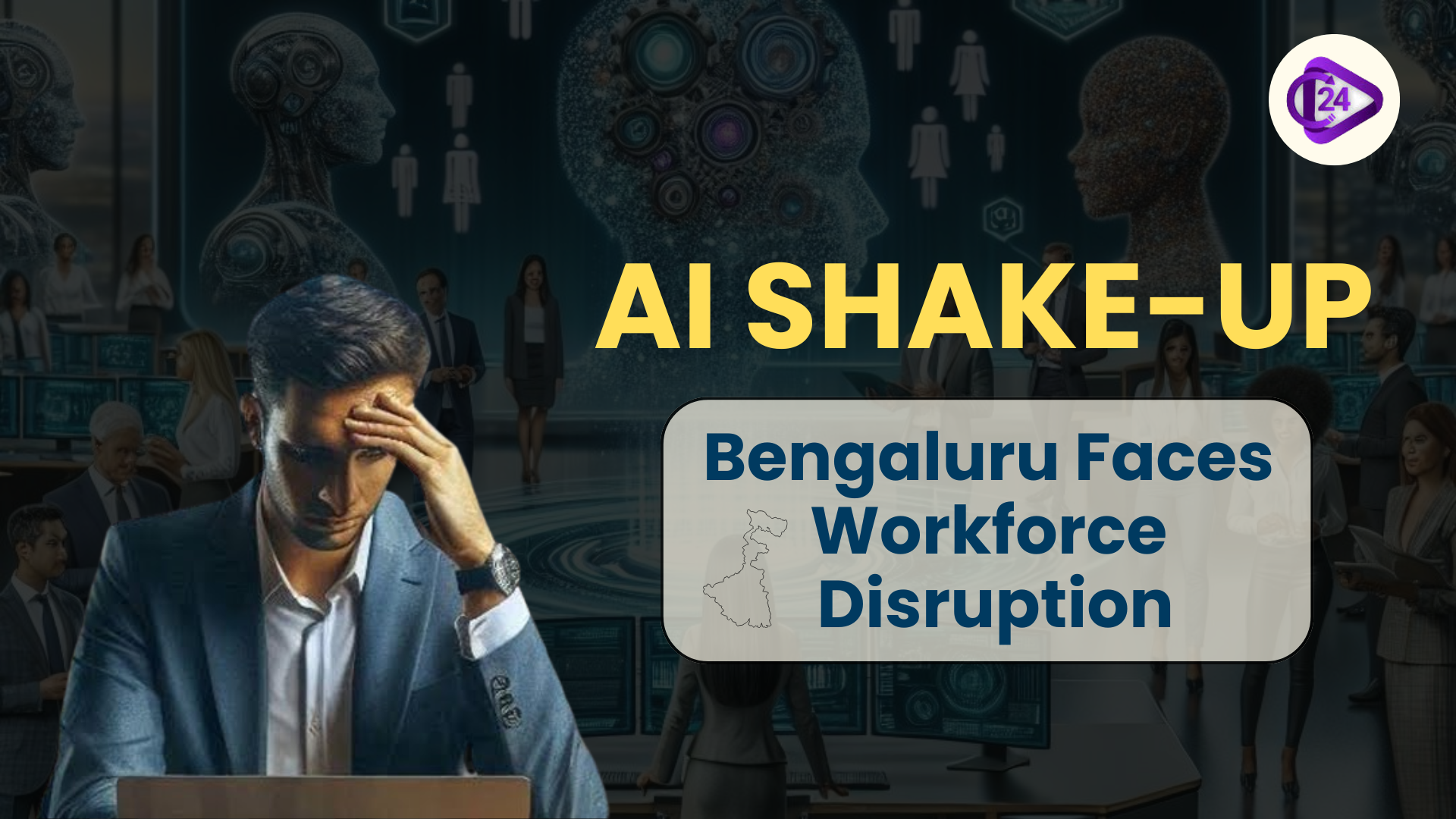
The Big AI Shake-Up: Bengaluru’s Response to Workforce Disruption

Artificial intelligence (AI) is necessitating the displacement of certain jobs, especially those that perform routine tasks, because these applications are being used faster in several industries. The Karnataka government has, in its response, initiated a survey to report on the effects of AI on the employee base. Bengaluru is one of the centres of AI workers and the leader in AI development which struggles with the complex issues of AI impact on job opportunities.

Context

  • The announcement of a survey on the effects of AI in Karnataka demonstrates that the issue of job displacement because of automation is an increasingly important concern, particularly in such industries as technology, medicine, and production. 

  • As the integration of AI boosts productivity, the government and industries are conducting reskilling that would reduce the chances of job loss.

Key Points

Artificial intelligence in Bengaluru:

  • There are more than 100,000 AI professionals in Bengaluru, and it is the second biggest AI ecosystem globally. 

  • The city has shown great interest in the advancement of AI in different industrial fields including healthcare, manufacturing, and finance.

Employment:

  • Efficiencies, as well as fears of loss of job, have also accompanied the introduction of AI. 

  • Automation in other cases has minimized human involvement, though employees have not been laid off instead, they have been diversified into other tasks. This might, however, affect the future recruitment.

Karnataka Survey of AI:

  • To find out the impact of AI on business processes, job roles at risk of automation and the rest of the workforce, a survey has been introduced by the government of Karnataka. 

  • It strives to offer policymaking to handle the turbulence of AI.

Skilling Initiatives:

  • To train and upgrade the skilled workforce, the Government introduced the program called “NIPUNA Karnataka” to train the workforce more on AI and machine learning as well. 

  • Some major industries such as IT, ITes, healthcare and manufacturing industry are likely to go through major changes.

Future of AI:

  • The AI is anticipated to supplement human functions particularly in those tasks that are precision centered and risky. 

  • As well as it is possible to lose jobs in sectors such as coding and research assistance due to AI, it is assumed that new opportunities will be created with the improvement of productivity.

Conclusion

Bengaluru and Karnataka are working on how to deal with the disruption that AI is causing to the job market. Skilling and reskilling, especially on AI and digital literacy is critical in reducing the threat of job displacement and realizing the potential of the technology as an economic growth impetus. The active efforts of the government are towards making sure that the result of the implementation of AI will not create a less prominent workforce but rather a stronger one.

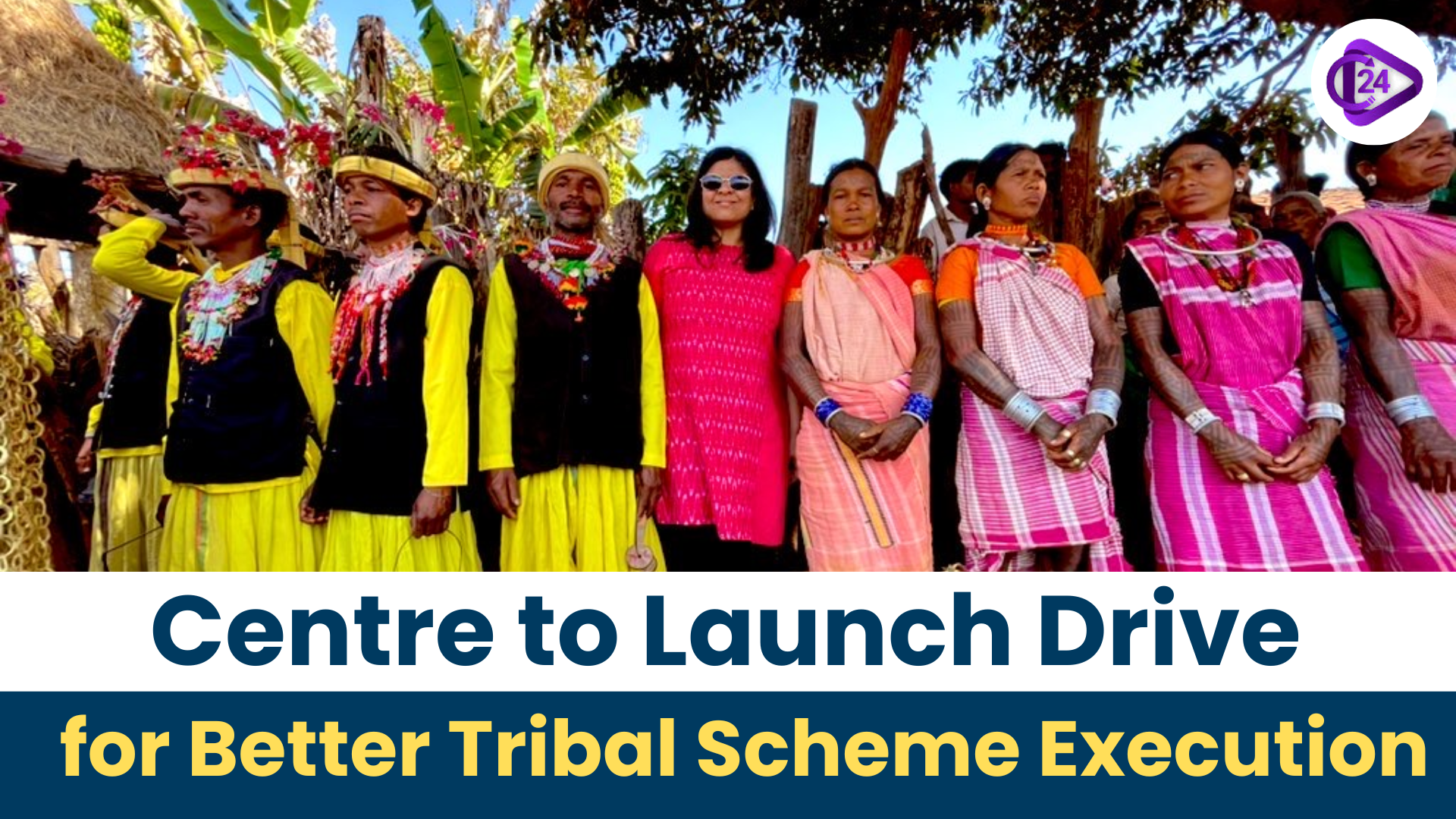
Centre Plans Initiative to Boost Execution of Tribal Schemes

The Department of Tribal Affairs hosted the National Conference on the Adi Anveshan in New Delhi and it was concluded by the participants, who were the officials of this government that the backwardness that was still taking place in the tribal regions could not be attributed to the absence of schemes but an absence of inspiration in the implementation of those schemes. It is founded on these conjectures that the government has declared the program of Adi Karmyogi to enhance the capacities of the officers at all levels so that they can execute schemes in a better way.

Context

  • To overcome this backwardness in the tribal regions, the Centre has created the Adi Karmyogi programme to enhance motivation and capacity of those officers who have to implement the welfare schemes of the tribal people. 

  • The project aims at designing a special corps of trainers at various administrative levels.

Key Points

Background:

  • A weekend workshop came to the conclusion that induction of schemes to the tribal welfare was not the first issue rather lack of enthusiasm among the implements.

Introduction of “Adi Karmyogi” Programme:

  • Jual Oram (Union Minister of Tribal Affairs) initiated the trained program, Adi Karmyogi, to create a core of officers dealing in citizen-centric service delivery.

Capacity-Building Objectives:

  • The program will train approximately 20 lakh field-level stakeholders, where 180 State trainers, 3,000 district level trainers, 15,000 block level trainers would be made.

Key Insight from Workshop:

  • The logical lack behind the tribal development is the conversion of the administrative practices into service delivery that comes out of purpose. 

  • This was highlighted by the use of anecdotal stories by leaders in the conference.

Incentivizing Officials:

  • The move is aimed at motivating the officers down to the level of senior bureaucrats and even the block level officials so that they can be committed in implementing the plans of tribal welfare.

Conclusion

The Adi Karmyogi programme signifies a strategic change in the issues relating to tribal welfare since all the efforts are pegged to enhance the motivation and strength of officials to efficiently execute schemes. This strategy tries to unravel the main cause of lack of development in the tribal areas where schemes will be implemented in the correct manner with the correct degree of commitment.

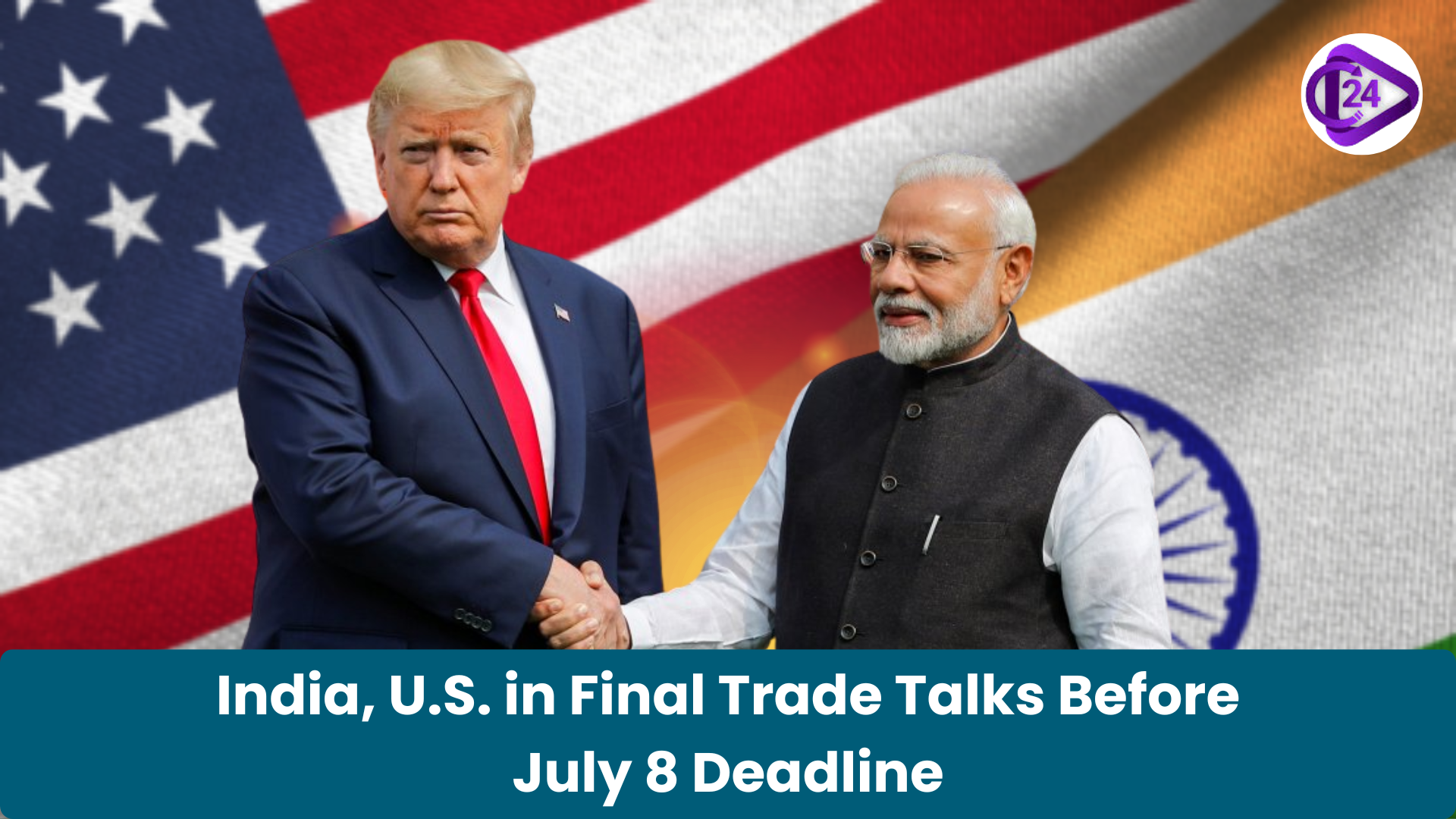
India in Final Trade Negotiations with U.S. Ahead of July 8 Deadline

India is also engulfed in last-minute talks with the US to get a mini trade deal during the July 8 deadline. This agreement is meant to stop an introduction of a 26 percent tariff on Indian exports as of July 9. The most specific questions within those negotiations are the import of externally modified (GM) crops, cow milk and the elimination of the reciprocal tariffs. U.S. President Donald Trump has alluded to a substantial trade bargain with India and in the event that no concurrence happens the U.S. charges will go into reality on July 9.

Context

  • India and the U.S. are striving to seal a trade agreement within the next two days by July 8 or face imposition of a 26 percent tariff on their imports. 

  • The agreement revolves around GM crops, the importation of cow milk and cutting tariffs.

Key Points

Expiration date of Agreement:

  • India seeks to complete a mini trade deal by July 8 so that the exports would not be subjected to a 26% tariff effective July 9.

Primary Issues:

  • The major barriers put in place involve importation of GM crops and cow milk within India, which are sensitive to India. 

  • The introduction of GM crops can be detrimental to domestic agriculture and importation of cow milk is controversial at this point.

U.S. Demands:

  • The U.S. is seeking concessions on industrial items, automobiles, electric vehicles, wines, petrochemicals products, dairy and agricultural products.

India’s Requests:

  • India wants the tariffs which are imposed on the basis of the so-called Liberation Day and the tariffs levied on the steel and the aluminum to be removed and a reduction to be made on the same. 

  • The country is also making concessions in its labor-intensive industries such as textiles, gems, jewelry and agricultural exports such as shrimp, oilseeds, grapes, bananas among others.

Political Context:

  • President Trump has reportedly suggested a big trade pact with India that would further liberalize the Indian market. 

  • The talks are part of resolving trade problems that exist in the U.S since it has tariffs on imports on several countries and India is one of them.

Conclusion

India is in negotiation with the United States and this is crucial as the July 8 deadline is near. A trade agreement is much needed so that high tariffs can not be imposed especially in the industries such as agriculture, textile, as well as chemicals. The fate of the same however depends on the resolution of sensitive matters like the importation of GM crops and cow milk whose importation is the major challenge yet in the discussions.

Frequently Asked Questions (FAQs)

The current affairs cover recent national and international events related to UPSC, SSC, Banking, Railways, and State PCS.

You need to read about the current affairs daily, and revise them every week and every month to keep them longer in your memory.

Yes, Class24 provides free downloadable Daily Current Affairs PDFs for easy revision.

Yes, you can practice MCQs and quizzes to boost your exam preparation.

Absolutely. The content is written in simple, easy-to-understand bilingual language suitable for beginners.

Go to class24.com and click on the current affairs section directly, where you find everything that you need.

ssc-toppers

Start Learning Today with Class24

Related current affairs

Class24 offers free video lectures for smart preparation, covering CGL, CPO, CHSL, MTS, and GD exams. Learn from expert faculty, revise concepts easily, practice with PYQs, and improve speed and accuracy through high-quality, exam-focused video lessons anytime, anywhere.

Get success in your hand. Start study anytime anywhere.

The journey becomes simple and enjoyable when you start taking interest in it. And through our app “Class24”, we will be your trusted partners in developing that interest.

Daily Quizzes
Mock Tests
Ongoing

No ongoing tests right now.