

Day: May 30, 2025

India Unveils the E-Hansa: An Electric Training Aircraft Increasing Green Aviation

By starting the development of E-Hansa, India is moving towards greener aviation as well as green energy with the help of CSIR-NAL. It fits well with India’s goals to cut greenhouse gas emissions while offering pilot trainers and students more affordable choices. There is an increasing motivation to partner with private businesses when bringing new technology to the market which encourages new ideas and works towards global cooperation. Dr. Jitendra Singh pointed out that this measure matches other advances, including ISRO’s work and greater involvement in global science diplomacy.

Context:

  • E-Hansa is India’s trainee plane for pilots that runs on electricity and supports environmental flights.

  • To speed up innovation, the government is promoting cooperation between public and private institutions and straight-forward technology transfer.

  • The nation works to make science cooperative globally and to create unified ways of governing science.

Key Points

About E-Hansa

  • E-Hansa is an Indigenous Electric Aircraft company.

  • The CSIR-National Aerospace Laboratories (NAL) in Bengaluru designed the aircraft as part of their HANSA-3 NG project.

  • The cost of a training aircraft seats two and it is usually between ₹1 crore and ₹2 crore, just half the price of an imported model.

  • Helps achieve India’s clean energy targets by cutting down on aviation pollution.

Strategic Importance

  • Allows students to easily access and pay for learning to become pilots.

  • Supports India’s efforts for green aviation and contributes to technology that improves aircraft cleanliness.

Multilevel Involvement Partnership (MIP)

  • PPPs are needed to encourage the commercialization of indigenous technology, suggested Union Minister Dr. Jitendra Singh.

  • DBT-BIRAC and IN-SPACe were successful models, so similar initiatives were established.

  • Promotes “Vasudhaiva Kutumbakam” by helping countries cooperate in science research.

Highlights and Current Projects from the ISRO

  • Appreciation of SPADEX mission is important for Gaganyaan human spaceflight.

  • The successful mission proved that ISRO plays a key role in managing science initiatives.

  • The Indian Space Research Organisation (ISRO) announced that it joined Axiom Space for microgravity research on the International Space Station (ISS).

Science Governance and Reaching Out Worldwide

  • Suggesting region-wise Chintan Shivirs to help departments (DST, DBT, CSIR, ISRO, etc.) come together and integrate science policy.

  • Global Science Talent Bridge is designed to bring leading international researchers to Hong Kong.

  • Establishing science centers with Switzerland and Italy will strengthen international cooperation in science.

Other Key Intiatives in India related to Green Aviation

  1. CSIR-NAL’s e-Hansa Electric Trainer Aircraft

    • Creating and using an electric trainer plane made by Indigenous people to cut carbon emissions and save money during pilot training.

    • The project proves India is ready to join the world in using clean and sustainable technology.

  2. National Electric Propulsion System

    • Programs focusing on making electric power systems more efficient for use in aircraft are being developed.

    • Drawing assistance from CSIR, DRDO and academic institutions for powering future green models of aircraft.

  3. New Green Aviation Policy

    • Policymakers in India now discuss boosting green aviation by focusing on electric and hybrid aircraft, green fuels and the supportive infrastructure that is needed.

  4. Sustainable Aviation Fuel

    • Oil companies and research organizations in India are working together on making biofuels from non-food materials for use by airlines.

    • Airports in Delhi and Mumbai are working with SAF blends to cut down their carbon impact.

  5. Indian Space Research Organisation and Green Technologies

    • Because it is involved in space technologies, ISRO’s work with clean propulsion and light materials helps guide green aviation research.

  6. PPP projects that support green aviation research

    • Governments are supporting PPP initiatives to help bring electric aircraft, battery technology and charging setups into green aviation.

  7. Make in India – Aerospace and Green Aviation Enterprises

    • The startup community is backing efforts to develop electric propulsion, new batteries and better energy-saving designs for airplanes.

    • Startups such as Asteria Aerospace, are investigating UAVs that rely on electric energy.

  8. Airport Infrastructure Development for Green Aviation

    • Using sustainably produced energy and electric vehicles at airports to reduce the number of emissions.

Conclusion:

E-Hansa stands for how India is moving toward environmentally friendly flying by relying on its own creativity and teamwork. With help from active scientific activities and worldwide partnerships, India can head up the development of sustainable technology and explore outer space. Inclusive innovation and international partnership are helping India progress toward achieving a leading role in science and technology.

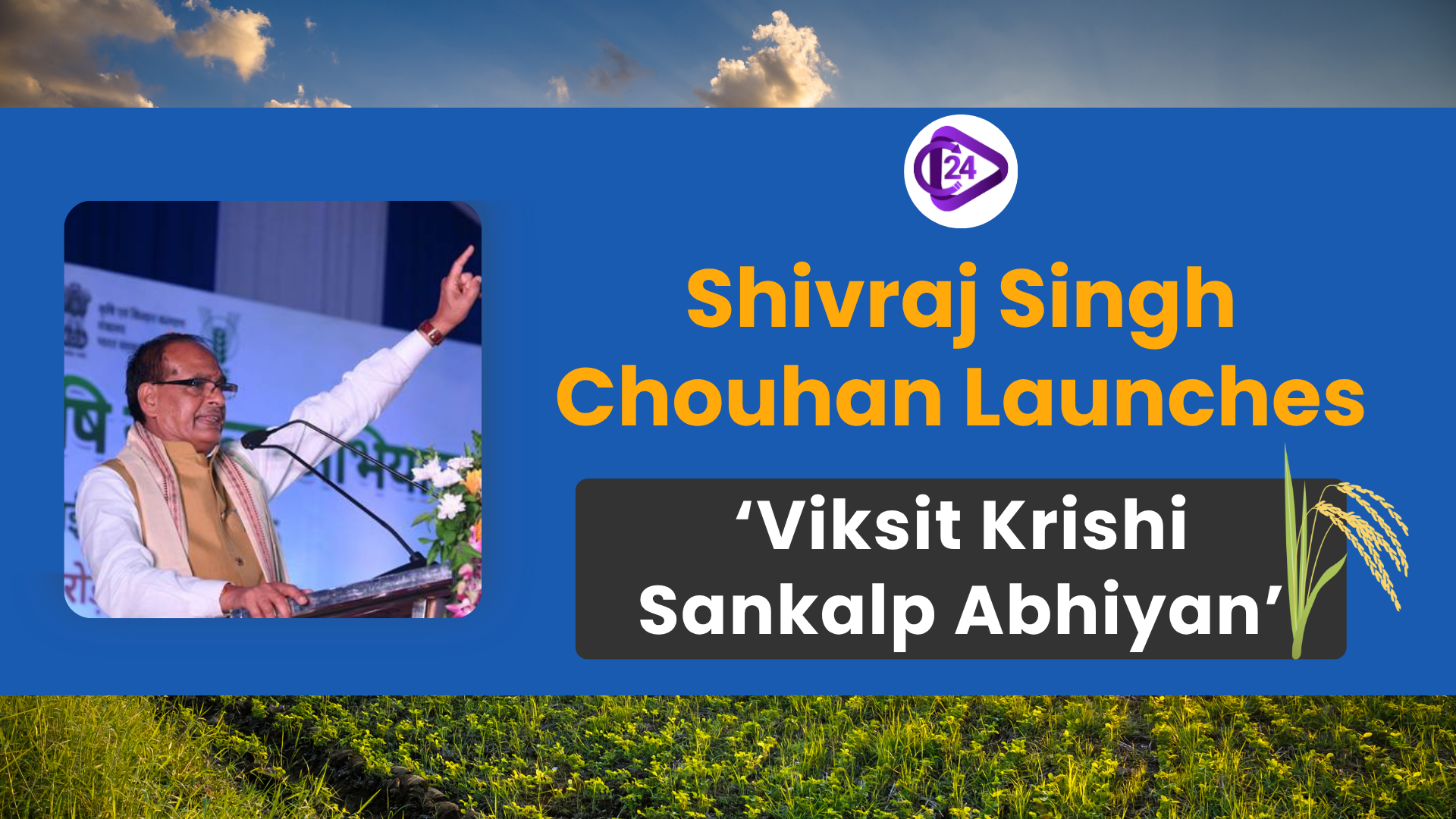
Shri Shivraj Singh Chouhan Launches ‘Viksit Krishi Sankalp Abhiyan’ to Transform Indian Agriculture

On the occasion of the festival, the Union Agriculture Minister inaugurated ‘The Viksit Krishi Sankalp Abhiyan’ from Odisha, a 15-day initiative to help advance Indian agriculture by using innovative science and reaching farmers directly. As a result of this initiative, conducted jointly by the Ministry of Agriculture and ICAR, scientists and farmers can discuss and exchange information, learning about what happens on the farm and supporting relevant research projects. Reaching over 700 areas and hiring thousands of experts, this effort wants to further modern farming, natural farming and diverse crops, all suited to local conditions in India, ensuring its future success in agriculture.

Context

  • The scheme promotes the Lab to Land approach by encouraging scientists and farmers to engage in discussions.

  • About 16,000 scientists in 2,170 teams will guide farmers on the best ways to grow and protect their crops.

  • The goal of the campaign is to lead future research and assist the Government in its plan for a developed India.

Key Points

Objectives 

  • Community partnerships allow scientists to teach farmers and find out about challenges farmers face.

  • Farming designed for the climate, soil and water in a particular area.

  • Provide farmers with information about appropriate crops, new types and ways to farm sustainably.

Implementation

  • Scientists formed 2,170 teams, each one spending 15 days in communities, visiting two villages each day.

  • Seventy-eighty-one districts have engaged with participation from Krishi Vigyan Kendras, ICAR institutes and state agriculture departments.

  • Getting experts from agriculture, horticulture, animal husbandry, fisheries and innovative farmers involved.

Impact and vision

  • Join agriculture research and experts to find real solutions for farmers.

  • Farmers’ views are asked to guide agricultural research choices relevant to their regions.

  • Prime Minister Narendra Modi’s goals for a stronger India by supporting progress in farming.

Other Government Initiatives for Agriculture in India

  • Pradhan Mantri Fasal Bima Yojana: helps farmers get compensation when crops are damaged because of natural disasters.

  • Digital Agriculture Initiatives: Allows farmers to use AI, drones and satellites for better farming and resource control.

  • Pradhan Mantri Fasal Bima Yojana: PMKSY will use Projects that Focus on Water: Increased use of drip and sprinkler irrigation methods for sensible water usage under PMKSY.’

  • Supporting Millet Growing: Supports efforts to make millets known as nutritious and tough enough to survive various climates.

  • Mission Poshan campaign revised in 2021: A nutrition program that blends maternal and children nutrition to enhance productivity.

  • The Paramparagat Krishi Vikas Yojana: Supports organic farming in clusters so farmers use less chemical products.

Conclusion:

The ‘Viksit Krishi Sankalp Abhiyan’ seeks to change Indian agriculture by merging science and what farmers experience every day. Sharing knowledge with farmers and involving them in creating new solutions allows this campaign to help increase productivity, sustainability and the sustainability of rural communities. After successful implementation, agriculture will boost India’s efforts to fight hunger and also progress the country, as hoped for in the ‘Viksit Bharat’ mission.

Rewriting the Script of Early Childhood Education: A Key to India’s Future Workforce

India’s Early Childhood Education (ECE) is very important for reducing poverty and opening up talents, according to Nobel Laureate James Heckman’s economic model. Millions of children participate in Anganwadis and pre-primary schools, but the system lacks proper instruction time, lacks teachers who are well-trained and has not involved enough parents. While Uttar Pradesh and Odisha have introduced new ways to offer ECE, a bigger focus on funding and more engagement with communities is still required. Investing in good early education is necessary, since there will be over a billion Indians joining the workforce before 2047 and this will help India become a world leader.

Context:

  • An early childhood education is beneficial for the economy because children and society thrive long term.

  • They must deal with fewer hours of instruction, a lack of materials and not all parents being involved.

  • Involvement by the government and parents can help push changes, preparing the way for India’s demographic dividend.

In news:

Siginificance of Early Childhood Education (ECE)

  • His studies show that each dollar put into ECE can bring up to $12 of benefit in the long term.

  • Childrens who get a good start in education are more likely to earn good wages and become homeowners as adults.

  • By the age of five, some children already show differences in their learning, so catching problems early is necessary.

Problems within India’s ECE System

  • Workers are only given 38 minutes a day for early childhood programs, while they should spend 2 hours.

  • Not All Schools Have Standard Teachers: There are trained early childhood educators in only 9% of government preschools.

  • Children who go straight to formal learning often find it hard, because just 1 in 7 pre-primary children can distinguish basic objects.

  • Government provides more funds for school education than for ECE, but there is little supervision in both areas.


State led initiatives 

  • Over 11,000 ECE teachers were placed in Uttar Pradesh, with master trainers attending a residential course on ECE methods.

  • Shishu Vatikas are used in Odisha to help 5-6 year olds prepare for starting school.

  • The state organizes Bal Choupal sessions once a month to encourage parents to use games for their children’s education.

  • Using WhatsApp and EdTech applications, parents are better involved in their children’s learning.

Role of parents

  • It is very important to equip parents with useful knowledge for progress in early childhood education.

  • Getting families involved in learning inside and outside the center helps children grow as a whole.

About Early Childhood care and Education(ECCE)

Definition of Early Childhood care and Education

  • ECCE is designed for children age birth to six, giving focus to their care, nutritional needs, health, playtime and learning.

  • Contains early stimulation for children up to three years, early education from 3 to 6 years and early learning in primary school up to eight years old.

Framework of the Constitution and Law

  • Article 45 of the Indian Constitution: ECCE facilities must be available from the State for all those under the age of six as directed by Article 45 of the Indian Constitution.

  • RTE Section 11: According to Section 11 of the Right to Education Act, children must be offered free pre-school by law to support their entry into elementary schooling.

Government Schemes and Programs

  • Integrated Child Development Services (ICDS): Anganwadi centers are set up by ICDS to deliver supplemental food, education, health care and immunization services to young children.

  • PM Poshan(Mid Day Meal Scheme): This scheme brings nutritious cooked food to children in government-run and aided schools as well as pre-schools.

  • National Health Mission (NHM): Under NHM, people all over India are provided with equal opportunities in healthcare, with extra focus on women and their children.

  • Palna Scheme: Giving children a chance at safe daycare that improves their overall health and thinking skills.

  • Pradhan Mantri Matru Vandana Yojana (PMMVY): This program gives pregnant and breastfeeding women money to help with their nutrition and safety.

  • ‘Poshan Bhi Padhai Bhi’: This initiative links nutrition education with school learning.

Importance of Early Childhood care and Education


  • Brain Development: Most of a child’s brain is developed by age six, so the early years play a vital role.

  • Holistic Development: The ECCE method as guided by the Panchakosha concept looks after the health of the body, mind and spirit.

  • Creative Learning: Focus on emergent literacy, numeracy, building good learning habits and learning through play.

  • Global take: EFA, SDG 4.2 and CRC prove that public care for children is an urgent priority worldwide.

Inclusion and Equity

  • Gender inclusion: Teaching gender equality from the start changes what people aim for and how they behave.

  • PwD: Screening and referral protocols introduced by the Ministry of Women & Child Development help with Divyang inclusion.

  • Anganwadi Centres: Setting up Anganwadi centers with diversity in teaching to help children reach their developmental goals

Global Commitments

  • India is a member of the Convention on the Rights of the Child 1989 and the Education for All agreement of 1990.

  • The strategy of UNESCO’s Global Partnership encourages ECCE that is available to all, inexpensive and designed for different genders.

  • Sustainable Development Goal 4 considers ECCE as the key for all children to receive education.

Way Forward

  • Growth in ECCE that eventually gives all children access to high-quality programs, supporting the most disadvantaged first.

  • States to build rules for how to register, accredit and ensure quality in education.

  • Developing practices, measuring results and documenting initiatives to try and scale best practices.

  • Early childhood care and education is formally assigned to the Ministry of Women & Child Development; the Ministry of Education will handle preschool education.

  • Teach children using methods where they lead rather than being led.

  • Support for greater government and corporate social responsibility funding to continue and extend ECCE.

  • Helping each Anganwadi teacher have enough time and resources.

Conclusion:

India’s ability to benefit from its young population depends on how well early childhood education is delivered. Tailored grants, more education professionals and encouraging parents to take part can improve education outcomes for large numbers facing birth disadvantages. By improving education, this drive will make India’s economy grow stronger and its reputation stronger as the country celebrates its centenary in 2047. Investment in human skills plays a big role in ensuring that India develops equally and remains a Vishwa Guru by training empowered young people.

Frequently Asked Questions (FAQs)

The current affairs cover recent national and international events related to UPSC, SSC, Banking, Railways, and State PCS.

You need to read about the current affairs daily, and revise them every week and every month to keep them longer in your memory.

Yes, Class24 provides free downloadable Daily Current Affairs PDFs for easy revision.

Yes, you can practice MCQs and quizzes to boost your exam preparation.

Absolutely. The content is written in simple, easy-to-understand bilingual language suitable for beginners.

Go to class24.com and click on the current affairs section directly, where you find everything that you need.

ssc-toppers

Start Learning Today with Class24

Related current affairs

Class24 offers free video lectures for smart preparation, covering CGL, CPO, CHSL, MTS, and GD exams. Learn from expert faculty, revise concepts easily, practice with PYQs, and improve speed and accuracy through high-quality, exam-focused video lessons anytime, anywhere.

Get success in your hand. Start study anytime anywhere.

The journey becomes simple and enjoyable when you start taking interest in it. And through our app “Class24”, we will be your trusted partners in developing that interest.

Daily Quizzes
Mock Tests
Ongoing

No ongoing tests right now.