
Day: May 26, 2025

Yashoda AI is Launched by NCW to Enhance Women’s AI and Cybersecurity Skills

At Mahatma Jyotiba Phule Rohilkhand University, Bareilly, the National Commission for Women (NCW) launched ‘Yashoda AI: Your AI SAKHI’ on May 22, 2025. It is designed to increase women’s knowledge of AI, cybersecurity and digital safety in both rural and semi-urban locations. NCW, together with Future Shift Labs, is supporting women to play a leadership role in the digital age, working to close the gap in digital access for them and ensuring women are safe from crimes and privacy threats.

Context:

The Yashoda AI initiative of the NCW gives women the training they need in AI and cybersecurity to help them lead and be secure online. It brings us closer to digital growth that includes everyone and closes the gender gap in technology.

Key Points

  • Groups and organizations responsible for putting the event together are called Launch and Organizers.

  • On May 22, 2025, the college took off at the Mahatma Jyotiba Phule Rohilkhand University, Bareilly

  • The event was organized together by the National Center for Women (NCW) and Future Shift Labs (FSL).

Aim and objectives

  • Teach women to use AI, cybersecurity, and improve their online safety.

  • Teach vulnerable women about AI and cybersecurity risk

  • Support women’s roles in managing digital education and safety work.

  • Include women who work, learn, or teach, as well as members of the police force, in community learning events.

Key Features:

  • Workshops cover problems related to AI-driven crimes and the security of our digital lives

  • Try to learn practical methods for securing your activities online and offline.

  • Both communities and a mix of disciplines play a leading role in this type of education

Significance:

  • Levels the playing field by including women in India’s digital sector

  • Helps women understand how to defend themselves and the people around them against dangers on the internet

  • Helps India achieve its goal of a modern, all-inclusive digital future (Viksit Bharat)

  • Helps women become active contributors, inventors, and directors in technology.

Conclusion

The launch of Yashoda AI by NCW is an important move to help Indian women as the country’s digital world transforms. With an emphasis on AI literacy, cybersecurity, and digital safety, the program aims to close the gender digital divide and grow a safer and more inclusive internet. If women learn these critical skills, they can lead, invent new things, and protect the community in today’s technology world, which will help India reach its goal of technological advancement and equality.

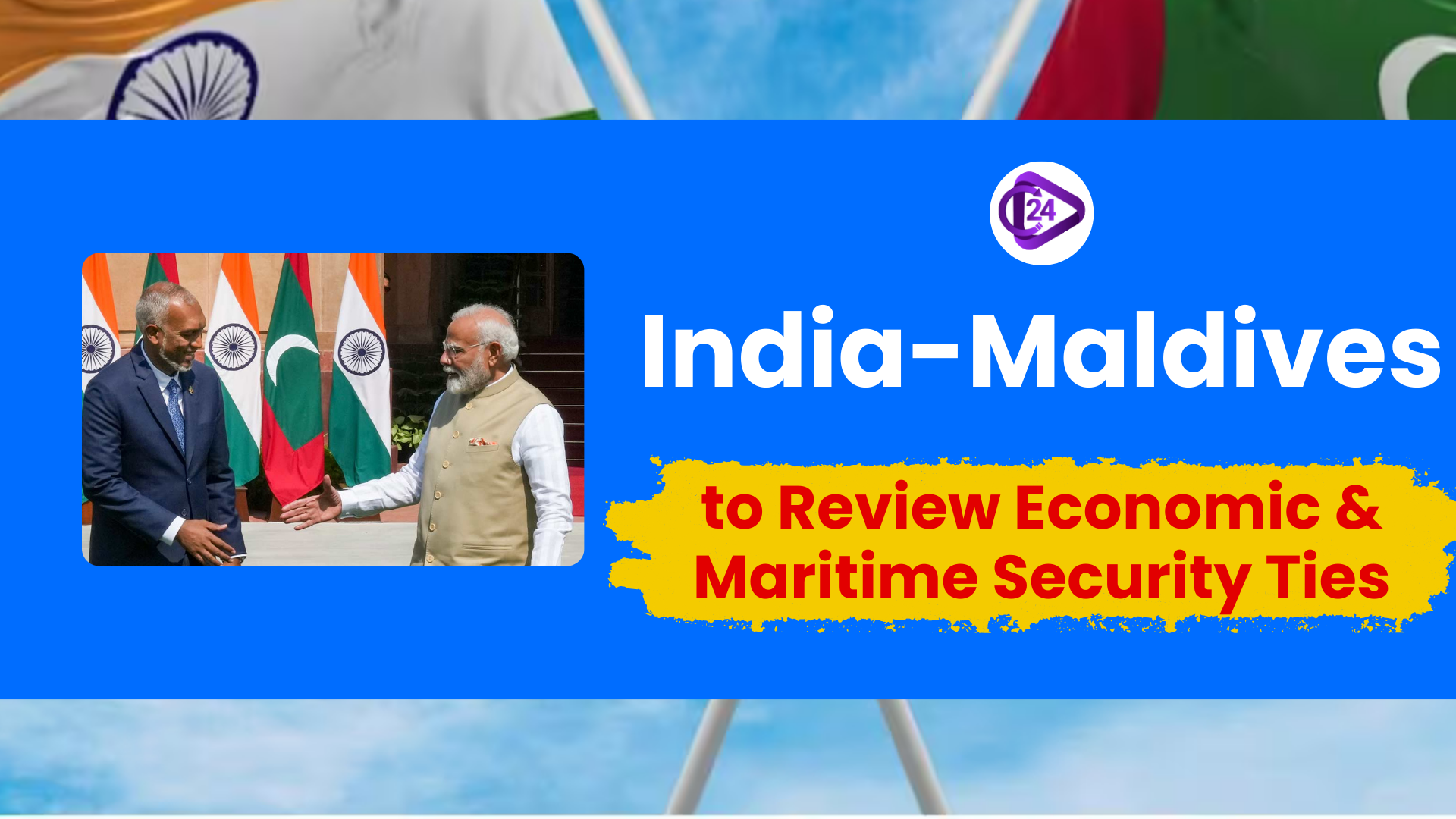
India and Maldives to Review Comprehensive Economic and Maritime Security Partnership

Foreign Minister Abdulla Khaleel from the Maldives is leading his country’s team to discuss the India-Maldives partnership on comprehensive economic and maritime security in New Delhi, India, for three days. In October of 2024, Prime Minister Narendra Modi and Maldivian President Mohamed Muizzu made the partnership official. The trip adds to the growing political exchanges happening between India and its neighbors within the policy known as Neighbourhood First. Officials are scheduled to address carrying out a unified vision document decided on last year, regardless of the prior friction when the Maldivian President first took a pro-China stance.

Context

  • India welcomes Foreign Minister Abdulla Khaleel, leading a Maldivian delegation, for a visit aimed at discussing improving the India-Maldives economic and maritime security partnership. 

  • In October 2024, Prime Minister Narendra Modi and President Mohamed Muizzu of the Maldives launched the partnership. 

Key Points

  • High-Level Visit:

    • As head of the Maldivian delegation, the Foreign Minister Abdulla Khaleel travels to Delhi for the third time this year.

  • Implementation of the Vision Document:

    • The gathering will look at the development of the comprehensive economic and maritime security partnership between India and the Maldives that was sealed in October 2024.

    • Khaleel will speak with Indian External Affairs Minister S. Jaishankar to outline future cooperation.

  • Strategic Importance:

    • The Maldives is a vital neighbor for India and important for the security and prosperity strategies outlined in ‘Neighbourhood First’ and the ‘Mahasagar’ initiatives.

  • Developments in the Past and Advancements Lately:

    • Tensions increased when President Muizzu came to power by advocating closer relations with China and asking India to pull out its military, but they have since improved after his vow to strengthen the alliance during his visit in October.

About India and Maldives Relations

Historical Ties:

  • Canada and Australia began diplomatic and political relations once Britain left in 1965.

  • India has since 2008 established close ties with the Maldives in politics, military affairs, business, and among civil society.

How much does the Maldives Matter for India?

  • Positioned just south of India in the Indian Ocean, makes navigating shipping safer and easier.

  • People in both regions have ancient Buddhism in common as part of their culture.

  • India’s policy to support its neighbors means that the Maldives’ stable growth helps keep the Indian Ocean secure.

Why India Is Important to the Maldives:

  • Important Goods: India exports necessary goods like food, medicine, and building materials used in infrastructure.

  • Education: A large number of Maldivian students choose education abroad because of the scholarships and support offered.

  • Help Through Disasters: A constant supply of aid during disasters and the COVID-19 emergency.

  • Security Concerns: This country has worked with military officials (in 1988 during Operation Cactus) and currently shares in naval exercises called “Ekuverin,” “Dosti,” and “Ekatha.”

  • Tourism: After the pandemic, the Maldives saw the biggest group of Indian tourists, who made up over 11% of arrivals in 2023.

Geographical Area:

  • Between India’s Minicoy Island and the Maldives stands the Eight Degree Channel.

Major challenge between India and the Maldives

  • India Out Campaign

    • Political campaigners in the Maldives are pushing for all Indian military personnel to leave.

    • The current President of the Maldives gave a March 15, 2024, deadline for the removal of troops from the country.

  • Tourism Strain:

    • Echoing anger at the Indian PM’s comments, a request to boycott Maldives tourism during Ramadan was posted online by many.

  • The Rise of Chinese Impact:

    • Worries about India’s security have arisen as China builds stronger relationships with the Maldives near shipping lanes.

    • There is a possibility of conflict between India and China for regional power.

Trade Between India and Maldives

Trade Aspect

Details

Total Exports from India to Maldives

$40.6 million

Total Imports to India from Maldives

$6.92 million

Trade Balance

+$33.7 million (India’s trade surplus)

Top Commodities trade

Top Indian Exports to Maldives

Top Indian Imports from Maldives

Poultry Products

Ships, Boats, Floating Structures

Granite, Natural Stone Products

Iron and Steel

Fresh Vegetables

Petroleum Products

Rice (Other than Basmati)

IC Engines and Parts

Sugar


Conclusion:

The India-Maldives relationship highlights India’s strategy to build up regional partnerships by working together on economic matters and maritime security. Because of both nations’ commitment, ties between them will deepen, bringing more stability and allowing the Indian Ocean region to grow, supporting India’s policies in the neighbourhood.

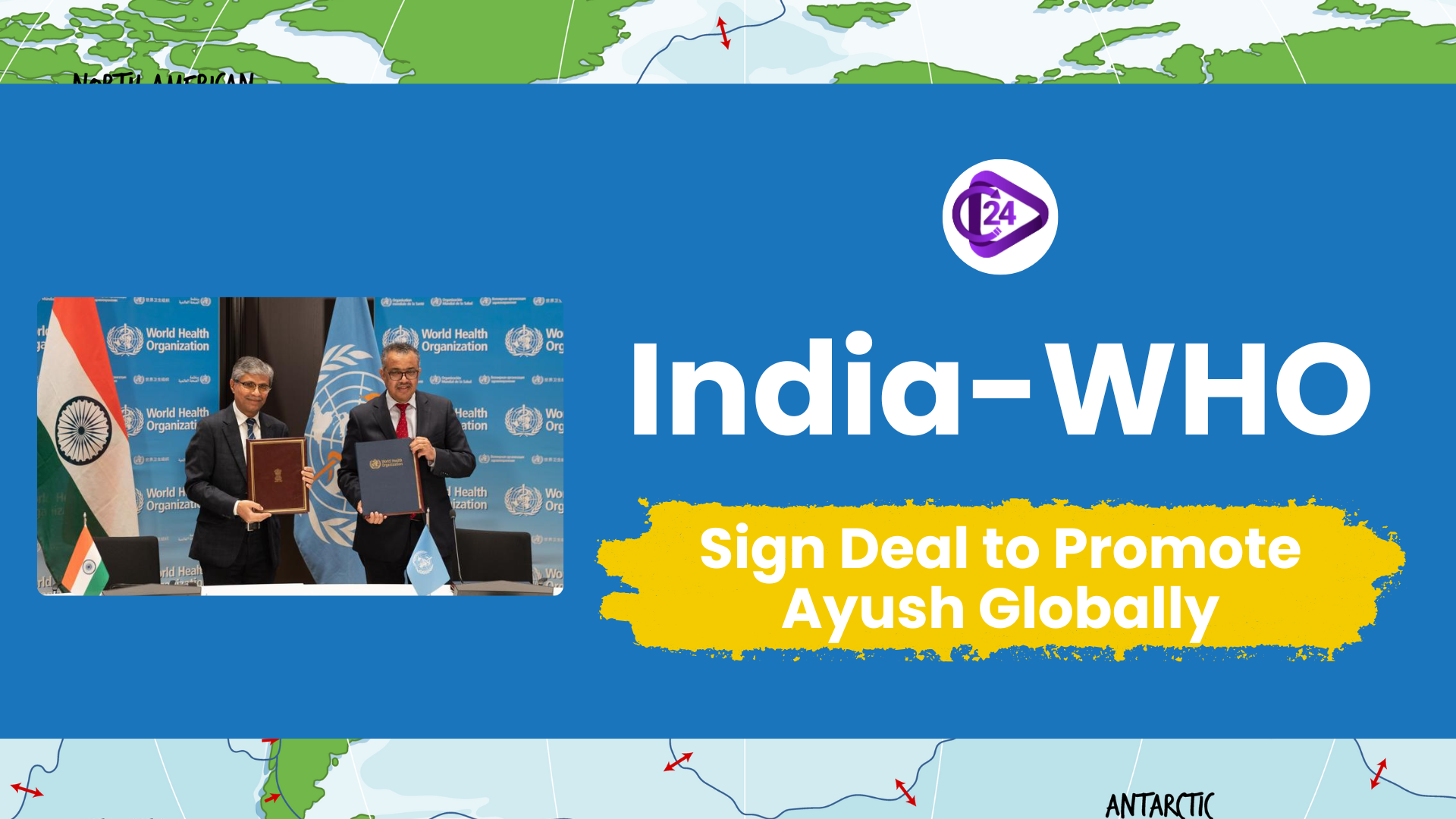
India signs a landmark deal with the WHO to help promote Ayush around the world.

India and the WHO have decided to include traditional medicine in a global classification system, which means Ayush treatments will become more accessible around the world. The project showcases how traditional Indian medicine is being accepted into international healthcare. Modi noted this achievement, saying it brings Ayurvedic therapies closer to being introduced in other countries more systematically.

Context

  • The Minister of Ayush signed an agreement with the WHO to build a Traditional Medicine module as part of the ICHI system. 

  • Its goal is to help systems like Ayurveda, Yoga, Siddha, and Unani become part of international health guidelines, allowing for scientific recognition and easier use by everyone.

Key Points

  • Agreement Signing:

    • India’s Ministry of Ayush and WHO signed the MoU on May 24, 2025, with Dr. Tedros Adhanom Ghebreyesus, WHO Director-General, present.

  • The Traditional Medicine Module forms part of the ICHI.

    • The new module works alongside WHO’s ICD-11 by adding standard global entries for treatments like Panchakarma, Yoga therapy, and regimens from Unani in a uniform style.

  • Key Benefits:

    • All billing practices in Ayush are transparent, and their prices are fair.

    • The idea of having Ayush treatments in health insurance policies

    • Hospital management works on clinical papers and research

    • More people around the world can use traditional medicine methods.

  • India’s Vision:

    • This action supports India’s effort to bring its old medical practices into the main global healthcare system, along with proof and accepted guidelines by science.

  • Global Endorsement:

    • WHO praised India for donating $3 million to support traditional medicine and once again pledged its effort toward universal health coverage and Health For All.

About AYUSH Ministry and Traditional Medicines

About the Development of Ministry

  • Began as the Department of Indian System of Medicine & Homoeopathy in 1995

  • The department was renamed AYUSH in 2003.

  • AYUSH Ministry was formed in 2014 to promote Ayurvedic, Yogic and other systems.

What does Traditional Medicine mean?

  • According to the WHO, traditional medicine is what cultures use to support and treat health.

  • Ayurveda, Unani, Siddha, Yoga, and Homeopathy make up India’s systems of medicine.

Why India is Strong in Traditional Medicine

  • Plenty of medicinal plants are found here.

  • At least 8,000 herbal remedies are recognized by AYUSH.

  • The main systems in India are Ayurveda, Unani, Siddha, and Folk medicine.

Growth and development

  • AYUSH sector rose from $3 billion (in 2014) to $18 billion (in 2020) and may reach $24 billion in 2023.

  • There are over 7,000 AYUSH wellness centers open across the country

  • Development in innovation for supply chain, diagnostic practices and telemedicine

Government Initiatives:

  • Affordable AYUSH services and better quality control through the National AYUSH Mission

  • FSSAI’s AYUSH Aahar program is for producers of herbal supplements.

  • The AYUSH Export Promotion Council supports India’s overseas exports.

  • Planned AYUSH Parks and incubation centers to encourage research and help start-ups

WHO Global Centre for Traditional Medicine (GCTM)

  • In Jamnagar, Gujarat, you can find Sapphiro

  • The world’s first global center exclusively for traditional medicine

  • The main investment by India is valued at around US$ 250 million

Conclusion:

Working together, India and the WHO are bringing Ayush systems into mainstream classification worldwide. Ayurveda secures India a leading role in the global health arena by validating its traditional medicine, giving rise to reasonable, common and consistent health services around the globe.

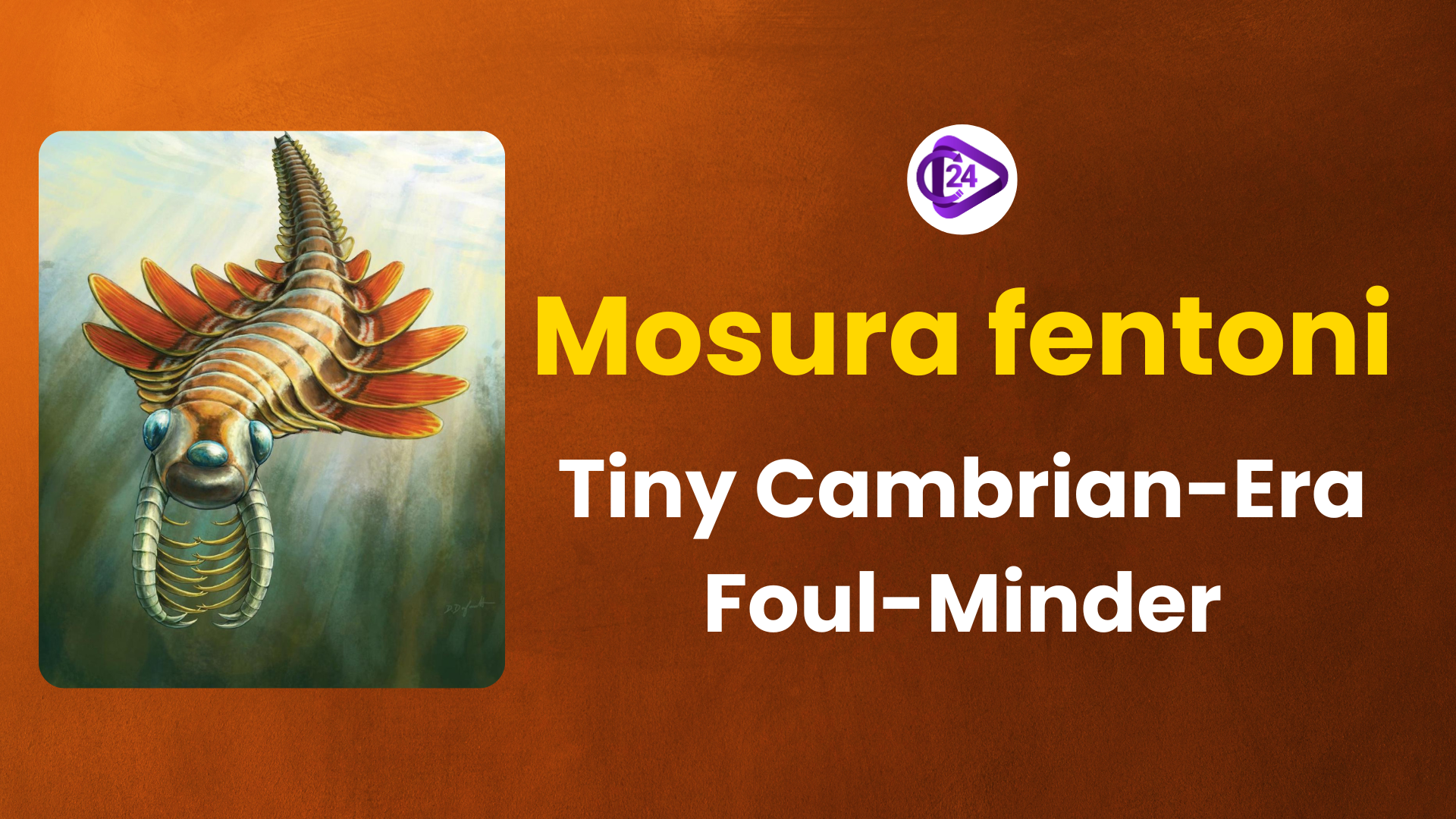
Mosura fentoni: A Miniscule Foul-Minder of the Early Cambrian Times

Scientists found Mosura fentoni, a newly discovered sea creature from the Burgess Shale of Canada, which challenges the current thinking about Radiodonts—a group that has much in common with modern insects, crabs, and spiders. Because it did not measure more than 6 cm, M. fentoni was quite small. Yet, it had a long, sectioned body and included several evolved features that suggest complex experimentation took place in the early days of arthropod life.

Context:

  • Mosura fentoni is a small Cambrian animal from the radiodont group. 

  • Its structure and breathing system show that early arthropods found ways to specialize body segments. 

  • This discovery gives important insight into the origins of arthropods’ wide range of forms.

Key Points

  • Species Overview:

    • Mosura fentoni was a tiny Cambrian animal in the radiodont group, related to modern insects and crabs.

  • Body Structure:

    • Its slender body (1.5-6 cm) consists of 26 parts divided into three parts, the neck, a swimming part with six paddles and a tail with up to 16 gill slits.

  • Specific Ways of Breathing:

    • The gills that cover most of the posterior part of the body make the posterotrunk a special air-breathing tagma, as seen in the gills of horseshoe crabs.

  • Evolutionary Significance:

    • This places M. fentoni at the bottom of the radiodont family, which implies that early radiodonts had begun to adopt complex body organization and the kind of specializations that later showed up more clearly in arthropods.

  • Suggestions for Arthropod Diversity.

    • It is possible that the splitting of segments and jobs in ancient arthropods created the conditions for the great variety in types and shapes found in modern arthropods.

Conclusion:

The study of Mosura fentoni gives us vital information about the first phase of arthropod evolution, showing how ancient marine life explored ideas for advanced body functions. The discovery contributes to our understanding of how arthropod diversity came about and shaped many modern animal groups.

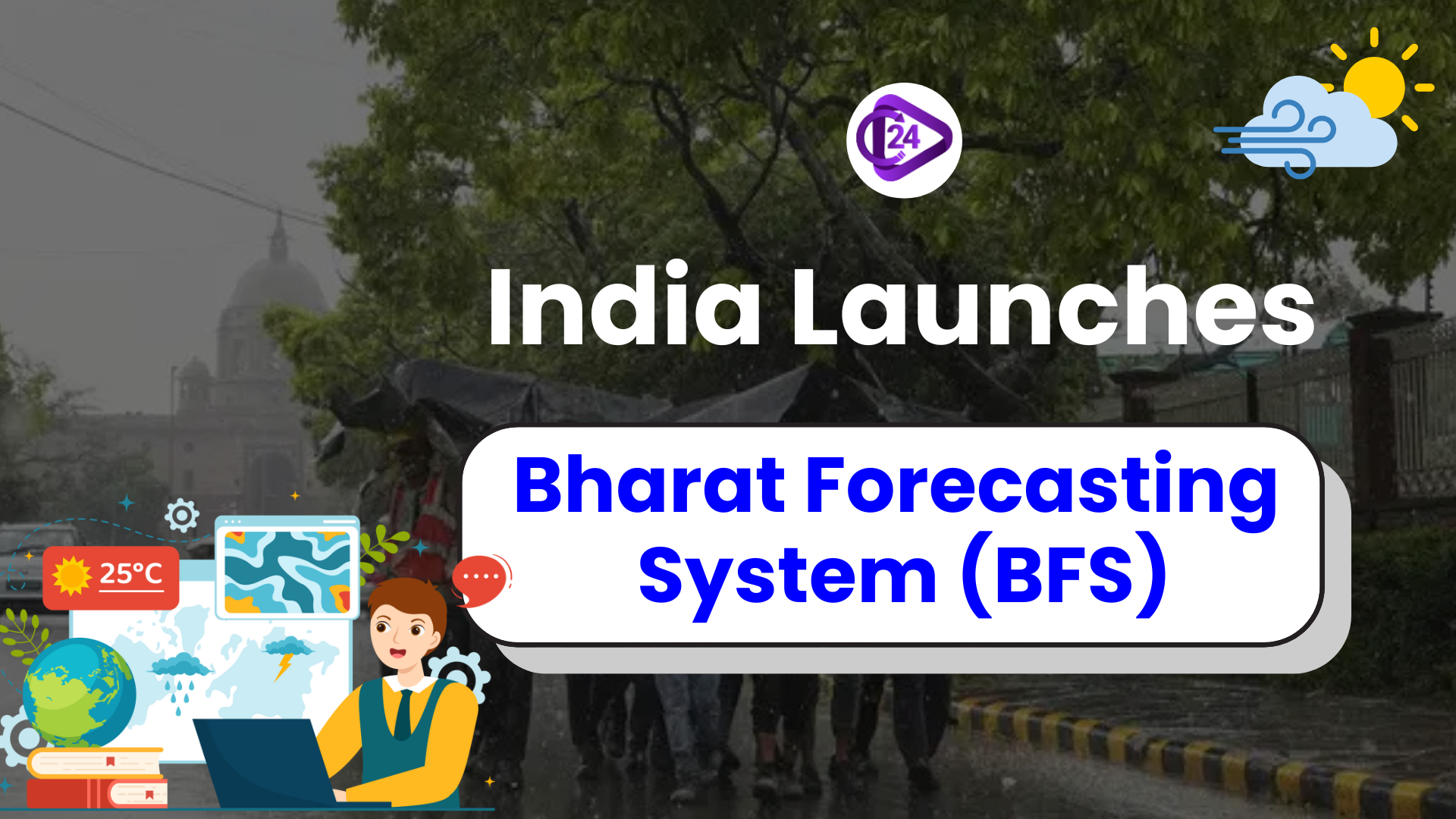
India Launches Bharat Forecasting System (BFS), the World’s Highest Resolution Weather Forecast Model

IITM Pune, together with the Bharat Forecasting System (BFS) spearheaded by Arka, introduced the system on May 26, 2025, changing the face of meteorology in India. The high-resolution BFS forecasts at a scale of 6 km x 6 km exceed those of global models, making it easier for India to address disasters, aid farming, and secure public safety.

Context

  • Bharat Forecasting System (BFS) is the world’s leader in 6 km weather data forecasts made possible by Arka, India’s fastest supercomputer. 

  • This progress helps improve the prediction of weather conditions at the local level, helping to reduce dangers from disasters and divide resources wisely.

Key Points

  • Initial Launch and the Development of the Game:

    • The BFS was founded by Dr. Jitendra Singh, Union Earth Sciences Minister, with assistance from the Ministry of Earth Sciences and the Indian Institute of Tropical Meteorology (IITM), Pune.

  • Technological Backbone:

    • Because BFS runs on the supercomputer Arka, 4 hours are now needed for data processing instead of the previous 10 hours.

  • Forecast Resolution:

    • BFS uses a 6 km x 6 km grid, which is twice as precise as earlier Indian climate models and better than European, U.S., and UK models (9 to 14 km).

  • Nowcasting with Radar Technology:

    • At present, the system can nowcast within the next two hours by analyzing data from 40 Doppler radars, hoping to add data from an additional 60 radars.

  • Coverage:

    • The system is reliable in tropical regions located between 30 degrees north and 30 degrees south, including all of India’s mainland.

  • Applications:

    • Better methods of dealing with disasters and getting early warnings

    • Precision agriculture and advice for farmers

    • Plans and actions for managing water resources

    • Public safety and planning for cities

  • Global Context:

    • India’s BFS means that Indian weather forecasts now have better details than anywhere else globally, which lifts India’s ranking in weather research on an international scale.

Conclusion:

Bharat Forecasting System was launched to greatly enhance India’s meteorological abilities, making it possible to produce the best weather forecasts worldwide. With this system, India can handle climate challenges, maintain good agricultural outcomes, and look after its people, mirroring India’s success in scientific and technological progress.

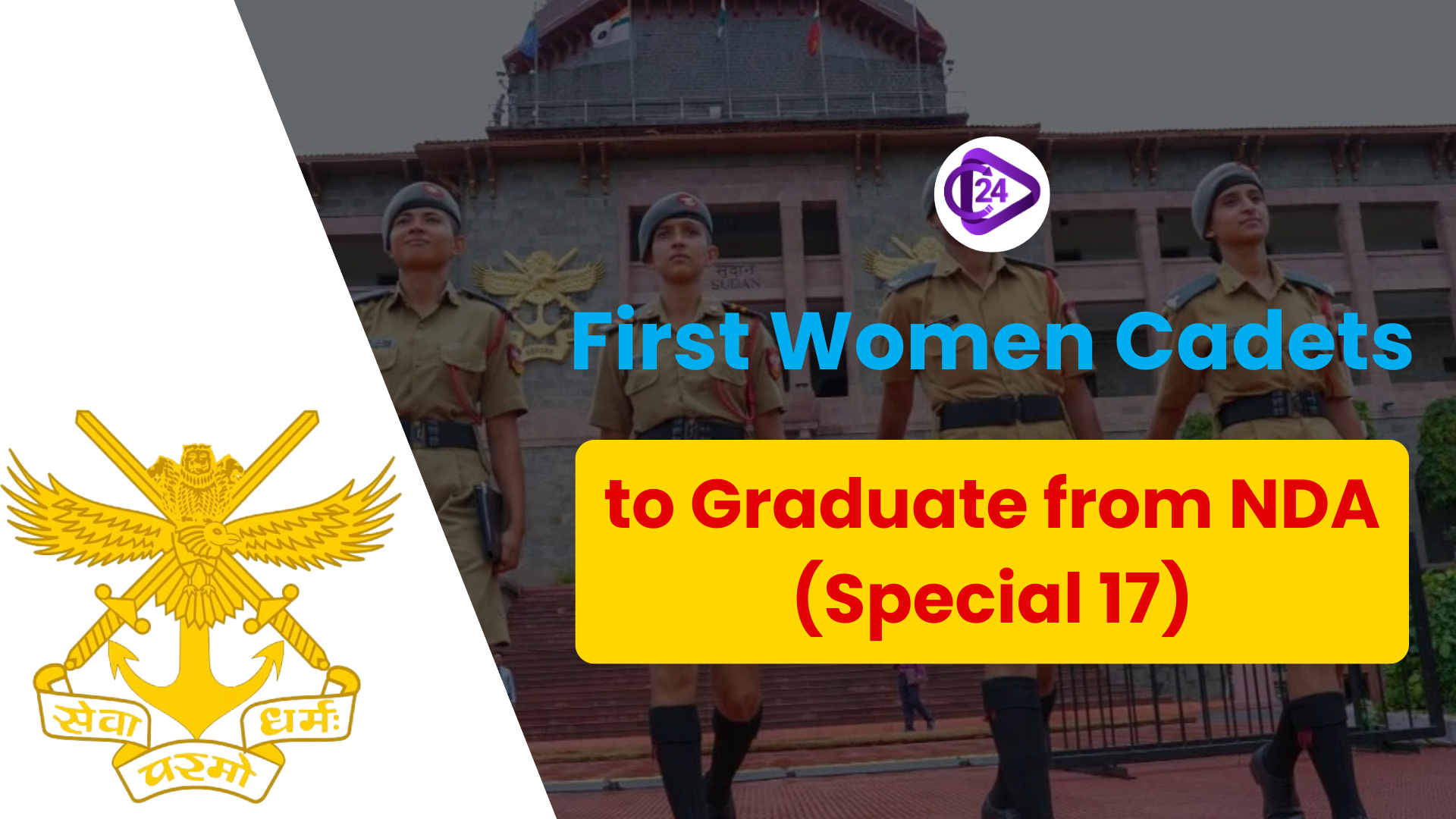
Special 17: First batch of women cadets set to pass out of NDA

The first group of 17 women cadets is due to graduate from NDA on May 30, 2025, representing a big step forward for India's armed forces. During their training which took three years, they learned and worked alongside some 300 males, growing socially and gaining strong expertise in leading. They spoke about how NDA helped them solve difficulties and gave a fair chance to everyone to participate. 

Context

  • A batch of 17 women cadets will become the first female graduates from the National Defence Academy on May 30, breaking new ground for the Indian Armed Forces. 

  • With the same training as men, these women learn to change, become strong leaders, and show resilience. 

Women in the Armed Forces

Background:

  • Eight women fly MiG-21, Su-30MKI, and Rafale aircraft for the Indian Air Force since they began being inducted in 2016.

  • Women are being assigned to lead Army units in different arms and services, including Engineers, Signals, Air Defence, Intelligence, Service Corps, Ordnance Corps and Mechanical Engineers.

  • In January 2023, Shiva Chouhan was made the first woman officer to work on the Siachen Glacier.

  • This February, women officers started being appointed to lead branch units outside the medical field and around 50 are scheduled to command units in the challenging Northern and Eastern Ground Commands.

  • For the first time, the Navy is allowing women officers to serve on ships that were once off-limits to them.

  • A large number of women officers take on challenges in field duties and sensitive roles.

Current Statistics:

  • More than 10,493 women in the armed forces are officers, the majority of them working in medical services.

  • The Indian Army now has 1,705 women officers (most) among all services.

  • 1,640 women officers form part of the Indian Air Force.

  • The Indian Navy has 559 women officers.

About Gender Equality

Global Perspective:

  • The UN Secretary-General believes gender equality is moving further out of reach and UN Women calculates that progress is now so slow it could take three centuries.

  • Legal obstacles are stopping 2.7 billion women from holding the same jobs as men.

  • Women made up just under 25% of all parliamentary seats globally in 2019.

  • Across the world, one in three women experiences gender-based violence.

India-Specific Challenges:

  • In December 2021, women made up only 9.4% of the labour force, while men’s share was much bigger at 67.4% (CMIE data).

  • The World Bank projects that India’s female LFPR is only 25%, as opposed to a global level of 47%.

  • While India was ranked 135th on the Global Gender Gap Index (2022), recent switch in ranking methods may help it earn a higher position.

  • Members of the Lok Sabha are only 14.44% women.

  • About 95% of working women currently work in informal roles that are unsecured and insufficiently rewarded (ILO, 2018).

Challenges Women Face in the Armed Forces

  • Societal Issues:

    • The vast majority of regional police officers who are male typically dislike being led by women.

    • Stigma still affects women soldiers who have been prisoners of war

  • Physiological Challenges:

    • Because of pregnancy, childbirth, and caring for their family, women face obstacles created by time away from work.

    • Dual-service couples are presented with the problem of balancing family tasks and their careers.

  • Family Issues:

    • Often, having to move and be apart for long periods affects children’s development and career choices for spouses.

    • When a woman has a career in the military, the sacrifice and commitment of her family often raise the pressures she must manage.

Conclusion 

Indian women in the military have gone far, now serving in combat and leadership roles. Even though women have more opportunities than before, they often face opposition in society, difficult physical challenges and problems related to family. This demonstrates that in both India and worldwide, gender inequality continues, so significant changes should be made to guarantee women are justly represented and cared for in the defense sector.

Frequently Asked Questions (FAQs)

The current affairs cover recent national and international events related to UPSC, SSC, Banking, Railways, and State PCS.

You need to read about the current affairs daily, and revise them every week and every month to keep them longer in your memory.

Yes, Class24 provides free downloadable Daily Current Affairs PDFs for easy revision.

Yes, you can practice MCQs and quizzes to boost your exam preparation.

Absolutely. The content is written in simple, easy-to-understand bilingual language suitable for beginners.

Go to class24.com and click on the current affairs section directly, where you find everything that you need.

ssc-toppers

Start Learning Today with Class24

Related current affairs

Class24 offers free video lectures for smart preparation, covering CGL, CPO, CHSL, MTS, and GD exams. Learn from expert faculty, revise concepts easily, practice with PYQs, and improve speed and accuracy through high-quality, exam-focused video lessons anytime, anywhere.

Get success in your hand. Start study anytime anywhere.

The journey becomes simple and enjoyable when you start taking interest in it. And through our app “Class24”, we will be your trusted partners in developing that interest.

Daily Quizzes
Mock Tests
Ongoing

No ongoing tests right now.