

Day: April 11, 2025

First Panchayat Advancement Index (PAI) Report Released – Gujarat & Telangana Lead

The Ministry of Panchayati Raj led a historic shift in grassroots governance monitoring through the initial release of Panchayat Advancement Index (PAI) baseline report for fiscal year 2022–23. The index serves as a data-driven evaluation system which rates more than 2.5 lakh Gram Panchayats based on Local Sustainable Development Goal themes. By establishing this pioneering framework the Ministry of Panchayati Raj aims to advance planning consistent with evidence and elevate developmental accountability throughout Panchayats. Gujarat together with Telangana demonstrate strong leadership by having the most "Front Runner" Panchayats in their territories.

  • Initiative Launched By: Ministry of Panchayati Raj, Government of India

  • Report Period: The baseline assessment covers the financial year 2022-23.

  • Objective: The purpose of this scheme provides data-driven tools to evaluate Gram Panchayats (GPs) development outcomes.

Purpose of PAI

  • The assessment goal of the Gram Panchayats involves determining their developmental performance through quantitative methods.

  • The system enables ground-level decision-makers to carry out planning and make data-based choices.

  • This index serves to enhance both the competition and inclusion levels in rural governmental systems.

Coverage and Data Validation

  • Total Gram Panchayats: 2,55,699

  • Panchayats with validated data: 2,16,285

  • The assessment data underwent final confirmation by each States and Union Territories.

  • The evaluation data from Meghalaya, Nagaland, Goa, West Bengal and Pondicherry are not included because they have not completed their validation process.

Performance Classification (based on validated entries)

  • Front Runners: 699 GPs (0.3%)

  • Performers: 77,298 GPs (35.8%)

  • Aspirants: 1,32,392 GPs (61.2%)

  • Beginners: 5,896 GPs (2.7%)

  • In the first round no Gram Panchayat succeeded in placing among the Achiever category.

Top Performing States (Front Runner GPs)

  • Gujarat: 346 Front Runner Panchayats

  • Telangana: 270 Front Runner Panchayats

  • Followed by: Maharashtra, Madhya Pradesh, Uttar Pradesh

States with Majority of Aspirant Panchayats

  • Bihar

  • Chhattisgarh

  • Andhra Pradesh

Assessment Framework

  • Assessment is done based on 9 LSDG Themes which correspond to Sustainable Development Goals.

  • The framework contains 435 performance indicators at present which MoSPI developed through the National Indicator Framework (NIF).

Nine LSDG Themes

  • Poverty-free and enhanced livelihoods

  • Healthy Panchayat

  • Child-friendly Panchayat

  • Water-sufficient Panchayat

  • Clean and green Panchayat

  • Self-sufficient infrastructure

  • Socially secured Panchayat

  • Good governance

  • Women-friendly Panchayat

Data Collection Mechanism

  • Through a multilingual online PAI Portal: www.pai.gov.in

Significance of PAI

  • Through PAI Panchayats can reveal their developmental underperforming areas.

  • The system assists Panchayats in developing their Strategic Development Plans (SDPs).

  • Promotes competitive spirit among Panchayats.

  • The program assists state governments and national policymakers for planning strategies.

Conclusion

Grassroots governance experiences a revolutionary change through the Panchayat Advancement Index which uses transparent data-based evaluation to assess Gram Panchayats. Gujarat and Telangana have become leaders under the PAI system which works to promote both Panchayat accountability along with beneficial competition between local bodies. This index performs as a strategic instrument by showing planning gaps together with effective cases to promote inclusive rural advancement and effective local resource management.

Naxalmukt Bharat Abhiyan: From Red Zones to Growth Corridors

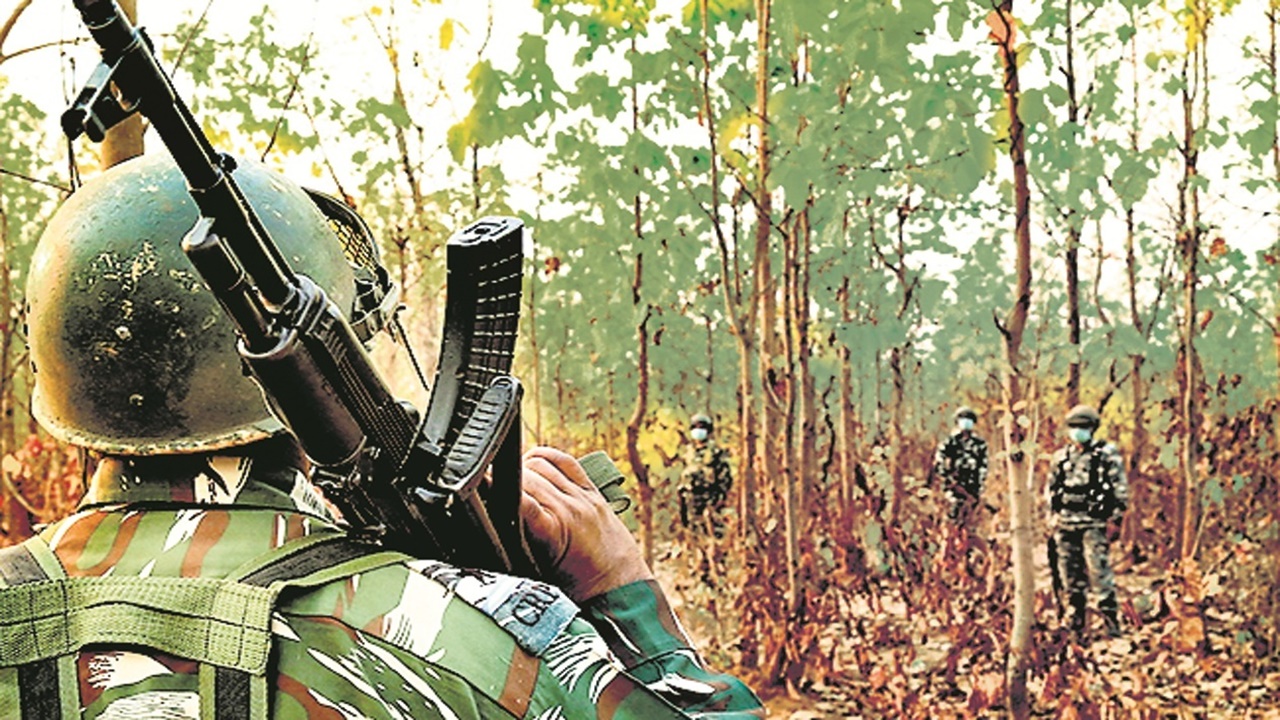
Naxalmukt Bharat Abhiyan serves as India's nationwide initiative that removes Left Wing Extremism (LWE) by deploying security approaches and development undertakings and empowerment approaches. A 2015 administration-led National Policy and Action Plan launched an initiative which succeeded in lowering violence rates and brought LWE-afflicted areas back into integration while advancing oppressed tribal communities. Combined efforts between infrastructure development together with enhanced security forces and telecom infrastructure and skills training and financial accessibility have reduced Naxaland influence. The government works to eliminate all LWE activism by March 2026 while actively promoting development in recovered conflict zones that now number only 38 districts.

  • The Left Wing Extremist (LWE) movement originated because of economic disparities that took hold across India’s tribal areas in the central and eastern regions. 

  • Insurgency movements opposed the functioning of state authorities and created obstacles to development progress in distant locations. 

  • The federal government implemented a focused multi-dimensional plan in 2015 to eliminate Naxalism because the movement posed both security concerns and developmental challenges.

Key Points

Origins and Spread of LWE

  • Naxalbari became the birthplace of this movement after the 1967 Naxalbari uprising commenced.

  • The armed violence extends to various sections of Chhattisgarh, Jharkhand, Odisha, Maharashtra and Andhra Pradesh and other adjoining states.

National Policy and Action Plan (2015)

  • A comprehensive action plan merges strategies which provide security with development and adopt rights-based frameworks to address issues.

  • The action plan concentrates on enforcing rule of law while reclaiming empty governance areas coupled with tribal grievance resolution.

Decline in LWE Violence and Territory

  • The total number of violent incidents decreased by 81% from 1,936 in 2010 until it reached 374 in 2024.

  • Naxal-affected districts reduced from 126 (2010) to 38 (2024).

  • A total of 12 districts were reduced to 6 districts as the most impacted areas.

Security Measures and Modernization

  • Over 600 fortified police stations were built.

  • The establishment of new security camps together with helipads has been completed.

  • Enhanced surveillance and CIAT schools.

  • The National Investigation Agency now operates to penetrate financial networks throughout the country.

Development Initiatives

  • Rs. 3,563 crore under Special Central Assistance.

  • Over 17,000 km of roads were constructed.

  • Skill development through ITIs and Skill Centres.

  • 178 Eklavya Schools for tribal education.

Community Engagement and Financial Inclusion

  • Over 13,000 individuals reintegrated from violence.

  • Banking sector expanded its services through 1,007 new branches and 937 new ATMs as well as 5,731 post office facilities.

  • 37,850 Banking Correspondents operationalized.

  • Indian forces conduct Civic Action Programs to develop better relations with their local communities.

Successes and Ongoing Operations

  • During the last ten years more than 8000 Naxalites surrendered their organizations.

  • 290 neutralized and over 1,000 arrests in 2024.

  • Outreach programs organized by the government execute personal welfare delivery to the public.

Conclusion

The integrated approach of security enforcement and meaningful development and social integration has established India's successful LWE counterstrategy. The effectiveness and success of Naxalmukt Bharat Abhiyan depend on addressing basic problems and sustaining complete rejection of violent acts. The National Campaign continues toward its 2026 objective as previous red zones turn into prosperous areas thanks to inclusive leadership together with the unwavering support of the nation.

Amnesty International’s Death Sentences and Executions 2024

A new study released by Amnesty International shows world executions have climbed to their greatest levels since 2015 in its Death Sentences and Executions 2024 publication. The report attributes this increase to the politicization of capital punishment, notably in countries like Iran, Saudi Arabia, and Iraq. The execution rates across the world have increased but data shows a declining number of nations who execute people indicating more countries support death penalty abolition.

Context:

  • Total Executions in 2024:

    • 1,518 people were executed across 15 countries, marking the highest annual number since 2015, and showing a 32% increase compared to 2023.

Key Points:

  • Global Execution Statistics:

    • Fifteen countries performed a total of 1,518 executions during this period compared to the 2023 total of 1,153.

    • Highest global execution rate since 2015.

  • Leading Countries by Number of Executions:

    • China

    • Iran

    • Saudi Arabia

    • Iraq

    • Yemen

    • The five countries together performed the most worldwide executions.

  • Political Use of Capital Punishment:

    • Governments apply execution as a tool to control dissenting behavior along with targeting minority populations.

    • The death penalty was administered to more than 40% of people convicted for drug offenses.

  • Global Abolition Movement:

    • The death penalty exists formally by law and in practice in only 15 countries while 145 jurisdictions have eliminated its use.

    • The number of countries that executed people in 2024 remained consistent at 15 throughout the same period in 2023.

  • India’s Status:

    • For 2 years in a row the Supreme Court has failed to approve any death sentences.

    • India still allows capital punishment for execution by utilizing hanging as the legal and authorized method of execution.

Key Legal Milestones in India:

  • Jagmohan Singh vs. State of U.P. (1972): The Indian judiciary upheld the death penalty as constitutional through its ruling in the Jagmohan Singh vs. State of U.P. (1972) case.

  • Bachan Singh vs. State of Punjab (1980): The 'Rarest of rare' principle developed during Bachan Singh vs. State of Punjab (1980).

  • Machhi Singh vs. State of Punjab (1983): Through the ruling of Machhi Singh vs. State of Punjab (1983) the courts finalized the specific standards which establish the 'rarest of rare'.

Global Legal Framework:

  • ICCPR Article 6 presents both restrictions on capital punishment implementation and support for elimination of this practice.

  • 1984 UN Safeguards: Protect rights of those facing execution.

  • 1989 Second Optional Protocol to ICCPR: Promotes death penalty abolition.

  • UNGA Resolutions (2007–2018): Calls for moratoriums and reduced capital offenses.

Conclusion

A large number of executions carried out in 2024 cannot change the long-running international shift toward banning this punishment. The world internationally criticizes concentrated capital punishment use among specific nations which executes people for non-violent crimes thus accelerating worldwide demands for human rights advancements. India continues to uphold the death penalty but exercises limited use of this punishment in accordance with overall judicial cautiousness.

Niveshak Didi Initiative Phase 2 Launched to Promote Financial Literacy Among Rural Women

The Niveshak Didi initiative began operating during the financial year 2022-23 to provide rural women better skills to handle their monetary matters effectively. The New Delhi introduction marks the second phase which seeks to extend its influence through rural and underserved areas together with semi-urban regions. This initiative works as a key solution to fill financial literacy gaps because it teaches women throughout these regions how to make better decisions.

Context:

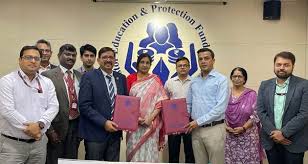
  • A second stage of Niveshak Didi program initiated by IEPFA with IPPB aimed to spread financial literacy knowledge to Indian rural women across the nation. 

  • The initiative extends its focus from the earlier step to impart knowledge of responsible investment coupled with savings practices together with digital banking and fraud prevention education targeting women in rural communities as well as semi-urban districts and underreached areas. 

  • Almost 40 thousand trained women postal workers named "Niveshak Didis" will organize over 4000 financial literacy camps as project leaders.

Key Points:

What is Niveshak Didi?

  • Niveshak Didi represents training from India Post through its female postal staff known as Dakiya working for India Post Payments Bank (IPPB). 

  • The female personnel from India Post Payments Bank are trained to spread financial literacy to other women within their communities so they become better-informed about their financial choices.

Objective of Phase 2:

  • The following stage of the initiative targets rural, semi-urban communities and under-served areas to educate women about responsible investing while teaching them money saving techniques and helping them understand scams and digital banking methods. 

  • Financial inclusion gains its broadest reach during this growth phase by effectively influencing larger numbers of the population.

Organizing Financial Literacy Camps:

  • The program will organize 4,000 camps throughout India where 40,000 Niveshak Didis will lead the sessions. 

  • The training and workshop sessions at these camps will teach rural women essential knowledge about handling their funds while making smart investment decisions.

India Post Payments Bank (IPPB):

  • IPPB exists as an establishment of the Department of Posts that functions under the Union Ministry of Communications.

  • IPPB launched its operations on September 1st 2018 as part of its mission to offer bank services accessible through nationwide post offices. 

  • Indian financial institutions operate with RBI regulations to provide banking access that reaches people in distant locations.

Investor Education and Protection Fund Authority (IEPFA):

  • IEPFA serves as a statutory organization created through the Companies Act 2013 which received its establishment from the Government of India. 

  • The authority began operations on September 7th 2016 when the Union Ministry of Corporate Affairs created it. 

  • The core purpose of IEPFA involves investor education together with investment protection for shareholders who buy shares and debentures and those holding fixed deposits.

Conclusion

The second phase of Niveshak Didi represents a vital advancement that strengthens financial education learning among rural female citizens across India. India Post Payments Bank together with the Investor Education and Protection Fund Authority will provide thousands of women with essential financial knowledge to make better decisions under this Phase 2 initiative of Niveshak Didi program while creating economic opportunities for rural India.

Jyotiba Phule: The Radical Reformer India Still Needs to Learn From

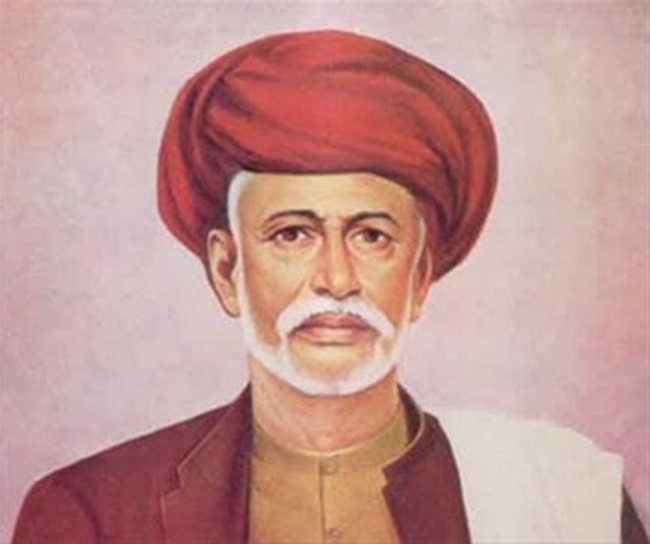
On April 11th India celebrates the birthday of transformative social reformer Mahatma Jyotiba Phule who remains relatively unknown in modern times. The valuable intellectual and moral accomplishments of Jyotiba Phule continue to inspire modern India because the country continues to face social equality issues as well as educational exclusion alongside caste oppression and gender discrimination.

  • Birth:

    • On 11th April 1827 Jyotirao Phule came into existence within the boundaries of present-day Maharashtra. 

    • According to the traditional classification the Mali caste originated from a background of traditionally gardeners and vegetable farmers.

Education

  • In 1841 Phule attended the Scottish Missionary High School in Pune to get his education.

  • Ideology:

    • His ideological foundation consisted of tools from Liberty and Egalitarianism and Socialism. 

    • Due to his exposure to The Rights of Man by Thomas Paine, Phule developed a fundamental belief that solving social problems required extensive education and enlightenment of both women and lower caste groups.

  • Major Publications:

    • Tritiya Ratna (1855)

    • Powada: Chatrapati Shivajiraje Bhosle Yancha (1869)

    • Gulamgiri (1873)

    • Shetkarayacha Aasud (1881)

  • Related Association

    • In 1873 Phule established Satyashodhak Samaj (Seekers of Truth) with his followers to achieve economic equality and social justice for the people of lower castes in Maharashtra.

    • The Poona municipality selected him as a commissioner for municipal service from 1883 to 1883.

    • Vithalrao Krushnaji Vandekar bestowed the honor of Mahatma upon him on May 11th 1888.

Contributions as a Social Reformer

  • Phule educated his wife Savitribai to read and write during 1848. Phule and Savitribai founded the first school for girls which was domestically managed in Pune.

  • The schools operated by the couple until 1858 ran until financial issues developed after the Revolt of 1857 caused their demise despite establishing three educational institutions in 1852.

  • Through his initiative he established an ashram that sheltered widows alongside promoting the acceptance of remarriage for widowed women.

  • From his standpoint Phule explicitly condemned Brahmins and upper caste members describing them as "hypocrites."

  • He built a bathing facility outside his home in 1868 to show all people could share together and he ended caste traditions regarding dining by sitting with everyone at his table.

  • Through his reform actions Dr. B.R. Ambedkar and Mahatma Gandhi along with other future leaders were significantly impacted.

  • After using the word 'Dalit' to define people excluded from society he is considered one of its original developers.

  • The whole of his life focused on opposing the caste system and untouchability practices in Maharashtra.

Death

  • On 28th November 1890 Jyotirao Phule died. His memorial stands at Phule Wada in Pune, Maharashtra.

Conclusion

  • The contemporary world has failed to catch up to revolutionary thinker Jyotirao Phule who dedicated his life to fight social hierarchies while working continuously for marginalized community upliftment. 

  • His work in education combined with activism alongside his resistive Orthodoxy examination established the basis for modern-day social justice movements in India. 

  • Phule continues to inspire people who combat social mistrust while striving for unity among all communities.

World Homoeopathy Day 2025: Celebrating Dr. Samuel Hahnemann’s Legacy

Dr. Christian Friedrich Samuel Hahnemann receives remembrance through World Homoeopathy Day which occurs annually on April 10 to celebrate his role as the founder of homoeopathy. This day serves to honor his medical work and increase community awareness regarding how homoeopathy benefits healthcare systems. Adhyayan, Adhyaapan, Anusandhaan (Education, Practice, and Research) serves as the 2025 theme to direct the three fundamental elements supporting homoeopathy growth.

Key Points:

Context: 

  • Dr. Christian Friedrich Samuel Hahnemann gets celebrated through the annual observance of World Homoeopathy Day on April 10. 

  • The day of observance for 2025 will be centered around "Adhyayan, Adhyaapan, Anusandhaan" (Education, Practice, and Research) as its main theme to showcase the development of homoeopathy through these three fundamental aspects. 

Dr. Samuel Hahnemann's Contribution:

  • The physician Dr. Hahnemann founded the foundational principle of "like cures like" while he was born in Paris on April 10, 1755. 

  • Dr. Hahnemann examined cinchona effects before creating homoeopathic principles for treatment using diluted substances to stimulate remedies from healthy patient symptoms.

World Homoeopathy Day History:

  • Each year on April 10 people observe World Homoeopathy Day to celebrate Hahnemann's birthday together with homoeopathy’s rising importance in medical care. 

  • The first observance of this initiative began in India back in 1997 because homoeopathy medicine has been commonly used in the country for several years.

World Homoeopathy Day Significance:

  • The Central Council for Research in Homoeopathy (CCRH) began organizing WHD events in 2016 to confirm the essential position of research for increasing acceptance and growth of homoeopathy. 

  • A significant two-day convention took place in Gandhinagar, Gujarat during 2025 under the direction of the Union Minister of State for AYUSH named Prataprao Jadhav. 

  • The gathering assembled homoeopathic experts and practitioners for research discussions while organizer "Live Materia Medica" competitions served to demonstrate both education and research importance in homoeopathy.

Homoeopathy in India and Global Recognition:

  • India continues its position as a worldwide leading nation for homoeopathic medical practice thanks to its network of 345,000 registered homoeopathic doctors who work inside over 15,000 institutions that focus on education and practice of homoeopathy. 

  • Homoeopathy stands among Traditional and Complementary Medicine (T&CM) treatments recognized by the World Health Organization as one of the most frequently used systems worldwide according to their records.

Conclusion

World Homoeopathy Day serves as a reminder of the innovative contributions of Dr. Samuel Hahnemann to global healthcare. The 2025 theme for World Homoeopathy Day emphasizes education and practice in combination with research as the day highlights the demand for ongoing development of homoeopathic educational initiatives and scientific discoveries. The growing worldwide adoption of homoeopathy provides World Homoeopathy Day as a time to both commemorate its past achievements and boost its future prospects.

Tahawwur Rana Extradited to India: What Comes Next in the 26/11 Case?

The individuals involved in the 2008 Mumbai terror attacks named Tahawwur Hussain Rana got extradited from the United States to face prosecution in India. Rana who migrated from Pakistan to Canada and the United States provided reconnaissance support to LeT through his work with David Headley. The legal fight against his extradition lasted ten years before coming to an end. Following his arrest by NIA forces Rana remains in their custody before facing his trial on terrorism and conspiracy crimes. Authorities from India will question Tahawwur Hussain Rana about all aspects connected to the 26/11 conspiracy. His arrival to India generates political disagreements along with strong anti-terrorism attitudes throughout the country.

  • A total number of 166 people lost their lives during the 26/11 Mumbai terror attacks. 

  • The detailed operational support Tahawwur Rana provided to the plot against India made him one of the main targets of investigation. 

  • The Indian government has striven to bring Rana back to India for multiple years to stand trial according to Indian law.

Key Developments

Who is Tahawwur Rana?

  • Pakistani-origin Canadian-American.

  • Former Pakistani army doctor.

  • High school friend of David Headley.

  • His firm operated as a cover for selecting targets located in India.

Role in the 26/11 Attacks

  • Through his assistance Headley established an immigration office simulation facility throughout Mumbai.

  • Headley received support from Rana for conducting numerous reconnaissance missions.

  • Precise correspondence links existed between Headley and him when Headley traveled across India.

  • He reportedly understood the terrorist plans that LeT had planned.

Charges Against Rana

  • The NIA has filed UAPA and IPC charges against Rana for acts related to terrorism and murder alongside conspiracy.

  • A new supplementary index is expected to be filed according to Indian criminal laws.

Legal Journey & Extradition

  • Arrested in the U.S. in 2009.

  • He received a terrorism conviction in Denmark while acting as an accomplice of LeT.

  • Released in 2020 on compassionate grounds.

  • Despite battling double jeopardy claims the appeals reached the U.S. Supreme Court where he lost.

  • The Indian government received full control of the suspect on April 9 this year.

What Happens Next?

  • Preparations will take place in front of the Special NIA court located in Delhi.

  • Judicial custody likely, with further interrogation by NIA and IB.

  • The subsequent judicial process will take place in great detail.

  • The National Investigation Agency plans to perform further investigation on obscure elements from the 26/11 plot.

Security Measures

  • The Indian government placed Rana in the high-security section of Tihar Jail.

  • Security personnel swept the entire court building before the hearing session.

Conclusion

The extradition of Tahawwur Rana marks a critical point in the prolonged pursuit to prosecute each of the actors behind the 26/11 attacks. When Rana comes to India it will give Pakistani law enforcement an opportunity to discover fresh proof against cross-border terrorist operations and enhance India's war against terrorism. People will closely observe his trial since it serves as a defining point for counterterrorism operations.

India’s First High-Altitude Climate Change Research Centre in J&K

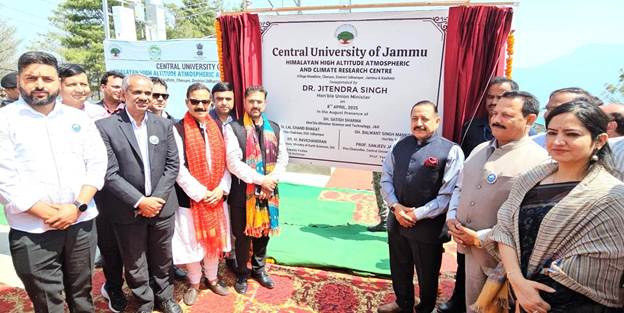
India established its inaugural climate change research station at Nathatop in Jammu & Kashmir under the name Himalayan High Altitude Atmospheric and Climate Research Centre. The research facility exists at 2,250 meters of elevation where scientists conduct analyses of atmospheric phenomena and climate patterns that examine clouds and aerosols and weather pattern development. The establishment of ICE-CRUNCH represents an important development in Indo-Swiss joint research that aims to advance worldwide climate science while helping India meet its 2070 net-zero emissions target.

Context: 

  • Nathatop, Jammu & Kashmir has become home to a new Himalayan High Altitude Atmospheric and Climate Research Centre that sets a major benchmark for global climate science studies. 

  • This high-altitude study facility will conduct regional observations of weather patterns for both Indian climate research goals and international climate science progress.

Key  Points:

Strategic Location: The Nathatop location at 2,250 meters sets the research facility perfectly because it offers pure air and low pollution levels which are essential conditions for high-accuracy atmospheric and climate measurement operations.

Research Focus: The research center will examine cloud processes together with aerosol interactions and atmospheric weather systems because these elements are fundamental for understanding climate system variations.

ICE-CRUNCH Project: The ICE-CRUNCH Project brings together Indian and Swiss scientists to examine Ice-Nucleating Particles alongside cloud condensation nuclei because both affect Himalayan precipitation and climate modeling.


Significance: National goals toward climate change mitigation as well as India's leadership position in climate science find support at this research center where scientists work to reach the net-zero target by 2070.

Conclusion

India achieved an important milestone through the creation of the Himalayan High Altitude Atmospheric and Climate Research Centre. This facility positions India to develop deeper worldwide knowledge about climate change while demonstrating serious dedication to environmental sustainability and climate target fulfillment. Future climate policy development and action will strongly rely on research output of the center.

Frequently Asked Questions (FAQs)

The current affairs cover recent national and international events related to UPSC, SSC, Banking, Railways, and State PCS.

You need to read about the current affairs daily, and revise them every week and every month to keep them longer in your memory.

Yes, Class24 provides free downloadable Daily Current Affairs PDFs for easy revision.

Yes, you can practice MCQs and quizzes to boost your exam preparation.

Absolutely. The content is written in simple, easy-to-understand bilingual language suitable for beginners.

Go to class24.com and click on the current affairs section directly, where you find everything that you need.

ssc-toppers

Start Learning Today with Class24

Related current affairs

Class24 offers free video lectures for smart preparation, covering CGL, CPO, CHSL, MTS, and GD exams. Learn from expert faculty, revise concepts easily, practice with PYQs, and improve speed and accuracy through high-quality, exam-focused video lessons anytime, anywhere.

Get success in your hand. Start study anytime anywhere.

The journey becomes simple and enjoyable when you start taking interest in it. And through our app “Class24”, we will be your trusted partners in developing that interest.

Daily Quizzes
Mock Tests
Ongoing

No ongoing tests right now.