

Day: March 28, 2025

Roshni Nadar Becomes First Indian Woman in World’s Top 10 Richest Women

Roshni Nadar broke Indian history when she became the first female to earn a spot in the world’s top 10 wealthiest women list. Roshni Nadar holds the position as the fifth wealthiest woman worldwide based on the Hurun Global Rich List 2025 which estimates her worth at ₹3.5 lakh crore (US$40 billion). Roshni Nadar's position as a top Indian billionaire was reinforced through her father Shiv Nadar's stake transfer of 47% in HCL Technologies which led to her place among the world's top 10 richest women. She currently holds the third position as the wealthiest individual in India and remains the richest woman throughout the country.

  • Roshni Nadar holds the position as the 5th wealthiest woman worldwide based on the Hurun Global Rich List 2025 which estimates her worth at ₹3.5 lakh crore (US$40 billion).

  • She currently holds the 3rd position as the wealthiest individual in India and remains the richest woman throughout the country.

  • Roshni Nadar's position as a top Indian billionaire was reinforced through her father Shiv Nadar's stake transfer of 47% in HCL Technologies.

Who is Roshni Nadar?

Early Life and Education

  • The Nadar family produced her as their daughter while her father Shiv Nadar established HCL Technologies.

  • Holds a Bachelor’s degree from Northwestern University and an MBA from the Kellogg School of Management.

  • Kellogg School of Management presented her with the Schaffner Award during 2023 for her outstanding social impact.

Role at HCL Technologies

  • HCL Technologies functions under her leadership as she serves as Chairperson of this leading IT firm that maintains a market capitalization of US$48 billion.

  • She serves as the committee leader for HCL Technologies' Corporate Social Responsibility (CSR) Board whose core responsibility includes steering crucial philanthropic work and leadership activities.

Philanthropic Contributions

  • Through its Shiv Nadar Foundation the organization operates multiple expensive education and leadership programs valuing over $1.2 billion.

  • VidyaGyan Academy: Leadership academy in Uttar Pradesh supporting talented students from underprivileged backgrounds.

  • He participates in distinguished board positions through affiliation with the Dean’s Advisory Council at MIT School of Engineering and The Nature Conservancy.

Global Recognitions

  • Chevalier de la Légion d’Honneur (2024) – Awarded by France for her contributions to business and philanthropy.

  • Forbes’ 100 Most Powerful Women – Featured since 2017.

Hurun Global Rich List 2025: Top 10 Wealthiest Women

561 women appear on the Hurun Global Rich List 2025 and 224 of these women reached their success through self-generated business endeavors highlighting the global expansion of female business leadership. 

Top 10 Wealthiest Women

Rank 

Name 

Country

Company

1

Alice Watson

USA

Walmart

2

Françoise Bettencourt Meyers

France

L’Oréal (Cosmetics)

3

Julia Koch & Family

USA

Koch Industries (Diversified)

4

Jacqueline Mars

USA

Mars Inc. (Food & Confectionery)

5

Roshni Nadar

India

HCL Technologies (IT Services)

6

Abigail Johnson

USA

Fidelity Investments (Finance)

7

Marilyn Simons & Family

USA

Renaissance Technologies (Hedge Funds)

8

Linda Stephens & Family

USA

Endeavor Energy Resources (Oil & Gas)

Conclusion

The worldwide recognition of Indian entrepreneurship grew stronger as Roshni Nadar joined the list of top 10 richest women globally. From her position as Chairperson of HCL Technologies she expanded her family heritage while delivering substantial contributions to business leadership and charitable giving. Her remarkable achievement demonstrates the rising influence of female entrepreneurs in international business while showing potential young business owners from every corner of the world.

Gaia Space Observatory: Achievements and Shutdown

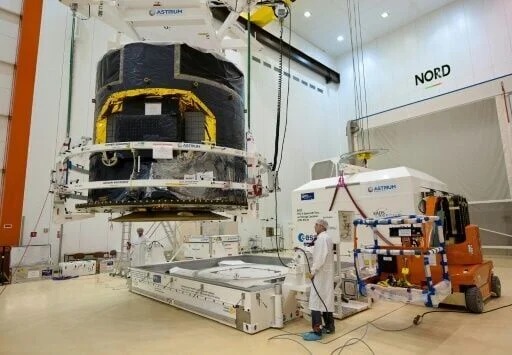
In March 2025 the European Space Agency (ESA) terminated its operations of the Gaia Space Observatory. Gaia launched in 2013 as a mission to construct the most exact three-dimensional chart of the Milky Way Galaxy. From its position at Lagrange Point 2 the spacecraft delivered important data that produced significant advancements in our understanding of cosmic bodies including stars and black holes and asteroids. Gaia finished its program after several successful years through the use of thrusters to establish its "retirement orbit" around the Sun.

About Gaia Space Observatory

  • Mission: Global Astrometric Interferometer for Astrophysics (GAIA) – ESA’s space astrometry mission.

  • Launch Year: 2013

  • From its position at Lagrange Point 2 (L2) – which rest behind Earth when viewed from the Sun – the Gaia Space Observatory maintains a distance of about 1.5 million kilometers to our planet.

  • Goal: The main mission goal focused on creating the most precise three-dimensional representation of the Milky Way.

  • Instrumentation:

    • Astrometer – Measures stellar positions and distances.

    • Photometer – Determines the brightness and color of stars.

    • Spectrometer – Identifies radial velocity and chemical composition of celestial objects.

  • Observational Scope:

    • Tracked over 2 billion stars and space objects.

Lagrange Points and Their Significance

A spacecraft can stay in stable equilibrium at Lagrange points which exist where the gravitation of two bodies maintains force balance within their gravitational system. These points serve as advantageous platforms for installing space-based observation instruments despite their lack of absolute neutrality.

  • L1 Point: From Earth the L1 point lies 1.5 million kilometers away and gives scientists constant unobstructed Sun observations.

  • L2 Point: Offers a stable environment for deep-space observations (e.g., James Webb Space Telescope).

  • L3 Point: Positioned behind the Sun, opposite Earth; potential for future solar observations.

  • The L4 and L5 Points:  Offers stable observational platforms that would make suitable sites for space observatories and monitoring stations although they are located further from Earth.

Key Achievements of Gaia

  • Gaia accomplished the most precise 3D representation of the galaxy that enhanced our knowledge regarding galactic structure.

  • Astronomers found a new kind of black hole along with an Earth-proximate version through gravitational detection independent of light emission.

  • The asteroid tracking program obtained detailed records of more than 150,000 asteroids for predicting space objects that represent a threat to Earth.

Conclusion

Gaia spent ten years successfully advancing astrometric research while revealing data that will support future astronomical investigations throughout multiple years. Stellar cartography and black hole discoveries and asteroid detection all represent remarkable achievements of space exploration through the work of this spacecraft. The retirement of Gaia enables upcoming missions to develop new ways of uncovering celestial mysteries.

India Achieves Significant Milestone in Global Tea Industry, Becomes World’s 2nd-Largest Exporter of Tea in 2024

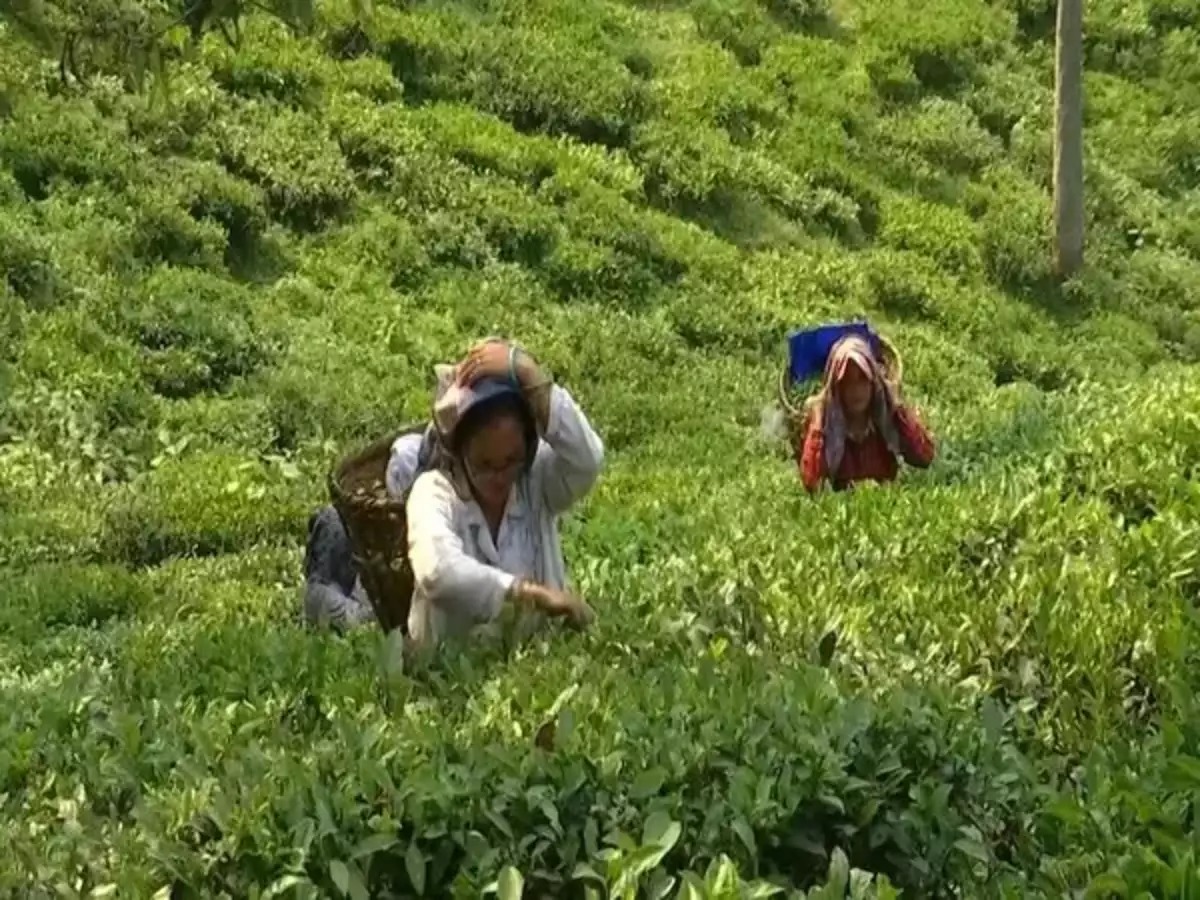
The tea export figures for India reached 255 million kilograms to claim second position behind China for the 2024 year. Strategic government policies combined with market expansion demand from international markets have established India as a dominant force in global tea markets with its position as the second-largest tea exporter worldwide in 2024. The tea sector of India maintains 10% market share in global exports as it continues exporting tea to the major markets of UAE, Iraq, Iran and Russia together with USA and UK.

Record-Breaking Exports

  • The tea industry recorded an annual growth of 10% when India exported 255 million kilograms of tea during 2024 compared to 231.69 million kilograms in 2023.

  • The industry breaks sales records for annual exports which represent the most exported amount in ten years although worldwide economic obstacles persist.

Key Export Markets

  • India distributes its tea exports to more than 25 international countries.

  • Indian tea finds its major import markets among the UAE together with Iraq and Iran and Russia and the United States and United Kingdom.

Diverse Tea Varieties

  • Black tea controls nine out of ten exported tea products.

  • The tea industry includes black tea and four other forms: green tea and herbal tea with masala tea and lemon tea.

Government Initiatives

  • The Tea Board of India has introduced multiple efforts dedicated to improving tea manufacturing and product recognition initiatives.

  • Formation of 352 Self-Help Groups (SHGs), 440 Farmer Producer Organizations (FPOs), and 17 Farmer Producer Companies (FPCs).

  • The creation of mini tea processing plants aims to develop rural business opportunities.

Employment & Economic Impact

  • The direct employment base of the Indian tea industry reaches 1.16 million whereas its indirect workforce totals 1.16 million.

  • The world considers Assam tea and tea from both the Darjeeling region and Nilgiri region to be the superior quality varieties.

Regulatory & Promotional Efforts

  • Indian Tea Board serves as the authority responsible for both product quality standards and market development initiatives.

  • The Tea Board of India implements export subsidy programs and implements branding strategies combined with financial aid for small growers.

About Tea

  • After water tea stands as the second most consumed beverage worldwide since its production occurs from Camellia sinensis plant material.

  • Origin: The original source for tea development exists between northeast India, North Myanmar, and Southwest China. Archaeological findings demonstrate that the Chinese people used tea as a beverage for more than 5000 years back.

  • Growth Conditions:

    • Climate: Thrives in tropical and subtropical regions with high humidity.

      • Optimum plant growth happens at temperatures ranging from 20°-30°C yet extreme temperatures may cause harm to tea plants.

    • Rainfall: Requires 150-300 cm of well-distributed annual rainfall.

    • Soil: Prefers slightly acidic, well-drained soil with good water percolation.

Significance

  • The cultivation of tea serves as a significant economic plant which generates employment opportunities for weaker economic areas.

  • Indian tea production supports multiple Sustainable Development Goals (SDGs) through poverty reduction (Goal 1) and hunger reduction (Goal 2) and strengthening women (Goal 5) with increased sustainability of land use (Goal 15).

  • This plant carries great cultural implications across countless regions across the world.

International Tea Day

  • International Tea Day has an assigned annual observance on May 21 through United Nations General Assembly resolution passed in December 2019.

How to Encourage the Growth of Indian Tea Industry?

  • Through the One District One Product (ODOP) Scheme Indian tea can be successfully marketed worldwide. The 'AROMA' strategic plan should be implemented to achieve profitability and sustainable growth along with expansion.

  • A framework to help local farmers increase quality along with sustainable practices should be implemented.

  • A campaign should be constructed to advance export infrastructure while focusing on high-value international markets in EU countries, Canada, South American states and Middle Eastern territories.

  • The promotion of organic tea products and GI-certified teas should occur through brand development.

  • Modernisation: Enable self-reliant tea farmers with better local supply chains.

  • The tea cultivation system should adopt flexible strategies that protect against climate threats for sustainable management.

Conclusion

India has achieved status as the world's second-largest tea exporter because of its historic tea cultivation practices together with governmental backing and broad marketplace demand. Through enhanced technology implementation together with branding efforts and sustainable practices India demonstrates an excellent potential to expand its market dominance in global tea distribution. Long-term sector growth will depend on three main factors: quality control systems development together with infrastructure improvement and worldwide market expansion.

Sagarmala Programme: Powering India’s Maritime Revolution

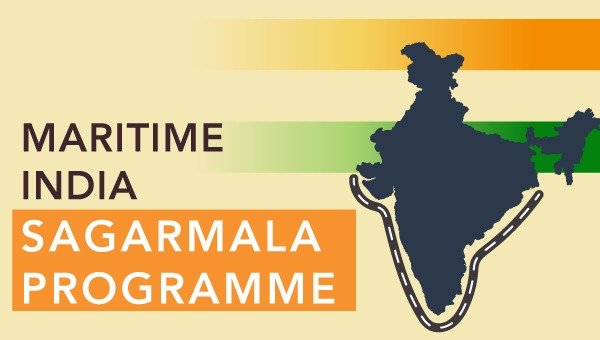
The Ministry of Ports, Shipping, and Waterways initiated the Sagarmala Programme in March 2015 as its primary maritime sector modernization initiative. The development initiative concentrates on port development to create connectivity and cut expenses for logistics while fostering economic expansion. The identified 839 projects that amount to ₹5.79 lakh crores have resulted in 272 completed projects valued at ₹1.41 lakh crore. The program has increased port effectiveness combined with inland waterways and coastal shipping which now provides a foundation to launch Sagarmala 2.0 to extract ₹12 lakh crore worth of investments during the next decade.

Key Achievements

  • Projects amounting to ₹5.79 lakh crores under Sagarmala have been identified with 272 completed projects that have received ₹1.41 lakh crore capital investment.

  • The coastal shipping sector grew by 118% during the past 10 years while simultaneously cutting down on logistic costs alongside pollution emissions.

  • The expansion of inland waterway cargo movement reached 700% higher levels which decreased congestion on both roads and railways.

  • Ro-Pax ferry transportation provided improved coastal reach to more than 40 lakh passengers while improving connectivity.

  • A new phase of Sagarmala has received ₹40,000 crore in government funding that aims to generate investments worth ₹12 lakh crore throughout the next 10 years.

  • 9 Indian ports among the world’s top 100, with Vizag in the top 20 container ports globally.

  • The Sagarmala Startup Innovation Initiative (S2I2) has been established to promote RISE through maritime technological innovation and startup development.

Components of Sagarmala

  • The primary objectives of the Sagarmala Programme aim to accomplish port modernization while developing new ports alongside promoting industrialization in close proximity to seaports.

  • Enhancing existing port infrastructure and building new ports operates as a key Sagarmala objective to fulfill rising trade needs.

  • The program aims to connect ports efficiently by constructing better access via roads, rail and inland waterways for cargo stimulation.

  • Port-Led Industrialization seeks to develop industrial zones close to maritime facilities with the purpose of drawing business capital and lowering transportation expenses.

  • The Coastal Community Development initiative establishes employment markets and provides improved services for coastal neighborhood residents.

  • The adoption of coastal shipping as well as inland waterways transport focuses on friendly environmental solutions to reduce traffic levels on roads and railways.

New Additions: Sagarmala 2.0 & S2I2

Sagarmala 2.0

  • Shipbuilding, port modernization and recycling form the main targets of this initiative in addition to ship maintenance.

  • Investment: ₹40,000 crore budgetary support with an aim to leverage ₹12 lakh crore over the next decade.

  • India’s maritime competitiveness will increase through this initiative as both the Viksit Bharat and Atmanirbhar Bharat visions aim to reach their goals by 2047.

Sagarmala Startup Innovation Initiative (S2I2)

  • The initiative started its operations on March 19, 2025 for advancing maritime technology development.

  • The initiative supports green maritime operations alongside smart port revolution along with maritime logistics development and shipbuilding advancements and coastal sustainability practices.

  • The principles operating under Research, Innovation, Startups, and Entrepreneurship (RISE) will function as the foundation to expand economic growth.

Implementation & Funding

  • Public-Private Partnership (PPP): Encouraging private sector participation.

  • State government grants concentrate on funding initiatives that conduct significant social good including fisheries harbors and skill education programs.

  • Institutional Funding: Through Sagarmala Development Company Limited (SDCL) and Special Purpose Vehicles (SPVs).

Conclusion

Through its Sagarmala Programme India progresses to optimize maritime infrastructure while enhancing trading capabilities to establish sustainable development frameworks throughout the country. Through Sagarmala 2.0 and S2I2 initiatives India will evolve into a leading maritime nation by 2047 which will fuel economic expansion as well as employment opportunities and supremacy in the Blue Economy.

Green Iron: A Billion-Dollar Opportunity and the Challenge of Winning It

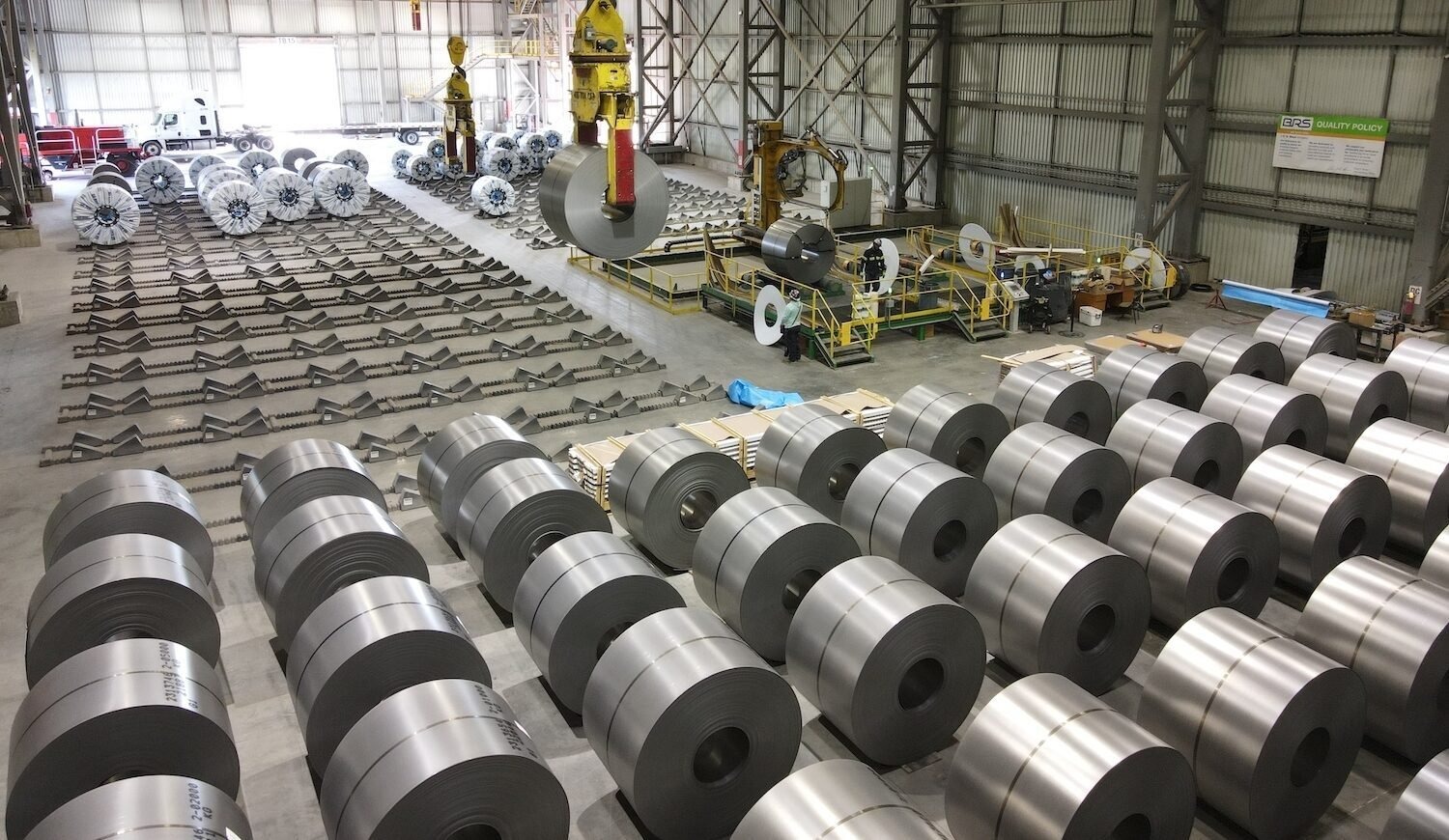
The massive challenge of steel industry decarbonization creates opportunities for governments and companies that choose to accept the risks. The global carbon emissions from steel production amount to 7% to 9% primarily resulting from coal utilization during iron ore processing. Developed technology for lowering emissions through hydrogen-based operations exists while full-scale adoption demands enormous monetary input together with internationally unified policy frameworks. Australia can boost its export revenues up to $252 billion every year through green iron production since it dominates worldwide iron ore exports. Transporting ironwork with renewable power while building new systems and implementing supportive policies is essential to accomplish this transition.

Key Points:

The Role of Steel in Carbon Emissions

  • Industrial operations produce their maximum amount of carbon emissions during steel production.

  • The production process of crude iron from iron ore by means of coal generates 80% of overall emissions.

  • Advanced production methods decrease steel sector carbon produce to 300 kg per ton which was formerly 2.2 tons.

Green Iron Technologies and Their Potential

  • A transition from coal-based blast furnace operations to hydrogen-based direct reduction takes place.

  • The production facilities use renewable solar power and wind energy as their primary energy source.

  • A brand-new lucrative export sector for green iron has the potential for development.

Challenges in Scaling Up Green Steel Production

  • The implementation of green steel production requires substantial investments for renewable energy systems together with hydrogen infrastructure.

  • China along with Japan and South Korea need to sign contracts for green iron purchases with their steel manufacturing facilities.

  • Government-supported supply chain development requires energy providers to coordinate with miners.

Economic and Policy Considerations

  • Green iron produces market potential to increase Australian iron exports from $85 billion to $252 billion.

  • The Asian market requires standard financial incentives such as carbon taxes coupled with subsidies to establish demand.

  • The necessary alignment of governmental policies must happen to attract investments and retain competitive market prices.

What is Green Steel?

About:

  • The production of green steel occurs through alternative methods that exchange fossil fuels for electricity or hydrogen and coal gasification instead of fossil fuel-based manufacturing.

  • The production method generates lower emissions together with cost reduction and enhanced steel manufacturing performance.

  • Blue and green hydrogen stands as a fundamental tool for lowering the carbon emissions within the steel industry.

Ways of Production:

  • The primary production methods can be replaced by sustainable technological alternatives.

  • Carbon Capture, Utilization, and Storage (CCUS).

  • Low-carbon hydrogen should be adopted instead of traditional power sources to power industrial operations.

  • Direct electrification through electrolysis of iron ore.

Significance:

  • Industrial steel operations currently represent one of the world's biggest users of energy resources and emitters of CO2 gases.

  • India stands as the planet's second-largest crude steel manufacturer with an objective to decrease emissions until 2030 while targeting net-zero operations by 2070 as per the agreements made during COP26.

Status of Steel Production in India

  • The production of crude steel at 120 million tonnes in 2021–2022 made India the globe's 2nd biggest steel manufacturing entity.

  • The states of Odisha, Jharkhand, West Bengal along with Chhattisgarh and northern Andhra Pradesh possess major iron ore deposits.

  • The main steel industrial complexes in India are positioned at Bhilai, Durgapur, Burnpur, Jamshedpur, Rourkela and Bokaro.

  • At present India stands in the 2nd position globally as a finished steel consumption market behind China.

Government Initiatives Supporting Green Steel

  • The Steel Scrap Recycling Policy 2019 provides enhanced domestic steel scrap access that cuts down coal consumption in the industry.

  • National Green Hydrogen Mission: Promotes green hydrogen production and usage in steel manufacturing.

  • Motor Vehicles Scrapping Facility Rules (2021) has resulted in increased availability of steel scraps for the industry sector.

  • National Solar Mission (2010) serves as an energy adoption mechanism that helps decrease steel manufacturing emissions.

  • The Perform Achieve Trade (PAT) Scheme provides incentives to steel industries that lower their energy consumption.

  • Japan’s NEDO Model Projects: Implemented for energy efficiency improvement in Indian steel plants.

Conclusion

The manufacturing of green iron combined with green steel production creates potential for lowering emissions and building economic worth. The vast benefits of these measures depend on acquiring appropriate funding and policy cooperation between governments alongside cross-national partnerships. Public and industrial entities need to collaborate for offering financial motivation and regulatory assurance while building essential infrastructure to enable this transformation. The right level of industry backing allows green steel to transform global net-zero carbon emission initiatives.

ChatGPT’s viral Studio Ghibli-style images highlight AI copyright concerns

People exhibit both enthusiasm and moral concern about the trend of AI systems creating images that resemble Studio Ghibli artistic styles. Fans who recreate their images and memes into Ghibli-styled animations by Hayao Miyazaki generate widespread discussion about copyright infractions and maintaining service along with AI-induced human creativity challenges. OpenAI conducts business as a conservative entity yet still confronts criticism about its AI-training process for copyrighted content without receiving proper authorization.

Who is Hayao Miyazaki?

  • Hayao Miyazaki stands as what identity following a short biography about his life and background.

  • Born in 1941, Tokyo. The artist grew up surrounded by manga together with the pacifist atmosphere that emerged following World War II.

  • His professional life started in 1963 when he co-established Studio Ghibli together with Isao Takahata in 1985

  • Directed masterpieces like:

    • Spirited Away (2001) – Won Academy Award for Best Animated Feature.

    • The Boy and The Heron (2023) – Also an Oscar winner.

Studio Ghibli films are:

  • Hand-painted, no digital shortcuts.

  • Studio Ghibli animations feature strong feminine characters who fight for environmental protection and parade pacifist and anti-war messages during each film.

  • Nature & imagination > modern materialism.

Progressive Themes 

  • Porco Rosso called it "anti-war propaganda."

  • Princess Mononoke depicted the battle between humans and nature.

  • Female main characters show bravery and intellectual competence alongside their lack of sexualization.

  • The film Spirited Away follows a girl who becomes trapped inside the kami (spirit) realm.

  • Themes include:

    • Anti-capitalism

    • Environmental protection

    • Individual freedom

Importance

  • Copyright and AI Ethics:

    • The usage of copyrighted materials by AI training datasets continues to face frequent legal disputes since the datasets operate without obtaining proper permission from owners.

    • Evolutionary changes occur in the EU AI Act and U.S. Copyright Law to define ownership rights in AI-generated content.

  • Impact on Artists and Creative Industries:

    • AI machines threaten established artistic professions since they generate style-based artwork without relying on human work.

    • The current situation raises serious ethical issues regarding both workers' proper payment and the protection of concepts and ideas.

  • Tech Industry vs. Creative Rights:

    • The AI industry led by OpenAI alongside other companies supports the use of generative AI as a tool for creating new content while promoting innovativeness and ease of access.

    • The practice is under fire because it uses artistic materials from creators without suitable payment or recognition.

  • Global Perspective on AI and Copyright:

    • The governmental bodies of Japan together with the EU are developing stricter AI regulations as part of their legislative efforts.

    • A legal struggle between artist Karla Ortiz will potentially establish legal standards regarding AI applications in creative industries.

Key Points

AI-Generated Ghibli-Style Art

  • OpenAI releases an image generation tool as part of Studio Ghibli's characteristic art style.

  • Many users on platforms have displayed AI-made images that transform popular memes and personal portraits into Miyazaki-style artworks.

  • The OpenAI CEO Sam Altman displayed his support for the trend by using a Ghibli-style portrait as his social media profile image.

  • Miyazaki expressed his position about AI applications in art

  • Hayao Miyazaki has criticized AI animation by describing it as an offense against the nature of life.

  • When shown an AI-generated animation sample in 2016 he displayed repulsion because his opinion was that AI animations lacked emotional quality.

Legal and Ethical Implications

  • Lawyers together with artists doubt if OpenAI secured authorization to train its models against Studio Ghibli's works.

  • Certain unique parts from Ghibli’s work can receive intellectual property protection but the studio’s core artistic design remains unprotectable through copyright law.

  • Artist Karla Ortiz filed an infringement lawsuit against AI image makers because she believes OpenAI exploits artists without legal authorization.

Conclusion

The new trend of making AI-generated Ghibli-style art demonstrates how advanced technologies combine with artistic expressions while conflicting with existing copyright regulations. Artistic tools that provide creative freedom about artistic ownership and fair use together generate discussions about human creative dominance. The expansion of AI technology will deepen the dispute concerning its effects on artistic work together with intellectual property protection law which will require stronger policy making alongside moral awareness.

Frequently Asked Questions (FAQs)

The current affairs cover recent national and international events related to UPSC, SSC, Banking, Railways, and State PCS.

You need to read about the current affairs daily, and revise them every week and every month to keep them longer in your memory.

Yes, Class24 provides free downloadable Daily Current Affairs PDFs for easy revision.

Yes, you can practice MCQs and quizzes to boost your exam preparation.

Absolutely. The content is written in simple, easy-to-understand bilingual language suitable for beginners.

Go to class24.com and click on the current affairs section directly, where you find everything that you need.

ssc-toppers

Start Learning Today with Class24

Related current affairs

Class24 offers free video lectures for smart preparation, covering CGL, CPO, CHSL, MTS, and GD exams. Learn from expert faculty, revise concepts easily, practice with PYQs, and improve speed and accuracy through high-quality, exam-focused video lessons anytime, anywhere.

Get success in your hand. Start study anytime anywhere.

The journey becomes simple and enjoyable when you start taking interest in it. And through our app “Class24”, we will be your trusted partners in developing that interest.

Daily Quizzes
Mock Tests
Ongoing

No ongoing tests right now.