Day: March 6, 2025

The Curious Case of Endogamy and Its Relation to Population-Specific Diseases

Endogamy as a marriage tradition that keeps members within particular social and cultural groups possesses major effects on gene distribution. K. Thangaraj who directs scientific research at the CSIR-Centre for Cellular and Molecular Biology (CCMB) has shown through his study that endogamous relationships contribute to Indian populations developing distinct genetic diseases.

A study based in the Journal of Genetics and Genomics evaluated 281 high-coverage whole exome sequences from four anthropologically different populations in their research. Research results demonstrated that inbreeding occurred dramatically along with new genetic variants that influence health results within particular communities.

Population-Specific Diseases and Endogamy

The repetitive practice of endogamy throughout the generations creates higher occurrence rates of particular genetic disorders among specific communities. A medical study found that ankylosing spondylitis presents at high levels among the Reddy community members from Andhra Pradesh. Genetic screening combined with precision medicine along with patient counseling becomes essential because of such discoveries to resolve community-based health issues.

Understanding Endogamy and Exogamy

What is Endogamy?

  • A social or cultural group maintains endogamy when its members choose a spouse from within their established boundaries. 

  • Social traditions and religious rules as well as societal norms help preserve particular inherited genetic heritage stretching across multiple generations.

Types of Endogamy:

  • Indian and Nepalese populations adhere to Caste Endogamy which requires them to wed someone who belongs to their same caste or social level.

  • Ethnic Endogamy – Marrying within one's ethnic group, prevalent in the Middle East, Africa, and Asia.

  • Among religious communities endogamy exists when members marry within their faith for the purpose of preserving their beliefs and traditions.

Endogamous Groups:

  • Jewish communities – Maintain traditions and religious identity through intra-community marriages.

  • Hindu communities maintain caste-based endogamy because this separation system creates different social classes.

  • Royalty has throughout time practiced endogamous marriage to protect their bloodline and maintain political power.

Why Does Endogamy Occur?

  • Social traditions as well as cultural norms operate through societal standards to support this practice.

  • Cultural preservation: Strengthens community identity and traditions.

  • The practice of marrying family members helps construct robust connections between relatives across their entire network.

  • Certain spiritual traditions support marriages among followers of the same religion for the purpose of preserving religious traditions.

Exogamy and Genetic Diversity

What is Exogamy?

  • Exogamy is a social phenomenon of marrying outside one’s own community, tribe or social group. 

  • It is exactly opposite of the endogamous marriage wherein an individual marries another individual strictly inside his/her own social group. 

  • The term exogamy came from the Greek word ‘exo’ which means outside and ‘gamy’ which means mating.

Key Features of Exogamy:

  • The social rule of marriage between different groups enhances population genetic variety thereby diminishing the occurrence of hereditary health issues. Exogamy occurs because of different reasons including:

    • Expanding social and economic networks

    • Improving social mobility

    • The increase of genetic diversity serves to stop the inheritance of diseases from generation to generation.

Benefits and Drawbacks of Exogamy

  • Benefits:

    • Genetic diversity creation through this practice makes inherited disorders less common.

    • Expanded social networks and access to new cultural perspectives.

    • Potential for improved social status in certain societies.

  • Drawbacks:

    • Cultural conflicts in inter-group marriages.

    • Language barriers in cross-cultural unions.

    • Potential loss of cultural identity over generations.

    • Examples of Endogamous and Exogamous Groups

Exogamous Groups:

  • The rejection of caste divisions happens through active promotion of marriages between different castes.

  • Ethnic minorities should support mating between different groups to establish connections with wider populations.

  • Religious minority communities should encourage religiously mixed unions between their members for fostering cultural acceptance.

Conclusion: The Future of Genetic Research and Healthcare in India

The genetic analysis performed by the CCMB establishes fundamental knowledge about how genetic data shapes the population of India. The study holds great value for upcoming diagnostic and therapeutic strategy developments according to Director Vinay K. Nandicoori. This research demonstrates the critical requirement for genetic testing along with precision medicine and individualized healthcare interventions for controlling health dangers linked with endogamous practices.

Drug efficacy optimization and adverse reaction reduction depends on the integration of pharmacogenomics into clinical practice because genetic research keeps developing. The research underlines the necessity for ongoing genetic study in India to establish health solutions that adapt to various population needs.

PM Modi Launches Gene Bank to Secure India’s Food Future

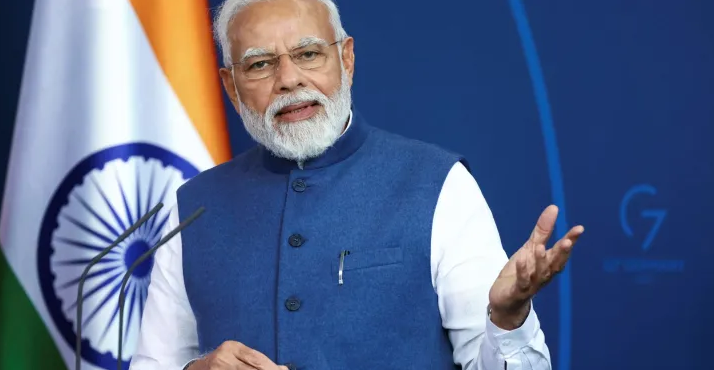
Prime Minister Shri Narendra Modi has launched a new Gene Bank during a post-budget webinar, marking a significant step toward preserving India's genetic resources and ensuring long-term food security. This initiative reflects the nation's strong commitment to biodiversity conservation and the promotion of sustainable agricultural practices. By safeguarding the genetic diversity of crops, the Gene Bank will play a crucial role in developing climate-resilient farming systems, supporting farmers, and strengthening India's position as a global leader in agricultural innovation and food security.

Key Highlights of the Initiative:

  • India will lead globally in biodiversity protection and cultivate strong agricultural resistance through these efforts.

  • A national genomics research facility becomes operational as an extension of the existing ICAR-NBPGR facility based in New Delhi.

  • The program supports climate-adapted farming systems which ensures farmers will achieve sustainability throughout the long term.

  • Protection of India’s diverse genetic resources includes more than 811 cultivated crop types and 902 crop wild relatives.

  • The program supplies essential support for the research-based preservation work of genetic resources within public and private sector laboratories.

  • The main function of a Gene Bank consists of storing genetic materials including seeds and pollen and tissue samples from numerous plant species to prevent species demise while securing valuable crop breeds for successive generations.

India’s Existing Gene Bank:

  • The National Gene Bank of India which ICAR-NBPGR established in 1996 now maintains 0.47 million accessions through its operational sites at 12 locations across the country.

  • Cereals: 0.17 million accessions

  • Millets: 60,600+ accessions

  • Legumes: 69,200+ accessions

  • Oilseeds: 63,500+ accessions

  • Vegetables: Nearly 30,000 accessions

Second National Gene Bank – Key Features:

  • The storage capabilities of the facility amount to 1 million germplasm lines.

  • The facility seeks to safeguard agricultural food security while developing long-term climate change resistance for farming.

  • Supports SAARC and BRICS countries in biodiversity conservation.

  • The facility protects germplasm collections from both natural disasters and climate threats and geopolitical hazards.

Conclusion

As India faces rising climate change threats and natural disasters and biodiversity decline the second Gene Bank stands to be essential for protecting genetic wealth for future Indian generations while making India a top global force in agricultural biodiversity preservation.

India demonstrates its dedicated commitment to protecting genetic diversity as well as assuring food security and developing sustainable agricultural platforms in both national and international realms.

Delhi Government’s Mahila Samriddhi Scheme: Rs 2,500 Monthly Payout for Women

Delhi Government’s Mahila Samriddhi Scheme is set to provide ₹2,500 monthly financial aid to eligible women, ensuring economic support and empowerment. This initiative, launching on March 8 (International Women’s Day), is aimed at women earning less than ₹3 lakh annually and not availing any other government financial assistance. The scheme will be implemented through a digital registration system linked to Aadhaar for verification and transparency. With 15-20 lakh women expected to benefit, the BJP-led government is focusing on women’s financial independence. This initiative marks a significant step towards social welfare and economic inclusion in Delhi.

During Delhi Assembly elections the BJP prioritized the scheme as one of their leading manifest promises. During elections Prime Minister Narendra Modi gave his word the scheme would start on March 8 which was International Women's Day.

Women who make less than Rs 3 lakh per year should qualify for government financial assistance of Rs 2,500 through the Delhi government. Additionally tax-paying citizens cannot receive this benefit. Public officials have verified that the Mahila Samriddhi Scheme exists to provide women with financial empowerment through this initiative.

Women between 18 and 60 can participate only if they hold no government positions and do not obtain any government funding through financial support programs.

Scheme Overview

  • During Delhi Assembly elections the BJP party introduced the Mahila Samriddhi Scheme as an essential campaign promise.

  • In his commitment to Women's Day celebrations on March 8 Prime Minister Narendra Modi confirmed the scheme would be implemented.

  • Approved women beneficiaries in Delhi receive Rs 2,500 as monthly financial support through this scheme.

Eligibility Criteria

  • The benefit of this program is reserved for women who earn less than Rs 3 lakh annually.

  • Women applying for this scheme must demonstrate that they are neither taxpayers nor law enforcement personnel.

  • Age limit: Between 18 and 60 years.

  • The existing financial aid recipients from widow pension or old-age pension schemes cannot participate in this program.

Expected Beneficiaries

  • According to current government projections the selected group will consist of 15-20 lakh women.

  • Data sources for verification include:

    • The number of female voters in Delhi reaches 72 lakh according to the Delhi Chief Electoral Office and the voting percentage reaches 50%.

    • Food and Civil Supplies Department data (for BPL women).

    • The Income Tax Department will perform checks to validate individuals who do not pay taxes.

Implementation & Registration

  • Registration services will be available through an online platform which the Delhi government is creating.

  • Users can verify applicants because the portal connects to Aadhaar cards.

  • The established software will examine new entries to stop duplicates and verify taxation and benefit situations.

  • The system will deny all applications which lack the required specifications.

Financial Allocation & Budgeting

  • A Rs 1,000/month scheme received a Rs 1,000 crore allocation during the time of the previous AAP government.

  • Starting from the subsequent financial year the BJP-led government plans to enhance their proposed budget allocation.

  • The financing for this program covers the period through March 31 before further funding expansion takes effect.

Launch & Rollout

  • The project is set to start operation on March 8 as the International Women's Day recognized globally.

  • Specific women enrolled in the program will start receiving their payments at the time of the launch ceremony.

  • The registration process will maintain active status following the launching period for additional beneficiary enrollment.

Conclusion

The Mahila Samriddhi Scheme delivers direct monthly financial assistance worth Rs 2,500 to eligible Delhi women who need support for their empowerment. With an efficient digital verification system and a March 8 launch, the government aims for a smooth rollout. The Women Empowerment Scheme will help lakhs of female beneficiaries as government officials maintain their dedication to promoting social welfare and economic inclusion through this initiative.

NITI Aayog Unveils Frontier Tech Hub & Quantum Security Report

The path toward becoming a developed nation (Viksit Bharat) by 2047 has reached its defining point in Indian history. This visionary goal requires systematic changes across all parts of society and economic sectors to succeed. India needs to actively welcome Frontier Technologies because they continue developing at a remarkably quick rate. Strategic investments toward research together with innovation and worldwide partnerships will help position India as a leader in modern technological developments.

NITI Aayog’s Frontier Tech Hub: A Catalyst for Transformation

  • The NITI Frontier Tech Hub serves as a dedicated Frontier Tech Action Tank developed by NITI Aayog to help India advance toward a Frontier Tech Nation status.

Key Objectives of NITI-FTH:

  • The goal is to make India prepared for frontier technology innovation which will fuel both economic and societal development to reach Viksit Bharat.

  • The organization functions through technology solutions that combine human needs with environmental preservation.

  • The organization seeks expertise from industry professionals and academic specialists and government officials for observing technological trends alongside their effects on India.

  • Leadership in emerging technologies requires the development of action plans and recommendations from India.

  • Through NITI-FTH collaboration with the Data Security Council of India this organization issued a strategic paper about Quantum Computing alongside its national security implications and strategic readiness recommendations. 

  • A national-level paper demonstrates how quantum computing evolves quickly while exploring its security impacts and required strategic actions that India needs to preserve its technological advantage.

Quantum Computing: Transforming the Future

The scientific function of quantum computing operates at atomic and subatomic scales to apply quantum mechanical laws. The binary system of 0s and 1s which classical computers utilize does not apply to quantum computers since these systems instead operate through quantum bits (qubits) that simultaneously inhabit multiple states because of superposition and interference together with entanglement principles.

Key Principles of Quantum Computing:

Principle

Description

Superposition

Qubits can exist in both 0 and 1 states simultaneously, enabling massive parallel computation.

Quantum Entanglement

Two qubits can be entangled, meaning their states are instantaneously correlated regardless of distance. This enables faster and more secure data processing.

Quantum Interference

The wave-like nature of qubits causes interference effects, optimizing the probability of obtaining correct solutions in quantum algorithms.

Quantum Tunneling

Particles can bypass energy barriers, enabling more efficient computations in quantum hardware.

Quantum Computer Hardware:

  • The fundamental unit of quantum computing called qubits originates from three main sources:

    • The technology utilizes superconducting circuits which require conditions of extreme cold temperatures.

    • Trapped ions (manipulated using lasers).

    • Diamond defects (offering stability at room temperature).

    • Quantum logic gates emulate classical logic gates through mechanisms that operate based on quantum attributes.

Classical vs. Quantum Computing:

Parameter

Classical Computing

Quantum Computing

Basic Unit

Binary Bit (0 or 1)

Qubit (0, 1, or Superposed)

Parallelism

Sequential Processing

Massive Parallelism via Superposition

Hardware

Silicon Chips

Cryogenic Quantum Processors

Programming

Step-by-Step Instructions

Quantum Interference for Probabilistic Solutions

Speed

Limited by Transistor Density

Exponential Speed Gains in Specific Applications

Security

Vulnerable to Classical Encryption Breaks

Quantum Cryptography Ensures Unbreakable Security

Quantum Supremacy and Global Developments

  • Quantum supremacy represents the moment when quantum computers achieve better problem-solving performance than modern classical computers work at their peak operational capacity.

  • The Sycamore 53-qubit machine operated by Google in 2019 completed an algorithm/task that a conventional supercomputer would require 10,000 years to complete within 200 seconds.

  • The QUESS satellite from China established successful operations for quantum key distribution (QKD) systems which provide secure communications.

Applications of Quantum Computing:

  • Quantum computing provides the ability to transform various industries through its technological innovations.

  • The Grover’s algorithm enables database search operations to become exponentially faster through its application.

  • Drug Discovery & Healthcare: Simulating molecular interactions for new drug formulations.

  • Artificial Intelligence: Enhancing machine learning capabilities.

  • Finance sector benefits from portfolio optimization service linked with risk assessment along with economic forecasting tools.

  • The implementation of quantum encryption protects users from cyber security risks.

  • NASA applies quantum computing technology for creating detailed simulations which assist in analyzing global climate changes.

  • The automotive field works to create improved battery components together with enhanced fuel-efficient models.

Challenges and Limitations:

  • Several obstacles block the path of quantum computing progress despite its theoretical benefits.

  • The operational devices need stable operating zones which include temperatures approaching absolute zero.

  • Quantum information disperses too rapidly between system preparations (IBM documented 47 microseconds within their 27-qubit platform).

  • Different models of quantum computing including superconducting and ion-trap and photonic systems operate without established standardized criteria.

  • Scalability: Current systems (Intel’s 49-qubit chip) need millions of qubits for real-world applications.

Quantum Computing in India: Accelerating Indigenous Efforts

  • India's government works on quantum computing development to reinforce national defense operations and achieve economic expansion.

  • Budget 2023 allocated a total of ₹6,000 crore amounting to $800 million as funding for the National Mission on Quantum Computing and Technology which will receive support over five years.

  • The National Qualifier Test from TCS (2023) serves as the first multinational examination for testing quantum computing competencies across the country.

  • MeitY Initiatives: Established Quantum Computing Applications Lab on AWS Cloud for research.

  • Indian Institute of Science (IISc) works on creating a Quantum Technologies and Application Centre dedicated to research activities.

  • IIT Madras established the Centre for Quantum Information, Communication, and Computing to generate secure communication technologies.

Conclusion

The global industry stands on the verge of a revolution through quantum computing and India continues making investment decisions to become a front-runner in this transformative technology at the global scale. Through national initiatives and the Frontier Tech Hub established by NITI Aayog India prepares its future quantum readiness which leads to technological innovation while enhancing economic growth and security measures.

The current research investments along with advanced infrastructure together with international partnerships will establish India as a leading force in Frontier Technologies by creating the next era of computing.

Women-Friendly Gram Panchayats Initiative Launched

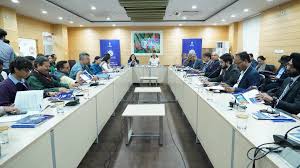
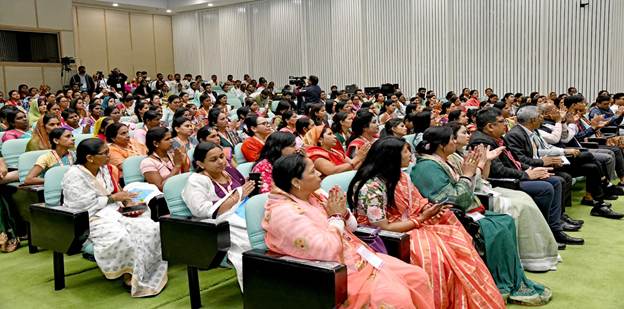
The Ministry of Panchayati Raj organized the National Convention on Model Women-Friendly Gram Panchayats on 5th March 2025 in New Delhi to commemorate International Women’s Day 2025 celebrations. The convention worked towards creating a minimum one Model Women-Friendly Gram Panchayat for each District. The event gathered more than 1500 representatives and officials who took part both in person and online.

Key Announcements:

  • Targets establishment of one Model Gram Panchayat to be allocated in each District.

  • Real-Time Dashboard Launched for Monitoring Women-Friendly Panchayats’ Progress.

  • Women Sarpanchs received a call to lead the execution of Central Government Schemes throughout the nation.

Major Initiatives Unveiled:

  • Virtual Training Programs for Model Women-Friendly Gram Panchayats.

  • A real-time monitoring dashboard tracks the participation and welfare of women through a system for grassroots tracking.

  • A special Mahila Gram Sabha meeting organized across the country will take place on 8th March 2025 to implement fundamental goals of the initiative at local levels.

Digital Initiatives for Panchayati Raj Institutions (PRIs)

Through the RGSA scheme the Ministry of Panchayati Raj executes the MMP-ePanchayat as a Mission Mode project which delivers e-Panchayats for PRIs to boost efficiency and transparency along with digital governance.

Key Digital Initiatives:

  • eGramSwaraj Portal (egramswaraj.gov.in)

    • The system enables decentralized planning as well as progress reporting and financial management and work-based accounting.

  • AuditOnline Platform (auditonline.gov.in)

    • Technology provides Panchayat account officials with real-time auditing capabilities which creates a transparent and accountable system.

    • The audit reports generated through online audit operations reached 2.42 lakh reports during the auditing period 2021-22.

  • Integration with Public Financial Management System (PFMS)

    • Through the eGramSwaraj-PFMS Interface (eGSPI) Panchayats can make instant payments to their service and vendor providers.

    • Through eGramSwaraj-PFMS Interface (eGSPI) all transactions processed amount to Rs. 1.74 lakh crore.

  • Integration with Government e-Marketplace (GeM)

    • Facilitates seamless procurement and financial tracking for Panchayats.

Constitutional & Legal Framework for Panchayati Raj

  • Panchayats as State Responsibility

    • State Panchayati Raj Acts govern Panchayats because the Constitution classifies them under the category of local government which belongs to the state level.

  • Reservation for Women & Marginalized Communities

    • According to Article 243D of the Indian Constitution all Panchayats must reserve positions for Scheduled Tribes, Scheduled Castes, Backward Classes alongside Women.

    • Twenty-one Indian States along with two Union Territories completely comply with the recommendation to give women 50% representation in the Panchayat system.

  • Special Provisions for Scheduled Areas

    • Through Panchayats (Extension to the Scheduled Areas) Act, 1996 Gram Sabhas receive authorities to defend both tribal culture alongside tribal subsistence.

  • Women Empowerment Through Advisory Support

    • The Ministry creates advisory documents that promote increased female attendance at Ward Sabha, Mahila Sabha, and Gram Sabha meetings.

    • The policy promotes women to become active participants during program planning and the implementation of schemes.

Key Challenges Identified

  • Lack of Political Experience

    • The beginner-level political knowledge of newly voted female officials creates obstacles for them to perform their duties efficiently.

  • Gender-Based Discrimination

    • Meetings allocate little attention to women while male representatives control most decisions.

  • Patriarchal Socio-Cultural Norms

    • Traditional gender-based beliefs and social constraints prevent women from an active role in government.

  • Political Pressure and Threats

    • Women experience harassment through intimidation and the improper implementation of No Confidence Motions which leads to their removal from office.

  • Socio-Economic and Cultural Disadvantages

    • Women from underrepresented social groups find it difficult to maintain home life while fulfilling their political duties.

  • Lack of Training and Mentorship

    • Gender equality suffers because women usually lack adequate opportunities to train for leadership positions thus their self-assurance and political performance declines.

  • Rotational Reservation System

    • A five-year term limits women’s ability to develop appropriate leadership skills and build their authority as leaders.

  • Weak Legal Deterrence

    • Current legislation does not stop males from using alternative persons to make choices on behalf of women.

Recommendations & Way Forward

  • The establishment of training programs and legal education systems should be strengthened to benefit women representatives.

  • The extension of reservation length should become a structural reform to guarantee sustained leadership performance.

  • The implementation of formal punishments should occur against those who act as proxies for males.

  • Capacity Building: Enhance mentorship and leadership skill programs.

  • Awareness Campaigns: Promote gender sensitization at all levels of governance.

Conclusion

The Ministry of Panchayati Raj develops initiatives that serve to transform Panchayati Raj Institutions into bodies that deliver efficient transparent governance while being inclusive to all stakeholders. Through the combination of Women-Friendly Gram Panchayats with digital governance structures and community leadership development initiatives the way becomes clear for women to lead local development activities.


Frequently Asked Questions (FAQs)

The current affairs cover recent national and international events related to UPSC, SSC, Banking, Railways, and State PCS.

You need to read about the current affairs daily, and revise them every week and every month to keep them longer in your memory.

Yes, Class24 provides free downloadable Daily Current Affairs PDFs for easy revision.

Yes, you can practice MCQs and quizzes to boost your exam preparation.

Absolutely. The content is written in simple, easy-to-understand bilingual language suitable for beginners.

Go to class24.com and click on the current affairs section directly, where you find everything that you need.

ssc-toppers

Start Learning Today with Class24

Related current affairs

Class24 offers free video lectures for smart preparation, covering CGL, CPO, CHSL, MTS, and GD exams. Learn from expert faculty, revise concepts easily, practice with PYQs, and improve speed and accuracy through high-quality, exam-focused video lessons anytime, anywhere.

Get success in your hand. Start study anytime anywhere.

The journey becomes simple and enjoyable when you start taking interest in it. And through our app “Class24”, we will be your trusted partners in developing that interest.

Daily Quizzes
Mock Tests
Ongoing

No ongoing tests right now.