

Day: February 5, 2025

13th Edition of Ekuverin Military Exercise between India and Maldives

Bilateral defense cooperation with the Indian Army and Maldives National Defence Force improves through the 13th edition of the Ekuverin military exercise. Established in 2009 both India and the Maldives conduct this exercise through alternating locations to conduct counter-terrorism, counter-insurgency, and disaster relief operations. Field training such as drills, practical activities, and cultural assimilation sessions form part of the exercise to develop combined operational effectiveness between both forces. The Ekuverin exercise functions as a vital factor for strengthening military relations as well as enhancing regional defensive capabilities and operational readiness for humanitarian responses.

Background of Ekuverin

  • Ekuverin means “friends” in Dhivehi.

  • Ekuverin started in 2009 after India and the Maldives established their mutual military exercise.

  • Both India and the Maldives serve as rotating venues for this exercise to boost their defense relationships.

  • The initiative supports joint military operations as well as strengthens defense diplomacy to build close friendship bonds.

Objectives of the Exercise

  • The joint forces benefit from improved tactical standards and operational interconnectivity through this program.

Focus areas

  • Counter-terrorism and counter-insurgency operations.

  • Humanitarian Assistance and Disaster Relief (HADR) training.

Significance of Ekuverin

  • It enhances military operational effectiveness together with strengthening mutual trust between both forces.

  • Joint response against regional dangers such as terrorism and piracy obtains stronger strength through this program.

  • This initiative supports stability throughout the region and maintains security conditions.

  • India holds a long historic relationship of military cooperation with the Maldives.

  • The military cooperation between these countries occurs through experiences that combine defensive discussions military pacts and team drills.

Cultural Exchange and Cooperation

  • Mutual engagement produces favorable cultural learning experiences with troops while increasing their respectful behavior toward one another.

  • The military engagement strengthens both forces to become a cohesive team that works effectively during coordinated operations.

  • The two countries build enduring military alliances through coordinated relationships.

Conclusion

Through Ekuverin India demonstrates its strategic friendship and military partnership with Maldives. Through these military exercises, both nations strengthen their dedication to secure the stability and safety of their regional territory. Such important defense initiatives continue to play a key role in building regional ocean peace while improving both operational preparedness and fostering bilateral ties.

SWAMIH Fund 2.0: Boosting India’s Real Estate Revival

The SWAMIH Fund 2.0 represents a financial solution that manages the current real estate sector challenges in India. The fund receives ₹15,000 crore from the budget to finalize one lakh unfinished housing units thus helping distressed homebuyers and saving time on delayed construction. With SWAMIH Fund 2019 (2019) as its foundation, the initiative has completed the construction of 50,000 units. Through support of RERA-registered affordable and mid-income residential projects, the fund provides essential funding to complete profitable developments at their last funding stage.

Introduction

  • The Indian real estate sector received SWAMIH Fund 2.0 to resolve its financial difficulties.

  • The Indian government dedicated ₹15,000 crore to finish the one lakh stalled housing units.

  • It operates to revive stalled projects while enhancing the confidence level in the housing market.

What is the SWAMIH Fund?

  • SWAMIH Fund launched its operations as a debt financing solution for delayed residential development projects in 2019.

  • Under SBICAP Ventures Ltd which operates as the State Bank Group subsidiary.

  • Developers can use this fund when they face financial problems as their last funding option.

  • The fund supports projects delayed because of judicial proceedings monetary flow problems and documentation issues.

Future Prospects and Challenges

  • SWAMIH Fund 2.0 functions to advance project completion rates while increasing the monetary fluidity of the sector.

  • SWAMIH Fund 2.0 needs prominent developers to guarantee both quick project execution and operational efficiency.

  • The government actively works toward digitizing land records to build trust along with sector transparency.

Conclusion

SWAMIH Fund 2.0 targets to revive the Indian real estate sector through the completion of unfinished projects which will help rebuild market trust. The fund supports distressed developers to construct projects better and provides economic activity benefits to struggling homebuyers. To achieve permanent gains through land digitization programs the government must maintain strong execution standards and work with developers who demonstrate reputable behavior.

Union Budget 2025-26: Boosting Extra-Long Staple (ELS) Cotton Farming

ELS cotton (fiber length 30 mm above) sourced from Gossypium barbadense plants produces premium textiles since its silky fibers deliver both extended endurance and elegant luxury quality. The four main regions where ELS cotton cultivation takes place include Egypt, China, Australia, and Peru. In India ELS cotton producers can find their farms in Maharashtra along with Tamil Nadu, Karnataka, and Madhya Pradesh. The domestic shortage of ELS cotton stems from low domestic output combined with weak market connections and technological deficiencies consequently leading to 90% imports by India. Better investments in seeds together with upgraded infrastructure and enhanced research will help decrease import dependence and increase indigenous manufacturing of local cotton products.

About Extra-Long Staple (ELS) Cotton

What is ELS Cotton?

  • ELS cotton stands for extra-long staple cotton that produces fiber lengths extending beyond 30 mm which brings high-quality characteristics and lasting as well as smooth touch to the material.

  • The Gossypium barbadense species serves as the main source of Egyptian and Pima cotton which leads to the creation of this product.

Features:

  • This type of cotton with 30 mm or longer fibers particularly suits the production of premium textile products.

  • ELS cotton production enables manufacturers to make exceptional yarns for luxury fabric production while delivering stronger and finesse textures.

  • The material shows excellent resistance to normal wear and tear since it works well for luxury clothing and house textile products.

Regions Grown In:

  • Globally: The main regions where farmers cultivate this type of cotton are Egypt, China, Australia, and Peru.

  • India: Cultivated in Atpadi taluka (Maharashtra), Coimbatore (Tamil Nadu), and parts of Karnataka and Madhya Pradesh.

Issues with ELS Cotton in India

  • Low Yield: ELS cotton plants in India produce only 7-8 quintals per acre which falls well below the yields of medium staple cotton varieties reaching 10-12 quintals.

  • Lack of Market linkage: The inability of ELS cotton producers to link with markets leads to challenges in obtaining optimal prices because of poor market infrastructure links.

  • Technological Gaps: Limited access to advanced seeds, agronomic practices, and pest-resistant technologies like HtBT cotton.

  • Dependent on Import: The textile industry requires about 20-25 lakh bales of ELS cotton annually which India mainly obtains as imports totaling 90% of its needs.

Conclusion

The Indian government launched a five-year ELS cotton farming plan because it represents their dedication to creating sustainable agricultural methods while decreasing import dependence and improving farming outputs. India demonstrates its rising position among world leaders for environmental and agricultural sustainability through these two initiatives.

International Big Cat Alliance (IBCA): A Global Conservation Initiative

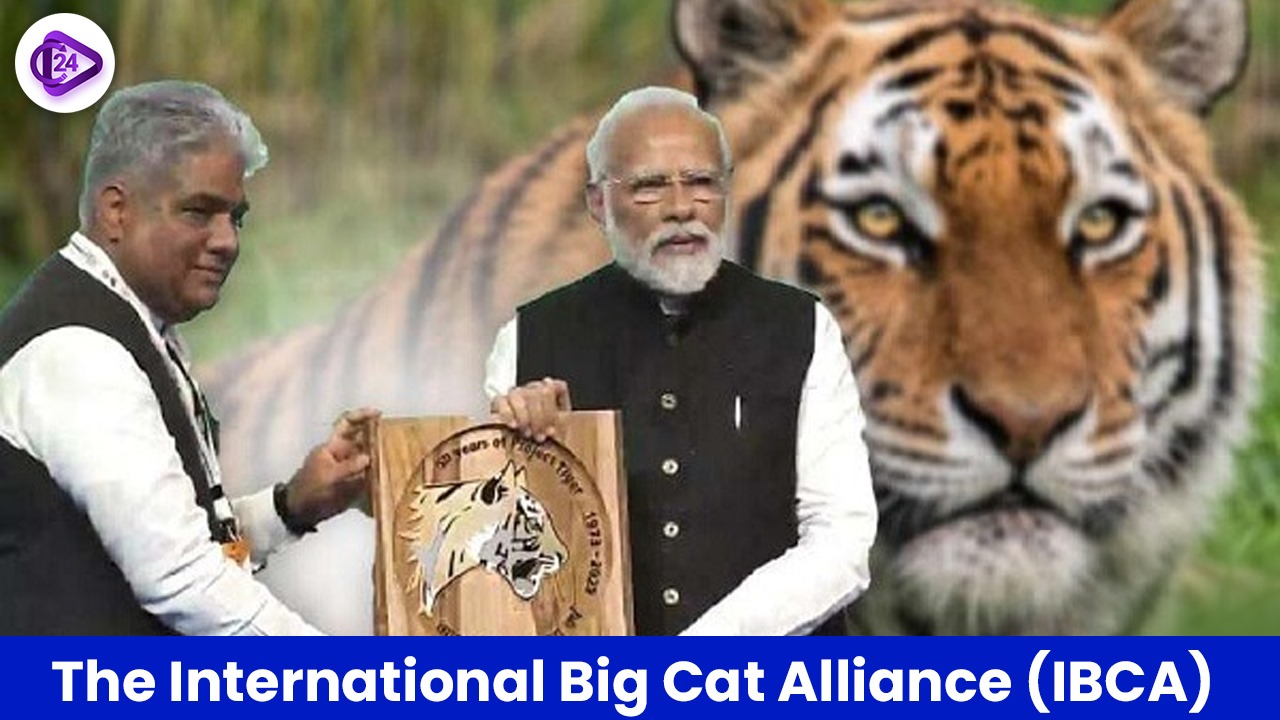
Since April 2023 the International Big Cat Alliance (IBCA) has functioned as a treaty-based intergovernmental organization that works on increasing global big cat conservation efforts. The international organization launched by Indian Prime Minister Narendra Modi on April 9, 2023, functions to celebrate 50 years of Project Tiger. The conservation initiative represents a major step forward by establishing five countries as founding signatories to create the agreement that enables joint wildlife protection work.

Formation and Membership

  • National Cabinet approval in February 2024 led to the establishment of the IBCA.

  • Headquarters: India (National Tiger Conservation Authority, MoEFCC).

  • The initial signatories of the ratification instruments to join the initiative included Nicaragua, Eswatini, Somalia, and Liberia.

  • A total of 27 countries demonstrated their dedication to joining the alliance because global engagement for big cat preservation continues to grow.

Objectives of IBCA

  • Conservation of wildlife: Alliance members work toward protecting all seven big cats: Tigers, Lions, Leopards, Snow Leopards, Cheetahs, Jaguars, and Pumas.

  • Global Cooperation: The organization IBCA works with governments and conservation agencies to establish worldwide cooperative initiatives for conservation programs.

  • Preventing Illegal Wildlife Trade: The alliance works to prevent illegal wildlife trade through enhanced monitoring of anti-poaching regulations to stop wildlife trafficking.

  • Financial and Technical Assistance: Providing funding, expertise, and technological support to conservation programs.

  • Climate Change Mitigation: IBCA engages in Climate Change Mitigation through the connection of sustainable initiatives that fight environmental effects.

Collaboration 

  • IBCA serves as a collaborative platform for national and international conservation organizations, researchers, and policymakers.

  • The platform allows members to exchange highly effective conservation methods which leads to the distribution of successful solutions between all participant nations.

  • The organization maintains a unified technical database and funding resources that support various conservation programs throughout member nations.

Financial Support and Initiatives

  • The Indian Biological Conservation Association operates under ₹150 crore in budget funding for the 2023-2028 financial period which received approval from the Indian Union Cabinet.

  • The alliance takes its inspiration from the International Solar Alliance (ISA) while the Director-General position was appointed through MoEFCC.

  • The initiative seeks to expand the capacity of existing platforms which unite governments for species protection tasks.

Impact on Global Conservation Efforts

  • IBCA will revolutionize worldwide wildlife protection as India leads this initiative.

  • The initiative facilitates networking between member states for exchanging information and shared resources in order to protect threatened big cat populations.

  • The advocacy group supports governments to link environmental policies with the UN Sustainable Development Goals in order to advance ecological sustainability.

Conclusion

  • IBCAs mission envisions big cats living prosperously in their original habitats.

  • The organization intends to implement sustainability measures based on conservation objectives to combat climate change impacts.

  • International organizations join forces to protect big cats as well as their natural habitat into the future.

Gyan Bharatam Mission 2025 Preserving India Manuscript Heritage

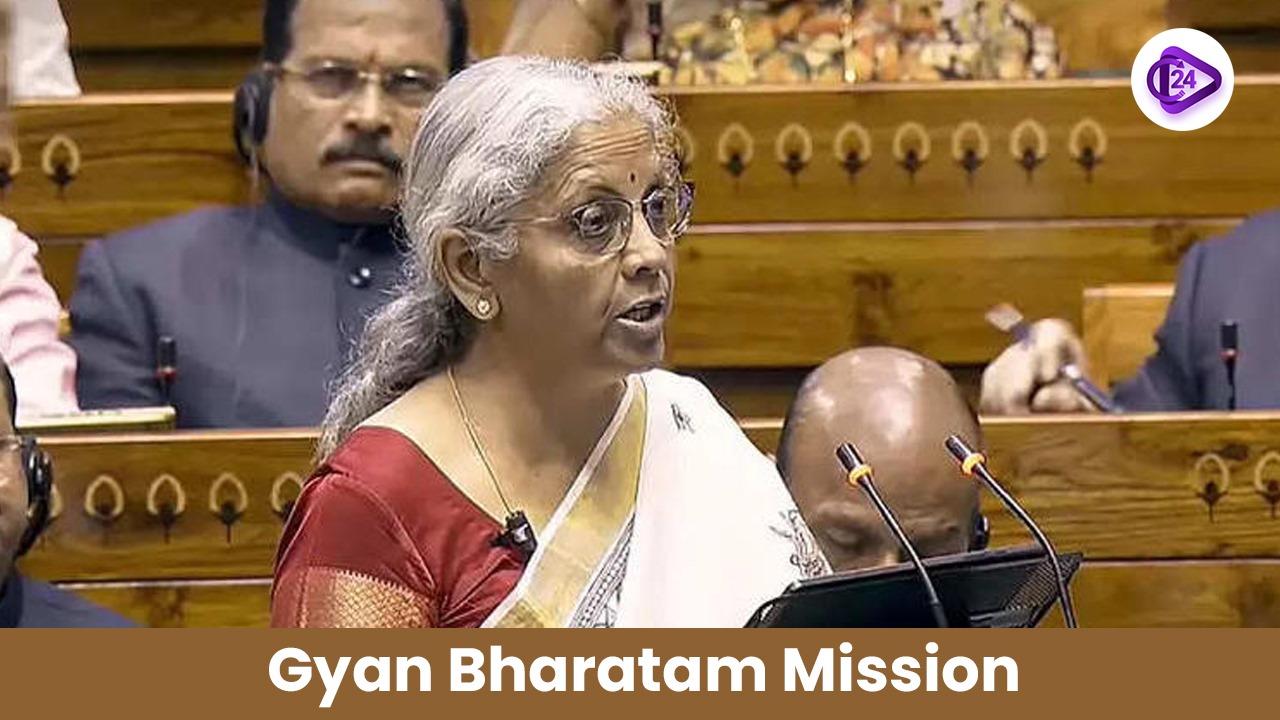
The Gyan Bharatam Mission under the Ministry of Culture launched through Union Budget 2025-26 operates as a national initiative dedicated to studying, documenting, and preserving all types of India's manuscripts. The expanded budgetary allocation of ₹60 crore enables the effort to index more than one crore manuscripts held in academic facilities and library spaces as well as private collection sites. Through this mission, the government implements advanced conservation methods and establishes autonomous management to work with experts while it expands accessibility for protecting historical documents indefinitely.


Introduction to Gyan Bharatam Mission

  • A national initiative for the survey, documentation, and conservation of India’s manuscript heritage.

  • The Ministry of Culture established the Gyan Bharatam Mission through the Union Budget 2025-26.

  • The project deals with manuscript materials found in institutional academic centers alongside museums and libraries, as well as private collections.

Budget Allocation

  • The National Mission for Manuscripts (NMM) received crucial budget increases during this period.

  • The budget allocation increased from ₹3.5 crore to ₹60 crore as part of new initiatives for better conservation support.

Objectives of the Mission

  • The mission aims to detect ancient Indian manuscripts and establish their protection before creating comprehensive records of their existence.

  • These manuscripts need to become accessible so both researchers and scholars together with members of the general public can study them.

  • Preservation of historical texts with their wisdom and knowledge becomes essential to make them available to upcoming generations.

Features of Gyan Bharatam Mission

  • Survey and Documentation operates intending to record more than 100 million manuscripts throughout all territories of India.

  • The mission employs state-of-the-art manuscript preservation methods for protecting sensitive fragile documents.

  • Through digitization, the program achieves broader accessibility functions while protecting the manuscripts from physical damage.

  • The project plans to create an autonomous body for efficient execution and management of operations.

Significance of the Initiative

  • India enhances its international role as an intellectual hub through the preservation of its historical knowledge accumulation.

  • The initiative promotes academic research together with scholarly studies of ancient manuscript content.

  • Historical records become protected through digitization preventing their destruction during subsequent periods

Conclusion

Gyan Bharatam Mission protects India’s traditional manuscripts through its efforts to safeguard old wisdom that allows research advancement together with the preservation of India’s cultural and intellectual heritage.

Frequently Asked Questions (FAQs)

The current affairs cover recent national and international events related to UPSC, SSC, Banking, Railways, and State PCS.

You need to read about the current affairs daily, and revise them every week and every month to keep them longer in your memory.

Yes, Class24 provides free downloadable Daily Current Affairs PDFs for easy revision.

Yes, you can practice MCQs and quizzes to boost your exam preparation.

Absolutely. The content is written in simple, easy-to-understand bilingual language suitable for beginners.

Go to class24.com and click on the current affairs section directly, where you find everything that you need.

ssc-toppers

Start Learning Today with Class24

Related current affairs

Class24 offers free video lectures for smart preparation, covering CGL, CPO, CHSL, MTS, and GD exams. Learn from expert faculty, revise concepts easily, practice with PYQs, and improve speed and accuracy through high-quality, exam-focused video lessons anytime, anywhere.

Get success in your hand. Start study anytime anywhere.

The journey becomes simple and enjoyable when you start taking interest in it. And through our app “Class24”, we will be your trusted partners in developing that interest.

Daily Quizzes
Mock Tests
Ongoing

No ongoing tests right now.