
Day: January 20, 2025

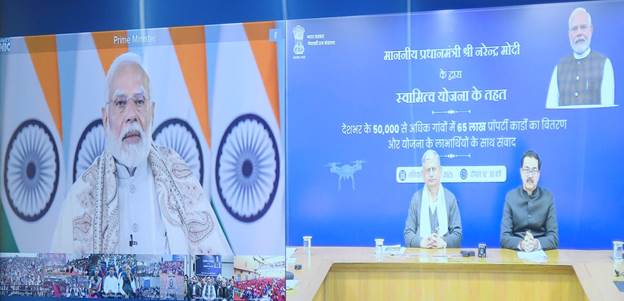
SVAMITVA Scheme to issue property cards in villages

The SVAMITVA (Survey of Villages and Mapping with Improvised Technology in Village Areas) is an organization that planned government undertakings of entitlement documents of property of dwelling units of rural households in India. It was initiated by Prime Minister Narendra Modi in April 2020 and helped the villagers get the property cards so they could unlock the opportunity for economic growth and procurement of financial stability for the growth of rural civilization. By using modern equipment such as drones and GIS maps, the government is developing valid land data intending to solve the problem of land issues, increasing access to finance, and supporting decentralization.

Key Points

About SVAMITVA Scheme

  • The benefits of livelihood of the people in rural areas are provided through property ownership documents under the SVAMITVA scheme which gives property cards.

  • Initiated on 24th April 2020 its purpose is to identify rural land through the use of drones and GIS maps.

  • Thus, we have formulated the scheme to assist the rural people because the establishment of legal ownership permits entitles the people to their piece of land.

How Does it Work?

The implementation involves a multi-step process:

  • MoU signed between Survey of India with the state government.

  • Inclusive of the survey of the areas that comprise a village is often conducted using drones, satellite images, and ground surveys.

  • Production of adequate and precise maps and GIS database of every village.

  • Issuance of property cards after map validation accompanied by a dispute.

Benefits of the SVAMITVA scheme

  • Rural households: In the villages, residents attain proper legal identification of their properties to use them for borrowing financial facilities, hence enhancing financial inclusion.

  • Gram Panchayats: Thus with a correct record of the land, Panchayats can even collect taxes, increase their authority for local administration, and solve problems of encroachment.

  • Farmers and Small Businesses: Small businesses as well as agricultural activities have been enhanced under the scheme and property rights give financial security.

Economic Impact

  • The established SVAMITVA scheme can help unleash activity of over Rs 100 lakh crore, as per the statement of PM Shri Narendra Modi.

  • There are various ways through which the newly obtainable titles would benefit the property owners. Such include the provision of loans to improve their businesses and establish small businesses within the areas thus stimulating the local economy.

  • It also assists in solving disputes causing conflicts over land and enhances rural development and the property sector in villages.

Progress and Reach

  • The scheme has been implemented in stages where pilot implementation has been implemented across continued states.

  • As of 2025, over 3.17 lakh villages have been surveyed using drone technology, covering 92% of the target villages.

  • The initiative has made significant progress, with a total of 67,000 sq.km of rural land surveyed, valued at Rs. 132 lakh crore.

Global Recognition

The Indian government aims to document the effectiveness of the SVAMITVA scheme to be presented at workshops and conferences in the next three years, 2025. This will promote international cooperation in the area of land governance and put India’s success stories in the aspect of rural development into the global business.

Conclusion

SVAMITVA is a new game-changing scheme that has been launched to enhance the ownership rights of property and the economic development of villages in India. With such benefits in mind, such as the utilization of advanced technologies such as drones and GIS mapping, it can transform the system of land records and also strengthen local administration as well as the preliminary motor for the development of the country’s economy. Through more than 3,17,118 surveyed villages and over millions’ property cards issued, the scheme is going to achieve the target of coverage in every state of the country along with setting an example in the context of global land governance.

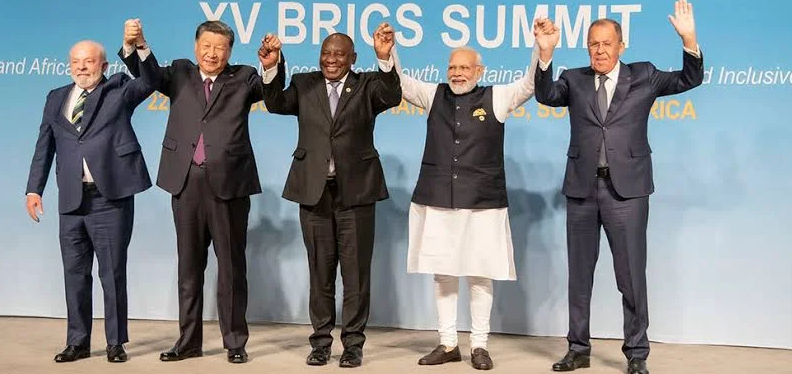
Nigeria Joins BRICS: A Milestone in Global South Collaboration

This year Nigeria becomes the BRICS member being the second country in Africa to join this important economic and political organization. The current chair of the Brazil, Russia, India, China, and South Africa (BRICS) grouping announced Nigeria’s interests in the grouping, especially on matters of cooperation and changing global order. Nigeria now become a member of several other countries as the BRICS partner countries hence making stronger the stance of the bloc on fulfilling multilateralism and redesigning the global order.

Nigeria BRICS partnership

  • Nigeria is the second African country to receive official membership into BRICS in the new calendar year after Uganda joined in January 2025.

  • The announcement has been made by Brazil which currently has the BRICS presidency, as Nigeria is considered as an actor that could substantiate and enhance cooperation within the Global South.

BRICS Partner Countries

  • The country now takes its position as a partner country to BRICS nations, together with other partner countries like Belarus, Bolivia, Cuba, Kazakhstan, Malaysia, Thailand, Uganda, and Uzbekistan.

  • The new partner-country status of Nigeria enables it to be an active member of BRICS and take part in its decision-making as well as in the use of its Instrument.

About BRICS

  • BRICS is a leading intergovernmental organization of five large developing and rapidly growing economies.

  • Formation: The BRIC association was formed in 2001 During the same year the organization had its first inaugural meeting in Russia in 2009.

  • Founding Members: The four founding members of BRIC are Brazil, Russia, India, and China(2009).

  • Brazil – 2009

  • Russia- 2009

  • India- 2009

  • China-2009

  • South Africa-2010

  • Iran- 2024

  • UAE- 2024

  • Egypt- 2024

  • Ethiopia- 2024

  • Saudi Arabia- 2024

  • Argentina- 2024

  • Indonesia-2025

Economic Influence

  • Together the five countries of BRICs have a total GDP of around one-third of the total international GDP.

  • Cover 46% of the world and represent an immense market and human resource base.

  • The bloc holds a crucial position in boosting trade and investment among the various emerging economies.

A counterbalance to Western Dominance:

  • BRICS provides an avenue for new economic powers to compete with G7 and other Western-dominated financial systems.

  • Here the group’s stance is for a multipolar world whereby they aim at diversifying from the American and European dominance most particularly in the areas of trade and finance.

Focus on Local Currencies and Non-Dollar Transactions:

  • BRICS has one of its aims to bring down the influence of the US dollar in its Cross-border transactions.

  • The objective is to encourage the use of physical currencies in local areas and develop a less degenerate financial environment that fully relies on dollars.

Advocacy for Global Institutional Reforms

  • BRICS is demanding more voice and vote reform in international organizations like the IMF and UN where the landscapes of international governance are shaped and where emerging economies like BRICS seek seats at the high table of decision-making.

Collaboration Among Emerging Economies:

  • Shows cooperation in technology, sustainable development, and others through BRICS.

  • The group fosters mutually beneficial knowledge of each other to address common issues which include global warming, disease outbreaks, and other adverse issues.

Energy and Resource Security

  • BRICS has many of its members as significant producers and consumers of energy, for instance, Russia, Brazil, and China, thus making it a strategic cooperation for energy security and development.

Support for Multilateralism

  • BRICS supports the concept of collective management through multilateral systems since it opposes the provision of individuals for every global issue.

Challenges Faced by BRICS

  • Diverse Economic Interests:

    • Currently, as it was mentioned before, BRICS is the union of countries with tremendously dissimilar economies – from the developed ones as China and India to the countries with oil-generating economies as Brazil and Russia.

    • These differences inevitably entail divergence of interest, particularly on matters to do with trade relations, economic liberalization, and foreign investments hence, making d [it] difficult to agree on some of the policies.

  • Political Differences:

    • However, BRICS nations have certain levels of common objectives in place however politically they differ from one another.

    • For instance, Sino-Indian, border disputes and the Russian struggle for a place with the West can affect the groups consensus in addressing certain aspects on the international relations platform.

  • Geopolitical Rivalries:

    • The conflict of interest in geopolitical nature equally impacts BRICS cohesion negatively where China and India have been in conflict and so have Russia with Western countries.

    • Further, relations with other countries that compose other alliances such as India with the US or an isolated Russia may make up some of the BRICS coalition creating differences in their total strength.

  • Economic Dependence on Global Markets:

    • While BRICS members strive for the block to become quite autonomous financially, most countries of this block are tied to World trade networks that are still dominated by the West.

    • This restrains the full liberation of BRICS and how they create their financial systems or shift from dollarization in the global economy.

Conclusion

The inclusion of Nigeria, a developing nation and emergent economy, as a partner country in BRICS, is a major landmark in Nigeria’s diplomatic calendar and for BRICS as an international organization. Considering Nigeria as an active player in the promotion of the South-South dialogue and change for effective global governance, it enhances the voice of the emerging market. This development highlights the role of BRICS as one of the most influential driving forces, towards the multipolar structure of the global economy of the Global South.

Nine Navies hold joint drills in strategic straits between the Indian Ocean and the Pacific

Having the Indian Navy and Indian Air Force join in the hands of the people is swift to constitute the companionship and interoperability fight against the French Carrier Strike Group (CSG) on India’s Western Seaboard. The exercise, which entailed elaborate sea exercise in tandem with the Indian Navy and joint airborne operations, came as proof of the escalating defense partnership between the two nations. French naval ships also visited Kochi, Kerala, this certainly helped to step up cooperation between the two navies.

Key Points

Maritime Partnership Exercise

  • INS Mormugao and IAF aircraft during Exercise with French Carrier Strike Group off the Western Fleet.

  • The exercise comprised a series of diverse maritime drills among which the air operations represented the elements of either separate Indian and French naval force’s professional interoperability.

French Naval Ships in Kochi

  • The visit of French ships FS Forbin and FS Alsace, part of the CSG, to Kochi, marked an important phase in the ongoing naval cooperation between India and France.

  • The French ships’ presence contributed towards the improvement of operational interactions and brought cooperation to new levels, such as professional routines that include cross-ship calls and Subject Matter Expert Exchanges (SMEE) and their purpose is to improve operational efficiency in the approaches used by the militaries of the two countries.

Strategic Bilateral Relationship

  • India and France have been strategic partners in defense since 1998 with well-publicized exercises like Shakti (land forces) Varuna (naval) and Garuda (air forces).

  • The visit and exercise and further increase collaboration between the two nations, and enhance defense cooperation between the two nations.

Mission CLEMENCEAU 25

  • The French Carrier Strike Group consisting of the aircraft carrier FNS Charles de Gaulle docked the Indian shores in the ongoing “Mission CLEMENCEAU 25”.

  • On this operation, the French CSG used several ports in India such as Goa and Kochi increasing operation in the region.

Ensuring Maritime Safety

  • India and France being the resident states of the Indian Ocean join hands to protect the security and stability of the region.

  • It also deepens regional maritime security and cements their joint responsibility in this important theater of world affairs.

Conclusion

The Maritime Partnership Exercise between the Indian Navy, Indian Air Force, and French Navy depicts the existing and progressed defense cooperation between both nations India and France. Now, through combined efforts and experiences sharing in training and undertaking operations, the relationship between the two states has improved and deepened their military cooperation, which has created a firmer basis for their mutual commitment to security in the Indian Ocean region. The Economic Cooperation between the two countries is a continuation of which such strategic partnership is vital amid a growing insecurity in the global world at this century.

Maharashtra Pioneering Move: Forming India’s First AI Policy

The Maharashtra government has come forward to formulate an Artificial Intelligence policy that could make Maharashtra the first state in India to develop the state AI Policy 2025 with further correlates to the India AI Mission and spearhead the industrial development, innovation, and digital economy development in Maharashtra, a new 16-member committee has been formed.

Formation of AI Committee

The AI policy will be created by a 16-member committee led by the Director of the Directorate of Information Technology, Mumbai. The specific purpose of a committee is to write a proposal within a given timeframe for the development of AI in the state.

Objectives of the AI Policy

The objectives of the AI policy of Maharashtra are to aid the national IndiaAI Mission and boost the state’s enterprising culture. Key objectives include:

  • Driving industrial growth.

  • Part of the executing a vision that will see Maharashtra boasting of a $ 1 trillion economy.

  • Organizing the AI use as a fundamental component of the development of the digital economy.

India AI Mission Overview

Aim of India AI Mission initiated in March 2024 will provide a boost to Indian AI by providing platforms like IndiaAI Datasets Platform, The Innovation Centre, and funding for AI startups. It guides the mission on how India will become a world power in the AI sector.

Cyber Security Policy Task Force

The Maharashtra state government has simultaneously set up a Cyber Security Policy Task Force to go hand in hand with the formulated AI policy. This particular task force will be tasked with the role of protecting this state’s IT systems and maintaining the integrity of the online services for its people, meeting one of the key dilemmas of Artificial Intelligence and the wide adoption of digitization.

Economic Impact of AI

AI is projected to revolutionize the digital economy of Maharashtra, which currently stands at ₹6 lakh crore. In detail, the AI policy is expected to foster development in sectors such as healthcare, agriculture, and manufacturing boosting the state’s economy.

AI development in its global context

They include India’s AI vision, “AI for All”, which launched intending to make India the epicenter of Innovation in AI. As the Indian Government is quite supportive of the development of AI via multiple strategies including global collaborations, such a statement positions AI as a critical factor at the global level.

Challenges in AI Adoption

Despite its potential, Maharashtra faces several challenges in AI adoption, including:

  • Skill-deficient candidates especially those in the AI related disciplines.

  • Lack of support infrastructures to foster the advanced research in artificial intelligence.

  • Issues that are related to privacy when AI technologies are in use.

Transforming governance through the use of advanced technologies has become one of the promising avenues for development, and solving the aforementioned challenges will be one of the key issues for the further successful AI policy and the state’s digitization process.

Some Ideas on the Future of AI in Maharashtra

The Maharashtra government will continue to promote AI research and development in the future. Future initiatives will focus on:

  • Improving educational services to produce human capital that meets the needs of businesses.

  • Supporting the adoption of AI through public-private partnerships in various sectors of the society.

  • These strategies will help make the state of Maharashtra realize its dreams of AI as a dominant technology and an economic force in the years to come.

Conclusion

This is a major step for Maharashtra towards constructing the state as an important factor in India’s AI journey. Maharashtra by leveraging the challenges to its favorable addresses challenges, the state plans to realize the full potential of AI and play its part in growing the digital economy of the state and the nation as a whole to serve as a model of emulation for the other States of India.

Breakthroughs in Alzheimer’s Disease Research: Hope for Effective Treatments

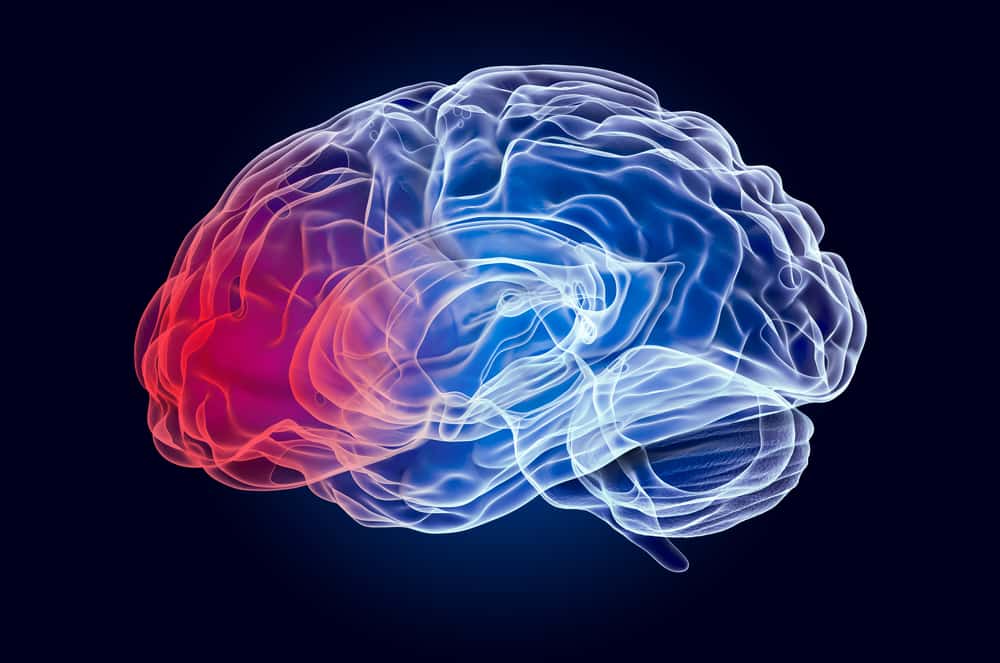
Alzheimer’s disease, a progressive neurodegenerative pathology, has been a difficult nut to crack for a long time. However recent innovations spearheaded by Professor Anirban Bhunia and his team from Bose Institute bring hope to the development of effective treatment. Asthma focused on amyloid proteins implicated in Alzheimer’s disease has winning approaches toward alleviating cognitive deterioration.

Role of Amyloid Proteins

Amyloid proteins are essential in the creation of Alzheimer’s disease. These proteins form large clusters or plaques in the brain that interfere with the work of neurons resulting in cell death. This leads to the dementia and amnesia that are associated with the disease all in a cycle manner.

Innovative Treatment Strategies

Professor Bhunia’s team employed two main approaches to tackle amyloid proteins:

  • Chemically Synthesized Peptides: The team created peptides that were expected to prevent the formation of amyloid beta, one of the main proteins that contribute to plaques.

  • Repurposing Lasunadya Ghrita (LG): An Ayurvedic preparation LG was investigated for its anti-amyloid activity in preventing the formation of amyloid beta fibrils. Used in traditional medicine to treat mental health disorders, it was observed to have a non-toxic natural cure.

Lasunadya Ghrita (LG)

LG is an herbal preparation made from natural ingredients that are safe in their nature according to Ayurveda medicine. A few investigations in the past few years showed that LG could inhibit amyloid fibrillation and inhibit oligomer formation, indicating that it is a drug candidate for Alzheimer’s disease.

Research Findings

In their study conducted in Biochemistry, the researchers observed that peptides fashioned through chemical synthesis could halt the formation of amyloid protein clusters. Encounters with Ayurvedic professionals overpowered that natural substances such as those in LG might better disintegrate amyloid beta than chemical peptides, providing the diagnosis care.

Presentation and Management of Alzheimer’s

Lack of memory and skill development are characteristic of Alzheimer’s disease. The first signs are forgetfulness, in particular, short-term memory loss. The patient may also look ill or sick, have problems with movements, be unable to perform everyday tasks, become irritable or depressed, and may not remember people close to him. 

Preserved Skills

However, as cognition deteriorates, persons with Alzheimer’s disease maintain some abilities, known as “relative strengths” or “cognitive sparing.” Skills of reading, storytelling, singing, and crafting are usually governed by the areas of the brain that are not impaired by the disease.

Future Directions

The novel conclusions derived from this investigation may extend to the investigation of the Ayurvedic treatment approach as a potentially complementary approach to addressing neurodegenerative illnesses.  It is in this regard that researchers are trying to extend the use of both traditional medicine and new scientific methods in a bid to enhance the quality of life of people who suffer from Alzheimer's and related ailments.

Conclusion

With the exit having been done on amyloid proteins and coming up with newer treatments like chemically synthesized peptides and Ayurvedic compound known as Lasunadya Ghrita, there is hope for combating Alzheimer’s disease anew. These developments provide additional possibilities for the treatment of neurological disorders creating a new ray of hope in the efficient dealing with these diseases.

Sri Lanka to Receive Highest FDI from China

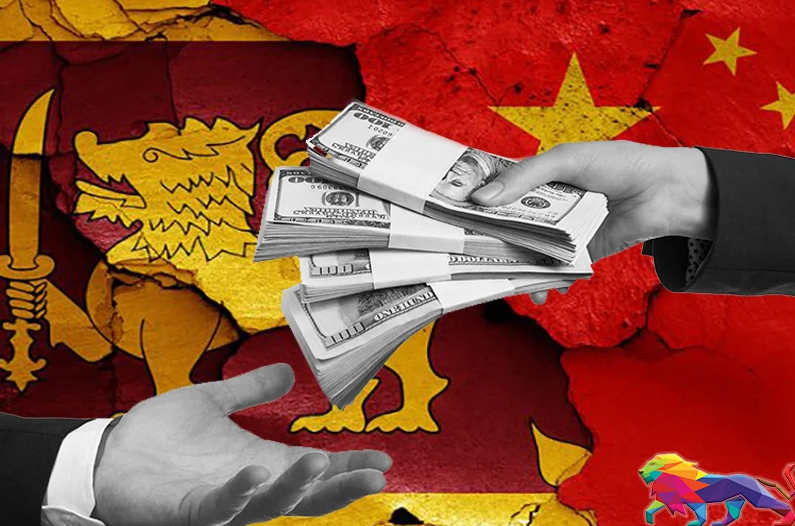
Sri Lanka is set to receive its biggest foreign direct investment FDI from China for the construction of an oil refinery worth $3.7 billion. This massive investment takes place at a time of a state visit to China by President Anura Kumara Dissanayake and complements the Chinese BRI. However, the project has instigated debt traps and geopolitical risks, and questions mark Sri Lanka’s economic sustainability, particularly regarding India’s strategic sensibility into the Ocean region.

Key Investment Details

Project Overview: Out of it, $3.7 billion will be spent on building an oil refinery by China’s Sinopec. This refinery has been planned to produce a capacity of 200,000 barrels per day to cater to the increasing domestic fuel demand of Sri Lanka. Also, through exports it intends to produce foreign currency.

Agreement: The agreement was completed between the Srilankan Ministry of Energy, power, and Energy, and Sinopec. It prefers to locally sell the fuel in Sri Lanka rather than export it.

Geopolitical Context

  • Growing Chinese Influence: A problem for India is that the refinery was built near the Hambantota port over which China has obtained a 99-year lease.  In response, India has plans for its energy projects, a $1.2 billion fuel pipeline to Trincomalee to counterbalance Chinese influence on the region.

  • China’s South Asia Strategy: China has been actively opening its economy in South Asia, Sri Lanka in particular as a part of the Belt and Road bilateral cooperation. India sees this as a part of China’s intent to surround it and threaten its diplomatic hegemony in the area known as South Asia.

  • Regional Rivalry: Historically India has always regarded Sri Lanka as its backyard and any Chinese incursion into the Sri Lankan infrastructure and energy sectors poses a threat to Indian influence in the region.

  • India’s Reaction: India sees China's growing influence in Sri Lanka and to some extent in the entire Indian Ocean region as a threat

Economic Context

  • Debt Trap is concerned with the Indian Ocean which serves as a shipping Lane. This project also increases India’s concern over the increasing adventurousness of China in the region.

  • Sri Lanka’s Financial Strain: Earlier there were concerns regarding Sri Lanka’s debt, especially from the Chinese which have been identified above. The act of leas­ing the Hamban­to­ta port is often described as a ‘‘debt pe­netra­tion’’ where the Sri Lankan gov­ern­ment ris­ingly found it­self in pos­sess­ion of sig­nif­i­cant debt obli­ga­tions it could not dis­solve and as a con­se­quence of which lost the port.

  • Economic Crisis: Sri Lanka faced a severe economic crisis in 2023 leading to $46 billion in foreign debt. Currently, the nation is open to all types of economic risks, and speculations on its reliance on Chinese money.

Sri Lanka’s Balancing Act

Sri Lanka is in the process of managing affairs with China and India – two regional giants that have conflicting interests. India has signed many arrangements of various nature with the country and has leased out an oil tank farm and granted licenses to Indian enterprises.

Economic Competition

  • Energy Market Threat: India which currently supplies fuel to Sri Lanka faces stiff competition from Sinopec following the company’s investment in the Refinery. Sinopec being overly obsessed with achieving market exclusivity in Sri Lanka will undermine IOC’s 20% market stake which jeopardizes India’s economic stronghold.

  • India’s Counter Projects: India immediately offered a $1.2 billion fuel pipeline to Trincomalee, but Sri Lanka may become a victim of China’s first-mover advantage in the energy sector.

Diplomatic and Strategic Relations

  • Sri Lanka’s Neutrality: At the same time, as China’s influence rises, the achievement of balance between China and India becomes increasingly difficult for Sri Lanka. This means India must develop diplomatic tactics that will enable Sri Lanka not to take part in any regional conflict.

  • Counterbalancing Chinese Influence: Some attempts by India to checkmate the Chinese influence may fail, for instance, the Trincomalee pipeline because China has heavily invested in the Sri Lankan infrastructure.

Significance of the Issue for India’s South Asian Policy

  • Threat to Regional Leadership: New stronger cooperation and relations between China and Sri Lanka threaten India’s hegemony in South Asia more than ever before. India could have to turn more assertive in investing in and diplomatically engaging with the neighboring countries to retain its influence.

  • Strengthening Maritime Strategy: China’s continuous expansion in the Indian Ocean is likely to bring about India’s improvement of its maritime strategy, making the contest between India and China in the Indian Ocean even more vehement over the strategic sea lanes.

Conclusion

The decision to host the largest foreign direct investment by China was a new historic chapter in the Plea’s economic and foreign policy. Thus, the $3.7 billion oil refinery project, which guarantees fuel supply and revenues, is questioned concerning debt pitfalls, commercial losses, and political unrest. While Sri Lanka needs to strengthen its relations with China and India there is a risk of over-reliance on one country in particular that must be avoided. The result of this project must therefore go some way towards determining the direction of the Sri Lankan economy as well as its strategic place in the geopolitics of the Indian Ocean region.

Frequently Asked Questions (FAQs)

The current affairs cover recent national and international events related to UPSC, SSC, Banking, Railways, and State PCS.

You need to read about the current affairs daily, and revise them every week and every month to keep them longer in your memory.

Yes, Class24 provides free downloadable Daily Current Affairs PDFs for easy revision.

Yes, you can practice MCQs and quizzes to boost your exam preparation.

Absolutely. The content is written in simple, easy-to-understand bilingual language suitable for beginners.

Go to class24.com and click on the current affairs section directly, where you find everything that you need.

ssc-toppers

Start Learning Today with Class24

Related current affairs

Class24 offers free video lectures for smart preparation, covering CGL, CPO, CHSL, MTS, and GD exams. Learn from expert faculty, revise concepts easily, practice with PYQs, and improve speed and accuracy through high-quality, exam-focused video lessons anytime, anywhere.

Get success in your hand. Start study anytime anywhere.

The journey becomes simple and enjoyable when you start taking interest in it. And through our app “Class24”, we will be your trusted partners in developing that interest.

Daily Quizzes
Mock Tests
Ongoing

No ongoing tests right now.